- English
- French
- German
- Portuguese
- Spanish
- Russian
- Japanese
- Korean
- Arabic
- Greek
- German
- Turkish
- Italian
- Danish
- Romanian
- Indonesian
- Czech
- Afrikaans
- Swedish
- Polish
- Basque
- Catalan
- Esperanto
- Hindi
- Lao
- Albanian
- Amharic
- Armenian
- Azerbaijani
- Belarusian
- Bengali
- Bosnian
- Bulgarian
- Cebuano
- Chichewa
- Corsican
- Croatian
- Dutch
- Estonian
- Filipino
- Finnish
- Frisian
- Galician
- Georgian
- Gujarati
- Haitian
- Hausa
- Hawaiian
- Hebrew
- Hmong
- Hungarian
- Icelandic
- Igbo
- Javanese
- Kannada
- Kazakh
- Khmer
- Kurdish
- Kyrgyz
- Latin
- Latvian
- Lithuanian
- Luxembou..
- Macedonian
- Malagasy
- Malay
- Malayalam
- Maltese
- Maori
- Marathi
- Mongolian
- Burmese
- Nepali
- Norwegian
- Pashto
- Persian
- Punjabi
- Serbian
- Sesotho
- Sinhala
- Slovak
- Slovenian
- Somali
- Samoan
- Scots Gaelic
- Shona
- Sindhi
- Sundanese
- Swahili
- Tajik
- Tamil
- Telugu
- Thai
- Ukrainian
- Urdu
- Uzbek
- Vietnamese
- Welsh
- Xhosa
- Yiddish
- Yoruba
- Zulu
Full Mask Respirator vs Half Mask: Which Offers Better Protection?
When evaluating respiratory protection equipment, the Full Mask Respirator consistently delivers superior protection compared to half mask alternatives. Full face respirators provide an Assigned Protection Factor (APF) of 50, significantly higher than the APF of 10 offered by half masks. This enhanced protection stems from complete facial coverage, including eye protection, and a more comprehensive seal around the entire face perimeter. The integrated design eliminates gaps between separate eye protection and respiratory equipment, creating a unified barrier against airborne contaminants in industrial environments.
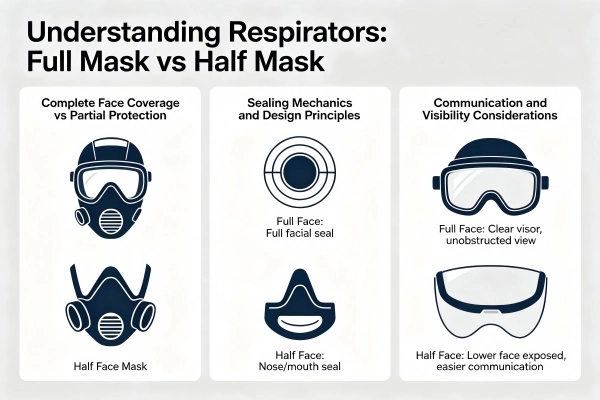
Understanding Respirators: Full Mask vs Half Mask
In workplace settings, respiratory protection equipment is the last line of defense against dangerous airborne contaminants. Knowing the main differences between full face and half face styles helps buying professionals make smart choices that protect their workers and make operations run more smoothly.
Complete Face Coverage vs Partial Protection
Full Mask Respirator devices make a seal around the whole face that protects the eyes, nose, and mouth at the same time. There is a silicone or thermoplastic rubber seal that goes from the forehead to the temples, down the lips, and under the chin on these devices. The combined design gets rid of possible exposure paths that happen when you wear different eye protection and half masks. Half mask respirators only cover the nose and mouth, so you need to wear extra eye protection in places where there are allergens or particles in the air. This split could cause problems with the seal where the eye protection meets the respirator, especially when the person is active or wearing it for a long time.
Sealing Mechanics and Design Principles
The way these two types of respirators close is very different from one another. Full-face units have a bigger touch surface area, which spreads pressure more evenly across the face and makes it less likely that the seal will break. The 5-point or 6-point headstrap method makes sure that the pressure is evenly spread, so the seal stays intact even when the machine is moving quickly. Half masks use a smaller closing surface that is focused around the mouth and nose. This design is lighter and more comfortable for the user, but it can be hard to keep the seal pressure steady, especially for people with facial hair or unique face shapes.
Communication and Visibility Considerations
Speech diaphragms or voice enhancement systems are built into modern full-face respirators so that people can still communicate clearly while staying safe. The wide-view plastic lens lets you see clearly around the edges of your field of vision, which is important for staying safe in complex industrial settings.
Half-mask designs let you speak more naturally, but based on the type of filter and the amount of noise in the room, they may make it harder to communicate. Safety goggle frames often get in the way of workers' peripheral vision when they wear half masks with separate eye protection.
Protection, Performance, and Safety Features Compared
The difference in performance between full face and half face respiratory protection is most clear when you look at how well they filter air, how well they close, and how well they meet OSHA and other foreign safety standards.
Assigned Protection Factors and Regulatory Compliance
OSHA rules set clear APF numbers that show how well protection works in the real world, in a normal workplace. For uses under negative pressure, Full Mask Respirator units have an APF of 50, which means they protect against contaminant amounts up to 50 times the permissible exposure limit (PEL). These units can reach APF values of up to 1000 when equipped with powerful air-purifying systems (PAPR). Half mask respirators have an APF value of 10, which means they can only be used in places where the amount of contaminants is low. Their usefulness for making chemicals, processing drugs, and managing toxic trash is greatly reduced by this limit.
Filtration Efficiency and Filter Compatibility
The filter tubes for both types of respirators can be the same. They can include P100 particulate filters that are 99.97% effective and combination filters that protect against both gases and vapors. Full face units, on the other hand, have better seal integrity, so filtered air gets to the user without bypass leaks that can happen with half masks that don't fit right. The bayonet or threaded filter connection methods allow for quick filter changes, which is important for keeping your safety during shift changes or when moving from one exposure area to another. There are often two filters on full-face units, which makes it easier to breathe and gives you a backup in case one filter fails.
Eye Protection Integration
One big benefit of full face breathing protection is that it protects against chemical splashes. The polycarbonate glass is impact-resistant and meets ANSI Z87.1 standards for eye safety. It also lets you see clearly in the workplace. Anti-fog layers and lens treatments keep your vision clear when it's wet or the temperature changes. Workers who wear half masks need separate eye protection, which could cause fit problems and make the process of putting on the masks more difficult. The space between different eye protection and breathing gear can let contaminants in, especially small particles or chemical fumes with low viscosity.
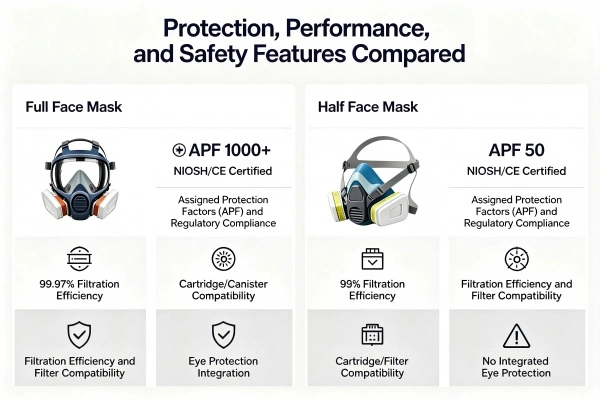
Comparative Analysis: Full Mask Respirator vs Half Mask Respirator
Real-world performance data from industrial settings shows that full face and half face lung protection systems are very different in how well they protect, how well users follow the instructions, and how well they work for the job.
Performance in High-Risk Environments
Chemical processing plants that use toxic gases and volatile organic compounds (VOCs) show how important it is to wear full face protection. Case studies from factories that make medicines show that Full Mask Respirator systems keep up the same level of protection even during long shifts that last 8 to 12 hours. Half masks, on the other hand, need to be checked for fit more often and cause more eye pain from chemical vapors in similar settings. Full face units get rid of these problems because they protect the whole face. They also cut down on the time workers spend changing or removing equipment.
User Compliance and Comfort Factors
Long-term wear studies show that full-face respirators that fit properly make users more likely to comply in difficult situations. Even pressure and a comfortable shape make it less likely for pressure points to form, especially around the bridge of the nose, which can happen with half mask systems. Half masks are lighter and more comfortable at first, so they are better for lighter jobs where workers need to be able to move around easily. But the need for separate eye protection often cancels out the weight benefit and makes the whole safety system more difficult to use.
Maintenance Requirements and Service Life
The total cost of ownership for lung protection devices is affected by maintenance schedules in a big way. Along with replacing the filters and checking the seals, full face units need to have the lens surface and speech diaphragm cleaned. The strong build, on the other hand, usually means that the face piece itself lasts longer. Maintenance of a half mask is easy, which makes it a good choice for places that don't have a lot of safety resources. However, keeping separate eye protection up to date makes things more difficult. For multiple parts to stay effective, they need to be stored and cleaned according to strict rules.
Procurement Insights: Choosing and Buying the Right Respirator
Making strategic choices about what to buy means weighing the original costs of the equipment against how well it works in the long run, how well it meets regulations, and how safe it is for workers. When procurement pros know the total cost of ownership, they can make the best safety decisions while staying within their budgets.
Hazard Assessment and Risk Matching
Comprehensive danger studies find specific airborne contaminants, their concentration levels, and trends of exposure over time that help figure out the right amounts of respiratory protection. Chemicals with low Threshold Limit Values (TLV) or substances that irritate the eyes right away usually need Full Mask Respirator protection, no matter how concentrated the chemicals are. During the review process, possible emergencies should be thought through, such as machine failure or sudden increases in exposure. Full face protection adds extra safety gaps that come in handy when regular working conditions change without warning.
Leading Manufacturer Evaluation
Global companies that make breathing protection, like 3M, Honeywell, and Draeger, have a wide range of products with different features and functions. PPE MAX has been making safety gear for more than 60 years and offers NIOSH-certified full face respirators that meet foreign safety standards like EN 136 and AS/NZS 1716. When procurement teams look at providers, they should give more weight to companies that have a history of success in similar industrial settings, offer full after-sales support, and have replacement parts easily available. With the ability to send goods to 134 countries around the world, products are always available, even in remote operating areas.
Strategic Purchasing Considerations
Buying in bulk can cut costs per unit by a lot while still making sure there are enough supplies for big teams. Custom labeling choices help with keeping track of goods and regulations, which is especially helpful for businesses that run multiple locations with different safety rules. Compatibility and availability of filters are ongoing practical costs that affect the total cost of ownership. By sticking to respirator models that accept common filter types, you can keep your inventory simpler and make sure that the respirators can be used in a variety of work settings.
Best Practices and Guidelines for Usage and Compliance
For breathing protection to work, fit testing, training, and upkeep must be done in a planned way. By following these steps, you can be sure that the performance specs of your tools actually protect workers in the real world.
Fit Testing and Certification Procedures
All tight-fitting respirators must be tested for fit by OSHA once a year, and they must be tested again if a worker's weight or teeth change in a big way. Quantitative fit testing with special tools gives accurate readings of how well a seal works, while qualitative testing depends on how the user reacts to challenge agents. Full Mask Respirator units usually pass the fit test more often because they have a bigger sealing area and headstrap systems that can be adjusted. The full seal makes it easier for everyone to get the right fit, which speeds up the licensing process and boosts trust in the level of security.
Training Program Implementation
Full training classes cover the right way to put on clothes, check seals, and what to do in an emergency. Workers need to know what their breathing protection can and can't do and know when to have their gear inspected or replaced. Documentation of training helps with following the rules and shows that proper care was taken to protect workers. Regular review meetings help people remember how to do things right and bring them up to date on information about safety measures or equipment requirements.
Maintenance Scheduling and Documentation
Schedules for preventive repair make sure that equipment keeps working well and extends its useful life. Protocols for daily inspections find potential problems before they risk security, and planned repair of parts stops them from breaking down at the worst possible time. Documentation tools keep track of each respirator's past, including the results of fit tests, upkeep tasks, and how it was used. This data helps with regulatory compliance checks and can also be used to find the best backup plans and people who need training.
Conclusion
Ultimately, the choice between full face and half face breathing protection relies on the dangers in the workplace, the rules that must be followed, and the limitations of the operation. Full Mask Respirator systems provide superior protection through higher APF ratings, integrated eye protection, and comprehensive facial sealing. Because of these benefits, they are necessary in high-risk places like chemical handling, making drugs, and responding to emergencies. Half masks are lighter and easier to use than full masks, but they can only be used in low-risk situations because they don't give much protection. To make choices that favor worker safety while still meeting operational needs, procurement professionals must carefully weigh their individual needs against the increased safety margins that full face protection offers.
FAQ
Can half mask respirators provide adequate protection in chemical environments?
It is only safe to wear a half mask respirator in chemical settings where the number of contaminants is less than 10 times the permissible exposure limit. When working with toxic vapors, organic solvents, or chemicals that irritate the eyes right away, you need to wear full face protection to keep your eyes and lungs safe. Because half masks have a limited APF, they shouldn't be used for most chemical handling tasks.
How often should filters be replaced on full mask respirators?
How often a filter needs to be replaced relies on the type of contamination, its quantity, and how it is used. P100 dust filters usually need to be replaced when breathing resistance goes up noticeably or at the manufacturer's recommended maximum times. Gas and vapor screens need to be replaced based on breakthrough testing or set plans. In high-concentration areas, this is usually done every day to once a week.
Are full mask respirators suitable for welding applications?
Due to the polycarbonate eye material, standard Full Mask Respirator units must be altered for welding uses. Specialized types for soldering have the right filter lenses built in so that they can still protect your lungs. To protect workers from arcs and keep their lungs safe, many places of work use different welding hats with powered air-purifying respirators.
Partner with PPE MAX for Superior Respiratory Protection Solutions
Our wide selection of NIOSH-certified Full Mask Respirator systems at PPE MAX is ready to meet your needs for breathing protection. As a top manufacturer with more than 65 years of experience, we know how important it is to have solid safety in tough industrial settings. Our state-of-the-art factories in Xi'an, China, make respirators that meet international safety standards and can be customized to fit your needs. Email our technical experts at marketing@ppemax.com to talk about buying in bulk, getting labels made just for you, and our full training classes. Whether you need urgent Full Mask Respirator provider help or want to build a long-term relationship, our global supply capabilities in 134 countries make sure that you always have access to products and receive professional service after the sale for your safety needs.
References
1. National Institute for Occupational Safety and Health. "Criteria for a Recommended Standard: Occupational Exposure to Refractory Ceramic Fibers." DHHS Publication No. 2006-123, 2006.
2. Occupational Safety and Health Administration. "Respiratory Protection Standard 29 CFR 1910.134." Federal Register, Department of Labor, 2019.
3. American National Standards Institute. "Practice for Occupational and Educational Personal Eye and Face Protection Devices." ANSI/ISEA Z87.1-2020.
4. European Committee for Standardization. "Respiratory Protective Devices - Full Face Masks - Requirements, Testing, Marking." EN 136:1998+A1:2003.
5. International Organization for Standardization. "Respiratory Protective Devices - Human Factors - Part 1: Metabolic Rates and Respiratory Flow Rates." ISO/TS 16976-1:2015.
6. Standards Australia. "Respiratory Protective Devices." AS/NZS 1716:2012, Joint Technical Committee SF-040.
Learn about our latest products and discounts through SMS or email