- English
- French
- German
- Portuguese
- Spanish
- Russian
- Japanese
- Korean
- Arabic
- Greek
- German
- Turkish
- Italian
- Danish
- Romanian
- Indonesian
- Czech
- Afrikaans
- Swedish
- Polish
- Basque
- Catalan
- Esperanto
- Hindi
- Lao
- Albanian
- Amharic
- Armenian
- Azerbaijani
- Belarusian
- Bengali
- Bosnian
- Bulgarian
- Cebuano
- Chichewa
- Corsican
- Croatian
- Dutch
- Estonian
- Filipino
- Finnish
- Frisian
- Galician
- Georgian
- Gujarati
- Haitian
- Hausa
- Hawaiian
- Hebrew
- Hmong
- Hungarian
- Icelandic
- Igbo
- Javanese
- Kannada
- Kazakh
- Khmer
- Kurdish
- Kyrgyz
- Latin
- Latvian
- Lithuanian
- Luxembou..
- Macedonian
- Malagasy
- Malay
- Malayalam
- Maltese
- Maori
- Marathi
- Mongolian
- Burmese
- Nepali
- Norwegian
- Pashto
- Persian
- Punjabi
- Serbian
- Sesotho
- Sinhala
- Slovak
- Slovenian
- Somali
- Samoan
- Scots Gaelic
- Shona
- Sindhi
- Sundanese
- Swahili
- Tajik
- Tamil
- Telugu
- Thai
- Ukrainian
- Urdu
- Uzbek
- Vietnamese
- Welsh
- Xhosa
- Yiddish
- Yoruba
- Zulu
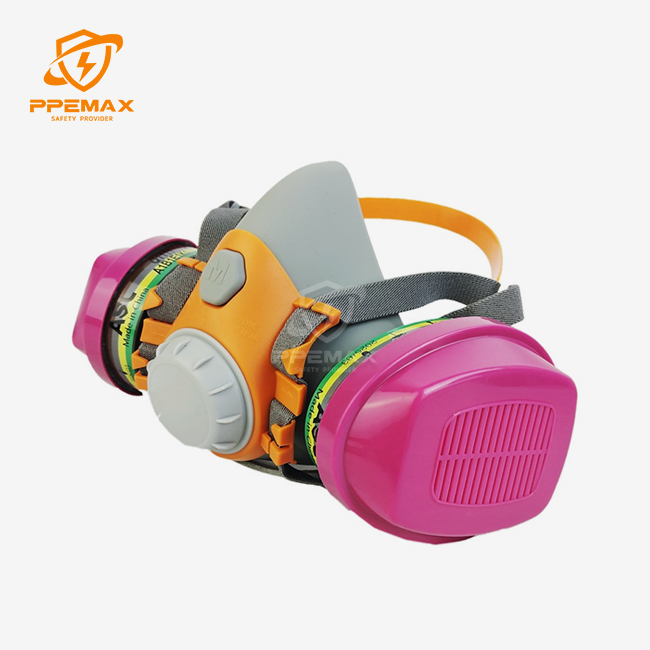
Safety Respirator Masks
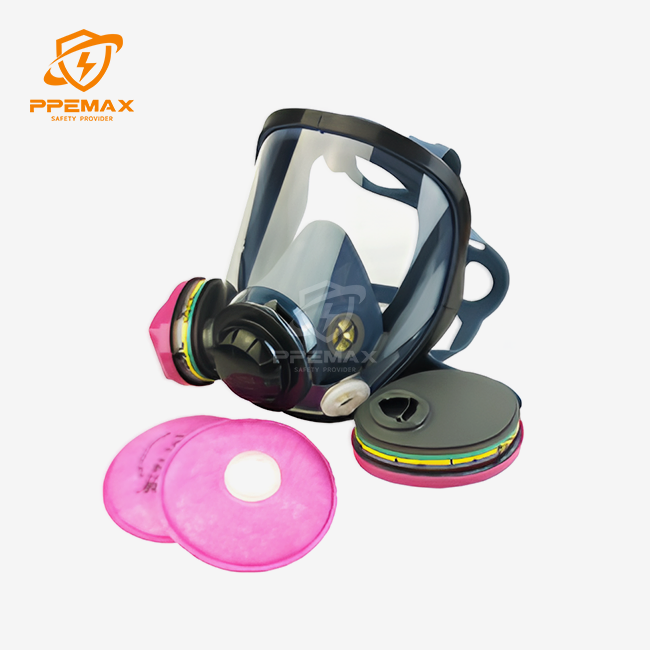
Face Shield: PC , Never fog technology, impact resistant, anti scratch
Speaking Diaphragm: Available
Connector: Bayonet connector
Head Belt: 6 points soft silicone
Certified: CE EN: 136: 1998
Safety Respirator Masks – Full-Face Silicone Respirator with CE EN 136 Certification
The Safety Respirator Masks handle full-face protection. They are one of the main products from Xi'An PPE MAX Co., Ltd. That company dates back to 1956. Liquid silicone makes up the full-face unit. Its head belt adjusts at 6 points. Fog and scratches stay off thanks to a polycarbonate face shield. A bayonet connector lets the wearer swap cartridges. CE EN 136:1998 certification comes with the mask. It shows the mask meets European rules for full-face respiratory protection in industrial and chemical settings.


About Xi'An PPE MAX Co., Ltd
PPE MAX factories have turned out occupational safety equipment since 1956. Construction crews buy from the company. Petrochemical plants do too, and so do healthcare sites and manufacturers. Respiratory protection sits in the range. Eye protection does as well, along with other PPE categories.
CE EN 136:1998 covers how a full-face mask is built. Leakage performance falls under it, and mechanical strength does too. Need to check that a certificate still holds? Take the four-digit number printed on the product and look it up in the EU NANDO Notified Body database.
Buyers can send OEM and customization requests to PPE MAX. Product specs then get set to fit the way each buyer actually works.


What Are This Product?
PPE includes the safety respirator mask. Harmful things in the air stay out of the lungs when you wear one. Dust gets blocked. Chemical vapors are stopped too, along with fumes and biological aerosols.
Surgical masks work on a different principle. Against the face, these respirators form a tight seal. Air you breathe in has to pass the filter cartridges first. Inside that filter, fine particles get caught. Inertial impaction does part of the job. Diffusion helps too. Electrostatic attraction plays a part as well.
Models that cover the whole face also protect the eyes and face. They suit places with splash hazards. Toxic gases may be present. So may particles at high concentration, and breathing risks are there too.


Standard Specifications
| Parameter | Details |
|---|---|
| Face Body Material | Liquid Silicone |
| Face Shield Material | Polycarbonate (PC) |
| Face Shield Features | Never-fog, impact resistant, anti-scratch |
| Speaking Diaphragm | Available |
| Connector Type | Bayonet connector |
| Head Belt | 6-point soft silicone |
| Certification | CE EN 136:1998 |
Features
Liquid Silicone Face Body
Different face shapes get matched by liquid silicone. A steady face seal is the result. Long wear will not make the material stiff. Shifts in temperature or humidity leave it flexible as well.
PC Face Shield with Never-Fog Technology
The polycarbonate face shield is designed to remain clear during high-exertion tasks. Impact resistance and scratch resistance help preserve an unobstructed field of vision throughout a work shift.
6-Point Soft Silicone Safety Respirator Masks Head Belt
Pressure gets spread over the head by six adjustment points. One spot won't take the whole load, so fatigue drops. Move around and the mask stays put.
Bayonet Connector System
The bayonet system allows cartridges to attach and detach without tools. This supports filter changes in field conditions and compatibility with multiple cartridge types depending on the hazard present.
Speaking Diaphragm
Loud sites still need talking. That's what the built-in speaking diaphragm is for. You don't have to take the mask off first.
Applications for Safety Respirator Masks
Heavy Industry & Construction
Cutting throws fine dust into the air. Grinding does the same, and so does knocking things down. Respirable crystalline silica (RCS) comes with it. Often the levels sit above the safe exposure limit. A full-face respirator with the right cartridges covers two problems there: what you breathe in, and what gets in your eyes.
Petrochemical & Chemical Manufacturing
Some hazards call for a filter medium of their own. Take volatile organic compounds (VOCs). Acid gases are a second case. Then there are oils in aerosol form. Activated carbon cartridges snap on through the bayonet connector. Oil-resistant filter types are an option as well. Either one works in chemical processing environments.
Pharmaceutical Manufacturing
Two risks come with pharmaceutical powders. Breathing them in is one. Landing on your face is the other. A full-face mask covers both. Which cartridge you pick depends on the substance and its exposure limit.
Mining & Tunneling
Underground, the dust load is heavy. Airflow stays low. Here a tight face seal counts. Enough filter capacity counts too. The mask stays put on a 6-point head belt. That holds it steady through long stretches of movement.
Certifications
| Certification | Standard |
|---|---|
| CE Full-Face Respirator | EN 136:1998 |

Packing
Each unit is packed so the PC shield and silicone face body reach the buyer without damage. For bulk orders, custom labels and other packaging options can be requested, including Safety Respirator Masks.

After-Sales Service
After-sales support is handled by PPE MAX. Product use questions fall under that support. The same goes for filter fit and spare parts availability. Do you need help with fit, cartridge choice, or compliance paperwork? The contact below can take your question.
FAQ
Q: Is it safe to wear this product in places where oxygen levels are low?
A: No. A filtering respirator only cleans air that is already there. It does not add oxygen. Once oxygen falls below 19.5% concentration, you need a Self-Contained Breathing Apparatus (SCBA) or a supplied-air system.
Q: How long does a respirator cartridge last in service?
A: On this full-face elastomeric model, how much the cartridge loads up decides its service life. When breathing becomes noticeably harder, change the cartridges. Another warning sign is a breakthrough odor, so keep an eye out for that as well. Follow the service life guidance from the cartridge maker for the hazard you face.
Q: Why is fit testing required?
A: Protection from a respirator depends on a proper seal against the face. That protection can drop a lot because of a wrong size, facial hair, or a careless donning routine. Fit testing rules differ from one jurisdiction to another. Look up the occupational health and safety regulation that applies in your region.
Q: What should I look at to verify the CE mark on this respirator?
A: Find the four-digit Notified Body number printed on the product. Then look that number up in the EU NANDO database. This product meets CE EN 136:1998. That standard sets out how a full-face mask is built. It also covers the force the mask has to withstand and the maximum air it may leak.
Q: What filter types can be used with this respirator?
A: Cartridges sit in a bayonet connector. They pop out and snap back in. Any time a job needs a different one, you can swap it. Particle hazards get stopped by some cartridges. Chemical hazards are what others target. A few take on both at once. Pick the cartridge that fits the substance in the air around you. Then check the exposure limits for your workplace.
Contact Us
Send inquiries about Safety Respirator Masks samples, pricing, or specifications to bettybing@ppemax.com. The PPE MAX team will respond to your request.
Learn about our latest products and discounts through SMS or email