- English
- French
- German
- Portuguese
- Spanish
- Russian
- Japanese
- Korean
- Arabic
- Greek
- German
- Turkish
- Italian
- Danish
- Romanian
- Indonesian
- Czech
- Afrikaans
- Swedish
- Polish
- Basque
- Catalan
- Esperanto
- Hindi
- Lao
- Albanian
- Amharic
- Armenian
- Azerbaijani
- Belarusian
- Bengali
- Bosnian
- Bulgarian
- Cebuano
- Chichewa
- Corsican
- Croatian
- Dutch
- Estonian
- Filipino
- Finnish
- Frisian
- Galician
- Georgian
- Gujarati
- Haitian
- Hausa
- Hawaiian
- Hebrew
- Hmong
- Hungarian
- Icelandic
- Igbo
- Javanese
- Kannada
- Kazakh
- Khmer
- Kurdish
- Kyrgyz
- Latin
- Latvian
- Lithuanian
- Luxembou..
- Macedonian
- Malagasy
- Malay
- Malayalam
- Maltese
- Maori
- Marathi
- Mongolian
- Burmese
- Nepali
- Norwegian
- Pashto
- Persian
- Punjabi
- Serbian
- Sesotho
- Sinhala
- Slovak
- Slovenian
- Somali
- Samoan
- Scots Gaelic
- Shona
- Sindhi
- Sundanese
- Swahili
- Tajik
- Tamil
- Telugu
- Thai
- Ukrainian
- Urdu
- Uzbek
- Vietnamese
- Welsh
- Xhosa
- Yiddish
- Yoruba
- Zulu
Step-by-step guide to checking insulating gloves for safety
ical safety in industrial environments, dielectric gloves serve as the primary barrier between workers and potentially fatal electrical hazards. Regular inspection of these specialized protective devices can mean the difference between a safe workday and a catastrophic accident. Our comprehensive inspection process involves systematic visual examination, dielectric testing, proper maintenance protocols, and strategic procurement considerations that protect both personnel and equipment investments.
Understanding the Basics of Dielectric and Insulating Gloves
Electrical insulating gloves represent one of the most critical components in personal protective equipment arsenals across industries. These specialized rubber gloves create an impermeable barrier against electrical current, protecting workers from shock hazards ranging from low-voltage applications to high-tension power lines exceeding 36,000 volts.
ASTM and IEC Safety Standards
The fabrication and testing of electrical security gloves must comply with thorough universal measures. ASTM D120 oversees elastic protection gloves in North America, whereas IEC 60903 gives the European system. These controls build up exact prerequisites for dielectric quality, physical properties, and testing techniques that guarantee reliable security levels over diverse producers and applications.
Voltage Classifications and Color Coding
Dielectric gloves are categorized into six unmistakable classes based on their most extreme utilize voltage:
- Class 00: 500V AC/750V DC (beige)
- Class 0: 1,000V AC/1,500V DC (red)
- Class 1: 7,500V AC/11,250V DC (white)
- Class 2: 17,000V AC/25,500V DC (yellow)
- Class 3: 26,500V AC/39,750V DC (green)
- Class 4: 36,000V AC/54,000V DC (orange)
Understanding these classifications empowers acquisition groups to coordinate glove details accurately with operational voltage necessities, killing both over-specification costs and unsafe under-protection scenarios.
Material Composition and Performance Characteristics
Modern electrical safety gloves utilize natural rubber compounds specifically formulated for electrical insulation properties. Unlike standard industrial rubber gloves designed for chemical or mechanical protection, dielectric gloves undergo specialized vulcanization processes that eliminate conductive pathways while maintaining flexibility and durability essential for manual dexterity.
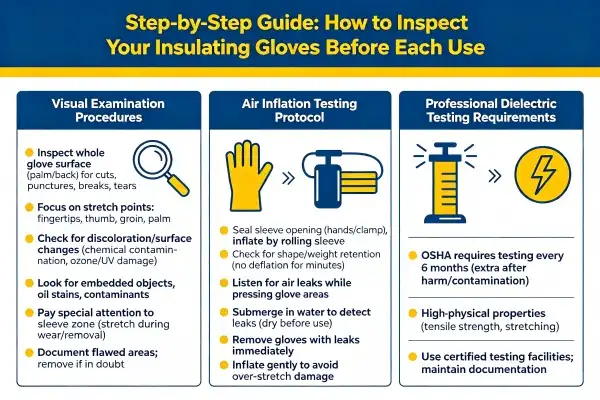
Visual Inspection: The First Line of Defense
Visual review speaks to the most prompt and cost-effective strategy for distinguishing compromised glove keenness, before electrical introduction happens. This preparatory appraisal can distinguish around 85% of potential disappointment modes that seem to result in electrical incidents.
Physical Damage Assessment
Systematic examination starts with extending the glove fabric to uncover micro-cracks, punctures, or implanted outside objects that might compromise cover properties. Pay specific consideration to push concentration regions counting fingertips, palm wrinkles, and sleeve locales, where rehashed flexing makes fabric weariness patterns.
Contamination and Chemical Exposure Signs
Chemical defilement from oils, solvents, or other mechanical substances can debase elastic compounds and diminish dielectric quality essentially. See for discoloration, surface tastelessness, or abnormal odors that show chemical assault on the elastic lattice. Such defilement regularly shows up as obscured patches or shiny ranges on something else, matte glove surfaces.
Age-Related Deterioration Indicators
Ozone presentation, bright radiation, and characteristic maturing forms show as surface crazing, loss of versatility, or lasting distortion. These debasement designs regularly start at high-stress zones and advance throughout the glove structure over time. Documentation of these perceptions underpins substitution planning and stock administration decisions.
Dielectric Testing Procedures to Ensure Integrity
Beyond visual appraisal, electrical testing gives quantitative confirmation of cover execution. Standard dielectric testing recognizes inside absconds imperceptible to visual assessment, while affirming continued compliance with security standards.
Air Inflation Test Method
The discussion expansion test offers a down-to-earth field strategy for recognizing spills and auxiliary shortcomings. Blow up the glove gradually until it comes to an adjusted shape without over-stretching, at that point submerge in water or apply a lathery arrangement to recognize and discuss spills through bubble arrangement. This test uncovers pin-holes, crease disappointments, or fabric corruption that seem to permit electrical current penetration.
Water Test Procedures
Fill the glove with water and watch for spillage over at least a 60-second period. Roll the sleeve to compress water against potential spill locales while analyzing all surfaces for moisture ingress. Water testing gives higher effectiveness than discussion testing for identifying micro-perforations that might elude visual detection.
Documentation and Record Keeping
Dielectric gloves assessment records, counting test dates, strategies utilized, comes about gotten, and reviewer distinguishing proof. These records back administrative compliance, guarantee claims, and support investigation for acquisition planning. Advanced documentation frameworks empower real-time following over numerous offices and gear inventories.
Proper Maintenance and Storage Practices for Prolonged Lifespan
Extending electrical security glove benefits life requires taught support conventions and controlled capacity situations. Appropriate care honours can double the life expectancy, while keeping up crest assurance execution throughout the benefit period.
Cleaning and Decontamination Methods
Clean gloves utilizing mild cleanser arrangements and tepid water instantly after utilize to expel contaminants some time recently they can enter the elastic framework. Dodge petroleum-based cleaners, fragrant solvents, or rough materials that might compromise separator properties. Exhaustive flushing evacuates cleaning buildups that might pull in extra contamination during storage.
Optimal Storage Conditions
Store electrical security gloves in temperature-controlled situations between 32°F and 70°F with relative mugginess underneath 80%. Coordinate daylight and ozone-generating hardware must be maintained at a strategic distance to avoid quickened maturing. Glove capacity packs or holders ought to permit easy circulation while securing against physical harm and defilement exposure.
Common Maintenance Errors to Avoid
Avoid collapsing or wrinkling gloves amid capacity, as changeless misshapening makes stretch concentration focuses that diminish shelf life. Never utilize talcum powder or other particulate materials for dampness assimilation, as these substances can make conductive pathways when combined with dampness. Normal revolution of stock guarantees indeed maturing over glove populations.
Advanced Considerations for Procurement and Usage
Strategic procurement of electrical insulating gloves involves balancing protection requirements, operational demands, and cost considerations across diverse industrial applications. Understanding material properties, supplier certifications, and customization options optimizes both safety outcomes and procurement efficiency.
Material Selection Criteria
Natural elastic compounds give prevalent dielectric properties and adaptability compared to engineered choices, making them the favored choice for most electrical applications. Be that as it may, engineered materials offer improved resistance to oils, ozone, and temperature extremes in specialized situations. Consider operational conditions counting chemical introduction, temperature ranges, and ability necessities when selecting suitable materials.
Supplier Certification and Quality Assurance
Verify provider compliance with pertinent security guidelines through current certification archives and testing reports. Trustworthy producers give group testing information, quality control strategies, and traceability documentation supporting item authenticity. Ask test items for assessment testing, and recently committed to large-volume purchases.
Cost-Benefit Analysis for Bulk Procurement
Volume purchasing typically reduces unit costs while ensuring consistent inventory availability. However, balance purchase quantities against shelf life limitations and storage requirements to prevent waste from expired products. Consider glove usage rates, testing frequencies, and replacement schedules when determining optimal order quantities.
Company Introduction and Product & Service Information
PPE MAX has served as a trusted gatekeeper of work environment security since 1956, building up ourselves as the biggest PPE producer in Northwest China. Our six decades of involvement in electrical cover security have prepared us with unparalleled ability in fabricating high-quality dielectric gloves that meet the thorough requests of mechanical applications worldwide.
Our comprehensive item incorporates electrical security gloves for all voltage classifications, from Course 00 through Course 4, guaranteeing total scope for any electrical work environment. Each glove experiences exacting quality control testing that surpasses universal benchmarks, giving the unwavering quality that procurement directors request for their workforce assurance programs.
We specialize in OEM associations and private name fabricating, empowering wholesalers and security gear companies to construct their brands with certainty. Our customization capabilities incorporate particular color coding, bundling arrangements, and testing documentation custom-made to territorial administrative requirements. These value-added administrations position us as more than a provider – we have become your vital accomplice in electrical safety.
Conclusion
Effective inspection of electrical insulating gloves, dielectric gloves visual examination, dielectric testing, proper maintenance protocols, and informed procurement strategies. Regular application of these inspection procedures protects workers from electrical hazards while optimizing equipment investments through extended service life and reduced replacement costs. The integration of visual assessment, performance testing, and maintenance discipline creates a comprehensive safety management system that meets both regulatory requirements and operational efficiency goals.
FAQ
How often should dielectric gloves be tested?
OSHA requires electrical testing of rubber insulating gloves every six months, with additional testing required after suspected damage or contamination exposure. High-use environments may benefit from more frequent testing intervals to ensure continued protection reliability.
Can damaged electrical safety gloves be repaired?
Electrical insulating gloves should never be repaired due to safety risks. Any damage compromises the insulation integrity and creates potential failure points under electrical stress. Damaged gloves must be removed from service immediately and replaced with certified new equipment.
What voltage rating do I need for my application?
Select glove voltage ratings based on the maximum system voltage present, not just the working voltage. Add appropriate safety margins according to NFPA 70E guidelines, typically requiring gloves rated at least twice the maximum system voltage for adequate protection.
How should gloves be stored to maximize lifespan?
Store electrical safety gloves in cool, dry environments away from direct sunlight, ozone sources, and temperature extremes. Use breathable storage containers that prevent physical damage while allowing air circulation to prevent moisture accumulation.
What's the difference between dielectric and regular rubber gloves?
Dielectric gloves undergo specialized manufacturing processes and testing to ensure electrical insulation properties, while regular rubber gloves focus on chemical or mechanical protection. Only certified electrical safety gloves protect against electrical hazards.
Partner with PPE MAX for Superior Electrical Protection Solutions
PPE MAX delivers industry-leading dielectric gloves backed by over six decades of manufacturing excellence and global safety expertise. Our certified electrical insulating gloves meet the demanding requirements of industrial safety distributors, procurement departments, and OEM partners seeking reliable protection solutions. Contact our technical team at marketing@ppemax.com to discuss bulk procurement options, customization capabilities, and comprehensive testing documentation that supports your safety compliance objectives. As a trusted dielectric gloves manufacturer serving 134 countries, we combine competitive pricing with warranty-backed quality assurance for long-term partnership success.
References
1. American Society for Testing and Materials. "Standard Specification for Rubber Insulating Gloves." ASTM D120-20, 2020.
2. International Electrotechnical Commission. "Live Working - Gloves of Insulating Material." IEC 60903:2019, International Standard.
3. Occupational Safety and Health Administration. "Electrical Safety Standards." OSHA 1910 Subpart S, United States Department of Labor.
4. National Fire Protection Association. "Standard for Electrical Safety in the Workplace." NFPA 70E-2021, Quincy, Massachusetts.
5. Institute of Electrical and Electronics Engineers. "Guide for Testing and Maintenance of Electrical Equipment." IEEE 62.2-2004, New York.
6. Canadian Standards Association. "Rubber Insulating Equipment for Electrical Workers." CSA Z462-18, Mississauga, Ontario.
Learn about our latest products and discounts through SMS or email