- English
- French
- German
- Portuguese
- Spanish
- Russian
- Japanese
- Korean
- Arabic
- Greek
- German
- Turkish
- Italian
- Danish
- Romanian
- Indonesian
- Czech
- Afrikaans
- Swedish
- Polish
- Basque
- Catalan
- Esperanto
- Hindi
- Lao
- Albanian
- Amharic
- Armenian
- Azerbaijani
- Belarusian
- Bengali
- Bosnian
- Bulgarian
- Cebuano
- Chichewa
- Corsican
- Croatian
- Dutch
- Estonian
- Filipino
- Finnish
- Frisian
- Galician
- Georgian
- Gujarati
- Haitian
- Hausa
- Hawaiian
- Hebrew
- Hmong
- Hungarian
- Icelandic
- Igbo
- Javanese
- Kannada
- Kazakh
- Khmer
- Kurdish
- Kyrgyz
- Latin
- Latvian
- Lithuanian
- Luxembou..
- Macedonian
- Malagasy
- Malay
- Malayalam
- Maltese
- Maori
- Marathi
- Mongolian
- Burmese
- Nepali
- Norwegian
- Pashto
- Persian
- Punjabi
- Serbian
- Sesotho
- Sinhala
- Slovak
- Slovenian
- Somali
- Samoan
- Scots Gaelic
- Shona
- Sindhi
- Sundanese
- Swahili
- Tajik
- Tamil
- Telugu
- Thai
- Ukrainian
- Urdu
- Uzbek
- Vietnamese
- Welsh
- Xhosa
- Yiddish
- Yoruba
- Zulu
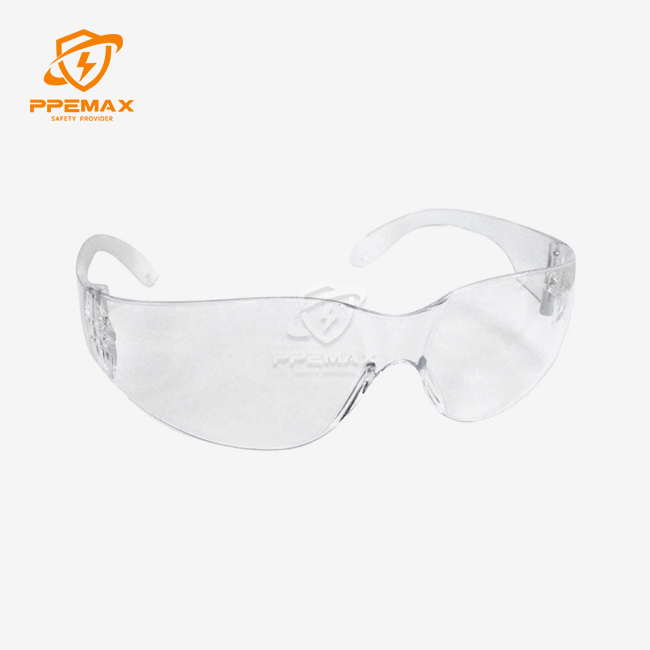
Welding Safety Glasses
Material: PC lens
Packaging: 1 pair/opp bag, 12 pairs/inner box, 300 pairs/outer box
Function: anti-fog, anti-impact
Standard: EN166
Welding Safety Glasses for Industrial & Workshop Use — Built for Real Hazard Protection
Xi'An PPE MAX Co., Ltd has made eye protection for the trade since 1956. Our Welding Safety Glasses (Model SG-71003) come with polycarbonate lenses. They block UV and IR radiation and they hold EN166 certification. Fog resistance and impact resistance sit inside the lens system itself. In high-heat work environments those two specs come up more often than any others. Each outer carton holds 300 pairs. For B2B buyers who need certified eye protection at volume, this model fits the job.
What Are This Product?
This product are specialized PPE. They guard the eyes against the risks that come with welding, brazing, cutting, and soldering. Standard safety eyewear is not built for this work. Lenses here are formulated for one purpose: filtering harmful non-ionizing radiation. The UV and IR wavelengths thrown off by thermal processes are the main target.
On the job, they cover four main eye hazards:
- Photokeratitis (Arc Eye): Strong UV light makes the cornea swell and become painful. The right lens filter blocks the wavelengths that cause this.
- Retinal and Corneal Burns: IR filters lower the heat that reaches the eye. That heat can cause lasting damage, and cataracts are one example.
- High-Velocity Impact: Sparks can strike the lens. Spatter and slag can too. A lens tested to high-velocity impact standards stops them.
- Optical Fatigue: Clear lenses cut distortion. Eye strain drops too when the job needs a steady hand, like plasma cutting or oxy-acetylene welding.

Standard Specifications
| Parameter | Details |
|---|---|
| Model | SG-71003 |
| Lens Material | Polycarbonate (PC) |
| Function | Anti-fog, Anti-impact |
| Standard | EN166 |
| Packing Unit | 1 pair / OPP bag |
| Inner Box | 12 pairs |
| Outer Box | 300 pairs |
Features
PC Lens with Natural UV Blocking
Injection-molded polycarbonate provides high impact resistance and blocks UV at the material level — no coating is required for basic UV filtration. Specialized absorbers added to the resin matrix handle IR wavelengths without reducing general visibility.
Wrap-Around Geometry
The frame uses an 8–10 base curve for peripheral coverage, blocking stray radiation from the sides rather than only what is directly in front of the wearer.
Surface Coatings
- Hydrophobic and oleophobic coating resists smudging and fingerprints
- Permanent hydrophilic anti-fog bonding verified under EN166 'N' mark testing — absorbs moisture rather than simply repelling it
- Hard coating resists scratching from abrasive welding dust
Passive Filtration Range
Lens shade options cover DIN scale 1.7 to 5.0. Shade 3.0 and 5.0 apply to gas welding and cutting. Lighter shades (1.7–3.0) are appropriate for helpers and supervisors managing exposure to welder's flash.
Performance and Certifications
EN166 Certified
The SG-71003 meets EN166, Europe's standard for personal eye protection. The 'N' mark on the lens confirms anti-fog performance under standardized test conditions.
Optical Welding Safety Glasses Class 1
Every lens gets checked for refractive distortion. That check covers astigmatism and spherical power errors. Meet Optical Class 1 and the lens geometry adds no distortion of the kind that brings on headaches or throws off depth perception across long stretches of precision work.
Impact Resistance
Normal QC testing covers two impact checks: a drop ball test and a steel ball test. After the hit, the lens still has to sit in the frame. Nothing may break away from the surface that faces the eye.
Flammability
Testing of the frame and lens materials happens at 650°C. Once the heat source is taken away, neither part ignites or keeps burning.
Applications for Welding Safety Glasses
Oxy-Fuel Cutting and Torch Brazing
Oxy-acetylene cutting gives off a lot of IR and UV. That is true in shipyards and in structural steel fabrication shops. The IR filtration needed to guard against thermal eye damage over the long term comes from Shade 5.0. At the same time the work area stays visible. Frame thermal stability matters in these conditions too.
Welding Inspection and Safety Supervision
Quality assurance personnel on the shop floor are exposed to indirect arc flash from nearby stations. Shade 1.7–3.0 filters stray UV without darkening the field of view enough to create trip hazards, while still offering impact protection from grinding debris.
Automotive Repair and Plasma Cutting
Auto-body shops and plasma cutter operators require Shade 5 with high contrast. Over-the-glass (OTG) designs can be fitted over prescription eyewear. The lenses are tested to handle high-velocity micro-particles from plasma gouging.
Why Choose PPE MAX?
PPE MAX has manufactured PPE since 1956. That production history means our processes and quality controls are built around the real requirements of safety purchasers and industrial end users — consistent product quality and reliable supply for volume orders.
We supply buyers across heavy industry, automotive, and construction. Orders are packed 300 pairs per carton and are ready for standard B2B fulfillment. Custom packaging is available for private-label or branded requirements.

Certifications
- EN166: European standard for personal eye protection, confirmed on the SG-71003
- EN166 'N' marking: Anti-fog lens performance verified under standardized test conditions
Packing
| Level | Quantity |
|---|---|
| OPP Bag | 1 pair |
| Inner Box | 12 pairs |
| Outer Box | 300 pairs |
Standard export packaging applies to all shipments. Custom labeling is available for Welding Safety Glasses on request.
After-Sales Support
- Quality issues reported within the applicable claim period are handled with replacement or credit on a case-by-case basis
- EN166 test documentation is available upon request
- Dedicated account support is available for bulk buyers and safety distributors

FAQ
Q: Can these glasses be used for MIG, TIG, or stick (electric arc) welding?
A: No. The SG-71003 is rated for gas welding, cutting, and brazing. Electric arc welding requires Shade 9–14. Shade 5 lenses do not provide adequate protection against the radiation levels produced by electric arc processes.
Q: How do I read the shade markings on welding filter lenses?
A: Under ANSI Z87.1, the mark to look for is the 'W' followed by the shade number (e.g., W5). Impact rating is confirmed by the '+' symbol. For EN169/EN166, check the scale number and the transmittance rating. Certified IR protection is not there when a lens carries only the 'S' (Special Purpose) mark.
Q: Could a pair of dark sunglasses stand in for proper welding eye protection?
A: No. Sunglasses cut down visible light and the UV around you. That is what they are built for. The filtration needed to stop the strong IR radiation that welding gives off is not in them. Swap welding glasses for sunglasses and you put your eyes at real risk of injury.
Q: When should welding glasses be swapped out for a new pair?
A: Check the lenses on a regular basis. Look for pitting, deep scratches, or heat deformation. Once the coating is damaged, or the frame turns brittle, impact and filtration performance can drop. For daily users, the guideline the industry cites most often is replacement every 6–12 months.
Q: Why do certain anti-fog coatings stop working in welding settings?
A: Under high heat and heavy sweating, standard hydrophobic coatings can break down. The SG-71003 carries a hydrophilic anti-fog coating that is permanently bonded. Moisture gets absorbed instead of being pushed away. That is the very behaviour the EN166 'N' mark test checks.
Q: How do Shade 3.0 and Shade 5.0 differ when you gas weld?
A: Torch brazing and light cutting give off fairly low UV and IR, so Shade 3.0 usually covers those jobs. For oxy-acetylene cutting and heavier gas welding, go with Shade 5.0. Without proper filtration at that level, the IR exposure can damage the retina or the cornea.
Contact Us
For orders, samples, or product documentation, reach us at bettybing@ppemax.com. Xi'An PPE MAX Co., Ltd welcomes inquiries about Welding Safety Glasses from distributors and industrial buyers.
Learn about our latest products and discounts through SMS or email