- English
- French
- German
- Portuguese
- Spanish
- Russian
- Japanese
- Korean
- Arabic
- Greek
- German
- Turkish
- Italian
- Danish
- Romanian
- Indonesian
- Czech
- Afrikaans
- Swedish
- Polish
- Basque
- Catalan
- Esperanto
- Hindi
- Lao
- Albanian
- Amharic
- Armenian
- Azerbaijani
- Belarusian
- Bengali
- Bosnian
- Bulgarian
- Cebuano
- Chichewa
- Corsican
- Croatian
- Dutch
- Estonian
- Filipino
- Finnish
- Frisian
- Galician
- Georgian
- Gujarati
- Haitian
- Hausa
- Hawaiian
- Hebrew
- Hmong
- Hungarian
- Icelandic
- Igbo
- Javanese
- Kannada
- Kazakh
- Khmer
- Kurdish
- Kyrgyz
- Latin
- Latvian
- Lithuanian
- Luxembou..
- Macedonian
- Malagasy
- Malay
- Malayalam
- Maltese
- Maori
- Marathi
- Mongolian
- Burmese
- Nepali
- Norwegian
- Pashto
- Persian
- Punjabi
- Serbian
- Sesotho
- Sinhala
- Slovak
- Slovenian
- Somali
- Samoan
- Scots Gaelic
- Shona
- Sindhi
- Sundanese
- Swahili
- Tajik
- Tamil
- Telugu
- Thai
- Ukrainian
- Urdu
- Uzbek
- Vietnamese
- Welsh
- Xhosa
- Yiddish
- Yoruba
- Zulu
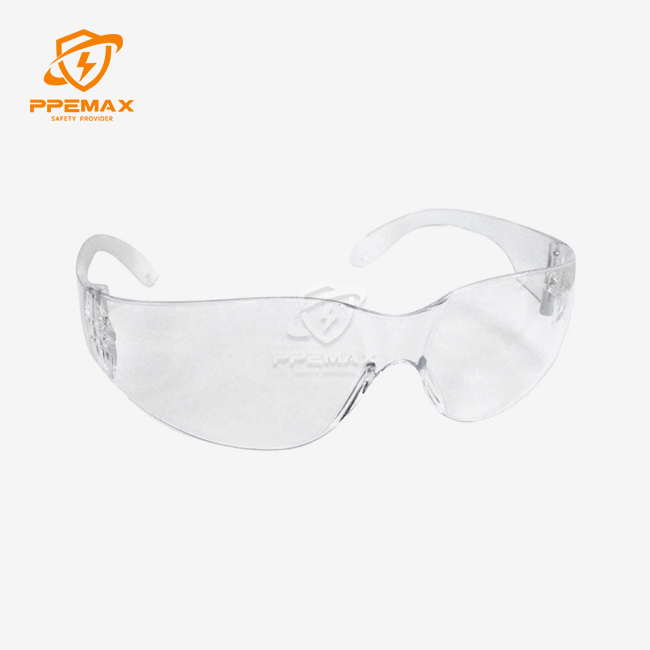
Laboratory Safety Glasses
Material: PC lens
Packaging: 1 pair/opp bag, 12 pairs/inner box, 300 pairs/outer box
Function: anti-fog, anti-impact
Standard:EN166
Laboratory Safety Glasses with Anti-Fog & Anti-Impact PC Lens | EN166 Certified
Buyers in pharma, chemical, and academic labs around the world get laboratory safety glasses from Xi'An PPE MAX Co., Ltd. The SG-71009 model carries optical-grade polycarbonate lenses. They resist fog. Impact does not crack them either, and they meet EN166 European standards. Packing starts with one pair in an OPP bag. Inner boxes hold 12 pairs, and an outer carton holds 300. That layout suits B2B procurement. PPE MAX has built personal protective equipment since 1956. Distributors come to us when quality has to stay consistent and be easy to verify. So do procurement teams and safety managers.
Standard Specifications
| Parameter | Details |
|---|---|
| Model | SG-71009 |
| Lens Material | Optical-grade Polycarbonate (PC) |
| Function | Anti-fog, Anti-impact |
| Standard | EN166 |
| UV Protection | Blocks 99.9% UVA/UVB (up to 385–400 nm) |
| Lens Hardness | 3H–5H (siloxane hard coating) |
| Packaging | 1 pair/OPP bag, 12 pairs/inner box, 300 pairs/outer carton |

Product Features
The SG-71009 uses optical-grade PC for its lenses. Strength is why that material got the pick. It stays light as well, and it absorbs UV on its own.
- Anti-fog coating: A bonded treatment sits on the surface and stays there, so the lenses keep clear. Put them in steam and no fog shows up for 8 seconds or more. That meets the EN166 N standard
- Anti-impact protection: The lens is made of PC. That build meets the high-velocity impact requirement specified under EN166
- Hard coating (anti-scratch): Siloxane-based coating cured to 3H–5H hardness, extending lens service life in abrasive environments
- Wraparound geometry: Provides lateral coverage to reduce gap-side exposure to vapors and liquid splash
- Lightweight frame: Suitable for extended wear during precision or repetitive laboratory tasks
Why Polycarbonate Matters in Lab Environments
On its own, polycarbonate takes in 99.9% of UVA/UVB radiation. You need no extra tint for that. A coating is not needed either. UV protection comes from the lens material alone. In rooms with UV-active equipment, that counts for something.
Anti-fog treatment on the SG-71009 is permanent. Regular wear will not break it down. Spray-on coatings wear off, this one does not. Humid cleanrooms are one place where that counts. So are labs next to autoclaves, or rooms where the temperature shifts a lot.
Stress builds up on the surface when scratches appear. That stress gets reduced by the hard coating layer. Impact resistance can drop when the lens has deep pitting. So pitting counts as a real criterion in scheduled lens replacement programs for safety eyewear.
Applications
Pharmaceutical R&D and Cleanrooms
Sealed designs cut down on particles shed from the eyewear. They also help meet impact protection requirements in controlled environments.
Chemical Synthesis and Wet Chemistry Labs
A wraparound frame blocks corrosive vapors. Liquid splash cannot get in either. Both count when splash and dust exposure ratings are written into the spec. That matters more if you handle VOCs or run exothermic reactions.
Academic and Educational Laboratory Safety Glasses Laboratories
On a busy site, eyewear takes a beating from constant handling. Every shift puts it through that test. A few of these styles fit OTG (Over-The-Glass) setups. So people who wear prescription frames can still put them on.

Quality Control
Each quality check on the SG-71009 runs to set testing protocols. Every one of them gets written down.
- Optical clarity: A Lensometer reads Refractive Power. Astigmatism and Prismatic Power Deviation come from that same unit. Outside ±0.06 diopter, a result fails.
- High-mass impact: From 127 cm, a 500 g pointed projectile is dropped. The lens must not fracture or detach.
- Anti-fog durability: The lens goes into distilled water at the start. It is then held over steam. Clear vision has to last 8 seconds or more (EN166 N).
- Chemical resistance: We wipe the lenses with isopropanol and acetone. After that we look for crazing or any structural weakening in the polymer matrix. Nothing of that kind is allowed.

Certifications
The SG-71009 meets EN166 European standards for personal eye protection. Certification documentation is available upon request for compliance and procurement purposes.
Packing of Laboratory Safety Glasses
| Level | Details |
|---|---|
| Unit | 1 pair per OPP bag |
| Inner Box | 12 pairs |
| Outer Carton | 300 pairs |
Carton configuration is designed for safe transit and straightforward inventory management at distribution or facility level.

After-Sales Support
Our team handles post-shipment requirements including:
- Replacement or exchange for verified product defects
- Compliance and certification paperwork is available when you ask for it
- Which lens fits your job and how to clean it, that is what we advise on. You also hear from us when it is time for a replacement
- Support for bulk reorders and volume-specific procurement inquiries
Exhibitions and Factory Visits
PPE MAX shows up at safety and occupational health trade fairs worldwide. Would you like to see the Laboratory Safety Glasses factory? Contact us first, then we will arrange a time.


FAQ
Q: Should I pick acetate lenses or polycarbonate ones?
A: If impact is what worries you most, take PC lenses. Think of flying debris, or anything that can strike the eye fast. Tensile strength on this material is high, and it passes the standards for high-velocity impact. Now suppose the danger is a splash of a strong organic solvent. Against those specific agents, acetate comes off better.
Q: Will these glasses protect against UV?
A: Standard PC lenses block 99.9% of UVA/UVB radiation. A few UV sources put out very high intensity. Sterilization lamps are one example, and transilluminators are another. Check the filter lens specs first if you work with those. Standard impact-rated lenses were never built as UV filter lenses for that kind of source.
Q: How do lenses get cleaned, and why does anti-fog coating stop working?
A: Alcohol wipes wear down hydrophilic anti-fog coatings over time. Warm water and mild soap help the coating keep working. Use that method on this product. Another option is a lens cleaner with no alcohol.
Q: When should lenses be replaced?
A: Swap the lenses out if you see deep pitting or scratches. Those spots can start a stress fracture. Another sign is yellowing you can see, which comes from UV breakdown. Also replace them when the frame stops holding a snug fit.
Q: Do OTG safety glasses meet impact protection standards?
A: OTG eyewear can meet impact standards. It has to be certified and marked to do so. The OTG glasses act as the main impact shield. Your prescription glasses underneath have no safety rating unless they were certified for it.
Q: What is the minimum order quantity?
A: Our standard outer carton holds 300 pairs. Contact us direct for MOQ details. We can also go over pricing tiers and lead times. Both depend on your order volume.
Contact Us
Need a sample? Want to talk about Laboratory Safety Glasses procurement? Email bettybing@ppemax.com. Distributors, procurement teams, and safety managers are all welcome to reach out.
Learn about our latest products and discounts through SMS or email