- English
- French
- German
- Portuguese
- Spanish
- Russian
- Japanese
- Korean
- Arabic
- Greek
- German
- Turkish
- Italian
- Danish
- Romanian
- Indonesian
- Czech
- Afrikaans
- Swedish
- Polish
- Basque
- Catalan
- Esperanto
- Hindi
- Lao
- Albanian
- Amharic
- Armenian
- Azerbaijani
- Belarusian
- Bengali
- Bosnian
- Bulgarian
- Cebuano
- Chichewa
- Corsican
- Croatian
- Dutch
- Estonian
- Filipino
- Finnish
- Frisian
- Galician
- Georgian
- Gujarati
- Haitian
- Hausa
- Hawaiian
- Hebrew
- Hmong
- Hungarian
- Icelandic
- Igbo
- Javanese
- Kannada
- Kazakh
- Khmer
- Kurdish
- Kyrgyz
- Latin
- Latvian
- Lithuanian
- Luxembou..
- Macedonian
- Malagasy
- Malay
- Malayalam
- Maltese
- Maori
- Marathi
- Mongolian
- Burmese
- Nepali
- Norwegian
- Pashto
- Persian
- Punjabi
- Serbian
- Sesotho
- Sinhala
- Slovak
- Slovenian
- Somali
- Samoan
- Scots Gaelic
- Shona
- Sindhi
- Sundanese
- Swahili
- Tajik
- Tamil
- Telugu
- Thai
- Ukrainian
- Urdu
- Uzbek
- Vietnamese
- Welsh
- Xhosa
- Yiddish
- Yoruba
- Zulu
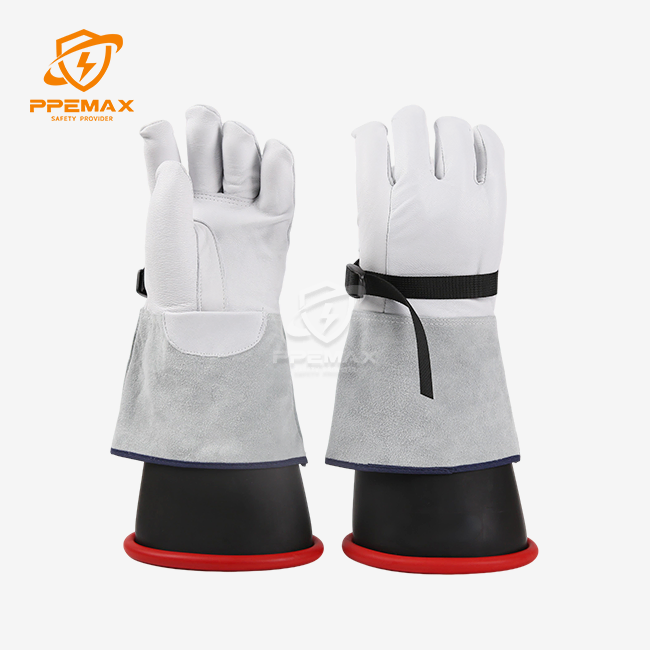
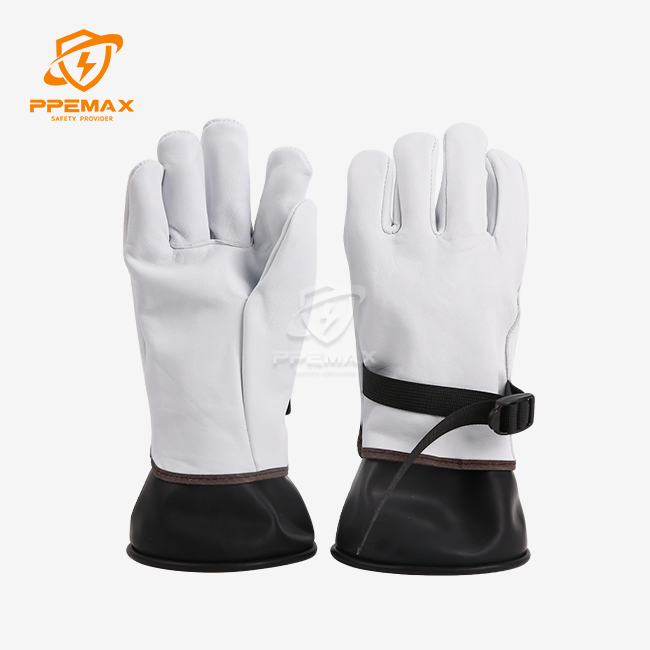
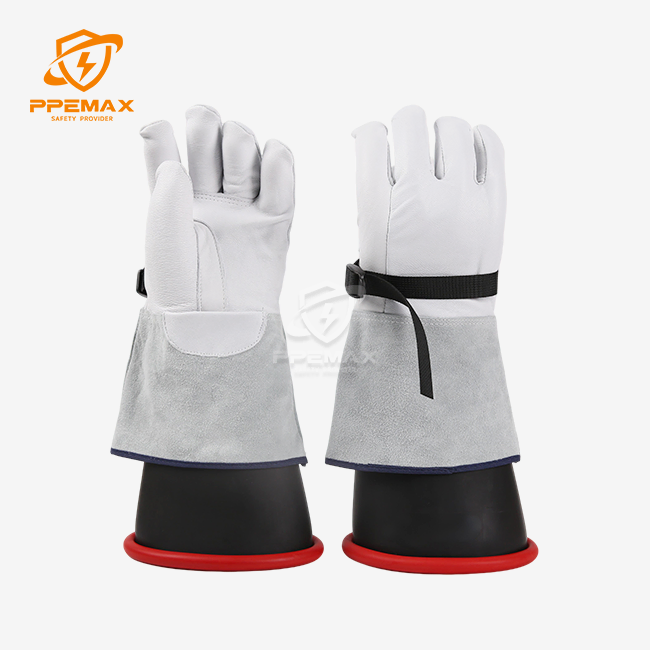
Class 00 Insulating Gloves Set
1 pair cotton gloves
1 pair class 00 insulating gloves
1 pair leather gloves
1pcs Canvas bag
Class 00 Insulating Gloves Set — 500V AC Rated, Three-Component Kit for Low-Voltage Electrical Work
Xi'An PPE MAX Co., Ltd has built electrical safety PPE since 1956. Our Class 00 Insulating Gloves Set ships as a kit with three parts. Ratings reach up to 500V AC / 750V DC. Inside every set you get insulating gloves, made from natural rubber or EPDM, along with leather protectors, cotton liners and a canvas storage bag. One unit is all an electrical technician needs to buy. The whole job stays covered. This kit meets ASTM D120. ASTM F696 and IEC 60903 are satisfied as well. Nothing has to be sourced piece by piece.

What Is This Product?
This product is a Personal Protective Equipment kit. Low-voltage work is where electrical workers reach for it, up to 500V AC or 750V DC. Rubber gloves on their own carry a well-documented limit, and the set format answers that. Dielectric protection from rubber is strong. The material is fragile, though. Punctures and cuts get down to the rubber layer during hands-on tasks. Abrasion wears it down as well. All of that happens when leather protectors are missing. Four components then work as one system:
- Dielectric rubber insulating gloves (ASTM D120 / IEC 60903) to block electrical current
- Leather protector gloves (ASTM F696) that shield the rubber layer against mechanical damage
- Cotton liner gloves keep hands comfortable, and they deal with moisture when you wear the gloves for long stretches
- Canvas storage bag for transport and storage between re-testing intervals

Standard Specifications
| Parameter | Detail |
|---|---|
| Voltage Class | Class 00 (Beige Label) |
| Max Use Voltage | 500V AC / 750V DC |
| Proof Test Voltage | 2,500V AC / 10,000V DC |
| Rubber Max Thickness | 0.75 mm (0.030 inches) |
| Material Options | Type I: Natural Rubber / Type II: Salcor/EPDM |
| Applicable Standards | ASTM D120, ASTM F696, IEC 60903 |
| Set Contents | 1 pair insulating gloves + 1 pair leather protectors + 1 pair cotton gloves + 1 canvas bag |
| Leather Cuff Clearance | Rubber extends min. 13 mm (0.5 inches) beyond leather cuff |

Key Features
0.75 mm Maximum Rubber Thickness
At the bottom of the ASTM D120 ladder you find Class 00. Of all the rated classes, this one is the thinnest. Thinner material gives your hands more room to move. That counts on jobs where small fasteners, wire connectors, or meter parts pass through your fingers for hours at a time.
Two Rubber Material Options
Natural rubber (Type I) stretches, and your sense of touch stays sharp. Precise indoor work suits it well. Ozone and UV do less damage to Type II Salcor/EPDM. Outdoor utility crews get a sound choice out of that.
Leather Cuff Clearance Design
The rubber glove cuff extends at least 13 mm (0.5 inches) beyond the leather protector edge. This clearance prevents electrical tracking or creepage along the cuff surface during live work — a requirement specified under both ASTM and IEC standards.
Beige Label Color Coding
A beige label marks Class 00 gloves. That label comes from the ASTM D120 color-coding system. Before every task, workers and site supervisors can read the voltage class of the Class 00 Insulating Gloves Set off it at a glance.

Applications
Electric Vehicle and Hybrid Maintenance
Tight chassis spaces are where 12V–48V battery management systems and auxiliary circuits come apart. Busbars sit close by. Touching one by accident is a real risk.
Smart Meter Replacement and Residential Utility Work
Meter change-outs on 120V/240V systems. In these jobs, leather protectors cut down the abrasion that metal lock rings and meter cans cause.
Industrial Control Panel Wiring
Live troubleshooting of 24V DC to 480V AC PLC cabinets. That work includes continuity testing near sharp DIN rails in manufacturing environments. Note: transient voltage spikes worry some teams on 480V circuits. For that reason, certain safety programs call for Class 0 (1,000V rated) gloves, which add to the safety margin.

Certifications for the Class 00 Insulating Gloves Set
- ASTM D120: Rubber Insulating Gloves
- ASTM F696: Leather Protectors for Rubber Insulating Gloves
- IEC 60903: Gloves of Insulating Material for Live Working

Packing
Each Class 00 Insulating Gloves Set ships in a canvas storage bag containing all four components. Sets are packed to avoid compression of the rubber gloves during transit. Custom outer carton labeling and bulk pallet configurations are available for large orders.
After-Sales Support
- Product documentation and test records provided with each order
- Technical guidance on re-testing schedules (an accredited lab has to re-test rubber gloves electrically every 6 months)
- Get replacement parts for leather protectors and cotton liners
- Pre-order consultation to help match set configuration to your specific application
About Xi'An PPE MAX Co., Ltd
Electrical safety equipment has come from Xi'An PPE MAX Co., Ltd since 1956. Each rubber glove in our sets gets a 2,500V AC proof voltage test. That test happens before the glove leaves the facility. Quality control protocols on the line match ASTM and IEC standards. Procurement teams with structured safety programs pick their own sizing, labeling, and packaging.


FAQ
Q: Can the rubber glove be used without the leather protector?
A: No. ASTM F496 says rubber insulating gloves must be worn with leather protectors for energized work. The leather protectors stop mechanical damage to the rubber layer.
Q: How often must the rubber gloves be re-tested?
A: Rubber insulating gloves need electrical re-testing every 6 months. An accredited lab has to do the work. If a set stays unopened and unused, you get a 12-month shelf life before that first re-test is due.
Q: How much cuff clearance do Class 00 leather protectors need?
A: Past the leather protector cuff, the rubber glove has to reach at least 13 mm (0.5 inches). That bit of extra length stops electrical tracking from creeping along the cuff surface.
Q: Does this set work on 480V industrial circuits?
A: Class 00 has a top rating of 500V AC. A 480V circuit comes close to that line. On industrial circuits, short voltage spikes can go past the rated voltage for a moment. So some safety programs ask for Class 0 gloves (1,000V rated) on 480V work. That keeps a wider safety margin.
Q: How should you go about cleaning the rubber gloves?
A: Warm water, no hotter than 120°F, plus a mild soap with no petroleum in it. Wash the gloves in that. Then let them air dry. Keep the sun off them while they dry. Leather protectors should never go into a washing machine. Wipe those with a leather wipe made for the job. The hide goes stiff when it takes in too much moisture.
Q: What sets Type I rubber apart from Type II?
A: Type I natural rubber has strong stretch and a good touch feel. It is the usual pick for precise indoor work. Type II Salcor/EPDM resists ozone and UV light better. Outdoor utility jobs are where it fits.
Contact Us
For orders, technical questions, or custom quotes, contact our team directly about the Class 00 Insulating Gloves Set at bettybing@ppemax.com.
Learn about our latest products and discounts through SMS or email