- English
- French
- German
- Portuguese
- Spanish
- Russian
- Japanese
- Korean
- Arabic
- Greek
- German
- Turkish
- Italian
- Danish
- Romanian
- Indonesian
- Czech
- Afrikaans
- Swedish
- Polish
- Basque
- Catalan
- Esperanto
- Hindi
- Lao
- Albanian
- Amharic
- Armenian
- Azerbaijani
- Belarusian
- Bengali
- Bosnian
- Bulgarian
- Cebuano
- Chichewa
- Corsican
- Croatian
- Dutch
- Estonian
- Filipino
- Finnish
- Frisian
- Galician
- Georgian
- Gujarati
- Haitian
- Hausa
- Hawaiian
- Hebrew
- Hmong
- Hungarian
- Icelandic
- Igbo
- Javanese
- Kannada
- Kazakh
- Khmer
- Kurdish
- Kyrgyz
- Latin
- Latvian
- Lithuanian
- Luxembou..
- Macedonian
- Malagasy
- Malay
- Malayalam
- Maltese
- Maori
- Marathi
- Mongolian
- Burmese
- Nepali
- Norwegian
- Pashto
- Persian
- Punjabi
- Serbian
- Sesotho
- Sinhala
- Slovak
- Slovenian
- Somali
- Samoan
- Scots Gaelic
- Shona
- Sindhi
- Sundanese
- Swahili
- Tajik
- Tamil
- Telugu
- Thai
- Ukrainian
- Urdu
- Uzbek
- Vietnamese
- Welsh
- Xhosa
- Yiddish
- Yoruba
- Zulu
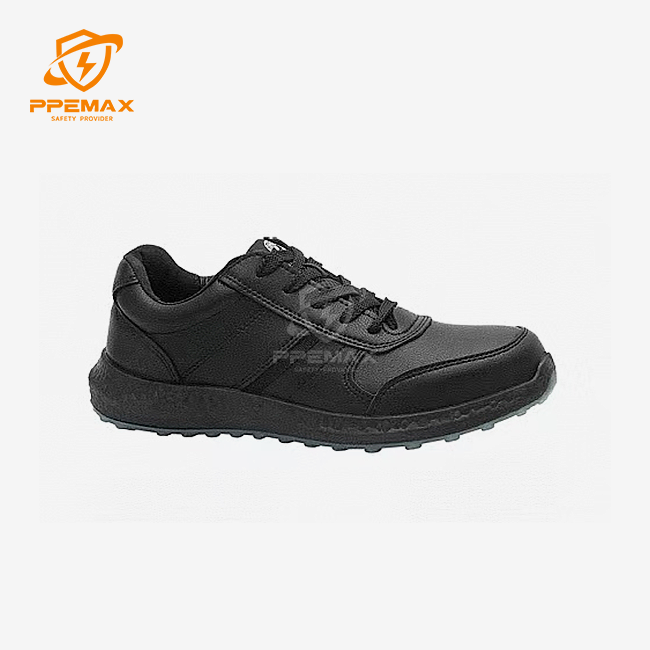
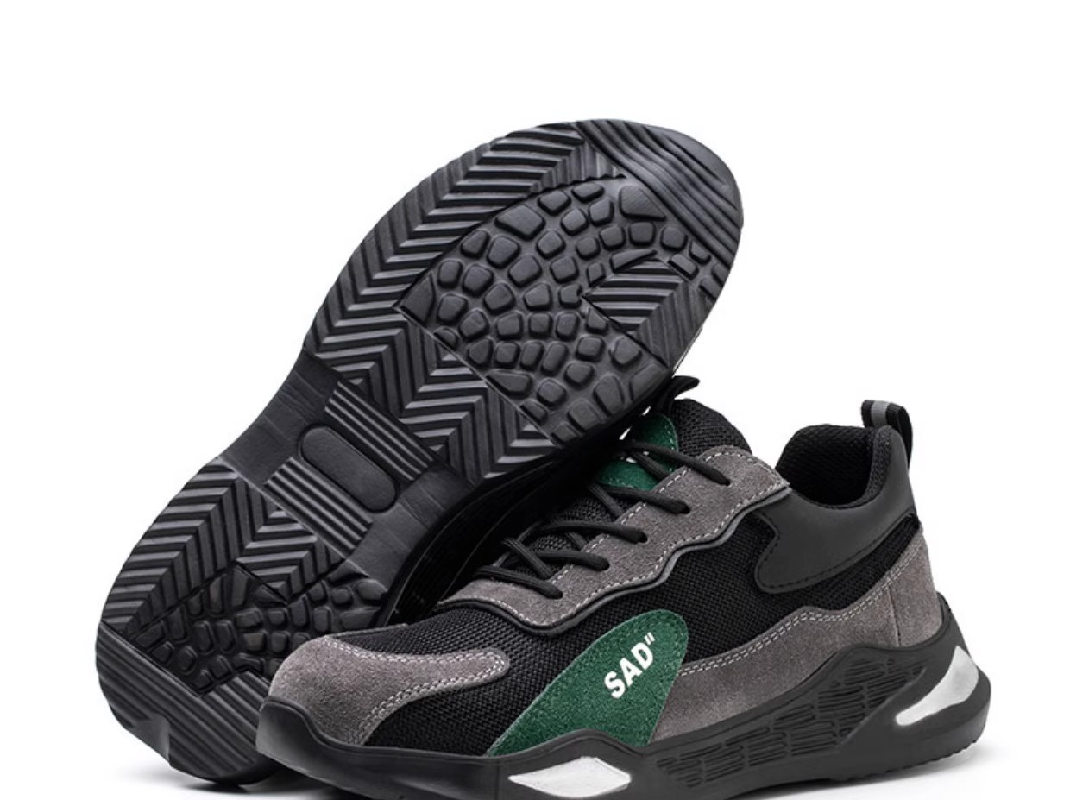
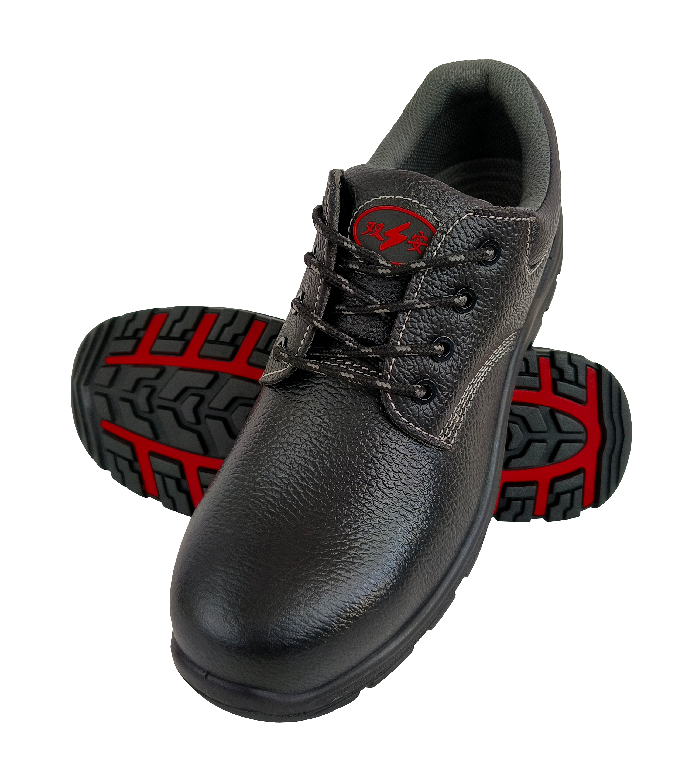
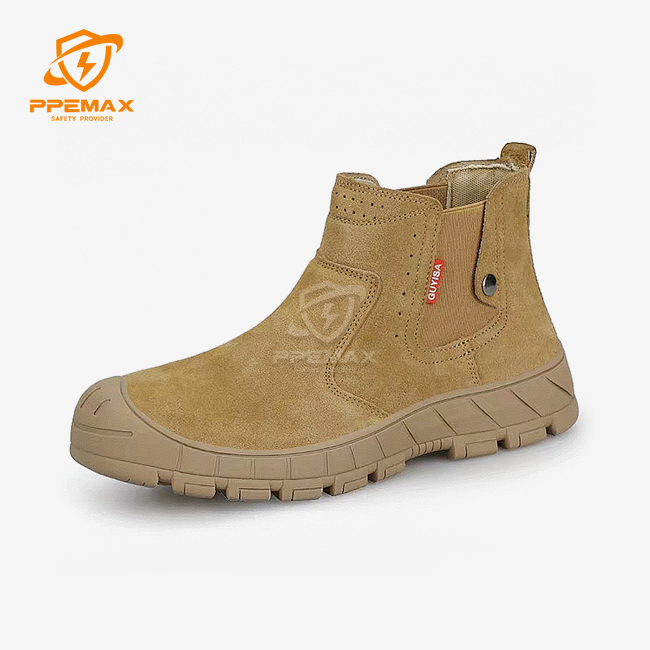
Anti-Smash And Anti-Puncture Safety Shoes
Steel toe leather anti-smash safety shoes
Anti-Smash And Anti-Puncture Safety Shoes for Industrial Protection — Steel Toe, Dual-Hazard Defense
The Anti-Smash And Anti-Puncture Safety Shoes from Xi'An PPE MAX Co., Ltd are built to meet EN ISO 20345 and ASTM F2413 standards. Each pair carries a toe cap rated at 200J of impact resistance and 15kN of compression load. Underneath sits a puncture-resistant midsole that withstands 1,100 Newtons of penetration force. Toe versions come in steel, aluminum alloy, or composite. Midsoles come in steel plate or Kevlar. Construction crews wear them. So do manufacturing plants and logistics teams, where the danger arrives from above and from the floor at the same time.

What Are This Product?
This product are a special group of PPE footwear. They deal with two serious site hazards at the same time. One is a vertical impact force from something falling above. The other is an upward puncture from sharp debris below.
A protective toe cap handles falling steel beams, pallets, and machinery parts. A puncture-resistant midsole stops rusty nails from pushing up through the sole. Screw shards and jagged scrap metal get the same treatment. Those are two separate systems. Together they give dual-hazard protection, and standard footwear cannot deliver that.

Standard Specifications
| Parameter | Specification |
|---|---|
| Impact Resistance (Toe Cap) | 200 Joules |
| Compression Load (Toe Cap) | 15 kN |
| Minimum Internal Clearance Post-Impact | 14 mm |
| Puncture Resistance (Midsole) | 1,100 Newtons |
| Steel Midsole Plate Thickness | 0.4 – 0.5 mm |
| Anti-Static Resistance | 0.1 MΩ – 1,000 MΩ |
| Toe Cap Material Options | Carbon Steel / Aluminum Alloy / Composite |
| Midsole Options | Steel Plate / Aramid Fiber (Kevlar) |
| Outsole Material | Dual-Density PU/PU or Rubber (HRO/SRC) |
| Applicable Standards | EN ISO 20345, ASTM F2413 |
Features
Dual-layer protection architecture. Each layer does its own job. One risk is handled by the toe cap, the other by the midsole. Both kinds of cover arrive at once, and neither has to be traded away for the other.
Choice of midsole technology. Steel plates provide reliable resistance against thin sharp objects such as needles. Kevlar (Aramid Fiber) covers 100% of the footbed area — steel plates often leave edge gaps — and is lighter and thermally insulating by comparison.
Multiple toe cap materials. Carbon steel brings solid structure and costs less. Weight is the reason to pick aluminum alloy, since it brings the total down. Composite (fiberglass or plastic) holds no metal at all, so it fits electrical work where EH-rated footwear is required.
Durable outsole options. Dual-density PU/PU outsoles soak up shock and hold up through daily wear. Tougher site conditions ask for more, so rubber outsoles carry HRO heat resistance and SRC slip resistance ratings.
Chemical and physical resistance. Models that fit this use stand up to fuel oil, acids, and alkalis. That makes them a workable pick for chemical plants and for workshop floors that get oily.

Applications
Construction & Demolition Sites
Bricks fall. Heavy tools fall. Structural debris comes down from above too. Underfoot there is exposed rebar, nails left in formwork, and sharp bits of concrete. No other site hits you with impact and puncture danger at the same moment as often as this one.
Heavy Manufacturing & Metal Stamping
Chassis parts bring heavy crush risks in car and machinery plants. Metal swarf on the floor adds a second problem. One pair of Anti-Smash And Anti-Puncture Safety Shoes covers both hazards.
Waste Management & Recycling Logistics
Glass splinters show up on a recycling line. So do hypodermic needles and jagged scrap. Conditions change fast, and nobody can predict what comes next. A puncture-resistant midsole gives workers a key safety barrier here. Heavy bales and forklifts bring their own risks, and the toe cap guards against those.


Certifications
Our safety shoes are produced and tested in compliance with:
- EN ISO 20345 (safety footwear standard used in Europe)
- ASTM F2413 (the American standard for protective footwear)
The tongue label on each pair states the applicable standard and protection category — for example, S1P indicates anti-smash and anti-puncture protection; S3 adds water resistance and cleated outsoles. Full certification documentation is available upon request for procurement and compliance purposes.

Quality Control for Anti-Smash And Anti-Puncture Safety Shoes
Our QC process follows EN ISO 20345 test protocols across five key areas:
- Impact Resistance Test: A 20kg striker gets dropped from a set height. After the hit, the toe cap still has to keep at least 14mm of clearance inside.
- Penetration Force Test: A nail goes in at 10mm/min. The midsole has to hold up and stay unbroken at 1,100N of force.
- Flexing Resistance: Over 30,000 flexion cycles are run. This shows the midsole and plate keep their structure as time goes on.
- Interlayer Bond Strength: We check how well the upper sticks to the midsole and outsole. Wet and oily surfaces are part of the test.
- Corrosion Resistance: Metal parts are put in salt-heavy conditions. We confirm they show no rust and keep their structure.

Why Work With Us
Xi'An PPE MAX Co., Ltd makes Anti-Smash And Anti-Puncture Safety Shoes and protective footwear itself. Our operations began in 1956. Construction and heavy manufacturing buyers come to us for B2B supply. Recycling and logistics firms do the same. They get factory-direct access and full in-house quality control.
- Each product is tested against EN ISO 20345 and ASTM F2413 international standards
- OEM/ODM work stays flexible. Logos can change. So can labels and specs.
- A B2B account contact supports you. Help runs from the first inquiry to after-sales follow-up.
- Buyers can come and visit the factory. You get to see how we produce and how we run QC, right there on site.


FAQ
Q: How do steel plate midsoles differ from Kevlar ones?
A: A steel plate costs less. It stops thin sharp things like needles. Kevlar weighs less and bends more easily. It also blocks heat, and it covers the whole sole area. With steel plates the edges often end up with gaps. Kevlar does away with that problem.
Q: Should shoes be replaced after a major impact?
A: Yes. Once a shoe has sustained a significant impact or serious puncture attempt, the integrity of the toe cap or midsole may be compromised — even without visible external damage. Replacement is recommended in that situation.
Q: Are these shoes heavy to wear all day?
A: Steel toe and steel plate models are heavier. Composite toe and Kevlar midsole versions are noticeably lighter, which reduces fatigue for workers covering high step counts during a shift.
Q: Can these shoes be used for electrical work?
A: Standard models carry anti-static ratings, not EH (Electrical Hazard) ratings. For live electrical environments, composite hardware and non-conductive soles with a specific EH rating are required.
Q: How do I verify the shoe's certification on the product?
A: Look at the label on the tongue. It has to show the standard that applies (e.g., EN ISO 20345) and the protection category. S1P means anti-smash and anti-puncture. S3 adds waterproofing and cleated outsoles.
Q: Can you customize orders for OEM or private-label buyers?
A: Yes. OEM and ODM options are both available. That covers logo, labeling, and specification changes. Tell us what you need and we can go through it in more detail.
Contact Us
To request product information, samples, or a quote for Anti-Smash And Anti-Puncture Safety Shoes, email us at bettybing@ppemax.com. We will respond to your inquiry promptly.
Learn about our latest products and discounts through SMS or email