- English
- French
- German
- Portuguese
- Spanish
- Russian
- Japanese
- Korean
- Arabic
- Greek
- German
- Turkish
- Italian
- Danish
- Romanian
- Indonesian
- Czech
- Afrikaans
- Swedish
- Polish
- Basque
- Catalan
- Esperanto
- Hindi
- Lao
- Albanian
- Amharic
- Armenian
- Azerbaijani
- Belarusian
- Bengali
- Bosnian
- Bulgarian
- Cebuano
- Chichewa
- Corsican
- Croatian
- Dutch
- Estonian
- Filipino
- Finnish
- Frisian
- Galician
- Georgian
- Gujarati
- Haitian
- Hausa
- Hawaiian
- Hebrew
- Hmong
- Hungarian
- Icelandic
- Igbo
- Javanese
- Kannada
- Kazakh
- Khmer
- Kurdish
- Kyrgyz
- Latin
- Latvian
- Lithuanian
- Luxembou..
- Macedonian
- Malagasy
- Malay
- Malayalam
- Maltese
- Maori
- Marathi
- Mongolian
- Burmese
- Nepali
- Norwegian
- Pashto
- Persian
- Punjabi
- Serbian
- Sesotho
- Sinhala
- Slovak
- Slovenian
- Somali
- Samoan
- Scots Gaelic
- Shona
- Sindhi
- Sundanese
- Swahili
- Tajik
- Tamil
- Telugu
- Thai
- Ukrainian
- Urdu
- Uzbek
- Vietnamese
- Welsh
- Xhosa
- Yiddish
- Yoruba
- Zulu
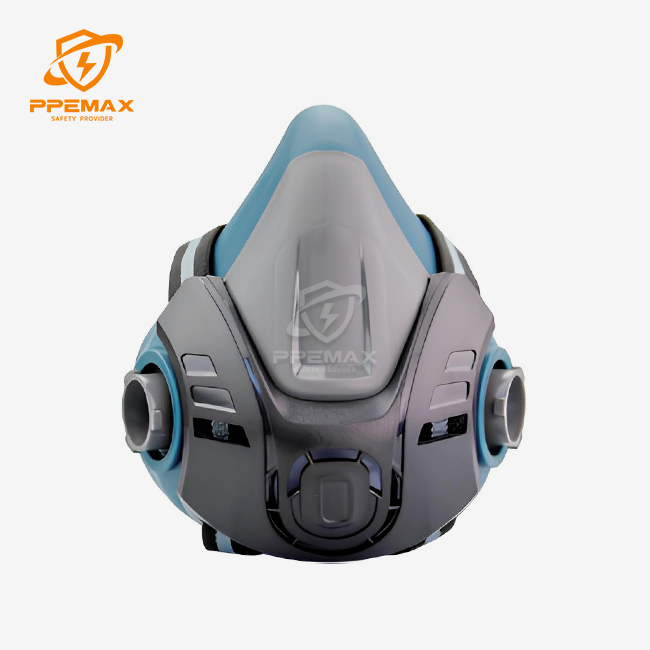
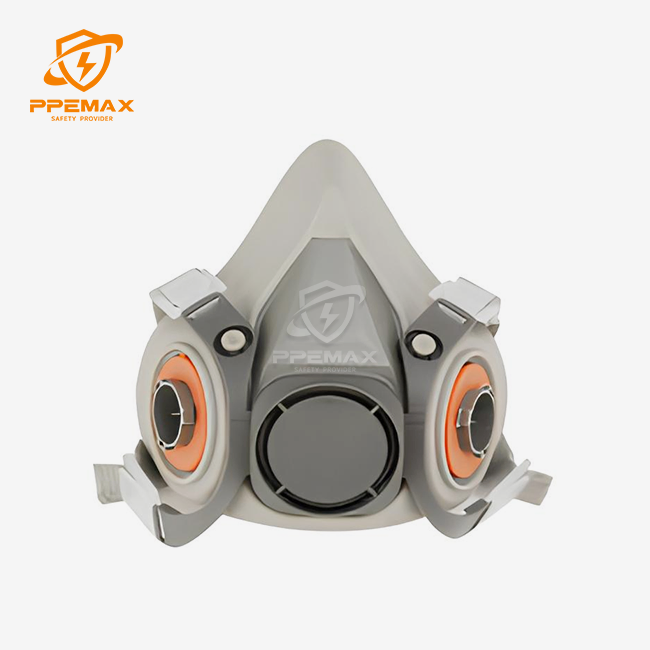
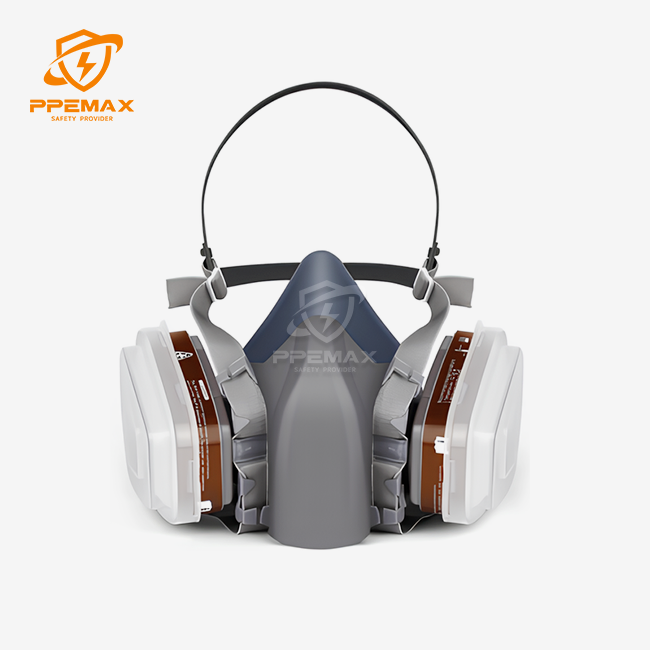
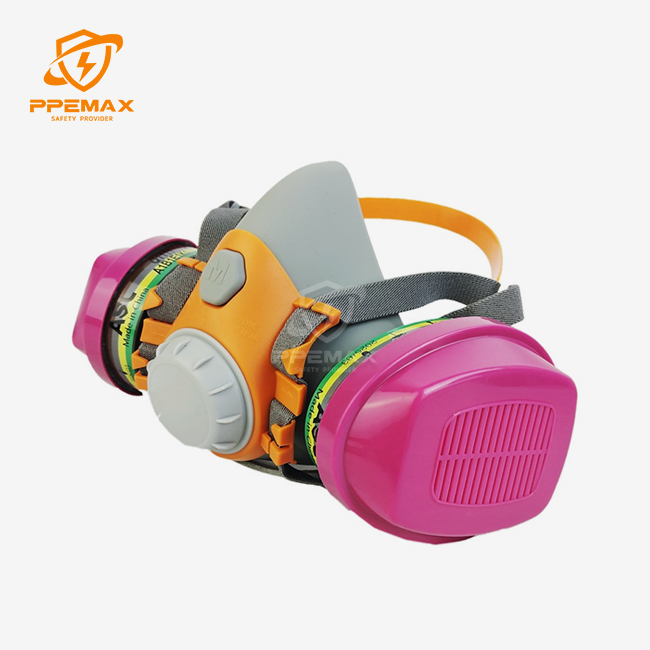
Chemical Cartridge Respirator
Visor: Anti-fog, Scratch resistant, impact protection.
RD40 connection;
Voice amplifier available.
5-point headbelt.
Certified: CE EN: 136: 1998
Chemical Cartridge Respirator Full-Face Gas Mask | RD40 Connection | CE EN 136 Certified
Respiratory protection gear has come from Xi'An PPE MAX Co., Ltd since 1956. The facepiece on this Chemical Cartridge Respirator is made of silicone. A 5-point headbelt holds it tight. Even on long shifts the seal stays put. Fog has a hard time forming thanks to the wide-angle visor. Scratches do not hurt it, and neither does impact. It connects using the RD40 standard. CE EN 136:1998 certification applies to the facepiece. Crews that talk a lot can add an optional voice amplifier. Every unit is checked with gas breakthrough testing before it ships. Airflow resistance is tested as well. Last comes mechanical shock conditioning.
What Is This Product?
Hazardous gases and vapors are what This product guards against. It works as a negative-pressure air-purifying respirator (APR). Contaminated air passes through granular activated carbon, or through sorbent material that has been chemically impregnated. Particulate filters do not work this way.
Before they reach the lungs, volatile organic compounds (VOCs) are trapped in the carbon bed. Acid gases like chlorine and sulfur dioxide are held back the same way. Ammonia gets held back too. This design came from three common needs in the workplace:
- Invisible vapor threats: VOCs, acid gases, and ammonia give no visual warning. The health risks they pose can hit fast. Over time they build up as well.
- Mobility needs: Ambient oxygen here has to sit at 19.5% or higher. Set against an SCBA system, this respirator weighs less. Crews also get more room to move.
- Regulatory compliance: Duties fall on employers under OSHA 1910.134. Inside a regulated respiratory protection program, this unit helps them meet those duties.

Standard Specifications
| Parameter | Specification |
|---|---|
| Facepiece Material | Silicone |
| Visor | Anti-fog, scratch-resistant, impact protection |
| Connection Standard | RD40 |
| Head Harness | 5-point headbelt |
| Certification | CE EN 136:1998 |
| Voice Amplifier | Optional |
| Inhalation Resistance (Delta P) | < 40 mm H₂O at 85 LPM |
| Oxygen Requirement | Minimum 19.5% ambient O₂ |
| Cartridge Thread | 40 mm DIN (standard canister compatible) |
Features
Silicone Facepiece
Soft is how the silicone seal feels. It lasts, too. Rubber copes with chemicals less well than this material does. A steady fit stays put over long periods. The reason is simple: the material holds its shape across a wide temperature range.
Anti-Fog, Impact-Resistant Visor
An anti-fog treatment covers the wide-angle visor. Scratches and knocks are resisted too. Humid air or rough handling will not blur what you see through it.
RD40 Connection
The RD40 thread lets this mask accept a wide range of cartridges that meet EN 14387. Organic Vapor (OV) is one option. Acid Gas and Ammonia are others, and combination types fit too. Standard color coding (Black, Yellow, Green) marks which one is which.
5-Point Headbelt
Pressure spreads evenly over the head thanks to five separate adjustment points. Hotspots are less of a problem when the gear stays on for long shifts. The face seal also holds steadier that way.
Optional Voice Amplifier
Speech stays clear with the voice amplifier attachment clipped on. No need to take the mask off. Supervisors get real use out of it, and so do team leaders and anyone whose job means talking a lot.
How the Filtration Works
Activated carbon fills the compatible cartridges made for a Chemical Cartridge Respirator. The material has a large surface area. Dense adsorption sites sit all over it, and organic vapors and chemical gases latch onto them easily. Chemically impregnated versions work in a different way: a chemical reaction neutralizes acid gases or ammonia. Simple physical trapping is not what does the job in those.
Each challenge agent comes with a tested breakthrough time on filters built to EN 14387 or NIOSH 42 CFR Part 84. A handful of advanced models go a step further and carry End-of-Service-Life Indicators (ESLI). These sensors change color. Before breakthrough happens, they warn you that the cartridge is close to saturation. Wondering if a certain type offers ESLI? Look it up in the cartridge manufacturer documentation.
Inhalation resistance stays under 40 mm H₂O at 85 LPM. That lower number means less effort on every breath, so physiological strain drops. A worker can keep the respirator on through long shifts. Protection holds steady the whole time.
Chemical Cartridge Respirator Applications
Petrochemical and Oil Refining
Workers on maintenance and sampling jobs breathe in benzene and toluene. Other hydrocarbon vapors are in the air too. OV cartridges trap them. That leaves two hazards: acute narcosis and long-term carcinogenic exposure.
Industrial Pickling and Metal Plating
Acid baths generate high concentrations of HCl and SO₂. Acid Gas cartridges with impregnated carbon neutralize these vapors locally — protection that standard particulate masks cannot provide.
Agriculture and Fumigation
For work with organophosphates or methyl bromide, This product with a P100 pre-filter is needed. A single assembly takes care of liquid mist particles. It also handles chemical vapor.

Why Choose PPE MAX
Since 1956, PPE MAX has built respiratory protection equipment. That full-face facepiece has CE EN 136:1998 certification. Gas breakthrough time is checked in-house. Airflow resistance (pressure drop) is checked there too. Desorption resistance gets the same check. Mechanical shock conditioning is tested as well.
The RD40 connection is compatible with EN 14387-compliant cartridges across all major gas categories. An optional voice amplifier and custom configurations are available depending on application requirements.

Certifications
- CE EN 136:1998: certification for the full-face respirator facepiece

Packing
Products are packed to prevent visor scratching and silicone deformation during transit. Standard export cartons are available. Custom labeling and OEM packaging can be arranged based on order requirements.
After-Sales Support
Need help using the Chemical Cartridge Respirator? We can also point you to replacement parts. Questions about cartridge compatibility are welcome too. If fit, visor clarity, or connection threading is unclear, email our technical team at bettybing@ppemax.com.
Exhibition and Factory Visits
The PPE MAX team participates in international safety and occupational health trade events. Factory visits are welcome — you can inspect the production process, quality control stations, and testing equipment directly. Contact us at bettybing@ppemax.com to arrange a visit.


FAQ
Q: How do I calculate the cartridge change schedule?
Q: Do not trust smell or taste. Sensory fatigue can mask breakthrough. Use Service Life Software for the exact contaminant, its concentration, humidity, temperature, and breathing rate. Add a safety factor to set a change schedule that meets OSHA requirements.
Q: Can this respirator be used in spaces with too little oxygen?
A: No. It cleans the air, but adds no oxygen. Use it only where ambient oxygen stays at 19.5% or higher. In low-oxygen areas, wear an SCBA or airline respirator.
Q: What makes channeling happen inside a cartridge?
A: Channeling starts when the carbon bed cracks or settles. A drop or a crush is usually behind it. Gas then finds a path around the sorbent, so the sorbent never gets used. Shake the cartridge before each use. Check the body for dents too.
Q: A cartridge and a canister, what makes them different?
A: Cartridges are smaller, mounted in pairs, and rated for lower concentrations. Canisters connect via 40 mm DIN thread (compatible with this mask's RD40 connection), hold more sorbent, and are rated for higher concentrations or longer durations, including CBRN-rated applications.
Q: Why does humidity shorten the life of an organic vapor cartridge?
A: Water vapor and organic molecules go after the same adsorption sites on activated carbon. Once relative humidity passes roughly 85%, water begins to fill the pores. Chemical adsorption capacity drops from that point on. The filter's safe service life gets shorter as well.
Q: Can this mask be fitted with combination cartridges?
A: Yes. The RD40 connection is compatible with combination cartridges — such as OV plus Acid Gas, or OV plus P100 pre-filter — that meet EN 14387 or equivalent standards, making it adaptable across multiple hazard environments.
Contact Us
For Chemical Cartridge Respirator orders, product questions, or a custom quote, reach us at bettybing@ppemax.com. We respond on business days.
Learn about our latest products and discounts through SMS or email