- English
- French
- German
- Portuguese
- Spanish
- Russian
- Japanese
- Korean
- Arabic
- Greek
- German
- Turkish
- Italian
- Danish
- Romanian
- Indonesian
- Czech
- Afrikaans
- Swedish
- Polish
- Basque
- Catalan
- Esperanto
- Hindi
- Lao
- Albanian
- Amharic
- Armenian
- Azerbaijani
- Belarusian
- Bengali
- Bosnian
- Bulgarian
- Cebuano
- Chichewa
- Corsican
- Croatian
- Dutch
- Estonian
- Filipino
- Finnish
- Frisian
- Galician
- Georgian
- Gujarati
- Haitian
- Hausa
- Hawaiian
- Hebrew
- Hmong
- Hungarian
- Icelandic
- Igbo
- Javanese
- Kannada
- Kazakh
- Khmer
- Kurdish
- Kyrgyz
- Latin
- Latvian
- Lithuanian
- Luxembou..
- Macedonian
- Malagasy
- Malay
- Malayalam
- Maltese
- Maori
- Marathi
- Mongolian
- Burmese
- Nepali
- Norwegian
- Pashto
- Persian
- Punjabi
- Serbian
- Sesotho
- Sinhala
- Slovak
- Slovenian
- Somali
- Samoan
- Scots Gaelic
- Shona
- Sindhi
- Sundanese
- Swahili
- Tajik
- Tamil
- Telugu
- Thai
- Ukrainian
- Urdu
- Uzbek
- Vietnamese
- Welsh
- Xhosa
- Yiddish
- Yoruba
- Zulu
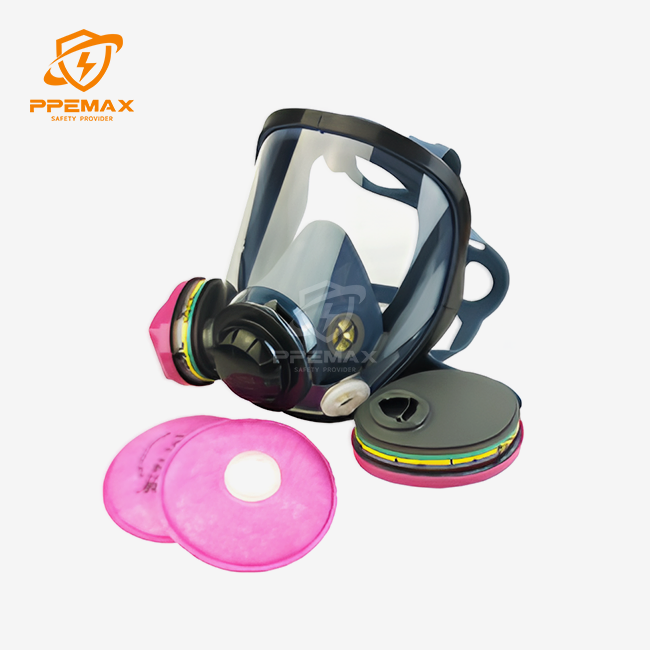
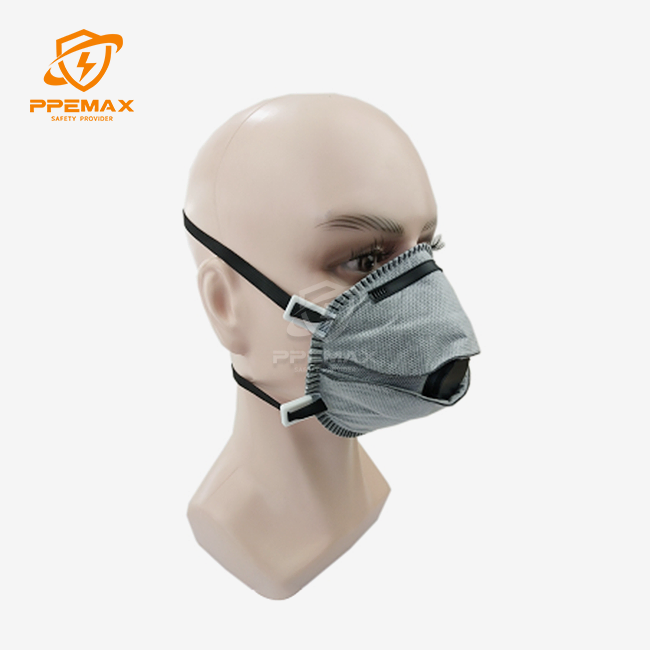
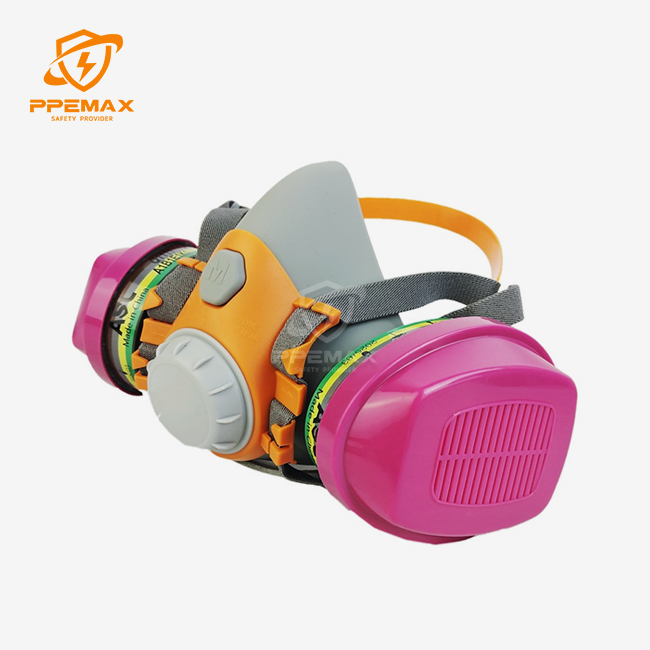
Breathing Respirator Mask
Head belt & neck belt: Size adjustable
Connector: Bayonet dust filters/gas filters
Size: S, M, L
Certified: CE EN: 140: 1998
Breathing Respirator Mask for Industrial & Occupational Safety — CE EN 140:1998 Certified
Respiratory protection equipment has come out of Xi'An PPE MAX Co., Ltd since 1956. TPE is what goes into our Breathing Respirator Mask. Locking it on takes a bayonet-style connector. Sizes run small, medium and large. Belts at the head and neck adjust for fit. The unit carries CE EN 140:1998 certification. Petrochemical work is one job this half-face respirator suits, and so are mining, construction and healthcare. Airborne hazards in those places carry real occupational risk.
About Xi'An PPE MAX Co., Ltd
Founded in 1956, Xi'An PPE MAX Co., Ltd has spent decades developing and supplying professional respiratory protection equipment to industrial and occupational markets worldwide. We hold CE EN 140:1998 certification for our half-face respirator line and provide full documentation support for procurement and compliance purposes.
We supply to global buyers and support B2B customers with product samples, CE certification documents, and technical guidance on filter selection.


What Is This Product?
Personal Protective Equipment (PPE) takes in devices like This product. Hazardous atmospheres are what it shields the wearer's respiratory system from. Dust gets stopped. So do other particles, plus gases, vapors and biological pathogens.
Surgical masks work another way. A respirator sits tight against the face and depends on special filter media. That brings higher filtration efficiency and lower total inward leakage (TIL).
At work, people wear these masks. Contact with substances tied to silicosis and asbestosis drops. Volatile Organic Compounds (VOCs) also get limited by the masks. Biological hazards carried in the air are blocked as well.


Standard Specifications
| Parameter | Details |
|---|---|
| Facepiece Material | TPE (Thermoplastic Elastomer) |
| Head Belt & Neck Belt | Size adjustable |
| Connector Type | Bayonet — compatible with dust filters & gas filters |
| Available Sizes | S, M, L |
| Certification | CE EN 140:1998 |
| Mask Type | Half-face elastomeric respirator |
| Filtration Media Compatibility | Particulate filters, gas/vapor cartridges, combination filters |
Features
TPE Facepiece
The facepiece uses Thermoplastic Elastomer (TPE). The material flexes and lasts well. Long wear or movement does not pull it away from the face. Because of that, the seal stays firm.
Bayonet Connector System
The bayonet-style connector supports quick cartridge changes between dust filters and gas/vapor cartridges depending on the work environment, without requiring tools.
Adjustable Head & Neck Belts
Workers can adjust the head belt and the neck belt to fit them. Both are fully adjustable. This gives a steady fit on different face shapes. It also helps reduce seal leakage while they work.
Three Breathing Respirator Mask Size Options
Sizes S, M, and L cover a range of face shapes. Getting the size right has a direct effect on Total Inward Leakage (TIL) performance. It also sets the protection level the mask can reach.
Quality Control
Each mask undergoes testing for filtration efficiency, inhalation resistance, and CO₂ clearance before leaving our facility. These tests are conducted in accordance with the requirements of CE EN 140:1998 to confirm that the facepiece meets the standard's defined performance criteria for materials, construction, and respiratory performance.
The bayonet connector and head harness are also evaluated for mechanical integrity and strap durability as part of the production QC process.
Applications for Breathing Respirator Mask
Petrochemical & Industrial Manufacturing
When the respirator has compatible gas/vapor cartridges, less chemical gets inhaled. Wear it where organic vapors, sulfur dioxide, or ammonia are present.
Mining & Heavy Construction
Fit the correct particulate filters. Then the mask guards against silica dust and coal particles. In workplaces with a known pneumoconiosis risk, that protection matters.
Healthcare & Infection Control
Clinics rely on reusable half-face respirators as well. Infectious disease wards are one place you will see them. So are rooms where aerosol-generating procedures are carried out. In those settings, they serve as one layer of an infection control plan.
General Industrial Use
Painting and spraying are two jobs it handles. So is welding fume exposure. Farm work fits as well, along with any other setting where airborne hazards need to be controlled.

Certifications
The Breathing Respirator Mask carries CE certification under EN 140:1998. This European standard covers half masks and quarter masks fitted with replaceable filters. The certificate shows the mask meets the standard's rules on materials and construction. Requirements for inhalation and exhalation resistance are met too. The same goes for CO₂ clearance and the practical performance evaluation.

Packing
Every product is packed so it stays intact in transit and in storage. Standard export packaging is available. Packing details can be matched to your order volume or your labeling needs. Get in touch with us and we will sort it out.
After-Sales Support
- Sample provision before bulk orders
- Full CE documentation provided upon request
- Technical guidance on filter cartridge selection by application
- Replacement parts and compatible filter cartridges available

FAQ
Q: What sets a half-face respirator apart from a full-face one?
A: A half-face respirator covers the nose and mouth only. You still get breathing protection. On a full-face model, the eyes are covered too. That counts when gases and vapors might sting your eyes. It also counts when they could block your view.
Q: How can I tell the gas cartridge is due for a swap?
A: Swap the cartridge right away in three cases. You notice any smell or taste of the contaminants, which means breakthrough. Breathing gets clearly harder. Or the scheduled change-out plan says it is time, and that plan is based on contaminant concentration and the humidity around you. The user cannot see active carbon saturation.
Q: Can this this product be used in low-oxygen environments?
A: No. This is an air-purifying respirator — it filters surrounding air but does not supply oxygen. It must not be used where oxygen levels fall below 19.5%. Supplied-air systems such as SCBA are required for oxygen-deficient conditions.
Q: Does industrial work require fit testing?
A: Where you work decides that. Plenty of countries have national occupational health standards. Those rules ask for a fit test any time respirators are part of a formal respiratory protection program. OSHA 1910.134 is one example. Other regions have their own versions that work the same way. Any major change to facial structure means you test again.
Q: What sizes can you get, and why does the size matter?
A: The mask comes in S, M, and L. Choose the size that matches you. Fit is what decides how well the mask seals against your face, and the Total Inward Leakage (TIL) reflects it. A poor fit means a lower effective protection factor. No filter rating can make up for that.
Q: What filter types are compatible with the bayonet connector?
A: The bayonet connector supports both dust/particulate filters and gas/vapor cartridges, including combination filters. This allows the same facepiece to be adapted for different workplace hazards by changing the cartridge type.
Contact Us
To request samples, product specifications, CE documentation, or a bulk quote, contact our Breathing Respirator Mask team at bettybing@ppemax.com. We support B2B buyers across industrial and occupational sectors.
Learn about our latest products and discounts through SMS or email