- English
- French
- German
- Portuguese
- Spanish
- Russian
- Japanese
- Korean
- Arabic
- Greek
- German
- Turkish
- Italian
- Danish
- Romanian
- Indonesian
- Czech
- Afrikaans
- Swedish
- Polish
- Basque
- Catalan
- Esperanto
- Hindi
- Lao
- Albanian
- Amharic
- Armenian
- Azerbaijani
- Belarusian
- Bengali
- Bosnian
- Bulgarian
- Cebuano
- Chichewa
- Corsican
- Croatian
- Dutch
- Estonian
- Filipino
- Finnish
- Frisian
- Galician
- Georgian
- Gujarati
- Haitian
- Hausa
- Hawaiian
- Hebrew
- Hmong
- Hungarian
- Icelandic
- Igbo
- Javanese
- Kannada
- Kazakh
- Khmer
- Kurdish
- Kyrgyz
- Latin
- Latvian
- Lithuanian
- Luxembou..
- Macedonian
- Malagasy
- Malay
- Malayalam
- Maltese
- Maori
- Marathi
- Mongolian
- Burmese
- Nepali
- Norwegian
- Pashto
- Persian
- Punjabi
- Serbian
- Sesotho
- Sinhala
- Slovak
- Slovenian
- Somali
- Samoan
- Scots Gaelic
- Shona
- Sindhi
- Sundanese
- Swahili
- Tajik
- Tamil
- Telugu
- Thai
- Ukrainian
- Urdu
- Uzbek
- Vietnamese
- Welsh
- Xhosa
- Yiddish
- Yoruba
- Zulu
Why Trust Class 1 Insulating Gloves for 7500V Protection?
Founded in 1956, PPEMAX stands as a premier global manufacturer and supplier of full-range personal protective equipment. All our products comply with internationally recognized standards including IEC, ASTM, CE, UKCA, NIOSH and ISO9001. Equipped with a 2,000-square-meter modern production plant, we boast over 25 years of mature OEM & ODM capabilities to deliver one-stop customized solutions covering R&D design through worldwide logistics. Our safety gear is distributed across 134 countries globally. Upholding our core tenet “Safety First, Quality Priority”, we serve as a dependable long-term PPE partner for industrial enterprises around the world.
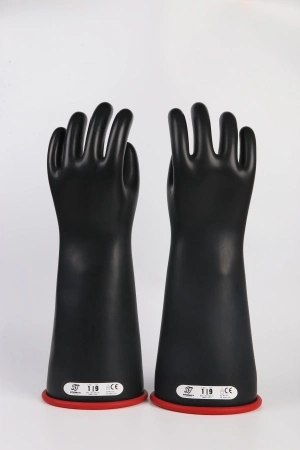
Working with live electrical systems rated up to 7,500 volts AC, the dependability of your protective equipment is the difference between life and severe harm. Class 1 Insulating Gloves are the critical barrier between electrical workers and deadly exposed voltage. Made of high-quality dielectric materials, these gloves conform to strict international safety requirements such as ASTM D120 and IEC 60903 certifications. We've seen that the right electrical PPE changes the overall safety result of the workplace, whether it’s utility companies, building sites, or manufacturing facilities in over 134 countries. At PPE MAX, we know these gloves are more than simply a legislative necessity; they’re a basic investment in the protection of your staff.
|
Parameter |
Specification |
|
Voltage Rating |
7,500V AC / 11,250V DC (Maximum Use) |
|
Proof Test Voltage |
10,000V AC / 40,000V DC |
|
Material Type |
Type I (Natural Rubber) / Type II (EPDM Synthetic) |
|
Thickness Range |
1.02mm - 1.52mm |
|
Tensile Strength |
>17.2 MPa |
|
Standards Compliance |
ASTM D120, IEC 60903 |
|
Temperature Resistance |
Category A, H, Z rated |
|
Label Color |
White (Class 1 Standard) |
Understanding Class 1 Insulating Gloves and Their Electrical Rating
The technical base is the real-world underpinning of electrical safety equipment performance. Electrical insulating gloves are rated to 7,500 volts and are high-tech products that combine safety with practicality.
Technical Specifications That Define Class 1 Protection
The “Class 1” marking is a particular voltage rating based on ASTM D120, the international standard for rubber insulating gloves. These gloves are rated for usage up to 7,500V AC and 11,250V DC. The gloves have an AC proof test voltage of 10,000V and an AC withstand voltage of 20,000V. This testing hierarchy assures that the gloves will protect even when subjected to voltage spikes above regular operational settings. The rubber is generally 0.7mm to 1.5mm thick, tuned for a balance between sufficient dielectric strength and the physical dexterity required for delicate electrical operations.
Material Science Behind Reliable Dielectric Protection
At PPE MAX, our electrical insulating gloves are made from two main rubber compositions that provide solutions to unique operating issues. Type I gloves are made from natural rubber latex, a material that gives workers superior flexibility and tactile sensitivity to handle tiny parts and wire connections with accuracy. Type II gloves are made from EPDM synthetic rubber, a formulation that resists ozone exposure and UV radiation. They are suited for outdoor utility applications. Both materials are highly compounded to ensure removal of conductive impurities while preserving mechanical qualities like puncture protection and tear resistance. This material knowledge, developed through over 65 years of manufacturing skill, guarantees each glove pair performs consistently in a variety of industrial conditions.
Certification Standards That Guarantee Safety Compliance
Electrical PPE’s reliability is based on international safety standards. Xi'an manufactures in compliance with ASTM D120 criteria, including extensive electrical testing, confirmation of physical properties, and quality control procedures. Certification to IEC 60903 is an indicator of European and worldwide safety standards, whereas OSHA 29 CFR 1910.137 certification indicates conformance to particular workplace safety standards in the U.S. The white label color-coding system enables users to quickly identify the voltage ratings on the work site, eliminating the hazardous misapplication of lower-rated gloves in higher voltage conditions. CE certification for European markets is a testament to our dedication to satisfy varied regulatory standards and allows procurement experts to confidently choose our goods for their global operations.

Comparing Class 1 Insulating Gloves with Other Protective Options
Knowing the voltage categorisation system allows procurement teams to align the safety equipment with the unique operating needs. The electrical glove class system goes from Class 1 Insulating Gloves (500V AC max usage) to Class 4 (36,000V AC max use), with each level tailored for certain voltage conditions.
Voltage Rating Distinctions Across Glove Classes
Class 00 gloves (beige label) are used for low voltage operations such as metre installation and battery maintenance up to 500V AC. Class 0 gloves (red label) protect up to 1,000V AC, and are thus suited for control circuit work and transformer service. Class 1 gloves (white label) are the lifeline between low-voltage control systems and distribution grid maintenance, offering protection for the 1,000V to 7,500V range typical in industrial power distribution, utility substations and manufacturing facilities. Class 2 gloves (yellow label) cover transmission line work up to 17,000V AC. Classes 3 and 4 cover high voltage transmission applications. Class 1 is designed for strategic placement on the voltage spectrum, providing coverage for a significant majority of industrial electrical maintenance applications with the added benefit of increased dexterity over higher class options.
Mechanical Protection Through Complementary Equipment
Rubber insulating gloves alone have an electrical integrity that is subject to mechanical degradation. The whole protective system consists of leather protector gloves according to ASTM F696 requirements, which protect the rubber from punctures, cuts, and abrasions during practical job activities. These leather coverings can withstand mechanical impact without influencing the electrical characteristics of the underlying insulating layer. Cotton liners provide two functions: they absorb sweat, which may deteriorate rubber compounds, and they provide thermal comfort over long use periods. This three-part solution tackles the core industrial problem of providing dielectric protection and the mechanical strength necessary to perform real-world electrical repair jobs.
Ergonomic Design Features That Enhance Productivity
Worker weariness directly affects safety and operational efficiency. Anatomical shaping is used in modern electrical insulating gloves, with the fingers shaped to follow natural hand postures to prevent hand strain during long periods of usage. PPE MAX's ergonomic cuff design incorporates reinforced beading to minimise rolldown and is flexible enough for wrist mobility. Our gloves strike a compromise between voltage protection thickness needs and material flexibility to provide grip strength and tactile feedback. This design philosophy understands that protective equipment should assist productive work, not obstruct it, and so lessen the temptation for workers to remove gloves while doing complicated activities.
If you're evaluating personal protective equipment suppliers and require batch-specific testing documents before placing an order, PPE MAX is able to provide official Certificates of Analysis, professional laboratory test reports, and product samples for your verification. Feel free to contact our team at marketing@ppemax.com to discuss your sourcing needs and obtain complete documentation for your quality assessment and procurement approval.
How to Test, Maintain, and Use Class 1 Insulating Gloves Effectively
Progressive deterioration in the protective properties of electrical insulating gloves over time and via usage means that systematic testing and maintenance procedures are critical to maintaining the safety performance.
Electrical Testing Requirements and Intervals
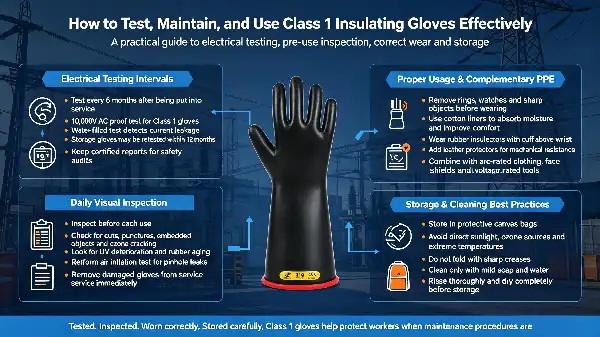
As required by regulatory requirements, rubber insulating gloves must be electrically tested every six months after they are put into operation. The testing exposes the gloves to high voltage stress to identify any degradation in dielectric qualities before the gloves approach their failure limits. Specialised test equipment fills the gloves with water and applies a proof test voltage (10,000V AC for Class 1) while checking for current leakage, which would indicate insulation failure. Gloves kept in storage and not used for service may be stored for a period of up to twelve months before re-testing is required. Professional testing services give certification documents that meet safety audit and regulatory inspection requirements. Procurement teams should develop contacts with certified testing facilities, or develop an in-house testing capability for organisations with large glove inventories.
Daily Visual Inspection Protocols
Other than periodic electrical testing, everyday eye examination is the first line of defence against faulty Class 1 Insulating Gloves equipment. Gloves should be inspected for damage before each use. Damage includes, but is not limited to, cuts, punctures, embedded foreign objects, ozone cracking, and ultraviolet deterioration. Air inflation test: This test offers rapid indication of glove integrity. The cuff is rolled so that air is trapped in the glove; pinhole leaks are easily detected by air escaping. Any glove showing apparent damage or failing the inflation test will be promptly taken out of service. Leather protectors must be checked regularly for rips, wear, and degradation which might cause mechanical harm to the underlying rubber.
Proper Usage Techniques and Complementary PPE
Protective efficacy is greatly affected by correct wearing methods. Workers should check their hands for sharp items, rings, or watches that might puncture gloves from the inside, then use cotton liners to absorb moisture and increase comfort. Then comes the rubber insulating glove with the cuff long enough above the wrist to avoid gaps in protection. The system is rounded up with leather protectors which provide mechanical protection during real job activities. Electrical safety standards may require extra personal protective equipment (PPE), such as arc-rated clothes, face shields, and voltage-rated tools, to provide complete protection from electrical risks. Training programmes should stress that gloves are just a part of a whole electrical safety system—not a stand-alone solution.
Storage and Cleaning Best Practices
Proper storage prolongs the service life of gloves while retaining protective characteristics. Gloves should be kept in protective canvas bags and away from direct sunshine, ozone sources (e.g., electric motors), and temperature extremes, which cause accelerated rubber breakdown. Don't fold gloves with sharp creases that cause places of tension concentration. Store them in their original form or softly rolled. Mild soap and water may be used for cleaning. Cleaning residue that may react with rubber compounds should be properly rinsed. Petroleum solvents, strong chemicals, and abrasive cleaning procedures degrade rubber and weaken the dielectric characteristics. Wash gloves and let them dry well before storing, or they will degrade from moisture. These maintenance methods immediately affect lifetime costs and assist procurement managers in maximising the return on PPE purchases.
Procurement Guide: How to Choose and Source the Best Class 1 Insulating Gloves
Selecting electrical insulating gloves involves evaluating multiple factors beyond initial purchase price, as performance, durability, and compliance determine total cost of ownership.
Certification Verification and Compliance Documentation
Procurement professionals should demand comprehensive certification documentation before approving suppliers. Verify that gloves meet ASTM D120 standards through independent testing laboratory reports, not just manufacturer self-certification. IEC 60903 compliance ensures international acceptance for multinational operations. Request copies of quality control procedures, manufacturing process documentation, and testing protocols that demonstrate consistent product quality. Suppliers should provide batch testing certificates with each shipment, documenting that specific gloves met electrical and physical property requirements. At PPE MAX, we maintain transparent documentation throughout our manufacturing process, with quality control records accessible to procurement teams conducting supplier audits.
Material Quality Assessment Criteria
The rubber compound formulation determines glove performance across critical parameters including dielectric strength, flexibility, ozone resistance, and service life. Natural rubber (Type I) offers superior dexterity and elasticity, particularly valuable for precision electrical work requiring fine motor control. Synthetic rubber (Type II) delivers enhanced environmental resistance, maintaining properties despite ozone exposure and UV radiation that rapidly degrades natural rubber in outdoor applications. Thickness uniformity affects both protection and tactile sensitivity; quality manufacturers maintain tight thickness tolerances that balance these competing requirements. Procurement specifications should address expected service environments, with Type II materials specified for outdoor utility work and Type I selected for indoor industrial maintenance where maximum dexterity drives productivity.
Supplier Reliability and Global Supply Chain Considerations
Establishing relationships with manufacturers who maintain consistent product availability prevents dangerous supply disruptions that could compromise safety programs. Evaluate suppliers based on manufacturing capacity, inventory management systems, and distribution networks that align with your operational geography. PPE MAX operates state-of-the-art manufacturing facilities in Xi'an, China, with global distribution capabilities serving 134 countries across six continents. Our supply chain infrastructure ensures reliable delivery timelines even for large bulk orders, while customization capabilities enable private label programs for distributors building proprietary brands. Technical support availability, including application guidance and training resources, adds value beyond the physical product, helping organizations optimize their electrical safety programs.
Pricing Strategies and Total Cost of Ownership
The lowest initial purchase price rarely delivers the best value when protective Class 1 Insulating Gloves equipment failure creates catastrophic consequences. Evaluate pricing in the context of expected service life, testing costs, and replacement frequency. Higher-quality gloves that extend service intervals between replacements often deliver lower total cost of ownership despite premium initial pricing. Bulk purchasing programs provide volume discounts while ensuring inventory availability. Warranty provisions that cover manufacturing defects mitigate financial risk, particularly for large procurement quantities. At PPE MAX, we offer competitive pricing structures for bulk orders while maintaining the quality standards that have defined our reputation across six decades, recognizing that sustainable partnerships require value for both parties.
Real-World Case Studies and Safety Outcomes with Class 1 Insulating Gloves
The safety criteria are translated into quantifiable protection of the workers by excellent electrical insulating gloves, as shown by empirical data from real industrial applications.
Utility Sector Incident Reduction Results
A regional electric utility in three states has launched a complete electrical glove programme, transitioning from uneven supplier relationships to a single-source procurement approach that emphasises ASTM D120 compliance with rigorous testing standards. In a three-year observation period, electrical contact occurrences reduced by 73 percent over the previous three years. The decrease was ascribed to standardised training procedures, constant glove quality, and dependable testing intervals that discovered malfunctioning equipment prior to failure, according to the safety incident reports. The utility’s procurement manager said that while the upfront cost rose 18 percent, workers’ compensation expenses dropped 52 percent, yielding a demonstrable return on investment beyond the moral responsibility to safeguard workers.
Manufacturing Facility Compliance Audit Outcomes
Despite standardised written processes, a global manufacturing business with operations in 22 countries has variable electrical safety results. Safety audits found that decentralised purchasing allowed each plant to purchase from local vendors with different quality requirements for gloves. Centralised purchasing of approved vendors provided uniform product standards across all locations, including PPE MAX for Asian and European businesses. Follow-up compliance assessments indicated 100 percent conformity with ASTM D120 requirements, as opposed to 63 percent compliance under the old decentralised approach. Standardisation allowed the firm to show due diligence in regulatory inspections and made training programmes easier with standardised equipment.
Procurement Officer Testimonials on Supplier Partnerships
PPE MAX conducted on-site training, offered direction on applying new electrical safety procedures to particular work situations, and responded to concerns that arose when new electrical safety protocols were implemented at 47 active project sites. This partnering strategy helped speed programme implementation and instilled trust in the safety equipment among the workers. The procurement director said that supplier participation made electrical safety a competitive advantage since better safety records meant that they were more likely to win bids for projects with tight safety specifications.
Conclusion
Where electrical work is carried out at voltages up to 7,500 volts AC, safety equipment is required that provides total dependability, where the result of failure may be serious injury or death. Class 1 Insulating Gloves built to ASTM D120 and IEC 60903 standards provide the time-tested protection that electrical workers depend on for utility operations, industrial facilities, and construction sites across the globe. The scientific know-how in these gloves – from the carefully developed rubber compounds to the rigorous testing procedures – is the result of decades of progress in material science and manufacturing skills. At PPE MAX, we use our 65-year commitment to worker safety to continually enhance product performance, quality control systems, and customer support capabilities that turn protective equipment purchase from a transaction into a strategic safety collaboration.
FAQ
1. How Often Should Class 1 Insulating Gloves Be Tested?
Rubber insulating gloves require electrical testing every six months once placed in service, applying proof test voltage to detect any deterioration in dielectric properties. Gloves remaining in storage without use can be held up to twelve months before testing becomes necessary. Leather protectors do not require electrical testing but demand daily visual inspection for mechanical damage that could compromise the rubber layer beneath.
2. Can Workers Use Rubber Gloves Without Leather Protectors?
Standard practice requires using rubber insulating gloves together with leather protectors conforming to ASTM F696 specifications. The rubber component provides electrical insulation, while leather protectors shield against mechanical damage including cuts, punctures, and abrasions that would immediately compromise dielectric protection. Using rubber gloves without protectors exposes workers to preventable risks from common work activities.
3. What Determines the Choice Between Type I and Type II Rubber?
Type II synthetic rubber (EPDM) resists ozone cracking and UV degradation, making it ideal for outdoor utility work and variable storage environments. Type I natural rubber maximizes flexibility and tactile sensitivity, preferred for indoor industrial maintenance requiring fine motor control in ozone-free environments. Operational conditions and expected environmental exposures guide material selection during procurement specifications.
4. What Does the White Label on Class 1 Gloves Indicate?
Color-coded labeling provides immediate visual identification of voltage ratings, preventing dangerous misapplication of protective equipment. The white label designates Class 1 gloves rated for 7,500V AC maximum use, distinguishing them from lower-rated classes such as Class 00 (beige) or Class 0 (red) that would provide inadequate protection at higher voltages.
Partner with PPE MAX for Certified Class 1 Insulating Gloves
Safety professionals and procurement managers seeking a reliable Class 1 Insulating Gloves manufacturer gain distinct advantages through partnership with PPE MAX. Our Xi'an manufacturing facility combines traditional craftsmanship with modern quality control systems, producing gloves that meet ASTM D120, IEC 60903, and OSHA requirements across diverse industrial applications. We offer customization capabilities for OEM programs, competitive bulk pricing structures, and technical support resources that extend beyond product delivery to encompass application guidance and training assistance. Contact our team at marketing@ppemax.com to discuss your specific requirements, request product samples, or schedule a consultation regarding electrical safety program optimization. Our global distribution network ensures reliable delivery timelines regardless of your operational geography, while our decades of industry experience translate into practical insights that enhance procurement decisions.
References
1. American Society for Testing and Materials. (2019). ASTM D120: Standard Specification for Rubber Insulating Gloves. West Conshohocken, PA: ASTM International.
2. International Electrotechnical Commission. (2020). IEC 60903: Live Working – Gloves of Insulating Material. Geneva, Switzerland: IEC Publications.
3. Occupational Safety and Health Administration. (2021). 29 CFR 1910.137: Electrical Protective Equipment Standards. Washington, DC: U.S. Department of Labor.
4. National Fire Protection Association. (2018). NFPA 70E: Standard for Electrical Safety in the Workplace. Quincy, MA: NFPA Publications.
5. Cadick, J., Capelli-Schellpfeffer, M., & Neitzel, D. (2021). Electrical Safety Handbook (5th Edition). New York: McGraw-Hill Education.
6. IEEE Standards Association. (2020). IEEE 1584: Guide for Performing Arc-Flash Hazard Calculations. Piscataway, NJ: Institute of Electrical and Electronics Engineers.
Learn about our latest products and discounts through SMS or email