- English
- French
- German
- Portuguese
- Spanish
- Russian
- Japanese
- Korean
- Arabic
- Greek
- German
- Turkish
- Italian
- Danish
- Romanian
- Indonesian
- Czech
- Afrikaans
- Swedish
- Polish
- Basque
- Catalan
- Esperanto
- Hindi
- Lao
- Albanian
- Amharic
- Armenian
- Azerbaijani
- Belarusian
- Bengali
- Bosnian
- Bulgarian
- Cebuano
- Chichewa
- Corsican
- Croatian
- Dutch
- Estonian
- Filipino
- Finnish
- Frisian
- Galician
- Georgian
- Gujarati
- Haitian
- Hausa
- Hawaiian
- Hebrew
- Hmong
- Hungarian
- Icelandic
- Igbo
- Javanese
- Kannada
- Kazakh
- Khmer
- Kurdish
- Kyrgyz
- Latin
- Latvian
- Lithuanian
- Luxembou..
- Macedonian
- Malagasy
- Malay
- Malayalam
- Maltese
- Maori
- Marathi
- Mongolian
- Burmese
- Nepali
- Norwegian
- Pashto
- Persian
- Punjabi
- Serbian
- Sesotho
- Sinhala
- Slovak
- Slovenian
- Somali
- Samoan
- Scots Gaelic
- Shona
- Sindhi
- Sundanese
- Swahili
- Tajik
- Tamil
- Telugu
- Thai
- Ukrainian
- Urdu
- Uzbek
- Vietnamese
- Welsh
- Xhosa
- Yiddish
- Yoruba
- Zulu
Why Is Proper Fit Testing Important for a Full Mask Respirator?
Fit testing for a Full Mask Respirator is very important because it ensures that the mask seals well around the wearer's face and keeps dirty air from getting past the filter. Even the best respirators may not protect workers from dangerous airborne pollution if they are not properly fitted. This can cause respiratory accidents, work-related illnesses, and regulatory violations. Full fit testing makes sure that the highest level of protection is reached and that your lung protection program meets OSHA, NIOSH, and foreign safety standards.
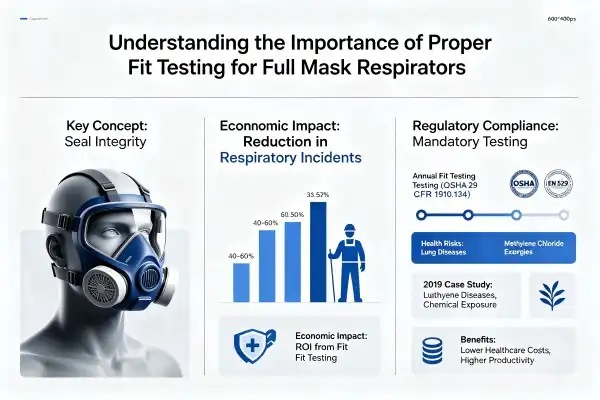
Understanding the Importance of Proper Fit Testing for Full Mask Respirators
Proper fit testing is an important part of making sure that breathing protection devices work as intended in the real world of work. When procurement managers put money into lung protection programs, they need to know that the only way for the equipment to work is for the wearer's face to form a tight circle around it. Not doing enough fit testing has effects that go far beyond immediate safety issues. When workers are exposed to dangerous substances because their respirators don't fit right, they are more likely to get lung diseases, chemical allergies, and severe breathing problems. These effects on health directly lead to more workers' compensation claims, less production, and the chance of being sued.
Regulatory Compliance and Risk Mitigation
The Respiratory Protection Standard (29 CFR 1910.134) from OSHA says that tight-fitting respirators must be fit tested once a year, and NIOSH gives detailed advice on how to do the tests. Similar rules are set by European EN 529 guidelines for respiratory protection plans in the workplace. These rules must be followed, or else people could face big fines, lost wages, and higher insurance rates. Real-life events show how important it is to follow strict fit testing methods. In 2019, several workers in a chemical processing plant were hospitalized after being exposed to methylene chloride fumes while wearing respirators that did not fit properly. According to the study, poor fit testing methods had not found seal failures that let contaminants get in.
Economic Impact of Fit Testing Investment
In addition to meeting regulatory requirements, proper fit testing gives a clear return on investment through lower healthcare costs, higher output, and more workers staying with the company. Companies that use full fit testing systems say that respiratory-related incidents and prices go down by 40 to 60 percent.
How Full Mask Respirators Work and the Role of Fit Testing
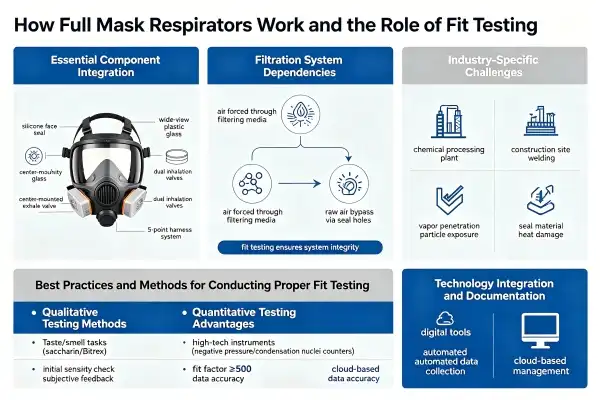
Full Mask Respirator devices are made up of several important parts that work together to protect your face and lungs completely. When procurement workers understand how these factors are related, they can better understand why fit testing is still necessary for security programs to work.
Essential Component Integration
The silicone face seal on the respirator is the main barrier between the wearer's breathing zone and dirty air in the room. To keep negative pressure inside the mask while breathing in, this elastic material has to perfectly fit the shape of the face, cheeks, and chin. The wide-view plastic glass is clear optically and stays structurally sound when there is a difference in pressure. The center-mounted exhale valve makes it easier to get rid of CO2, while the dual inhalation valves lower breathing resistance by letting more air flow during inhaling. The 5-point harness system spreads the tension evenly across the head, keeping the seal pressure constant without making pressure spots that are painful to wear for long amounts of time.
Filtration System Dependencies
For replacement cartridge filters to work, all of the air that is breathed in has to be forced through the filtering media. Even small holes in the seals can let raw air get around the protection system, which greatly lowers the protection factor. Fit testing makes sure that the whole system works as a single unit in a changing work environment.
Industry-Specific Challenges
Different work settings have their own unique fit testing problems that need special care. Chemical processing plants that work with volatile organic chemicals need to make sure that vapors don't get through, and building sites that have a lot of particles need to test their materials under physical stress. Heat can damage seal materials when they are used for welding, so they need to be tested again and again to make sure they keep their integrity.
Best Practices and Methods for Conducting Proper Fit Testing
Implementing effective fit testing protocols requires understanding both qualitative and quantitative methodologies, each offering distinct advantages for different operational requirements. Modern testing methods use both old-fashioned methods and cutting-edge digital technologies to make tests more accurate and make compliance paperwork easier to keep track of.
Qualitative Testing Methods
Qualitative fit testing uses the wearer's senses to find possible seal breaks by giving them taste or smell tasks. When the respirator fit allows entry, saccharin or Bitrex treatments make experiences that can be felt. Even though the results are subjective, these methods give quick feedback and don't require a lot of tools, so they can be used for field testing. First, an initial sensitivity check is done, and then the person wearing the respirator is exposed to a limited amount of radiation. Positive answers mean that the fit didn't work right and that the size needs to be changed or adjusted. This method works well for regular testing programs where a simple fit proof is more important than exact numbers.
Quantitative Testing Advantages
With quantitative testing, high-tech instruments are used to measure real loss rates. This gives numbers that take the guesswork out of judging fit. Controlled negative pressure devices or condensation nuclei counters make accurate readings that can be kept for compliance checks and trend analysis. These systems check for particles inside and outside the mask and figure out fit factors that are directly related to the amount of protection. If the fit factor is 500 or higher, the protection is good enough for most industry uses. However, better performance standards may be needed in some situations.
Technology Integration and Documentation
Modern digital fit testing tools make the whole process easier, from setting up the test to giving the final report. Automated data collection cuts down on mistakes made by people while keeping complete records that help with legal compliance and program improvement. Cloud-based tools make it possible to handle testing schedules, findings, and equipment maintenance across various locations from one place. Integration with systems that handle employees makes organizing easier, sends test notices, and shows requirements that are past due. This organized method makes sure that the program is always followed, and it also makes it easier for safety staff to handle paperwork.
Comparing Full Mask Respirators and The Impact of Fit on Selection
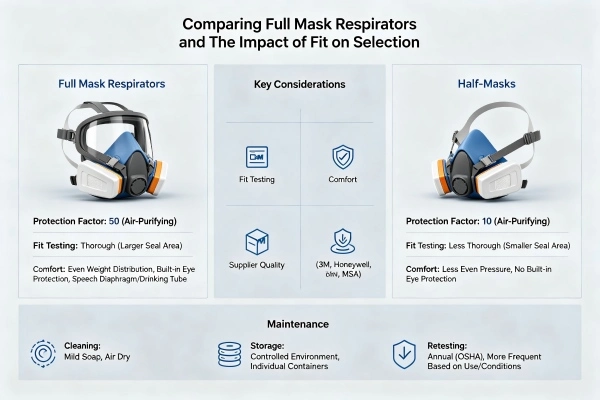
To choose the right breathing protection, you need to know the main differences between full-face and half-mask designs, especially when it comes to the need for fit testing and the level of protection they offer. While Full Mask Respirator systems provide better safety, they need to be put through more thorough testing procedures to prove that they work better.
Protection Factor Differentials
When it comes to air-purifying designs, full-face masks usually get given safety factors of 50, while half-masks only get 10. This better protection comes from the full facial seal, which blocks any possible leaks around the eyes and upper face. To reach these levels of safety, however, more thorough fit testing is needed to make sure that the seal stays intact across the larger contact area. The additional sealing area creates more opportunities for fit failures, particularly around complex facial contours near the temples and cheekbones. The testing procedures need to take these larger seal zones into account while also making sure that the fit is comfy enough for workers to keep up during their shifts.
Comfort and Usability Considerations
Comfort during extended wear has a big effect on worker behavior and the general success of the program. Full-face masks spread weight and pressure more evenly than half-masks, which makes long work sessions less tiring. The built-in eye protection gets rid of the need for separate safety glasses, which makes the equipment easier to use and more acceptable to users. Speech diaphragms and drinking tube choices make the mask easier to use without sacrificing safety. This is especially important for workers who need to communicate clearly or stay hydrated during long shifts. During fit testing, these features must be taken into account to make sure they don't make leak paths or affect the quality of the seal.
Supplier Performance and Quality Assessment
The results of fit tests tell us a lot about the quality of the maker and how well the design works. Consistent fit performance across a range of face measurements is a sign of better engineering and quality control. When comparing sources and deciding what to buy in bulk, procurement workers should look at how often fit tests work. Well-known companies like 3M, Honeywell, and MSA put a lot of money into ergonomic research and testing to make sure that their products fit and work best for a wide range of people. But new providers may come up with cheap options that work just as well when tested according to the right rules. Comprehensive fit testing programs give you real data that you can use to make smart buying decisions based on performance rather than just brand recognition.
Maintaining and Optimizing Full Mask Respirator Fit Over Time
For breathing protection to keep working, the fit must be checked regularly throughout the equipment's lifecycle. Even respirators that are properly fitting can become less effective over time because of wear and tear, cleaning methods, storage conditions, and changes in the user's body that affect the seal.
Cleaning and Maintenance Protocols
Proper cleaning methods must strike a balance between the need for cleanliness and the need to protect seal materials and keep the vision clear. Harsh chemical cleaners can break down rubber seals, making tiny cracks that make the fit less stable. Mild soap solutions, thorough washing, and air drying away from direct heat sources are usually the best ways to clean something. The plastic lens needs extra care to keep it from getting scratched, which could make it hard to clean. Microfiber brushes and approved cleaning solutions keep the lenses clear and prevent damage that could mean they need to be replaced too soon.
Storage and Environmental Considerations
Environmental factors have a big effect on how long Full Mask Respirator units last and how well they fit. Extreme temperatures can make flexible materials lose their flexibility or break easily. UV light can damage both rubber and plastic parts. Storing things correctly in controlled settings saves investments and makes sure that they work the same way every time. Individual storage containers prevent contamination and physical damage while maintaining proper shape retention. When respirators are squished or bent, they might not go back to their original size. This can cause lasting fit problems that mean the equipment needs to be replaced.
Retesting Schedules and Replacement Criteria
As a minimum, OSHA requires fit testing once a year. However, best practices call for more frequent checks based on how often the equipment is used and the conditions of the work area. People who work in dirty places or who have recently lost or gained weight, had dental work, or hurt their face should get retested right away to make sure they are still protected. By setting clear criteria for replacement, you can avoid using old equipment that looks like it works but doesn't offer enough safety. Visual inspection standards help find patterns of wear, material degradation, or damage that needs to be replaced right away, even if testing isn't planned for a while.
Conclusion
Proper fit testing for Full Mask Respirator Systems is a basic requirement for lung safety programs in the workplace. This process makes sure that the equipment works the way it's supposed to, follows the rules, and keeps workers healthy. Organizations can get the most out of their investments in respiratory protection while lowering their risk of liability and healthcare costs by following thorough testing methods, keeping up with upkeep, and forming smart partnerships with suppliers.
FAQ
How Often Should We Conduct Fit Testing?
As a minimum, OSHA requires fit tests to be done once a year, but for best results, programs should do tests more often based on specific risk factors. Workers who have lost or gained a lot of weight, had their teeth changed, or hurt their faces need to be retested right away. High-risk areas might benefit from testing every six months to make sure that the amount of safety stays the same.
What Are the Limitations of Fit Testing?
Fit testing lowers the risks of lung exposure by a large amount, but no method can completely protect you. Fit testing is done in controlled conditions, but things that happen at work, like face hair growth, equipment wear, or not putting on the gear correctly, can make safety less effective. To get the most out of their efforts, comprehensive programs combine fit tests with ongoing training and supervision.
What Should We Consider for Bulk Procurement?
When buying in bulk, you should think about how different types of workers may need different sizes and shapes to get the best safety. Credentials of the supplier, agreement with certifications, and the ability to provide after-sales assistance are all important evaluation factors. Before signing off on large-scale buying contracts, you might want to try out sample testing programs with smaller amounts.
Partner with PPE MAX for Superior Full Mask Respirator Solutions
PPE MAX has been making high-quality breathing protection for over 65 years. They use advanced engineering and strict quality control to make Full Mask Respirator systems that always pass the strictest fit testing methods. Our wide range of products includes comfortable designs, high-quality materials, and many ways to customize them to meet the specific needs of industrial activities in 134 countries around the world.
As a reliable company that makes full mask respirators, we offer full solutions, such as fit testing advice, training programs, and technical support, to make sure that your employees are safest possible. Get in touch with our team at marketing@ppemax.com to talk about your unique needs and experience the PPE MAX difference in respiratory protection greatness.
References
1. Occupational Safety and Health Administration. Respiratory Protection Standard 29 CFR 1910.134. US Department of Labor, Washington, DC, 2019.
2. National Institute for Occupational Safety and Health. Criteria for a Recommended Standard: Occupational Exposure to Refractory Ceramic Fibers. DHHS Publication No. 2006-123, Cincinnati, OH, 2006.
3. European Committee for Standardization. EN 529:2005 Respiratory Protective Devices - Recommendations for Selection, Use, Care and Maintenance. Brussels, Belgium, 2005.
4. American National Standards Institute. ANSI Z88.10-2010 Respiratory Protection - Respirator Fit Testing Methods. New York, NY, 2010.
5. International Organization for Standardization. ISO 16975-3:2017 Respiratory Protective Devices - Selection, Use and Maintenance. Geneva, Switzerland, 2017.
6. Campbell, David L. and Johnson, Robert M. Quantitative Fit Testing Methods and Statistical Analysis for Industrial Respiratory Protection Programs. Industrial Hygiene Journal, Volume 45, Issue 3, Pages 287-295, 2018.
Learn about our latest products and discounts through SMS or email