- English
- French
- German
- Portuguese
- Spanish
- Russian
- Japanese
- Korean
- Arabic
- Greek
- German
- Turkish
- Italian
- Danish
- Romanian
- Indonesian
- Czech
- Afrikaans
- Swedish
- Polish
- Basque
- Catalan
- Esperanto
- Hindi
- Lao
- Albanian
- Amharic
- Armenian
- Azerbaijani
- Belarusian
- Bengali
- Bosnian
- Bulgarian
- Cebuano
- Chichewa
- Corsican
- Croatian
- Dutch
- Estonian
- Filipino
- Finnish
- Frisian
- Galician
- Georgian
- Gujarati
- Haitian
- Hausa
- Hawaiian
- Hebrew
- Hmong
- Hungarian
- Icelandic
- Igbo
- Javanese
- Kannada
- Kazakh
- Khmer
- Kurdish
- Kyrgyz
- Latin
- Latvian
- Lithuanian
- Luxembou..
- Macedonian
- Malagasy
- Malay
- Malayalam
- Maltese
- Maori
- Marathi
- Mongolian
- Burmese
- Nepali
- Norwegian
- Pashto
- Persian
- Punjabi
- Serbian
- Sesotho
- Sinhala
- Slovak
- Slovenian
- Somali
- Samoan
- Scots Gaelic
- Shona
- Sindhi
- Sundanese
- Swahili
- Tajik
- Tamil
- Telugu
- Thai
- Ukrainian
- Urdu
- Uzbek
- Vietnamese
- Welsh
- Xhosa
- Yiddish
- Yoruba
- Zulu
Spark Proof Leather Welding Apron Comfort & Fit Features
When choosing safety gear for welding, the Spark Proof Leather Welding Apron's comfort and fit have a direct effect on how well workers do their jobs and how safe they are. Premium welding shields are made with ergonomic design elements and movable parts to give you the best safety without limiting your movement. The carefully designed weight distribution systems, breathable materials, and adjustable strap setups in these specialized clothes make them suitable for a wide range of body types while still keeping the wearer securely in place during hard industrial tasks.
Understanding Spark Proof Leather Welding Aprons
Material Composition and Protection Properties
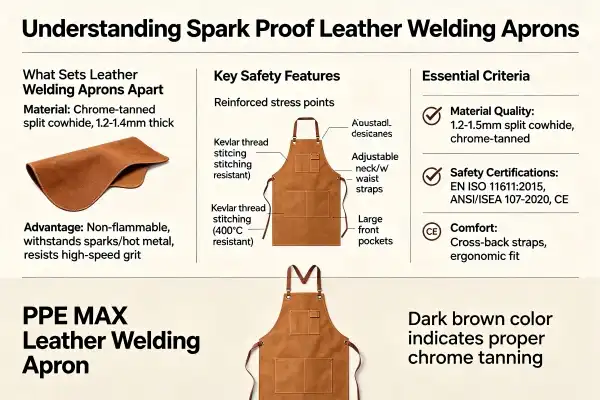
When welding in an industrial setting, you need safety gear that can handle high temperatures and mechanical dangers. Our spark-proof welding aprons are made from high-quality split cowhide leather that is 1.2 to 1.4 mm thick. This leather was chosen because it has strong fibers and is very resistant to heat. For direct touch settings, the chrome-tanning process makes the leather better able to keep its shape at temperatures up to 250°C. The Spark Proof Leather Welding Apron is made with Kevlar thread stitching in key stress spots, which makes it very durable against the constant sparks and hot metal splatter that happen during SMAW and FCAW welding. This way of building makes sure that the apron keeps its protective shield even in the harshest work environments.
Distinguishing Features from Standard Protective Wear
Unlike most flame-resistant cotton aprons, spark-proof leather aprons have physical deflection qualities that stop hot metal from getting through. According to ISO 15025 standards, the leather's natural makeup stops flames from spreading and goes out on its own within two seconds of removing the source of the flame. Because of this, leather aprons are necessary for Class 2 welding jobs where heavy spatter formation offers a high risk of burns. The stronger design has cross-back strap systems and riveted connection points that spread the weight evenly across the shoulders and chest of the user. These technical details set professional-grade gear apart from basic safety gear, making sure that it works well during long shifts.
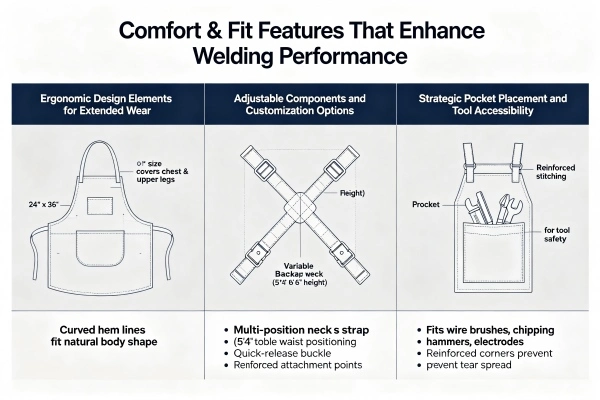
Comfort & Fit Features That Enhance Welding Performance
Ergonomic Design Elements for Extended Wear
In workplace welding settings, worker comfort is closely linked to following safety rules and getting work done quickly and correctly. Our ergonomic method takes into account the physical demands of welding work by planning designs that keep workers from getting too tired and let them move around as much as possible. The 24" x 36" size of the apron covers the whole chest and upper legs without getting in the way of normal movement. Key ergonomic features of Spark Proof Leather Welding Apron include hem lines that are curved to fit the natural shape of the body and flex zones that are put in a way that allows for turning and reaching. The leather's natural ability to breathe, which is improved by perforating only the non-essential areas, helps keep the heat down during long welding sessions.
Adjustable Components and Customization Options
Professional welding needs tools that can work with a wide range of workers and meet a wide range of operating needs. Our flexible strap systems have metal buckles and strengthened cotton webbing that keep the straps in place on bodies of all shapes and sizes. Traditional apron forms can cause neck pain, but the cross-back style doesn't.
Here are the main benefits of flexibility that make the user experience better:
- Multi-position neck strap adjustment: fits people from 5'4" to 6'6" tall with medium-sized choices
- Variable waist positioning: lets you make it fit different body lengths and places you want to cover.
- Quick-release buckle system: Allows quick removal in an emergency while keeping the connection securely in place during normal operations.
- Reinforced attachment points: metal pins and leather backing plates keep the strap from coming apart when it's under a lot of stress.
These choices for adjusting make sure that the protection is always in the right place, no matter what size person they are or what work stance they need to be in. Procurement managers can safely choose single-apron models for a variety of work environments. This makes managing goods easier while still meeting safety standards.
Strategic Pocket Placement and Tool Accessibility
The effectiveness of operations relies on how easy it is to get to the welding tools and supplies that are needed. The big front pocket is made with reinforced stitching and smart placement that keeps tools safe while making them easy to get. The pocket's position lets you get to it without removing the protective covering or reaching awkwardly. The inside of the bag is big enough to fit common welding tools like wire brushes, chipping hammers, and disposable electrodes. Sharp tool edges can't cause tears to spread because the corners are reinforced. This extends the apron's useful life while keeping it usable during hard work cycles.
Comparing Spark Proof Leather Welding Aprons for Smart Procurement
Leather versus Cotton Apron Performance Analysis
Before making a purchase choice, you need to know a lot about how the material will work in real welding conditions. When it comes to safety and sturdiness, leather aprons are better than cotton ones, especially when high-intensity welding is being done. Chrome-tanned leather can bend in ways that cotton materials can't because of the way their bodies are made. Light TIG welding jobs with little spatter can be done with cotton flame-resistant aprons. But for stick welding, flux-cored processes, and high welding positions, you need Spark Proof Leather Welding Apron types. The cost-per-use study shows that leather construction is better because it lasts longer and needs to be replaced less often.
Lightweight versus Heavy-Duty Design Considerations
Different amounts of intensity are used in industrial settings, so different safety methods are needed. Leather aprons that are 0.8 to 1 mm thick and very light are used for maintenance welding and repair work, where movement is more important than full protection. Heavy-duty versions with a thickness of 1.2 to 1.5 mm are used in structure construction and production welding settings where they are exposed to high temperatures for long periods of time. Some extra features that come with heavy-duty designs are strengthened bibs, larger covering areas, and better strap systems. These requirements are the same as EN ISO 11611 Class 2 standards for protecting against large amounts of molten metal splashes. The selection factors should match the trends of projected spatter strength and exposure time.
Leading Manufacturer Capabilities and Differentiating Features
Market research shows that welding apron suppliers have big differences in the quality of their products and the new ideas they come up with for designs. When PPE MAX makes things, they focus on making sure that the leather thickness tolerance is always the same (±0.1mm), that the chrome tanning penetrates evenly, and that there are strict quality control tests done at every step of the production process. Our state-of-the-art buildings have weather controls that make sure the results of treating leather are always the same. Custom sizes, logo embroidery, and bulk packing choices that make delivery easier are all examples of advanced production capabilities. These value-added services set comprehensive equipment sellers apart from basic commodity providers. They also offer buying benefits that go beyond unit price.
Maintenance & Longevity to Maximize ROI
Proper Cleaning Techniques Without Material Compromise
To make an apron last longer, it needs to be properly maintained so that the leather's protective qualities are kept. Cleaning with water takes away natural oils and coloring agents, which makes the material porous and less resistant to heat. Dry brushing to get rid of built-up dirt and specialized leather conditioners made for commercial use are recommended for regular upkeep. Petroleum-based solutions should not be used for cleaning because they can soak into leather fibers and make them more likely to catch fire. Regular weekly inspections help find early signs of wear and allow preventative actions to be taken before the protected layer is compromised. With normal commercial use, regular upkeep can increase the average service life from 6 to 8 months to 12 to 18 months.
Regular Inspection and Replacement Indicators
Systematic checking methods make sure that the apron's safety continues to work well throughout its service life. When looking at something visually, you should pay attention to the stress points, the state of the stitches, and how flexible the leather is. Hardening or breaking are signs of heat damage that make the protection less effective and require repair right away. Important signs that it's time to replace something are obvious thread wear, pockets coming apart, strap attachments becoming loose, and oil saturation that changes the flame resistance qualities. Setting up standard inspection plans that work with workplace safety audit requirements and regulatory compliance responsibilities is helpful for procurement managers.
Storage Best Practices for Shape Retention
Proper keeping keeps the apron working and increases the time between refills. Permanent creasing that affects coverage areas and safe placement can be avoided by hanging storage. Climate-controlled spaces keep temperatures from changing too much, which can cause leather to expand and shrink, speeding up the aging process. Some things to think about when planning a storage area are how much air flow is needed to keep the area dry and free of contamination from chemicals. Well-organized storage systems make inspections and inventory movement easier, which makes the best use of tools across all jobs.
Procurement Insights: Purchasing and Supplier Selection
Sourcing Channels and Volume Purchase Advantages
When buying Spark Proof Leather Welding Apron equipment through business-to-business (B2B) outlets, it's important to find ones that meet the needs of the company and its budget. For big orders, buying directly from makers at wholesale prices can save you a lot of money—usually 15 to 25 percent compared to buying through retail outlets. The benefits of buying in bulk go beyond lower unit prices and include the ability to customize, faster shipping times, and better warranty support. For access to bulk prices, the minimum order quantity is usually between 50 and 100 units. This means that medium to large-sized industrial companies can work directly with manufacturers.
Quality Certification and Compliance Verification
Verification of regulatory compliance makes sure that newly bought equipment meets safety standards and lowers the risk of being sued. Some important certifications are CE marking, EN ISO 11611:2015 compliance, and ANSI/ISEA 107-2020 compliance, based on the rules in the operating area. For auditing reasons, verification paperwork should be sent with every package. Third-party testing proof gives you more peace of mind about chemical safety, flame spread resistance, and mechanical strength qualities. Reputable makers keep their certifications up to date and back up their claims of regulatory compliance with a lot of proof.
Supplier Evaluation Criteria and Partnership Development
When looking at long-term provider ties, you need to think about more than just price at first. Certifications for the manufacturing site, the implementation of a quality management system, and the ability to provide help after the sale are all important factors in the evaluation process. The security of the supplier's finances affects the availability of guarantee service and the continuation of supply throughout the service cycles of the equipment. Six decades of manufacturing experience at PPE MAX show that they have the steadiness and knowledge that buying professionals need when they need to buy important safety equipment. We are more of a strategic partner than a transactional provider because we have thorough quality assurance processes, follow all international certification rules, and can make things exactly how you want them.
Conclusion
To choose the right Spark Proof Leather Welding Apron gear, you need to carefully think about the features that make it comfortable, how well it fits, and how it works in terms of specific industrial uses. The safety and efficiency of workers are directly affected by ergonomic design elements, adjustable parts, and planned usefulness. Comprehensive purchasing methods that look at the qualities of materials, the quality of the making, and the supplier's skills make sure that the equipment works well and doesn't cost too much. When companies buy high-quality welding safety gear, the risk of injuries goes down, the gear lasts longer, and operations run more smoothly. This makes the initial costs worth it because the equipment keeps working better over time.
FAQ
What makes comfort and fit features essential in spark-proof leather welding aprons?
Comfort and fit directly influence safety compliance and worker productivity during extended welding operations. Properly fitted aprons with ergonomic features reduce fatigue, prevent safety equipment removal, and maintain consistent protection positioning throughout demanding work shifts.
How do adjustable strap systems improve welding apron performance?
Adjustable straps accommodate diverse body types while distributing weight evenly across the shoulders and torso areas. Cross-back designs eliminate neck strain and ensure secure positioning that maintains protective coverage during various welding positions and movements.
What pocket features enhance operational efficiency in welding aprons?
Strategic pocket placement allows convenient tool access without compromising protective coverage areas. Reinforced construction withstands sharp tool edges while maintaining security during active welding operations, improving workflow efficiency, and reducing equipment handling time.
How does leather thickness affect the comfort and protection balance?
Optimal thickness ranges from 1.2-1.4mm, providing thermal protection while maintaining flexibility for natural movement. Thicker materials offer enhanced protection but may restrict mobility, while thinner options improve comfort at the expense of maximum thermal resistance.
What size considerations optimize welding apron fit and coverage?
Standard 24" x 36" dimensions provide comprehensive torso and upper leg protection for most applications. Custom sizing accommodates specific workforce requirements or unique operational demands while maintaining adequate coverage for safety standard compliance.
Ready to Upgrade Your Welding Safety Equipment with PPE MAX?
With over 65 years of experience making safety gear, PPE MAX is the name you can trust to make spark-proof leather welding aprons. Our high-quality Spark Proof Leather Welding Apron blends the best in comfort with the highest safety standards. It comes with a lot of certifications and strict quality control checks. As a top provider that works with more than 134 countries, we offer flexible options, low bulk prices, and great customer service after the sale to make your buying experience easier. Get in touch with marketing@ppemax.comright away to talk about your unique needs and find out how our top-of-the-line welding protection tools can improve the safety of your employees while also making your operations run more smoothly.
References
1. American Welding Society. "Personal Protective Equipment for Welding and Allied Processes." AWS Safety and Health Fact Sheet No. 33, 2019.
2. International Organization for Standardization. "Protective Clothing for Use in Welding and Allied Processes - Part 1: General Requirements." ISO 11611:2015 Standard Specification.
3. National Institute for Occupational Safety and Health. "Criteria for a Recommended Standard: Occupational Exposure to Welding, Brazing, and Thermal Cutting." NIOSH Publication No. 88-110, 2018.
4. European Committee for Standardization. "Protective Clothing - Assessment of Resistance of Materials to Molten Metal Splash." EN ISO 9185:2007 Testing Protocol.
5. American National Standards Institute. "Industrial Head Protection and Personal Protective Equipment Guidelines." ANSI/ISEA Z87.1-2020 Compliance Framework.
6. Occupational Safety and Health Administration. "Welding, Cutting, and Brazing Safety Standards." OSHA 29 CFR 1910.252 Regulatory Requirements, 2020.
Learn about our latest products and discounts through SMS or email