- English
- French
- German
- Portuguese
- Spanish
- Russian
- Japanese
- Korean
- Arabic
- Greek
- German
- Turkish
- Italian
- Danish
- Romanian
- Indonesian
- Czech
- Afrikaans
- Swedish
- Polish
- Basque
- Catalan
- Esperanto
- Hindi
- Lao
- Albanian
- Amharic
- Armenian
- Azerbaijani
- Belarusian
- Bengali
- Bosnian
- Bulgarian
- Cebuano
- Chichewa
- Corsican
- Croatian
- Dutch
- Estonian
- Filipino
- Finnish
- Frisian
- Galician
- Georgian
- Gujarati
- Haitian
- Hausa
- Hawaiian
- Hebrew
- Hmong
- Hungarian
- Icelandic
- Igbo
- Javanese
- Kannada
- Kazakh
- Khmer
- Kurdish
- Kyrgyz
- Latin
- Latvian
- Lithuanian
- Luxembou..
- Macedonian
- Malagasy
- Malay
- Malayalam
- Maltese
- Maori
- Marathi
- Mongolian
- Burmese
- Nepali
- Norwegian
- Pashto
- Persian
- Punjabi
- Serbian
- Sesotho
- Sinhala
- Slovak
- Slovenian
- Somali
- Samoan
- Scots Gaelic
- Shona
- Sindhi
- Sundanese
- Swahili
- Tajik
- Tamil
- Telugu
- Thai
- Ukrainian
- Urdu
- Uzbek
- Vietnamese
- Welsh
- Xhosa
- Yiddish
- Yoruba
- Zulu
What to Consider When Buying Dielectric Gloves for Industrial Use?
When buying electrical safety gear for work, dielectric gloves are one of the most important things you can spend your money on. These special dielectric gloves are the main thing that keeps your workers safe from electrical dangers that could kill them. Picking the right voltage-rated gloves that meet ASTM D120 and EN 60903 standards has a direct effect on how safe workers are during high-voltage repair, making sure they follow the rules and lowering the risk of accidents. When buying teams know about the technical specs, testing procedures, and performance traits of these barriers, they can make choices that protect people and keep operations running smoothly.
Understanding Dielectric Gloves and Their Industrial Importance
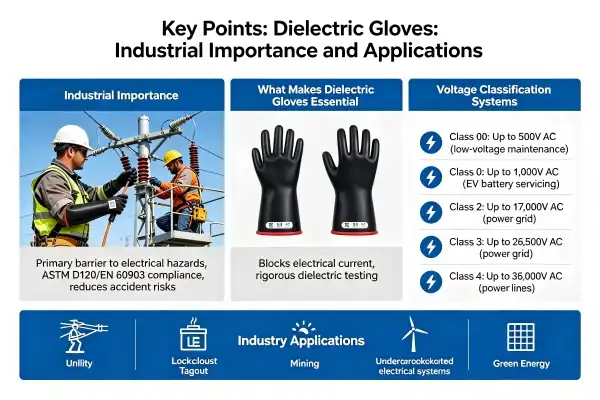
When it comes to how they are made and what they are used for, dielectric gloves are very different from regular work gloves. We make these things out of high-quality natural rubber or EPDM elastomer compounds that are designed to block electrical power without conducting it. General-use rubber gloves may be able to fight some chemicals, but dielectric gloves go through a lot of dielectric testing to make sure they can protect against certain voltages.
What Makes Dielectric Gloves Essential for Electrical Work
Linemen working in utility maintenance areas often come across live conductors holding thousands of volts while doing regular repairs. If you don't have the right electrical protection, touching an electrical wire by mistake can seriously hurt or kill you. When these dielectric gloves are put on, they form a shield around the hand that stops current from flowing through the body to ground. The anatomically curved-hand design keeps muscles from getting tired after long periods of use. This solves a common problem electrical workers had with old protection that was too stiff and uncomfortable, which made it hard to feel things.
Voltage Classification Systems Explained
Class 00 gloves protect you up to 500 volts AC, so they can be used to maintain low-voltage industrial equipment. Class 0 covers up to 1,000 volts, which is usually what is needed to service batteries in electric vehicles. Class 2 and Class 3 choices protect against 17,000 and 26,500 volts, respectively, which is what the power grid needs. Class 4, which is the highest level, can handle up to 36,000 volts for work on power lines. For each group, there are specific proof test voltages that make sure the glove is properly insulating before it leaves our plant.
Industry Applications Across Multiple Sectors
Dielectric gloves barriers to keep people safe when working on overhead lines or transformers and are exposed to high-voltage AC. When factories keep industrial machinery, they use them as part of the lockout-tagout process. For upkeep of underground electrical systems, mining activities require protection with a voltage rating. Adoption has grown a lot in the green energy sector. For example, workers who install wind turbines and solar panels need reliable electrical insulation for setting up the systems and fixing problems.
Essential Criteria When Selecting Dielectric Gloves
A lot of technical and practical factors need to be carefully looked at during the buying process. Your choice has a direct effect on both worker safety and long-term cost savings because the glove will last longer if you use it.
Voltage Rating Alignment with Workplace Hazards
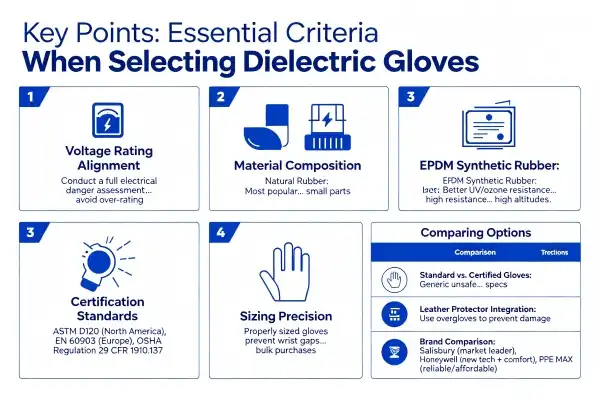
By doing a full electrical danger assessment, you can find out what the highest voltage levels are that your workers will be exposed to. This study should keep track of the rated loads of powered equipment, possible breakdown situations, and induced voltages from nearby wires. Choosing gloves with voltage values higher than the dangers you've found is an important safety measure. Underrating safety creates risks that are too high, and overrating it too much often adds extra bulk that makes it harder to do precise jobs by hand.
Material Composition and Performance Characteristics
Because it is more flexible and has better insulating strength, natural rubber is our most popular material choice with electrical workers. Naturally, the material doesn't allow holes to go through it, and it still has great physical properties for working with small parts. EPDM synthetic rubber is more resistant to UV light and ozone damage, which means it lasts longer in outdoor settings. Some buyers put this formulation at the top of their list for teams that work in full sunlight or high altitudes where ozone levels speed up the aging process of natural rubber.
Certification Standards and Regulatory Compliance
ASTM D120 sets performance standards and testing procedures for North America that our production methods must strictly follow. The markets in Europe use EN 60903 standards, which have similar but different ways of testing. OSHA regulation 29 CFR 1910.137 sets specific standards for inspection, testing, and retirement that must be taken into account when making buying choices. Making sure that your provider gives you proof that they follow these standards saves your company from liability and makes sure that the protection really works. We test every batch of products we make and keep detailed records of quality that customers can look over.
Sizing Precision for Optimal Protection and Comfort
When gloves are properly made, there are no gaps at the wrist that could let electricity touch the skin, and the material doesn't bunch up too much, which weakens the grip. We provide size charts based on hand diameter and length measurements because we know that a diverse workforce needs a wide range of sizes. Custom sizes can be made to fit specific needs, but normal sizes usually work for 95% of workers. Before committing to big purchases, procurement teams should order sample sizes to try for fit. This will lower the number of returns and make sure that the workforce accepts the products.
Comparing Different Dielectric Gloves and Alternatives
Knowing what makes one pair of dielectric gloves different from another helps buyers get the most out of their protective gear purchases.
Standard Rubber Gloves Versus Certified Electrical Protection
In hardware shops, you can buy generic rubber gloves that don't have any standard electrical values and don't go through any dielectric testing. These goods might protect you from chemical splashes well enough, but they haven't been proven to protect you from electrical dangers. It is very dangerous to use gloves that aren't rated when working with electricity. It doesn't matter how much money you save if a worker gets hurt. There are obvious marks on certified dielectric gloves that show their voltage class, testing date, and production specs. These markings set them apart from alternatives that aren't safe.
Leather Protector Integration for Mechanical Durability
When using dielectric gloves in the field, they need to be worn with leather protection overgloves that keep the rubber from getting punctured, cut, or worn down. The leather layer keeps the insulation material from being damaged by sharp edges on electrical equipment. We suggest buying guards and dielectric gloves at the same time to make sure you get the right size and set up a full protection system. This mix makes the rubber glove last a lot longer by protecting it from mechanical damage that would normally mean it has to be retired early.
Brand Comparison and Product Innovation
Salisbury has been the market leader for decades thanks to its high-quality products and wide range of voltage-class products. Honeywell adds new technologies to comfort features while still meeting strict safety standards. At PPE MAX, we can make protective gear that is both reliable and affordable by combining traditional rubber mixing skills with modern quality control systems. In 134 countries since 1956, we've provided electrical services, mines, and factories with supplies. This has earned us a name for reliable performance that procurement managers trust.
Procurement Factors for Industrial Buyers
When buying in bulk, there are things to think about besides just the basic specs of the gloves.
Volume Purchasing Strategies and Cost Optimization
When you order in bulk, you save a lot of money on each unit and make sure that your inventory is always available at all of your workplaces. We set our prices so that bigger purchases are rewarded, because we know that business buyers need to be able to plan their budgets with confidence. Setting up blanket purchase deals with regular delivery lines up buying cycles with real consumption rates. This stops both running out of stock and having to pay extra to store too much of it. When you look at the total cost of ownership instead of just the purchase price, the economic benefits of strategic buying become clear.
Supplier Reliability and Quality Assurance
Checking the qualifications of the maker keeps fake or low-quality goods from getting into your supply chain. We keep our ISO certification and welcome site checks from potential partners who want to be sure of our production capabilities. Each shipment comes with documentation that includes batch testing results, material certificates, and records of how the materials were used. These can help your internal quality control systems. Reliable providers always deliver on time and keep enough product on hand to meet quick replacement needs without having to wait for longer lead times.
Custom Solutions for Specialized Requirements
In some situations, normal products need to be changed to work better. For certain upkeep tasks, longer cuff lengths offer more protection for the wrist. Color-coding methods help tell the difference between voltage classes in storage places where more than one rating is present. Working together with buying teams, we create custom solutions that solve specific business problems. We use our manufacturing flexibility to help you reach your goals for worker safety. These customization options set complete PPE partners apart from simple product sellers.
Maintenance, Lifespan, and Safety Best Practices
The best way to get the most out of your investment in dielectric gloves is to follow the care instructions that come with them.
Inspection Protocols and Testing Frequency
Visual checks are done every day before each use to find clear damage like cuts, tears, or foreign objects that are embedded and could weaken protection. The air inflation test is still the most useful way to check in the field. Workers fill the glove and look for air leaks, which means there are holes. Every six months, OSHA requires labs to test gloves in use for dielectric breakdowns. This needs special high-voltage tools that can apply proof test voltages and measure leaking current. We suggest setting up testing plans with certified labs and keeping thorough records that can be used as proof of compliance during safety checks.
Storage Conditions That Preserve Protective Properties
Heat, sunshine, and ozone exposure all break down rubber faster, which means gloves will no longer be useful for a long time. Canvas storage bags keep gloves safe while they're being moved and let air flow to keep wetness from building up. Away from electrical motors, welding tools, and other things that make ozone, storage places should keep their temperatures between 50°F and 70°F. When you hang gloves with the cuffs down, you keep the stress from building up and making weak spots in the material. These easy steps can add months or years to the life of your equipment, which increases your return on investment.
Retirement Criteria and Replacement Indicators
No matter what the test results say, gloves that have surface cracks, lasting distortion, or tackiness must be taken out of service right away. Loss of flexibility is a sign that the material is breaking down, which makes it less safe and less comfortable to use. When dielectric tests fail, it's clear that the item needs to be thrown away, but small changes in its physical features often happen before electrical fails. Setting clear criteria for retiring and teaching workers to spot warning signs stops people from continuing to use protections that aren't up to par. We quickly send new units to replace old ones, so your employees will never be without enough electrical protection.
Conclusion
To choose the right dielectric gloves, you have to balance technical requirements, legal compliance, user comfort, and the speed of purchase. Voltage ratings must exactly match the known dangers in the workplace, and the choice of material affects both the amount of security and the time the device will work. Verification of certification makes sure that goods really do meet written safety standards, not just what the company says they do. When it comes to long-term value, strategic buying methods that focus on source stability, volume benefits, and full support are better than choices that are only based on price. Putting in place strict maintenance and testing plans will get the most out of your investment in safety and show that you care about the safety of your workers.
FAQ
How Often Should Dielectric Gloves Be Tested?
OSHA rule 29 CFR 1910.137 says that dielectric gloves that are used regularly must be tested for dielectric strength in a lab every six months. In tough settings with a lot of chemical or mechanical wear, this time frame may be cut down to three months. In addition to regular testing, daily pre-use checks find clear damage before it happens when the equipment is exposed to electricity. We keep testing relationships with accredited labs to make compliance easier for our clients.
Can These Gloves Be Reused After Electrical Contact?
If you take care of your dielectric gloves, they will protect you for many uses. Contact with live conductors during regular use does not always mean that the equipment needs to be retired if inspection and tests after the event show that it is still safe to use. If there are signs of electrical arcing or obvious heat damage, the item must be taken out of service right away and tested in a lab before it can be used again.
What Voltage Range Should I Specify for My Operations?
Do a full electricity danger assessment and write down the highest voltage your workers will be exposed to. Choose glove classes that are rated higher than the amount of danger you've found. This will give you safety margins that take into account voltage spikes and measurement errors. Class 0 is good for most workplace repair tasks that don't involve more than 1,000 volts, but Class 2 or better protection is usually needed for utility work.
Partner with PPE MAX for Certified Electrical Safety Protection
At PPE MAX, we know that keeping your employees safe from electrical hazards requires more than just legally required goods. It also requires a dedicated dielectric gloves provider with a track record of success and strict quality standards. We have been making voltage-rated protection since 1956, and electricity companies, mines, and factories in 134 countries trust our products. Our testing methods go beyond what is required by ASTM D120. This makes sure that every glove that leaves our plant in Northwest China is proven to protect. We offer discounts for buying in bulk, unique sizing, and expert technical advice, so you can get the Class 00 gloves you need for EV repair or the Class 4 gloves you need for transmission work. Email our team at marketing@ppemax.com to talk about your unique voltage needs and get personalized advice based on decades of experience making safety equipment.
References
1. American Society for Testing and Materials. (2019). ASTM D120-19: Standard Specification for Rubber Insulating Gloves. West Conshohocken, PA: ASTM International.
2. Occupational Safety and Health Administration. (2018). 29 CFR 1910.137: Electrical Protective Devices. Washington, DC: United States Department of Labor.
3. International Electrotechnical Commission. (2017). IEC 60903: Live Working - Gloves of Insulating Material. Geneva, Switzerland: IEC Publications.
4. National Fire Protection Association. (2021). NFPA 70E: Standard for Electrical Safety in the Workplace. Quincy, MA: NFPA Publications.
5. European Committee for Electrotechnical Standardization. (2018). EN 60903: Live Working - Electrical Insulating Gloves. Brussels, Belgium: CENELEC Standards.
6. Canadian Standards Association. (2016). CSA Z462: Workplace Electrical Safety. Toronto, Canada: CSA Group Publications.
Learn about our latest products and discounts through SMS or email