- English
- French
- German
- Portuguese
- Spanish
- Russian
- Japanese
- Korean
- Arabic
- Greek
- German
- Turkish
- Italian
- Danish
- Romanian
- Indonesian
- Czech
- Afrikaans
- Swedish
- Polish
- Basque
- Catalan
- Esperanto
- Hindi
- Lao
- Albanian
- Amharic
- Armenian
- Azerbaijani
- Belarusian
- Bengali
- Bosnian
- Bulgarian
- Cebuano
- Chichewa
- Corsican
- Croatian
- Dutch
- Estonian
- Filipino
- Finnish
- Frisian
- Galician
- Georgian
- Gujarati
- Haitian
- Hausa
- Hawaiian
- Hebrew
- Hmong
- Hungarian
- Icelandic
- Igbo
- Javanese
- Kannada
- Kazakh
- Khmer
- Kurdish
- Kyrgyz
- Latin
- Latvian
- Lithuanian
- Luxembou..
- Macedonian
- Malagasy
- Malay
- Malayalam
- Maltese
- Maori
- Marathi
- Mongolian
- Burmese
- Nepali
- Norwegian
- Pashto
- Persian
- Punjabi
- Serbian
- Sesotho
- Sinhala
- Slovak
- Slovenian
- Somali
- Samoan
- Scots Gaelic
- Shona
- Sindhi
- Sundanese
- Swahili
- Tajik
- Tamil
- Telugu
- Thai
- Ukrainian
- Urdu
- Uzbek
- Vietnamese
- Welsh
- Xhosa
- Yiddish
- Yoruba
- Zulu
How to Test and Inspect Class 1 Insulating Gloves Before Use?
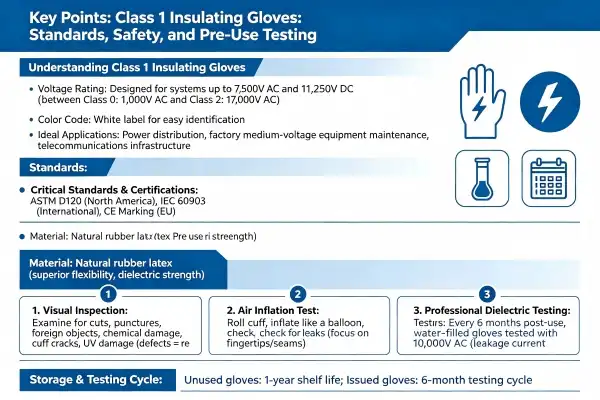
Class 1 Insulating Gloves must be checked and tested before each use. Not doing this can be very dangerous and could even kill someone. Three important steps must be taken to properly inspect Class 1 Insulating Gloves: first, look at the gloves carefully for cuts, punctures, or foreign objects that might be inside; second, use an air inflation test to find hidden leaks or weak spots; and third, make sure that the gloves have passed their most recent six-month dielectric testing. As required by ASTM D120 and OSHA 1910.137, these steps make sure that the gloves keep their rated protection against voltages up to 7,500 volts AC. This keeps electrical workers safe from possibly fatal shock dangers while they work on utilities, in factories, or on the phone network.
Understanding Class 1 Insulating Gloves: Standards and Safety Requirements
Class 1 Insulating Gloves are the main thing that keeps workers away from live wires. These specific pieces of personal safety equipment are made to keep you from getting an electric shock while working on or near live electrical systems. Over the past 65 years, PPE MAX has worked to improve the way we make gloves so that they meet the strictest international safety standards.
What Makes Class 1 Gloves Different from Other Voltage Classes?
Class 1 Insulating Gloves are grouped by the highest power they can handle. Class 1 Insulating Gloves can work with systems that have up to 7,500 volts AC and 11,250 volts DC. This puts them in the middle of Class 0 gloves, which can handle 1,000V AC, and Class 2 gloves, which can handle 17,000V AC. Because of this, they are perfect for work that involves distributing power, maintaining medium-voltage equipment in factories, and building up internet networks. The white label color code on Class 1 Insulating Gloves makes them easy to spot right away, which keeps people from getting them mixed up on the job, where there may be more than one voltage class.
Critical International Standards and Certifications
Following established safety rules is not a choice; it's essential for keeping workers safe. The Class 1 Insulating Gloves that PPE MAX makes meet ASTM D120, which is a North American standard that says what materials must be used, how to test for electrical safety, and how to label things. We also certify to IEC 60903, which is the worldwide standard that is accepted in Asia, Europe, and emerging countries. Customers in Europe really like our CE marking, which shows that we follow EU safety rules. These approvals aren't just pieces of paper; they're strict proof from a third party that our gloves will work when lives depend on them.
The choice of material is very important for how well gloves work. Because it is so flexible and dielectrically strong, natural rubber latex is the best material for precise work that needs a lot of skill. At our Xi'an factory, we have quality control checks at every step of the way, from checking the raw materials to making sure the finished product works with electricity at 10,000 volts AC, which is much higher than the maximum use voltage.
Step-by-Step Guide to Testing Class 1 Insulating Gloves Before Use
The worker's last line of defense against broken tools is glove inspection every day before they are used. Even gloves that were tested by a professional six months ago can get dangerous flaws from normal use, bad storage, or damage that happens by chance. We suggest an organized three-step review process that doesn't take long and cuts risk by a huge amount.
Visual Inspection: What to Look For
First, look at both the Class 1 Insulating Glove and its leather cover in well-lit areas. Be very careful to find any holes, cuts, or punctures—even small ones can damage the dielectric. Check for metal shavings or glass pieces that could be buried and form conductive lines. Check for signs of chemical damage, which usually show up as changes in color, swelling, or a sticky feel. Check the area around the cuffs where folding can cause stress cracks during storage. UV damage from the sun shows up as chalking or breaking on the surface. Any of these flaws means the item must be taken out of service right away.
The Air Inflation Test: Detecting Hidden Defects
This easy-to-use field test finds leaks that you can't see with the naked eye. By rolling up the glove's cuff, you can make it look like a balloon. Listen and feel for air that is leaving while putting light pressure on the area. Work your way around the whole glove in a planned way, paying extra attention to the tips of the fingers and the spaces between them, which are common places for holes to appear. Some inspectors hold the glove up to their face to find even the smallest air leaks. This test doesn't need any special tools, but it's very important to make sure that the shield on the glove stays in place.
Professional Dielectric Testing Requirements
Workers do daily sight and inflation tests, but every six months after the gloves are put to use, they must be put through a full electrical test by an approved testing facility. Up to 10,000 volts AC (the proof test voltage) is used in this test to make sure the glove keeps its insulation qualities. Class 1 Insulating Gloves filled with water are put into a bath that is conductive, and precise tools are used to measure any leakage current. Gloves that don't pass this test will never be used again. Legally, these tests must be documented, and this documentation should be looked over during the purchase glove inspection.
Procurement managers need to know the difference between in-service tests and shelf life. Class 1 Insulating Gloves can be stored without being worn for up to a year before they need to be tested for the first time. However, once they are given to workers, the testing cycle starts every six months, no matter how many hours they are used.
Common Issues and How to Avoid Them: Risk Awareness and Mitigation
To keep Class 1 Insulating Gloves from breaking, you should first understand how and why they do so. Working with workplace safety managers in 134 countries for decades has shown us trends in glove failures that can be almost entirely avoided by following the right procedures.
Overlooked Damage That Creates Fatal Risk
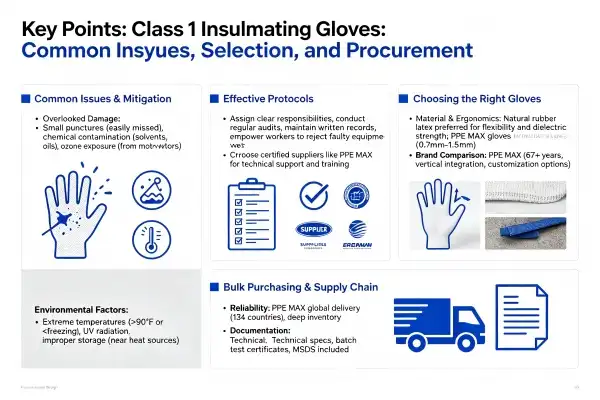
Small punctures are the most dangerous because they are easy to miss when you only look at something briefly. An opening smaller than a millimeter can let electricity flow through the glove and directly to the worker's skin, protecting them from harm. Solvents, oils, or cleaning products can contaminate the rubber material with chemicals that break it down slowly, lowering its dielectric strength without any clear signs. Ozone exposure, which happens a lot near electric motors and welding gear, causes tiny cracks that make failure happen faster.
Environmental Storage Factors That Shorten Glove Life
Extreme temperatures have a big effect on the structure of rubber. Temps above 90°F (32°C) in storage areas speed up the aging process, while temps below freezing can make things break easily. Rubber materials break down when they are exposed to UV rays from direct sunlight. A lot of places store gloves near steam lines, HVAC exhaust, or car trunks, where temperatures often go above what is safe. We've seen gloves fail electricity tests after only three months because they weren't stored properly, which was easy to avoid.
Building Effective Inspection Protocols
Safety plans that work make it clear who is responsible for what. Name particular people who will be in charge of teaching others on glove inspections and doing regular audits. Keep written records of each check to show that you did your research. Make it so that workers don't feel like they have to "make do" with bad gloves and are free to refuse to use iffy tools. Work with certified providers like PPE MAX who offer more than just goods. They also offer full technical support, such as training on-site and help with inspections.
Procurement teams should set clear quality standards that go beyond just price, check factory licenses, and require proof of group testing as part of their supplier selection processes. The difference in price between certified and uncertified gloves is very small when compared to the damage and loss of life that could happen in an electrical accident that could have been avoided.
Choosing the Right Class 1 Insulating Gloves for Your Needs
Choosing the right Class 1 Insulating Gloves means combining a lot of different factors that have an effect on both worker safety and the speed of the process. When lives are at stake, price alone never tells the whole story.
Material Quality and Ergonomic Design Considerations
Natural rubber latex is still the best material for Class 1 Insulating Gloves because it is more flexible and has been shown to work well as a dielectric. At PPE MAX, our Class 1 Insulating Gloves are made of high-quality latex that stays flexible even when the width runs from 0.7mm to 1.5mm. This mix between safety and tactile awareness lets workers work with circuit breakers, wire connections, and precision tools without getting frustrated and taking their gloves off, which could be dangerous. Ergonomic shaping keeps your hands from getting tired after long periods of use, which makes it easier to follow safety rules. Our gloves are better at resisting ozone and UV damage than cheaper options, which means they will last longer and be a better deal over the life of the purchase.
Comparing Leading Brands and PPE MAX Advantages
Established names like 3M, Honeywell, and Ansell are in the electrical safety business. Each of these brands has a track record of success. PPE MAX stands out because we have been making things since 1956 and are the biggest PPE producer in Northwest China. From getting the raw materials to checking the finished product, we are vertically integrated, which gives us a level of consistency that contract makers can't match. We can customize for large buyers who need specific cuff lengths, color codes for internal inventory systems, or private label for sellers who are building their own brands. Our low prices on big orders are due to how efficiently we make things, not to lower quality.
Bulk Purchasing and Supply Chain Considerations
Industrial sellers who are in charge of a lot of workers need supply chains that they can count on to keep safety gear in stock. Our global delivery network serves 134 countries, and we keep a deep collection to make sure that even urgent replacement orders are filled quickly. Our minimum order amounts are set up so that they can work for both big businesses and small workers. With every package, we include technical specification sheets, batch test certificates, and material safety data sheets. This makes it easier for you to keep track of your compliance paperwork. Flexible payment terms and bulk discounts help buying managers plan their budgets in a way that keeps costs low while maintaining the highest safety standards.
Maintaining Class 1 Insulating Gloves: Storage and Lifespan Optimization
When gloves are taken care of properly, they last longer and keep their protective qualities that keep workers safe. Not following the rules for keeping and upkeep wastes money on purchases and raises safety risks for no reason.
Optimal Environmental Conditions for Glove Storage
Class 1 Insulating Gloves should be kept in cool, dry places away from direct sunlight and sources of ozone. These gloves come in cloth bags made just for this reason. The temperature and humidity should stay about the same, between 10°C and 21°C (50°F to 70°F). When storing gloves, never fold them or let big things press down on them, because that makes stress points that are more likely to crack. When storing rubber gloves for a long time, take them out of their leather covers to keep their shape. Dedicated glove storage boxes with good airflow are ideal and show that you care about your tools during safety checks.
Approved Cleaning Methods That Preserve Integrity
Clean your gloves often with water and gentle soap. Don't use cleaners, solvents, or strong detergents that are made from petroleum, as these can damage rubber materials. Rinse well to get rid of any soap residue that might become conductive. Let things dry fully in the air before putting them away. Never use heat sources, like heaters or forced air dryers, that can speed up the aging process. Using approved glove powder to lightly dust rubber surfaces keeps them from sticking together while they are being stored. The leather covers are very important to the Class 1 Insulating Glove's life, so they should be cleaned separately and looked at to see how they wear.
Recognizing When Replacement Is Necessary
In addition to the required electrical testing every six months, gloves should be thrown away when they show a lot of wear, coloring from chemicals, or loss of flexibility, which means the material is breaking down. According to manufacturer standards, workers should retire after 12 months of service, even if electrical tests still pass. This is because rubber properties decrease over time, no matter how good the state looks. Keeping up with replacement plans and making sure you have enough supplies stops you from wanting to push the service life past what is safe. As part of our commitment to customer safety programs, PPE MAX offers tools for keeping track of how long items last and setting alerts for when they need to be replaced.
Conclusion
Electrical safety depends on following strict testing and checking procedures that find broken equipment before it breaks down in use. The steps described here—visual inspection, air pressure testing, and skilled dielectric verification—as a whole make up a system that has kept many workers safe for decades. Working with a maker that knows both the technical needs and the problems that come up in the real world of industrial safety programs makes them more likely to last. Every client of PPE MAX benefits from our team's more than 65 years of experience. We support your safety goals with approved goods, technical know-how, and quick service that lasts long after the purchase.
FAQ
How often must Class 1 insulating gloves undergo professional electrical testing?
Once gloves are in use, OSHA 1910.137 and ASTM F496 say they must be tested for electricity every six months. If gloves are kept on a shelf and not opened, they can be kept for up to 12 months before they need to be tested for the first time. This difference is important for managing supplies because buying gloves ahead of time doesn't start the testing clock until they are given to workers.
Can rubber insulating gloves be used without leather protectors?
Protectors made of leather are required, not extra. Class 1 Insulating Gloves can get holes, cuts, and other damage that makes them less effective at protecting against electricity right away. The leather layer on the outside protects the rubber layer on the inside so that it can keep its insulating barrier. It is against the rules to use Class 1 Insulating Gloves without protection; this causes an unacceptable risk.
What do the color-coded labels on insulating gloves indicate?
The color of the label makes it easy to see what voltage class it is. Class 00 gloves are green, Class 0 gloves are red, Class 2 gloves are yellow, and so on. Class 1 Insulating Gloves have white labels that make them stand out from the others. This color-coding method keeps workers from using gloves that aren't rated for higher voltage on higher-voltage systems by chance, which could be fatal.
Partner with PPE MAX for Certified Class 1 Insulating Gloves
Electrical safety needs more than just goods that follow the rules. It also needs a connection with a supplier based on trust, technical knowledge, and quick help. Since 1956, PPE MAX has been protecting workers in 134 countries. We've built our name on consistent quality and real partnerships with safety pros. Our Class 1 Insulating Gloves are made of high-quality natural rubber and are designed to be comfortable to wear. They give workers the flexibility they need and meet safety standards. As a top producer of Class 1 Insulating Gloves, we can offer you bulk pricing that fits your budget without lowering the quality of our products. Email our purchasing experts at marketing@ppemax.com to get technical specs, paperwork for batch testing, and bulk quotes that are relevant to your needs. We offer full help, including inspection training materials and upkeep rules that make your safety program work better.
References
1. American Society for Testing and Materials. (2016). ASTM D120-14a Standard Specification for Rubber Insulating Gloves. West Conshohocken, PA: ASTM International.
2. Occupational Safety and Health Administration. (2018). 29 CFR 1910.137 - Electrical Protective Equipment. Washington, DC: U.S. Department of Labor.
3. International Electrotechnical Commission. (2019). IEC 60903:2019 Live Working - Electrical Insulating Gloves. Geneva, Switzerland: IEC Publications.
4. Cadick, J., Capelli-Schellpfeffer, M., & Neitzel, D. (2015). Electrical Safety Handbook (4th ed.). New York: McGraw-Hill Education.
5. National Fire Protection Association. (2021). NFPA 70E: Standard for Electrical Safety in the Workplace. Quincy, MA: NFPA Publications.
6. Marne, R., & Sullivan, T. (2017). Personal Protective Equipment for Electrical Workers: Selection, Testing and Maintenance. Journal of Occupational Safety Engineering, 14(3), 45-62.
Learn about our latest products and discounts through SMS or email