- English
- French
- German
- Portuguese
- Spanish
- Russian
- Japanese
- Korean
- Arabic
- Greek
- German
- Turkish
- Italian
- Danish
- Romanian
- Indonesian
- Czech
- Afrikaans
- Swedish
- Polish
- Basque
- Catalan
- Esperanto
- Hindi
- Lao
- Albanian
- Amharic
- Armenian
- Azerbaijani
- Belarusian
- Bengali
- Bosnian
- Bulgarian
- Cebuano
- Chichewa
- Corsican
- Croatian
- Dutch
- Estonian
- Filipino
- Finnish
- Frisian
- Galician
- Georgian
- Gujarati
- Haitian
- Hausa
- Hawaiian
- Hebrew
- Hmong
- Hungarian
- Icelandic
- Igbo
- Javanese
- Kannada
- Kazakh
- Khmer
- Kurdish
- Kyrgyz
- Latin
- Latvian
- Lithuanian
- Luxembou..
- Macedonian
- Malagasy
- Malay
- Malayalam
- Maltese
- Maori
- Marathi
- Mongolian
- Burmese
- Nepali
- Norwegian
- Pashto
- Persian
- Punjabi
- Serbian
- Sesotho
- Sinhala
- Slovak
- Slovenian
- Somali
- Samoan
- Scots Gaelic
- Shona
- Sindhi
- Sundanese
- Swahili
- Tajik
- Tamil
- Telugu
- Thai
- Ukrainian
- Urdu
- Uzbek
- Vietnamese
- Welsh
- Xhosa
- Yiddish
- Yoruba
- Zulu
What Makes a Full Mask Respirator More Effective for Hazardous Environments?
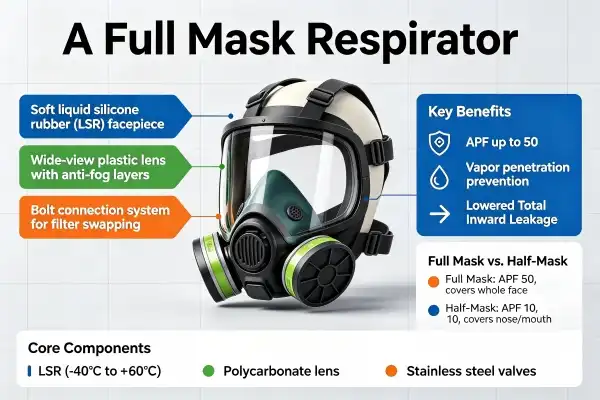
A Full Mask Respirator is the best way to stay safe in dangerous places because it covers the whole face, including the eyes, nose, and mouth. This makes a continuous seal that keeps harmful contaminants out and protects the eyes from exposure at the same time. This combined design gets Assigned Protection Factors (APF) of up to 50 in negative pressure settings, which is a lot better than half-mask options. The full face coverage stops vapor penetration, lowers Total Inward Leakage, and protects against multiple exposure pathways at the same time. This makes these respirators essential for places like chemical plants, drug factories, and emergency response operations where workers are exposed to a lot of different dangers.
Understanding Full Mask Respirators: Design and Functionality
The physics behind Full Mask Respirator protection shows why these tools are still needed in many industries. Over the past 65 years, PPE MAX has improved its designs to better meet the needs of its customers who work in dangerous settings every day.
Core Components That Define Protection
There are a lot of important parts in our Full Mask Respirators that all work together perfectly. Soft liquid silicone rubber (LSR), which is nontoxic and can stay flexible at temperatures ranging from -40°C to +60°C, is usually used for the facepiece. This material makes the strong cover that is needed to keep contaminants out. The wide-view plastic lens lets you see clearly and has anti-fog layers that keep the vision clear even when you're working hard.
Filtration Technology and Contaminant Removal
The bolt connection system lets you quickly switch between filters and can accommodate different types of cartridges based on the dangers in the workplace. Particulate filters use mechanical filtration to catch aerosols and dust, while gas and vapor cartridges use activated carbon beds that have been treated with certain chemicals to soak up molecular pollutants. Because it is flexible, a single mask body can protect against both particles and organic vapors by simply switching out the cells. For procurement teams that have to deal with a wide range of practical needs, knowing which filter fits your risk profile is essential.
Distinguishing Full Masks from Alternative Respiratory Protection
Full Mask Respirators protect against APF 50, while half-mask respirators only protect the nose and mouth. This tenfold difference is very important in places with high concentrations or when contact lasts for longer than short periods of time. Powered Air-Purifying Respirators (PAPRs) have battery-powered fans that push filtered air into loose-fitting hoods or tight-fitting facepieces. Depending on the design, these respirators can provide APFs between 25 and 1000. PAPRs make breathing easier, but they are heavier, more difficult to maintain, and require more thought about how to handle batteries, so they might not be right for all operating situations.
Core Advantages of Full Mask Respirators in Hazardous Environments
Industries that deal with explosive chemicals, pharmaceutical compounds, or toxic waste know that full face protection isn't an option—it's necessary for worker safety and to follow the rules. The benefits that PPE MAX has built into our Full Mask Respirators directly address the problems that safety managers say they face when they are in charge of big groups of people in complicated settings.
Enhanced Protection Through Complete Facial Coverage
Full-face covering creates a sealed environment that keeps germs from getting in through any forehead openings. People who only think about respiratory safety often forget about the eyes, which are also a sensitive exposure pathway. Eye damage can happen right away from irritating gases, acidic vapors, and high-speed particles. Our integrated lens system gets rid of the need for different safety masks. This cuts down on equipment costs and makes sure workers stay safe by eliminating gaps between devices. Along the forehead, temples, lips, and chin, there is a continuous seal that protects the filtered air from getting dirty. This is very important during toxic spills, entering tight spaces, or getting rid of asbestos, where exposure levels can rise quickly and without warning.
Superior Assigned Protection Factors and Regulatory Compliance
When a device is worn properly, its assigned protection factor tells you how well it protects your lungs. APF values are set by regulatory bodies like OSHA after a lot of testing and collecting data from the field. Our respirators have an APF of 50, which means that the concentration inside the mask shouldn't be more than 1/50th of the concentration outside. This performance level lets you follow the acceptable exposure limits (PELs) for a lot of dangerous chemicals.
Certifications back up claims of efficiency and make sure that products can be tracked all the way through the supply chain. In the US, our goods meet NIOSH 42 CFR Part 84 standards. In Europe, they meet EN 136:1998 standards, and in Australia and New Zealand, they meet AS/NZS 1716 standards. These approvals aren't just pieces of paper; they're the result of strict testing methods that prove the inhalation resistance stays below 35 mm H2O and the exhalation resistance stays below 25 mm H2O at normal flow rates. This multi-market certification method makes it easier for procurement professionals in charge of international operations to follow the rules in all of the different regulatory areas.
Material Quality and Long-Term Reliability
Total cost of ownership is directly related to how long things last. Our facepieces made of liquid silicone rubber don't break down when they're cleaned, exposed to UV light, or bent over and over again. Acrylic lenses are more likely to break or scratch than polycarbonate lenses. Stainless steel intake valves keep their seals even after thousands of breathing cycles. By choosing these materials, manufacturers can make their products last longer, which means they don't have to be replaced as often and their costs are lower over the course of their useful life. Because these respirators can be used more than once, have filters that can be replaced, and have extra parts available, they are a more cost-effective choice than throwaway ones in situations where they will be used a lot.
Maintenance, Fitting, and Operational Best Practices
Effective respiratory protection relies on both the quality of the tools and how it is used. Safety officers and maintenance teams from 134 countries have been taught by us, and the problems they always run into are with fitting precisely and maintaining consistently.
Achieving Proper Fit Across Diverse Facial Structures
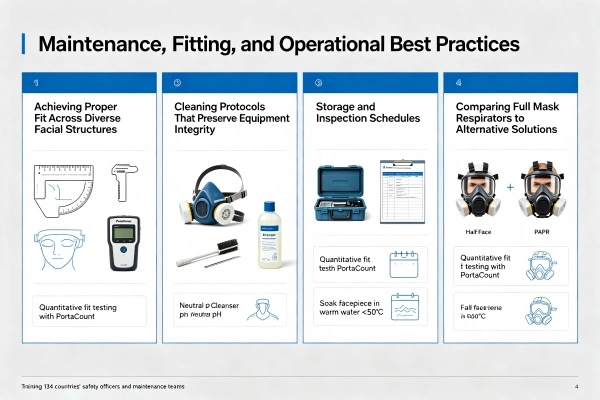
Different groups of people have very different facial measurements, which makes it very important to get the right size. We have different sizes of facepieces to fit people with different face types and sizes. The distance from the bridge of the nose to the chin, the width of the face, and the shape all affect how well the seal works. Quantitative fit testing, which uses tools like the PortaCount to measure real leakage during certain tasks like normal breathing, deep breathing, talking, moving your head, and bending. In qualitative testing, bitter or sweet vapors are used to find leaks by letting people taste them.
Tight-fitting full-mask respirators used in controlled businesses must be fit-tested every year by OSHA. Aside from making sure workers are following the rules, regular testing lets employers know when they need different sizes because of changes in weight, tooth work, or scars on the face that could affect the seal. Keeping track of which mask sizes fit which employees is helpful for companies with rotating shifts because it makes it easier to give tools and cuts down on the work of fit testing.
Cleaning Protocols That Preserve Equipment Integrity
Cross-contamination can be avoided, and equipment can last longer if it is cleaned between uses. Take out the cartridges and filters before you clean them, and never put the filter media in water. As directed by the maker, take apart the breathing valve and the inhalation valve. Soak the parts of the facepiece in warm water (below 50°C) that has a neutral pH cleanser in it. Cleaners made from petroleum, lanolin soaps, and solvents like acetone that break down silicone and flexible materials should be avoided.
Clean cracks and valve seats with a soft brush to get rid of dirt and dust. Rinse well to get rid of any soap buildup that could irritate the skin. Before putting it back together, let it dry fully in the air. Any moisture that gets stuck in valve assemblies can freeze in cold places or help microbes grow. Check the areas where the valves sit for cuts, tears, or other damage that could make closing less effective. Instead of trying to fix broken parts on the job site, replace them right away.
Storage and Inspection Schedules
Respirators should be kept in sealed cases out of direct sunlight, high temperatures, and chemicals. UV light breaks down elastomers, and changing temperatures speeds up material wear. Set up check plans that are in line with how much the item is used. Places that get a lot of use may need to be inspected once a week, while emergency response gear that is kept ready to use should be checked once a month.
The items on an inspection list should include the integrity of the facepiece (no cracks, tears, or distortion), the clarity of the lens (no scratches that make it hard to see), the flexibility of the strap (no lasting stretching), the function of the valve (proper fitting and movement), and the state of the threads on the cartridge connections. Keeping records of checks makes people responsible and shows that they did their job during investigations of incidents or governmental audits.
Comparing Full Mask Respirators to Alternative Solutions
When making procurement choices, you have to find a balance between security levels, user acceptance, operational limits, and your budget. Safety managers can make the most of their lung protection plans by knowing when Full Mask Respirators work best and when other options might be better for certain tasks.
Protection Level Analysis Across Respirator Types
Half-mask respirators are lighter and cheaper than full-face types, so they can be used for jobs that last less time or are exposed to less concentration. Their APF of 10 is enough to protect many industrial processes, especially when engineering controls lower the amounts in the air below the levels that need higher protection factors. But they don't protect the eyes well and might not seal well on people with certain facial traits.
Powered Air-Purifying Respirators use fans to force air through filters, which eliminates breathing resistance. This makes it easier on the body when working hard. PAPRs help workers who can't get a good fit with facepieces that are too tight because they have facial hair, scars, or structural issues. When set up correctly, PAPR systems can handle higher APF values (up to 1000 for pressure-demand supplied air respirators), which lets people work in environments that are immediately dangerous to life or health (IDLH). Battery runtime, weight, noise, and the difficulty of upkeep are all trade-offs that might not work well in all operating situations.
Cost-Efficiency Considerations for Bulk Procurement
The initial buying price is only one part of the total cost of owning. For big groups of workers, the costs add up quickly because disposable respirators need to be replaced all the time. Reusable full-face types cost more up front, but they pay for themselves over many years of use. The cost of replacing a filter depends on how dirty it is and what kind of cartridge it is. Particulate filters usually need to be replaced less often than gas/vapor cartridges.
Companies that manage centralized equipment pools can cut costs by making sure that all of their places have the same inventory. This method makes training easier, streamlines upkeep tasks, and lets you negotiate with sellers on big purchases. We help the purchasing departments of international companies set up supply deals that keep unit prices, delivery times, and the costs of keeping goods in check across all of their global operations in balance.
User Comfort and Task Compatibility
Compliance rates are affected by how well workers are accepted, which makes comfort issues strategically important. Full Mask Respirators are heavier and make it harder to talk, while half-masks make these problems less noticeable. Speech diaphragms built into our designs make it easier to understand, but isolated systems still warp sound some. With drinking tube choices, you can stay hydrated without taking off your mask, which is a popular complaint during hot work or long shifts.
There are limits to the field of view around the edges, where the facepiece frames the lens. This doesn't usually affect everyday tasks, but it could be a problem for tasks that need to be done with the head in awkward situations or with very little room to move. Instead of finding problems during performance, task analysis should include checking to see if respirators are compatible during the planning stages of the project.
Procurement Insights: Choosing and Buying the Right Full Mask Respirator
When making strategic buying choices, it's important to know not only the product specs but also the skills of the seller, the validity of the certification, and the overall reliability of the supply chain. Buying safety gear comes with extra duties because broken products can directly affect people's health.
Hazard Assessment and Protection Requirement Mapping
Completely identifying risks is the first step in making a good choice. Baseline exposure values for certain contaminants are set by air tracking data. To figure out what safety factors are needed, compare the concentrations that were recorded to the limits that have been set for work exposure. This way of using math takes the guesswork out of it: if the concentration in the air is 500 ppm and the PEL is 50 ppm, you need at least 10 APF (500/50=10). Adding safety margins by choosing higher-rated tools takes into account changes in focus and gives you more defense when things go wrong.
When choosing refill types, material matching is very important. Most hydrocarbon liquids can't get through organic vapor cartridges, but they might not be able to hold on to some low-molecular-weight chemicals. Chlorine, hydrogen chloride, and sulfur dioxide can all be put in acid gas cylinders. Combination containers deal with the different kinds of hazards that happen in the workplace. There are cartridges that are made just for ammonia, mercury gas, and other dangerous substances. Technical knowledge is needed to match cartridge chemicals to contaminants in the workplace. Our technical support team helps customers make the right choices by using Safety Data Sheets and exposure profiles.
Supplier Evaluation Criteria for Industrial Buyers
Long-term relationship success for Full Mask Respirator depends on how trustworthy the supplier is. The past of manufacturing shows how much the company knows and how mature its quality system is. PPE MAX has been making products for 65 years, and over that time, they have continuously improved thousands of different products and customer uses. We have the most production capacity in Northwest China, so we can keep supplies steady even when the market is down.
Verification of certification validity is needed. Instead of depending only on what the supplier says, get copies of test results from well-known labs. Our NIOSH, EN 136, and AS/NZS 1716 licenses are regularly renewed, and customers can look at the paperwork to see what they say. Fake lung protection is always a problem in global supply chains, so checking with suppliers is important for making sure that purchases are honest.
Brand Comparison and Product Line Analysis
Leading companies like 3M, Honeywell, MSA, and Avon keep large collections of breathing protection gear, with different types that work best for different tasks. By comparing features, certifications, prices, and availability, you can find the best options for your unique operational needs. While some brands focus on making designs that are light and easy to carry, others focus on making designs that are very durable for use in tough industrial settings. Different manufacturers use different standards for connecting cartridges, which can make stocking more difficult if more than one brand is used by the same company.
Conclusion
To choose the right breathing protection, you need to carefully look at the risks, the level of protection needed, the limitations of the job, and the supplier's skills. You can tell Full Mask Respirators are better in dangerous places because they cover your whole face, have higher Assigned Protection Factors, and have built-in eye protection that fills in any holes in your personal protective equipment. Proper fitting, regular upkeep, and choosing the right filters will make equipment work better and make sure it meets regulations in a wide range of workplace settings. It is important for strategic buying choices to weigh the initial costs against the long-term value of the purchase, giving top priority to the supplier's dependability and technical support skills that ensure the safety program's long-term success.
FAQ
What distinguishes full-face from half-mask respirators in industrial settings?
Full-mask respirators protect the whole face, including the eyes, and have an APF rating of 50, while half-masks only have an APF rating of 10. This tenfold difference in safety is very important in high-concentration areas or situations where contact lasts for a long time. Because the lens is built in, you don't need to wear separate eye protection.
How frequently should filter cartridges be replaced during normal operations?
When breathing resistance goes up dramatically, it's time to change the particulate filters. Gas and vapor cartridges need to be replaced based on service life plans that are estimated by taking into account the concentration of contaminants and the length of time they are used, or as soon as a breakthrough smell is detected. Set up change schedules by using maker instructions and data from watching the workplace.
Can workers with facial hair achieve adequate seal with full-face respirators?
No matter how good the mask is, facial hair gets in the way of sealing surfaces, greatly lowering the level of protection. According to OSHA rules, you can't wear a tight-fitting mask if your facial hair goes past the sealing area. For example, workers who can't shave need to wear loose-fitting powered air-purifying respirator hoods as an alternative form of protection.
What cleaning procedures preserve respirator integrity without causing damage?
Take out the filters, and then take the valves apart. Use neutral pH soap and warm water below 50°C to wash the parts. Cleaners and chemicals made from gasoline can damage elastomers, so stay away from them. Rinse well, let them dry fully in the air, check for damage, and put them back together before putting them away.
Partner with PPE MAX for Certified Full Mask Respirator Solutions
PPE MAX is a trusted Full Mask Respirator manufacturer with more than 60 years of specialized experience. They offer complete respiratory protection that meets the strict needs of industrial safety distributors, large-scale construction projects, and government procurement agencies all over the world. Our factories strictly follow the rules set by NIOSH, EN 136, and AS/NZS 1716. This makes sure that every mask that leaves our factories protects your workers in a way that can be proven. We offer cheap bulk pricing for large orders, OEM solutions that can be changed to fit the needs of brands creating their own product lines, and technical advice services that match the specs of your equipment to your specific risk profiles. Find out how our Full Mask Respirator Supply skills can improve your safety programs across multiple operational sites by contacting our respiratory protection experts at marketing@ppemax.com to discuss your unique needs.
References
1. National Institute for Occupational Safety and Health. (2018). NIOSH Guide to the Selection and Use of Particulate Respirators. Department of Health and Human Services Publication No. 96-101.
2. Occupational Safety and Health Administration. (2019). Respiratory Protection Standard 29 CFR 1910.134: Compliance Guidelines for Industrial Applications.
3. European Committee for Standardization. (2017). EN 136:1998 Respiratory Protective Devices - Full Face Masks - Requirements, Testing, Marking. Brussels: CEN Technical Standards.
4. Cohen, H.J., & Birkner, L.R. (2020). Industrial Respiratory Protection: A Practical Guide for Safety Professionals. American Industrial Hygiene Association Press.
5. Colton, C.E., & Mullins, H.E. (2021). Assigned Protection Factors: Theory, Application, and Field Validation Studies in Hazardous Environments. Journal of Occupational and Environmental Hygiene, 18(4), 156-174.
6. Standards Australia/Standards New Zealand. (2019). AS/NZS 1716:2012 Respiratory Protective Devices: Performance Requirements and Laboratory Testing Protocols. Sydney: SAI Global Limited.
Learn about our latest products and discounts through SMS or email