- English
- French
- German
- Portuguese
- Spanish
- Russian
- Japanese
- Korean
- Arabic
- Greek
- German
- Turkish
- Italian
- Danish
- Romanian
- Indonesian
- Czech
- Afrikaans
- Swedish
- Polish
- Basque
- Catalan
- Esperanto
- Hindi
- Lao
- Albanian
- Amharic
- Armenian
- Azerbaijani
- Belarusian
- Bengali
- Bosnian
- Bulgarian
- Cebuano
- Chichewa
- Corsican
- Croatian
- Dutch
- Estonian
- Filipino
- Finnish
- Frisian
- Galician
- Georgian
- Gujarati
- Haitian
- Hausa
- Hawaiian
- Hebrew
- Hmong
- Hungarian
- Icelandic
- Igbo
- Javanese
- Kannada
- Kazakh
- Khmer
- Kurdish
- Kyrgyz
- Latin
- Latvian
- Lithuanian
- Luxembou..
- Macedonian
- Malagasy
- Malay
- Malayalam
- Maltese
- Maori
- Marathi
- Mongolian
- Burmese
- Nepali
- Norwegian
- Pashto
- Persian
- Punjabi
- Serbian
- Sesotho
- Sinhala
- Slovak
- Slovenian
- Somali
- Samoan
- Scots Gaelic
- Shona
- Sindhi
- Sundanese
- Swahili
- Tajik
- Tamil
- Telugu
- Thai
- Ukrainian
- Urdu
- Uzbek
- Vietnamese
- Welsh
- Xhosa
- Yiddish
- Yoruba
- Zulu
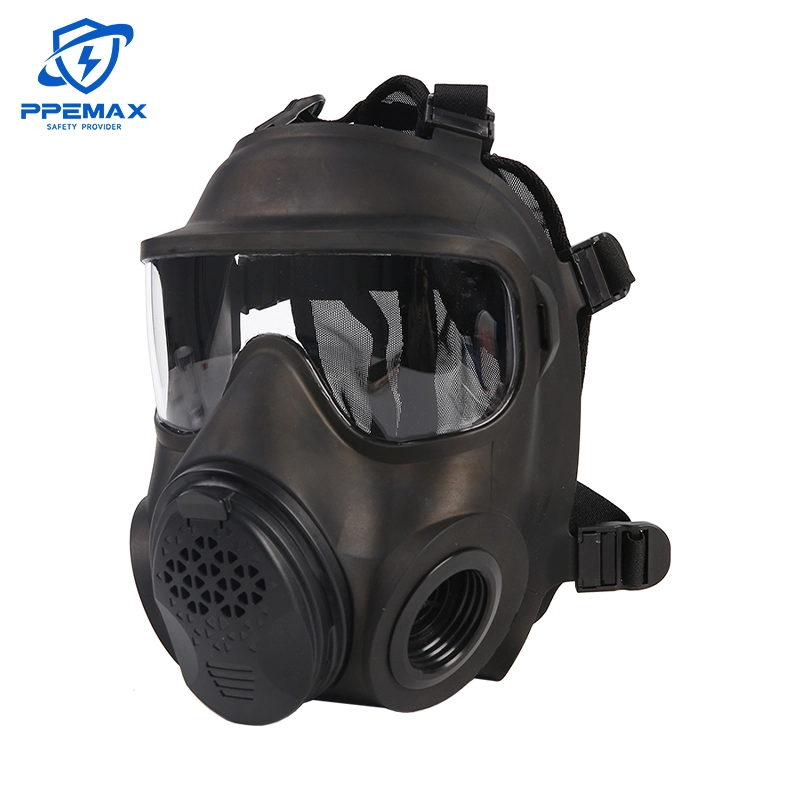
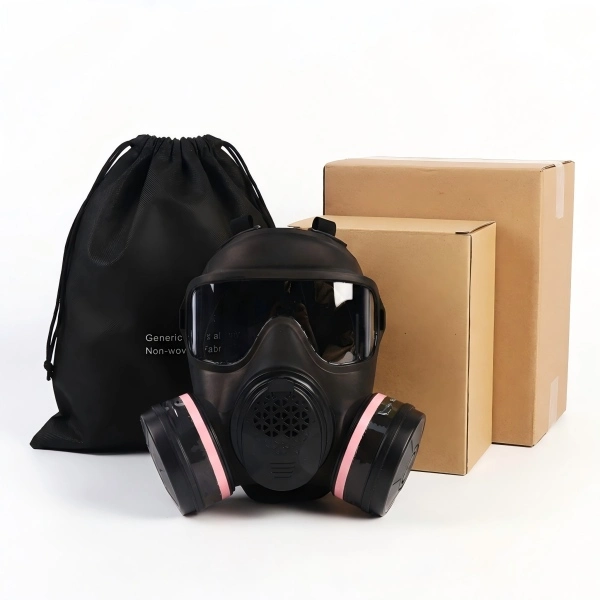
Facepiece Chemical Gas Respirator
Facepiece Chemical Gas Respirator for Industrial Protection — Xi'An PPE MAX Co., Ltd
Facepiece Chemical Gas Respirator systems come from Xi'An PPE MAX Co., Ltd. Workers who handle toxic gases and organic vapors put them on. Crews in harsh industrial plants face chemical particulates too, and they wear the same gear. Masks have been this company's main line since 1956. B2B buyers around the world can get mask bodies, filter cartridges, and protective lenses through one purchasing channel. Small runs are fine. Order size is never fixed. Logos and packaging can both be customized. DDP shipping gets supported as well.

What Is This Product?
This product is a tight-fitting Air-Purifying Respirator (APR). Hazardous substances cannot get to the lungs while it is worn. The mask seals against the face. That seal means every breath taken in must pass through a set filtration media.
A basic dust mask does not have that seal. This one goes after three problems that keep coming up in industrial environments:
- Masks of a lower grade may leak at the seal. Acute toxicity then becomes more likely. Long-term breathing damage, silicosis among other conditions, also turns into a real risk
- Hard manual labour runs up against high breathing resistance. Over a whole shift, that stacks up as metabolic fatigue
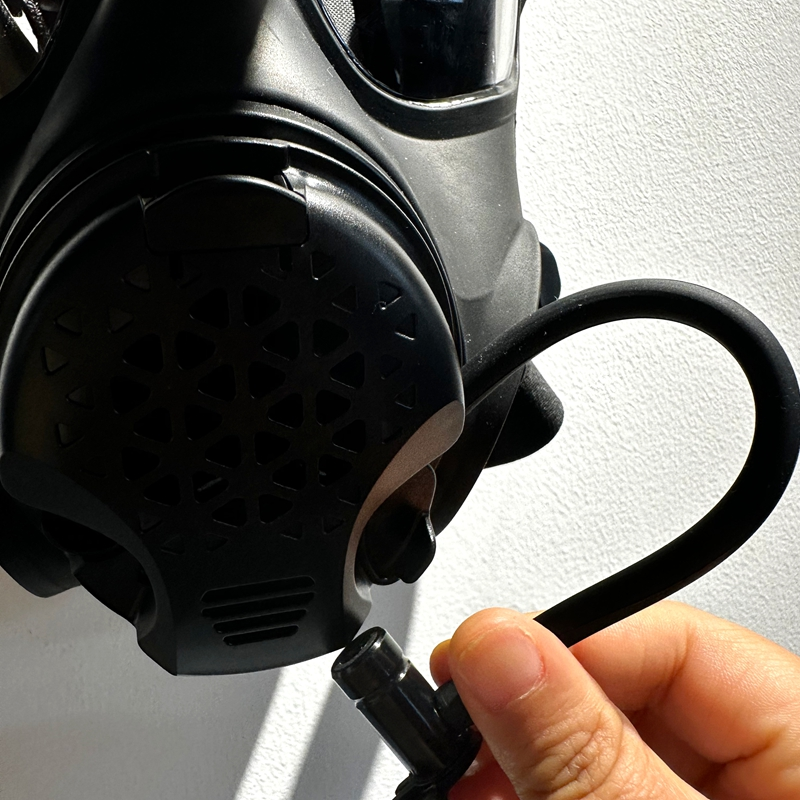
- Full-face models get lens fogging. An integrated nose cup sends exhaled air away from the lens, which cuts it down
Half-face models carry an Assigned Protection Factor (APF) of 10× the Permissible Exposure Limit. On full-face versions the figure reaches APF 50. Those numbers come from OSHA 1910.134 guidelines.
Standard Specifications
| Parameter | Details |
|---|---|
| Face Skirt Material | Medical-grade Liquid Silicone Rubber (LSR) or Thermoplastic Elastomer (TPE) |
| Thermal Stability | Resists deformation up to 150°C |
| Lens Material | Hard-coated Polycarbonate |
| Lens Standard | ANSI Z87.1 high-impact |
| Light Transmission | >90% |
| Filter Thread Standard | EN 148-1 (RD40) or bayonet systems |
| Half-Face APF | 10× PEL (OSHA 1910.134) |
| Full-Face APF | 50× PEL (OSHA 1910.134) |
| Total Inward Leakage (Full-Face) | ≤0.05% (EN 136) |
| CO₂ Dead Space Limit | <1.0% by volume |
| Respirator Body Shelf Life | 5–10 years (silicone, proper storage) |
| P100 Filtration Efficiency | 99.97% |
Key Features
A face seal that holds. Face skirts made of LSR and TPE take on the shape of the wearer's face. Quantitative Fit Testing (QNFT) then shows the seal is still in place. Keep the mask on for long shifts and a leak is less likely.
Optics with no distortion. Each lens is made of hard-coated polycarbonate. Light transmission goes past 90%. Your side view stays whole. Acetone won't hurt the surface. Neither will regular cleaning solvents.
Anti-fog nose cup. A nose cup comes built in. Outgoing breath is pushed away from the lens. Fog forms slower that way, even in steamy work areas.
Chemical-resistant body. Solvent splashes do not harm the respirator body. Common industrial chemicals touch it and the material holds up.
Low-resistance exhalation valve. Heat leaves quickly through the high-flow exhalation valves. So does moisture. Long shifts get easier, because fatigue takes longer to build up.
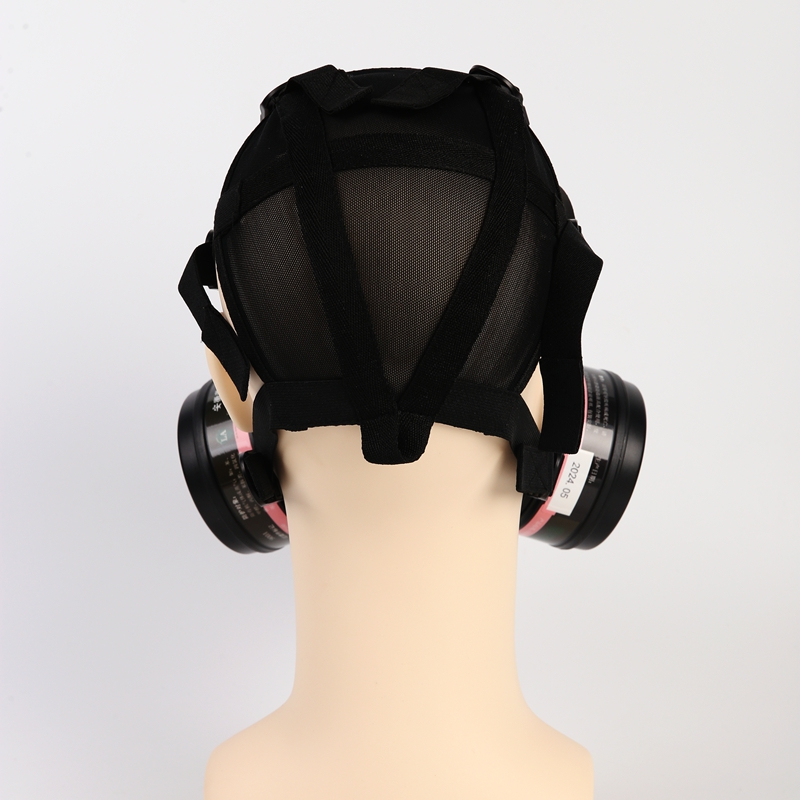
EN 148-1 RD40 compatibility. A standard filter thread means plenty of cartridge types will fit. No Facepiece Chemical Gas Respirator adapters are needed at all. Buying filters gets simpler that way.
Applications
Chemical manufacturing and petrochemical refining. This respirator goes on when workers clean reactors or service pipelines. Organic vapors, ammonia, or methylamine can reach high levels during those tasks. Splashes roll off the chemical-resistant body. It holds up well.
Automotive spray painting and coating. Against isocyanates and VOCs you need filtration you can count on. Long spray booth shifts get easier to take with high-flow exhalation valves.
Pharmaceutical production and hazmat remediation. Mold spores are a hazard here. So are active pharmaceutical ingredients. Each one calls for P100-level protection. At that rating, filtration efficiency reaches 99.97%. Respirators pair up with hood and helmet systems. Containing cross-contamination gets easier that way.
Why Choose PPE MAX
- Experience since 1956 in respiratory protection manufacturing
- MOQ from 1 piece lets you test the waters with a trial order. You don't need to commit a large sum upfront.
- In-stock inventory is what makes 7-day delivery possible
- All parts from one source: the mask body ships from the same supplier as the filter cartridges. The protective lenses come from that supplier too
- For B2B buyers, a customized logo and packaging option is available
- DDP delivery supported for simplified import logistics
- Replacement service for items confirmed damaged on arrival

Certifications for Facepiece Chemical Gas Respirator
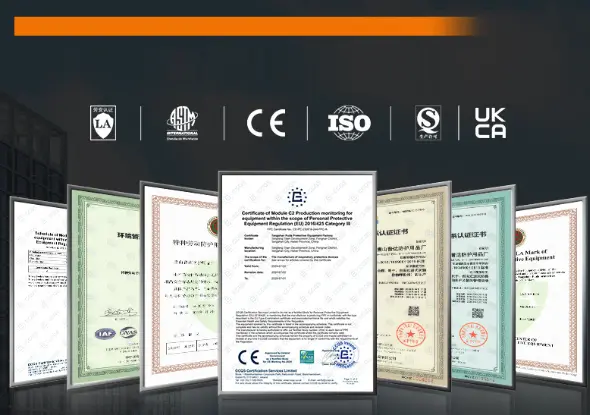
Each product comes out of a quality management system. Occupational safety standards are used to measure that system. A few test references apply. Total Inward Leakage is covered by EN 136. Filter thread compatibility gets checked under EN 148-1. Lens impact resistance falls under ANSI Z87.1. When it comes to protection factors, the OSHA 1910.134 guidelines are the reference. Do you need certification paperwork for your market? Get in touch. We will send the specific documents.

Packing
- Standard export carton packaging
- Customized box and logo printing available
- Packing inside the box protects the lens and the face skirt from UV light and ozone. It also takes the knocks during transit
- Bulk and retail packing formats supported
After-Sales Service
Damage does happen. Our replacement service takes that on directly when a shipment shows up that way. Tech questions come up too, about Facepiece Chemical Gas Respirator fit, filter choice, and compatibility, and the team answers them. For the long run, PPE MAX sticks with procurement relationships. We stay reachable for follow-up after every order.
FAQ
Q: How often do filter cartridges need replacing?
A: Build a schedule with the manufacturer's Service Life Software. Swap cartridges when that schedule says so. Swap them sooner if you taste or smell something. Do it sooner too if breathing starts to feel harder.
Q: Can this respirator be worn if I have a beard or stubble?
A: No. The sealing surface has to be clean-shaven. OSHA and NIOSH rules require it. Hair caught under the mask breaks the face seal. Protection drops sharply once that happens.
Q: How long is the shelf life of the respirator body?
A: Keep them in the original packaging. UV light, ozone, and extreme temperatures should be avoided. Follow that and a silicone body typically lasts 5 to 10 years.
Q: Can you use this respirator safely in air with no oxygen?
A: No. These units filter the air. They do not make oxygen. Keep them out of any space where oxygen drops under 19.5%.
Q: How do I clean the respirator?
A: Remove the filters and valves first. After that, wash the facepiece in warm water. The water must not be hotter than 50°C, and use a neutral pH detergent. Rinse it well. Let it air dry. Solvents like lanolin or gasoline should never be used.
Q: What thread standard do the filters on this respirator use?
A: The thread on most models is the EN 148-1 RD40 standard. That means cartridges from many suppliers will fit. Bayonet system options exist too.
Contact Us
Need product details, samples, or help with an order? Email our team at bettybing@ppemax.com. B2B inquiries about the Facepiece Chemical Gas Respirator get a fast reply.
Learn about our latest products and discounts through SMS or email