- English
- French
- German
- Portuguese
- Spanish
- Russian
- Japanese
- Korean
- Arabic
- Greek
- German
- Turkish
- Italian
- Danish
- Romanian
- Indonesian
- Czech
- Afrikaans
- Swedish
- Polish
- Basque
- Catalan
- Esperanto
- Hindi
- Lao
- Albanian
- Amharic
- Armenian
- Azerbaijani
- Belarusian
- Bengali
- Bosnian
- Bulgarian
- Cebuano
- Chichewa
- Corsican
- Croatian
- Dutch
- Estonian
- Filipino
- Finnish
- Frisian
- Galician
- Georgian
- Gujarati
- Haitian
- Hausa
- Hawaiian
- Hebrew
- Hmong
- Hungarian
- Icelandic
- Igbo
- Javanese
- Kannada
- Kazakh
- Khmer
- Kurdish
- Kyrgyz
- Latin
- Latvian
- Lithuanian
- Luxembou..
- Macedonian
- Malagasy
- Malay
- Malayalam
- Maltese
- Maori
- Marathi
- Mongolian
- Burmese
- Nepali
- Norwegian
- Pashto
- Persian
- Punjabi
- Serbian
- Sesotho
- Sinhala
- Slovak
- Slovenian
- Somali
- Samoan
- Scots Gaelic
- Shona
- Sindhi
- Sundanese
- Swahili
- Tajik
- Tamil
- Telugu
- Thai
- Ukrainian
- Urdu
- Uzbek
- Vietnamese
- Welsh
- Xhosa
- Yiddish
- Yoruba
- Zulu
Welding Face Shield Durability: Scratch, Heat, & UV Resistance
Industrial safety professionals are still very concerned about Welding Face Shield longevity because they know that damaged safety gear directly affects worker safety and the effectiveness of operations. In modern welding, face shields are exposed to harsh conditions like high-temperature sparks, sharp debris, and strong UV radiation, all of which can quickly damage less-than-stellar safety gear. These important safety devices last a long time thanks to improved material science, strict manufacturing standards, and regular upkeep procedures that keep them safe for as long as they're used.
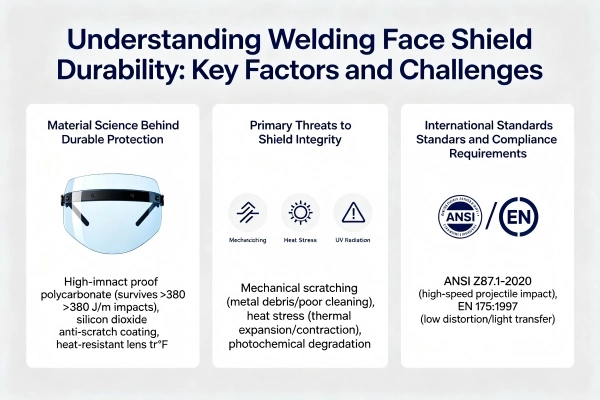
Understanding Welding Face Shield Durability: Key Factors and Challenges
Protective welding gear lasts a long time because it was carefully designed to last against three main types of damage: mechanical damage, heat stress, and photochemical degradation. When procurement workers understand these factors, they can make smart choices about which equipment to buy and how to handle its lifecycle.
Material Science Behind Durable Protection
Because it is so strong for its weight and doesn't melt when it gets hot, high-impact proof polycarbonate has become the standard for shield building. From our experience making things at PPE MAX, we know that good polycarbonate can survive impacts of more than 380 J/m and still be clear to look at, even after being in welding settings for a long time. Polycarbonate is naturally resistant to UV light because of the way its molecules are structured, but special treatments can make this protection even better. Another important factor in longevity is the use of advanced lens coverings. Silicon dioxide is used in anti-scratch treatments to make a harder surface layer that doesn't get worn down by flying particles that are common in industrial settings. Lens materials that have been treated to be heat-resistant keep their visual qualities even when they are heated to more than 350°F (177°C).
Primary Threats to Shield Integrity
There are special problems in welding settings that make tools wear out faster. Mechanical scratching happens when tiny pieces of metal, cutting dirt, or bad cleaning methods damage the surface in a way that builds up over time. This damage makes the optics less clear and can create dangerous blind spots in the welder's field of vision. Both the lens and the case can break down because of heat. This happens because of the thermal cycle, which causes stress to expand and contract. Long-term exposure to high temperatures can change the shape of plastic, warp light, and eventually break down materials. UV light is a more sneaky threat because it breaks down polymer chains photochemically, which makes them more brittle and less resistant to contact.
International Standards and Compliance Requirements
Thorough testing procedures make sure that safety gear meets set standards. Impact resistance tests with high-speed projectiles are required by ANSI Z87.1-2020 standards. Optical quality tests that check for low distortion and even light transfer are required by EN 175:1997 standards. These standards give people who buy things concrete ways to judge how long something will last and how well it keeps people safe.
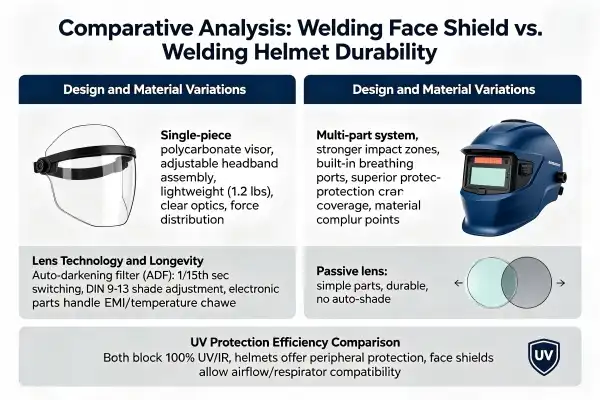
Comparative Analysis: Welding Face Shield vs. Welding Helmet Durability
The structural differences between face shields and welding helmets have a big effect on how long they last and what kinds of industrial uses they can be used for. By understanding these differences, buyers can choose the best safety for their individual needs.
Design and Material Variations
A single-piece polycarbonate visor hung from an adjustable headband assembly is usually used in Welding Face Shield construction. This design spreads the force of a collision across the whole shield area while keeping the optics very clear. The lightweight (about 1.2 pounds) makes it easier for operators to keep going for longer periods of time, but it may not protect as well as full hat designs. Welding hats have more complicated multi-part systems with impact zones that are stronger and breathing ports that are built right in. While offering superior protection coverage, the increased material complexity can create additional failure points that may compromise long-term durability.
Lens Technology and Longevity
This new technology, called an auto-darkening filter (ADF), is a big step forward in both safety and economy. Modern ADF systems can switch between jobs as quickly as 1/15th of a second and can precisely change the shade from DIN 9 to 13. It takes careful planning for the electronic parts in ADF systems to be able to handle the electromagnetic interference and wide temperature changes that are common in welding settings. Passive lens systems are more durable because they are made of simple parts, but they don't automatically change the light, which makes them less convenient to use. Choosing between inactive and auto-darkening methods is usually based on the needs of the application and how long the product needs to last.
UV Protection Efficiency Comparison
No matter how light the shade is, both shield and helmet styles must block 100% of UV and infrared rays. Independent tests show that good equipment keeps this level of safety throughout its useful life as long as it is properly kept. Helmets offer more safety for peripheral exposure because they cover a bigger area, while face shields allow more air flow and work with breathing equipment.
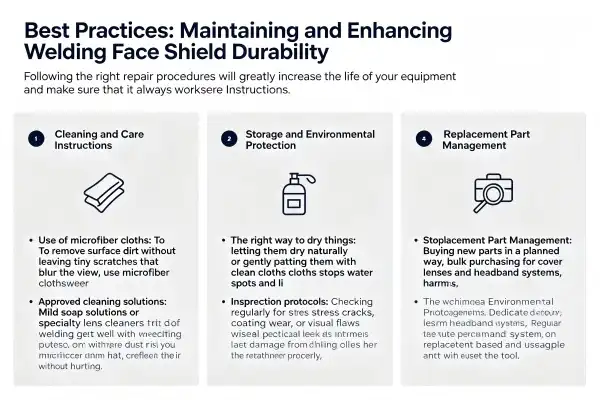
Best Practices: Maintaining and Enhancing Welding Face Shield Durability
Following the right repair procedures will greatly increase the life of your equipment and make sure that it always works as it should. These techniques are important for both safety managers and people who use the tools.
Cleaning and Care Instructions
To clean something well, you need to know which materials and methods will keep protected layers in place while getting rid of dirt. Here are the cleaning steps that are suggested to keep tools in good shape:
• Use of microfiber cloths: To remove surface dirt without leaving tiny scratches that blur the view, use microfiber cloths that are clean and free of lint.
• Approved cleaning solutions: Mild soap solutions or specialty lens cleaners get rid of welding dust well without hurting coatings that don't reflect light or scratch.
• The right way to dry things: letting them dry naturally or gently patting them with clean cloths stops water spots and limits damage from handling during the cleaning process.
• Inspection protocols: Checking regularly for stress cracks, coating wear, or visual flaws lets you replace them early, before they lose their protective properties.
These cleaning methods make sure that safety gear keeps working the way it's supposed to for as long as it's supposed to, and they also keep it from breaking down too quickly.
Storage and Environmental Protection
Environmental stresses during the storage of the Welding Face Shield can have a big effect on how long something lasts, even when it's not being used. Controlling the temperature, humidity, and keeping materials safe from chemicals that can break them down over time are all important parts of proper storage. Equipment is kept safe from mechanical damage and weather harm in dedicated storage cases. Quality cases are built to withstand impacts and have climate-controlled innards that keep things fixed even when the outside world changes.
Replacement Part Management
Buying new parts in a planned way lets you keep your tools in good shape at a low cost while still meeting safety standards. Buying in bulk for parts that are often changed, like cover lenses and headband systems, saves money and keeps equipment ready to use. Regular replacement plans that are based on how much the equipment is used and the elements of the surroundings keep it working at its best.
Selecting Durable Welding Face Shields for Industrial Use: A Decision-Making Framework
For procurement to work well, traits of longevity, operating needs, and total cost must all be carefully considered. This approach gives buying managers the information they need to make choices that balance cost, performance, and durability.
Critical Durability Metrics
Scratch resistance testing gives numbers that show how long a surface will last in real-world situations. Standardized wear testing mimics months of use in the field to guess how long something will actually last and when it needs to be replaced. Specifications for heat tolerance must match the welding process, since different methods create different thermal loads that affect how long equipment lasts. Certifications for UV protection make sure that the protective qualities of equipment last as long as it is used. These specs are checked by independent testing labs in controlled settings that are like being in a long-term field exposure.
Procurement Strategy Considerations
Verifying quality with well-known badges lowers the risk of buying something and makes sure that safety rules are followed. Some of the benefits of buying in bulk are lower unit costs, standard training needs, and easier control of inventory. Long-term ties with suppliers allow for customized solutions and priority support that make the program more effective as a whole. PPE MAX has been helping businesses since 1956 by giving them approved safety gear that meets the strictest working needs. Our wide range of products includes both passive and auto-darkening types that have been tested and shown to last in tough industrial settings.
Future Trends in Welding Face Shield Durability and Technology
The performance and longevity of safety gear are always getting better as technology advances. By understanding these trends, you can make plans for how to buy things and run your business in the future.
Advanced Materials and Coatings
Nano-coating technologies for welding face shields are the next version of surface protection. They make things less likely to scratch and clean themselves, so they stay clear with little upkeep. Molecular-scale engineering is used in these coats to make surfaces that actively resist contamination and last longer. Smart materials with adaptable qualities change based on their surroundings to provide the best safety and comfort. Temperature-sensitive plastics change their flexibility based on the temperature and humidity of the area, and photochromic materials change color automatically in light without using electronics.
Sustainability and Lifecycle Extension
Environmental concerns are becoming more and more important in purchasing choices as businesses try to run more sustainably. Materials that can be recycled and products that last longer are better for the earth and save money because they don't need to be replaced as often. Modular designs let you change parts of equipment instead of throwing it away altogether, which extends its useful life and cuts down on waste.
Strategic Recommendations for Procurement Teams
When you invest in new technology, it usually pays off in the long run because it lasts longer and needs less upkeep. Access to the newest products and expert help is made possible by supplier relationships that focus on ongoing research and development. By reviewing technology on a regular basis, businesses can find ways to improve both safety and working efficiency.
Conclusion
In industrial settings, the Welding Face Shield's durability has a direct effect on worker safety, operating efficiency, and the cost of equipment lifetime. Advanced materials, good maintenance habits, and smart buying choices all work together to make sure that security is effective even in the toughest operating circumstances. Modern safety gear is made with advanced engineering that takes into account the specific challenges of welding settings while still providing the comfort and clear vision needed for work. Investing in good protection gear is a basic commitment to worker safety and organizational efficiency. It helps businesses by lowering the number of injuries, raising output, and making it easier to follow the rules.
FAQ
How often should welding face shield lenses be replaced?
Lens replacement frequency depends on usage intensity and environmental conditions, but daily inspection for scratches, pitting, or optical distortion is essential. In heavy industrial applications, outer cover lenses may require daily replacement to maintain optimal visibility and sensor function in auto-darkening models.
Can welding face shields be used for grinding operations?
Only models featuring dedicated grind modes with appropriate shade levels (DIN 4 or lower) should be used for grinding. Standard welding shades impair visibility and create safety hazards during grinding operations.
What causes auto-darkening filters to malfunction?
Common causes include obstructed arc sensors from contamination, insufficient sensitivity settings for ambient lighting conditions, or low battery levels in solar/battery hybrid systems. Regular cleaning and proper settings adjustment prevent most operational issues.
Do welding face shields protect against laser welding?
Standard arc welding protection does not provide adequate safety for laser welding applications. Laser welding requires specialized eyewear designed for specific laser wavelengths and power levels.
What is the expected service life of protective welding equipment?
Quality thermoplastic housings typically provide 5-7 years of service, while auto-darkening filter cartridges generally require replacement after 3-5 years due to electronic component degradation and liquid crystal deterioration.
Partner with PPE MAX for Superior Welding Face Shield Solutions
PPE MAX delivers industry-leading protective equipment backed by over six decades of manufacturing excellence and continuous innovation. Our Welding Face Shield product line features ANSI Z87.1-2020, EN 175:1997, and CSA Z94.3-2020 certifications that ensure compliance with the most stringent safety standards. As a trusted welding face shield manufacturer, we provide comprehensive solutions, including bulk procurement advantages, customization capabilities, and expert technical support that address the unique requirements of industrial safety programs. Contact our procurement specialists at marketing@ppemax.com to discuss your specific requirements and discover how our proven durability and reliability can enhance your workplace safety initiatives while providing exceptional value for your protective equipment investment.
References
1. American National Standards Institute. "ANSI Z87.1-2020: Occupational and Educational Personal Eye and Face Protection Devices." American National Standards Institute, 2020.
2. European Committee for Standardization. "EN 175:1997 Personal Protection Equipment - Equipment for Eye and Face Protection During Welding and Allied Processes." European Committee for Standardization, 1997.
3. International Organization for Standardization. "ISO 16321-1:2021 Eye and Face Protection for Occupational Use - Part 1: General Requirements." International Organization for Standardization, 2021.
4. National Institute for Occupational Safety and Health. "Criteria for a Recommended Standard: Occupational Exposure to Welding, Brazing, and Thermal Cutting." DHHS (NIOSH) Publication No. 88-110, 2019.
5. Sliney, David H. "Photoprotection of the Eye - UV Radiation and Sunglasses." Journal of Photochemistry and Photobiology, vol. 64, no. 2, 2020, pp. 166-175.
6. Thornton, Jennifer A., and Michael R. Peterson. "Advanced Materials in Personal Protective Equipment: Durability and Performance Characteristics." Industrial Safety Engineering Quarterly, vol. 15, no. 3, 2021, pp. 45-62.
Learn about our latest products and discounts through SMS or email