- English
- French
- German
- Portuguese
- Spanish
- Russian
- Japanese
- Korean
- Arabic
- Greek
- German
- Turkish
- Italian
- Danish
- Romanian
- Indonesian
- Czech
- Afrikaans
- Swedish
- Polish
- Basque
- Catalan
- Esperanto
- Hindi
- Lao
- Albanian
- Amharic
- Armenian
- Azerbaijani
- Belarusian
- Bengali
- Bosnian
- Bulgarian
- Cebuano
- Chichewa
- Corsican
- Croatian
- Dutch
- Estonian
- Filipino
- Finnish
- Frisian
- Galician
- Georgian
- Gujarati
- Haitian
- Hausa
- Hawaiian
- Hebrew
- Hmong
- Hungarian
- Icelandic
- Igbo
- Javanese
- Kannada
- Kazakh
- Khmer
- Kurdish
- Kyrgyz
- Latin
- Latvian
- Lithuanian
- Luxembou..
- Macedonian
- Malagasy
- Malay
- Malayalam
- Maltese
- Maori
- Marathi
- Mongolian
- Burmese
- Nepali
- Norwegian
- Pashto
- Persian
- Punjabi
- Serbian
- Sesotho
- Sinhala
- Slovak
- Slovenian
- Somali
- Samoan
- Scots Gaelic
- Shona
- Sindhi
- Sundanese
- Swahili
- Tajik
- Tamil
- Telugu
- Thai
- Ukrainian
- Urdu
- Uzbek
- Vietnamese
- Welsh
- Xhosa
- Yiddish
- Yoruba
- Zulu
How Often Should a Full Mask Respirator Be Cleaned and Maintained?
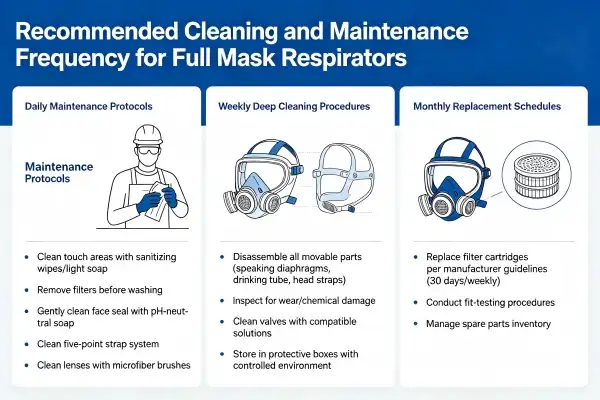
Full Mask Respirator maintenance schedules vary by usage intensity and environmental conditions, but daily cleaning after each use is essential for optimal protection. In industrial settings, surfaces that come into contact with things need to be cleaned every day, all parts need to be deep cleaned once a week, and filters or cartridges need to be replaced every month. Chemical exposure, dust levels, and humidity all have a direct effect on how often maintenance needs to be done. To make sure workers are safe and equipment lasts longer, high-contamination areas need stricter rules.
Understanding Full Mask Respirator Maintenance Needs
What Makes Full Face Protection Unique
When it comes to closing, our full-face breathing protection devices work better than half-face options because they cover the whole face. These units have medical-grade silicone face seals and polycarbonate glasses, which together give them an Assigned Protection Factor (APF) of 50 in negative pressure settings. The complicated design has many parts, such as breathing valves, exhalation systems, and filter link mechanisms that need to be maintained in a certain way. The materials used in production have a direct effect on how often repairs need to be done. Silicone face seals don't let chemicals through and stay flexible at different temperatures, but they need gentle cleaners to keep their stiffness. Polycarbonate glasses are impact-resistant and meet ANSI Z87.1 standards. However, if they are cleaned incorrectly, they can get tiny scratches that make it harder to see.
Critical Components Requiring Regular Attention
The parts that need the most upkeep are the breathing valve units. These carefully designed parts control the direction of wind and keep dirty air from getting into the breathing zone. To keep the negative pressure integrity, valve seats must stay clean and properly installed. Even tiny particles can make seals less effective, leaving users open to dangerous environments. Filter cartridges and jars need to be carefully watched because the amount of saturation directly affects how well they protect. Instead of single-use respirators, these systems use changeable filter media that are made to handle different types of contaminants. Chemical cartridges can get full without any obvious signs, but particle filters are clearly loaded when they make it harder to breathe.
Industry-Specific Maintenance Considerations
Equipment used in chemical handling is exposed to corrosive fumes that speed up the breakdown of parts. When workers are around toxic chemical compounds or acid gases, elastomers need to be checked and replaced more often. High temperatures that are typical in chemical plants can also change the qualities of materials, which could make seals less effective over time. Working in a mine can be difficult because of the sharp particles that can damage lens surfaces and block valve systems. These settings profit from weekly thorough inspections of sealing surfaces and daily compressed air cleaning of external surfaces for Full Mask Respirator units. Pay close attention to filter loading rates and breathing resistance tracking in construction sites where silica-generating activities happen.
How often should an air-purifying respirator be changed?
Daily Maintenance Protocols
At the end of each workday, necessary cleaning tasks are done to keep tools working and keep things clean. Workers should clean areas that they will touch right away with approved sanitizing wipes or light soap solutions. The cleaning process starts by taking out the filters so that the filtration media don't get wet during the washing steps. Face seal areas need to be cleaned gently with soaps that don't change the pH level. Harsh chemicals or solvents derived from petroleum can break down silicone compounds, which can cause seals to fail and crack before they should. The five-point strap system should be cleaned to get rid of the sweat and oils that have built up over time, which can weaken the fake materials. When you clean your lenses, you need to be careful not to scratch them, which makes it harder to see. Anti-fog films need cleaning products that are compatible with them and maintain their usefulness. Microfiber brushes clean surfaces very well without damaging them in a way that could affect their clarity during important tasks.
Weekly Deep Cleaning Procedures
As part of comprehensive weekly maintenance, all movable parts must be taken apart, cleaned, and inspected carefully. As part of this process, speaking diaphragms, drinking tube units, and head strap systems are taken off so that each one can be cleaned. Every part is looked at to see if there are any signs of wear, chemical damage, or mechanical stress. When servicing is done once a week, valve assemblies get extra care. The inhalation and exhale valves are carefully taken off and cleaned with solutions that are safe and won't change how flexible or well the valves close. These parts are looked at in good lighting to find any nicks, tears, or distortions that might affect how well they work. Getting the storage ready becomes very important during weekly repairs. After being cleaned and dried, the parts are put back together and kept in protective boxes that keep dust from building up and damage from happening by chance. Controls for the environment in storage areas should keep temperatures and humidity levels at levels that maintain the qualities of the materials.
Monthly Replacement Schedules
Filter cartridge change is done according to the manufacturer's instructions, which are based on readings of breathing resistance and contamination levels. In moderately contaminated areas, chemical cartridges usually need to be replaced every 30 days. In high-contamination areas, they may need to be replaced every week. Particulate screens are clearly loaded when they turn different colors and make it harder to breathe. As part of the monthly maintenance cycle, full performance testing is done using approved fit-testing procedures. These steps make sure that changes or wear haven't broken the protection seal around areas where you'll be touching your face. Recording these tests helps with following the rules and gives trend data for managing the lives of tools. Managing the quantity of parts for the Full Mask Respirator becomes very important during monthly review rounds. When new parts are needed, having spares on hand means that there is little downtime. This includes making sure there are enough valve kits, lens replacements, and harness parts that get worn out during standard activities.
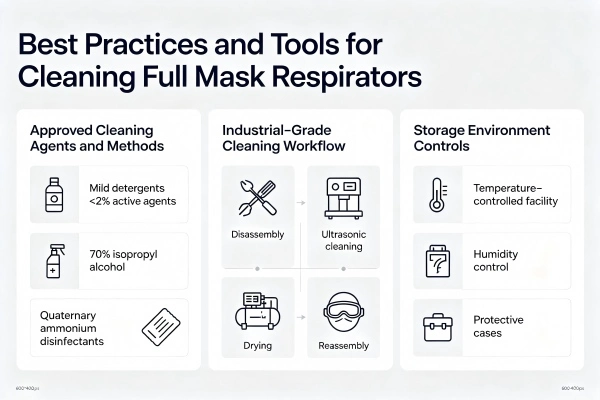
Best Practices and Tools for Cleaning Full Mask Respirators
Approved Cleaning Agents and Methods
Choosing the right cleaning products keeps things from breaking down and gets rid of contaminants that could be harmful to people's health. These quaternary ammonium chemicals kill a wide range of microbes without hurting silicone or plastic parts. These treatments are still effective against common pathogens in the workplace and are still safe for use with materials in breathing equipment.
For commercial use, the following cleaning products have been shown to work:
- Mild detergents with less than 2% active agents that won't leave films on surfaces that need to be sealed. These solutions get rid of organic pollutants and body oils well without damaging the material or leaving behind leftovers that change the taste.
- Solutions of isopropyl alcohol that are 70% concentrated kill germs quickly and evaporate quickly, so they don't cause problems with wetness. This quantity is the best for killing microbes and is safe to use on flexible materials over and over again.
- Quaternary ammonium disinfectants are made to clean medical devices and are effective against a wide range of microbes, including bacteria, viruses, and fungi. These methods don't let biofilm form, which could keep pathogens alive between cleaning rounds.
These approved cleaning methods get rid of 99.9% of common contaminants in the workplace while keeping equipment working and making it last longer through gentle chemical action.
Industrial-Grade Cleaning Workflow
Professional cleaning starts with carefully taking things apart, following the manufacturer's instructions to make sure no parts get broken or lost. Each part that can be taken off gets its own cleaning method that is right for its material and how much it has been contaminated. The process keeps track of each component so that they can be properly put back together and work. Ultrasonic cleaning systems can get rid of all contaminants from complicated valve parts and threaded connections that can't be cleaned by hand. The frequencies that these systems use move particles around without using mechanical cleaning, which could damage surfaces that have been carefully made. The temperature of the cleaning solution and contact time must follow set rules that balance how well they work with protecting the material. For drying, filtered compressed air or controlled-environment heaters are used to get rid of wetness without heating up the parts too much. Valve parts that still have some wetness in them can freeze in cold places or allow microbes to grow while they are being stored. Complete cleaning makes sure that the part works at its best and increases its useful life.
Storage Environment Controls
Putting cleaned equipment away in the right way keeps it from getting dirty or damaged by the surroundings between uses. Temperature-controlled facilities keep things steady, which keeps elastomers flexible and stops the thermal stress cycle that causes them to crack too soon. Controlling the humidity stops the mist that could help mold grow or rust metal. Protective cases made just for breathing tools keep them safe while still letting air flow through so that wetness can escape. These cases come with foam pieces that keep parts in place during transport and stop them from moving, which protects the shape of the face seal. Separate sections for each component stop cross-contamination and make managing supplies easier.
Full Mask Respirator Maintenance: Comparison and Standards
Maintenance Complexity Differences
Due to their complexity and greater number of parts, Full Mask Respirator systems need more thorough repair procedures than half-face options. The built-in eye protection makes it more important to clean and protect the lens from scratches, and the bigger sealing surface needs more thorough inspection steps. Voice communication systems make it harder to clean the speaking diaphragms and other hardware that goes with them. Most of the time, half-face respirators have easier upkeep routines that focus on replacing the filter and making sure the face seal stays in place. As a result of fewer parts, cleaning processes are faster, and spare parts stocking needs are lower. But this ease of use comes at the cost of security level and adaptability in tough work settings. Full-face safety systems take an average of 15 to 20 minutes a day to maintain, while half-face options only take 5 to 10 minutes. This extra time investment pays off in a big way by making workers safer, cutting down on the time needed to train people to use different kinds of tools, and making inventory management easier for companies that stick to a single platform.
Regulatory Compliance Standards
Under 42 CFR Part 84 of the NIOSH laws, basic rules for maintaining and inspecting respirators are set. These standards require specific ways to clean, when to repair things, and how to keep records, all of which make sure that safety keeps working. Compliance audits look at how full repair records are and how well they follow manufacturer instructions. Similar rules can be found in EN 136 European standards, which put more stress on testing for material compatibility and proving environmental performance. These standards take into account the different chemical exposure environments in different European industry sectors. They also require testing procedures that show the chemicals will still work in real-life working conditions. When OSHA takes action, they focus more and more on making sure the repair program is adequate rather than choosing the right tools at the start. Citations usually happen because of bad cleaning methods, filter tubes that have passed their expiration date, or not enough paperwork showing maintenance activities. Compliance programs that go above and beyond the bare standards show that employers are doing their part to protect workers' health.
Manufacturer Support Programs
Leading equipment makers, such as 3M and Honeywell, offer repair help that goes beyond the guarantees that come with their products. As part of these programs, there are technical hotlines run by experts in respiratory protection who can help with complicated maintenance problems and suggest solutions for tough exposure environments. Training programs help safety managers come up with good repair plans that are specific to the dangers in the workplace. Extended guarantee programs know that regular repair keeps equipment valuable and ensures that the security system keeps working. These deals usually include guarantees for replacement parts that break because of regular wear and tear. This lowers the lifetime costs for businesses that keep a lot of equipment on hand. On-site training and regular equipment checks can be part of service contracts. These help find problems before they put workers at risk.
Maintenance Challenges and How to Overcome Them in Procurement Decisions
Common Maintenance Pitfalls
The biggest problem with lung protection maintenance systems is that users aren't trained properly. If workers don't know how to clean properly, they might use the wrong chemicals, which could damage sealed surfaces or leave behind contamination. Bleach or ammonia-based household cleaners can damage silicone parts forever, so they need to be replaced instead of just being serviced regularly. Workplace efficiency stresses that make it hard to set aside enough time for maintenance often lead to not cleaning enough often. Maintenance may be seen by businesses as time wasted rather than an important safety investment. This way of thinking causes more equipment to break down than what the maker says it should, and it could lead to regulatory violations during compliance checks.
Structured Maintenance Program Development
Effective repair programs don't add extra work to workers' schedules; instead, they work equipment care into their daily tasks. Cleaning stations with the right tools and enough light make people more likely to follow the rules and cut down on the time needed for care. Posting methods with pictures helps workers do maintenance right, even when they are short on time. Documentation tools keep track of when upkeep is done, when parts need to be replaced, and the results of machine inspections. Digital tracking systems can automatically remind workers to do maintenance and let managers know when tasks are past due. These systems create audit trails that show that rules are being followed and find trends that could mean that people need more training or that their equipment is broken.
Supplier Partnership Strategies
Long-term ties with suppliers offer benefits beyond low prices, such as access to technical help and maintenance services. Suppliers that have been around for a while know how their customers use their products and can suggest answers for tough servicing situations. As part of these agreements, people often get priority access to new parts and faster delivery for urgent needs. Maintenance training and expert support services can be part of bulk procurement deals, which lower the total cost of ownership. Suppliers may offer on-site training, upkeep checks, and equipment lifecycle analyses that help you decide when to replace your equipment. When you make a volume promise, you can often get in touch with skilled technical representatives who know how to solve problems in your business.
Conclusion
Maintaining Full Mask Respirator systems regularly has a direct effect on worker safety, following the rules, and the overall cost of the equipment over its lifetime. Maintenance programs that work include cleaning contact areas every day, doing full checks once a week, and replacing parts every month. In places with a lot of pollution, where broken equipment could put workers in instant danger of getting sick, these rules become even more important. A successful implementation needs the right training, the right cleaning tools, and written processes that show compliance with regulations while also making the equipment work better for as long as it lasts.
FAQ
How often should filter cartridges be replaced in industrial environments?
Filter cartridge replacement schedules depend on contamination levels and cartridge type. Chemical cartridges usually need to be replaced every 30 days under moderate exposure conditions, while high-contamination environments may demand weekly replacement. Particulate filters should be changed when it becomes harder to breathe or when they look like they are heavily loaded. Some cartridges have end-of-service-life signs that give you more information about when to change them.
Can household cleaning products be used on industrial respiratory equipment?
Household cleaners should never be used on industrial respiratory equipment. Many contain chemicals like bleach, ammonia, or petroleum solvents, which can hurt silicone seals and make equipment less reliable. To keep materials compatible and security working well, only cleaning products approved by the maker should be used. Cleaners that have been approved are specially made to get rid of contaminants without hurting important parts.
What are the consequences of inadequate respirator maintenance?
When equipment fails because of poor upkeep, it can subject workers to respiratory hazards that could lead to short-term or long-term health problems. OSHA penalties and large fines may be given for breaking the rules. Workers' compensation claims about breathing-related exposure can have a big effect on the cost of insurance. Also, broken equipment needs to be replaced instead of being serviced regularly, which greatly raises the costs of running the business.
Partner with PPE MAX for Superior Respiratory Protection Solutions
PPE MAX brings over 65 years of manufacturing expertise to deliver industry-leading Full Mask Respirator solutions that meet the demanding requirements of modern industrial environments. Our comprehensive product line features medical-grade silicone face seals, impact-resistant polycarbonate lenses, and precision-engineered valve systems that provide reliable protection across diverse applications. As a trusted Full Mask Respirator supplier, we understand the critical importance of proper maintenance protocols and provide extensive technical support to help organizations develop effective equipment care programs.
Our global supply capabilities serve customers in 134 countries with uniform quality standards and dependable delivery. In addition to making great products, we also offer full after-sales support, which includes upkeep training, expert advice, and access to spare parts. This makes sure that the equipment works at its best for as long as it is used. Get in touch with our technical team at marketing@ppemax.com to talk about your specific breathing protection needs and find out how our solutions can improve safety at work while lowering total operating costs through better design and full support services.
References
1. National Institute for Occupational Safety and Health. "Criteria for a Recommended Standard: Occupational Exposure to Refractory Ceramic Fibers." DHHS Publication No. 2006-123, Cincinnati, OH: NIOSH, 2006.
2. American National Standards Institute. "ANSI/AIHA Z88.2-1992 American National Standard for Respiratory Protection." American Industrial Hygiene Association, Fairfax, VA, 1992.
3. European Committee for Standardization. "EN 136:1998 Respiratory Protective Devices - Full Face Masks - Requirements, Testing, Marking." Brussels: CEN, 1998.
4. Occupational Safety and Health Administration. "29 CFR 1910.134 Respiratory Protection Standard." U.S. Department of Labor, Washington, DC, 2021.
5. International Organization for Standardization. "ISO 16975-3:2017 Respiratory Protective Devices - Selection, Use and Maintenance." Geneva: ISO, 2017.
6. Myers, William R., and Ziqing Zhuang. "Field Performance Measurements of Half-Facepiece Respirators - Foundation for a New Approach." Journal of Occupational and Environmental Hygiene, vol. 15, no. 4, 2018, pp. 285-295.
Learn about our latest products and discounts through SMS or email