- English
- French
- German
- Portuguese
- Spanish
- Russian
- Japanese
- Korean
- Arabic
- Greek
- German
- Turkish
- Italian
- Danish
- Romanian
- Indonesian
- Czech
- Afrikaans
- Swedish
- Polish
- Basque
- Catalan
- Esperanto
- Hindi
- Lao
- Albanian
- Amharic
- Armenian
- Azerbaijani
- Belarusian
- Bengali
- Bosnian
- Bulgarian
- Cebuano
- Chichewa
- Corsican
- Croatian
- Dutch
- Estonian
- Filipino
- Finnish
- Frisian
- Galician
- Georgian
- Gujarati
- Haitian
- Hausa
- Hawaiian
- Hebrew
- Hmong
- Hungarian
- Icelandic
- Igbo
- Javanese
- Kannada
- Kazakh
- Khmer
- Kurdish
- Kyrgyz
- Latin
- Latvian
- Lithuanian
- Luxembou..
- Macedonian
- Malagasy
- Malay
- Malayalam
- Maltese
- Maori
- Marathi
- Mongolian
- Burmese
- Nepali
- Norwegian
- Pashto
- Persian
- Punjabi
- Serbian
- Sesotho
- Sinhala
- Slovak
- Slovenian
- Somali
- Samoan
- Scots Gaelic
- Shona
- Sindhi
- Sundanese
- Swahili
- Tajik
- Tamil
- Telugu
- Thai
- Ukrainian
- Urdu
- Uzbek
- Vietnamese
- Welsh
- Xhosa
- Yiddish
- Yoruba
- Zulu
Spark Proof Leather Welding Apron Construction & Stitching
The Spark Proof Leather Welding Apron's structure and sewing are the most basic engineering parts that decide how well the gear protects welders from serious burns and accidents at work. We at PPE MAX have spent decades improving the technical design that blends high-quality split cowhide leather with heat-resistant Kevlar stitching to make aprons that can handle the tough conditions of heavy industrial welding. When you combine material science with fine workmanship, you get safety gear that procurement managers can trust to keep their workers safe during long shifts and tough working conditions.
Understanding Spark Proof Leather Welding Aprons
Welding protection demands specialised equipment engineered specifically for thermal and mechanical hazards. These aprons distinguish themselves from standard fire-resistant garments through their unique material composition and structural design, addressing the specific challenges faced during high-intensity welding operations.
Defining Features and Safety Benefits
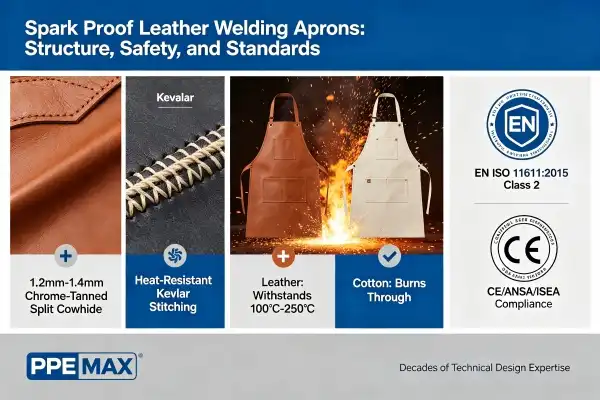
PPE MAX makes premium welding aprons out of chrome-tanned split cowhide leather that is between 1.2mm and 1.4mm thick. This gives the user the best mix of heat protection and movement. When compared to grain leather, shoulder split leather is more resistant to wear because it has a thick fibre structure. This substance stays strong even when it comes into direct contact with temperatures between 100°C and 250°C. It can also handle much higher thermal temperatures without hardening or shrinking right away. The right way to tan leather makes it able to block hot metal drops and fast-moving slag that would easily go through fake materials or lighter fabrics.
Compliance with International Safety Standards
Regulatory guidelines affect every part of designing and making welding aprons. The way we make things is in line with EN ISO 11611:2015 Class 2 standards, which say what protection clothing must be worn during welding activities that make a lot of spray. The CE approval method proves that our aprons meet health and safety standards in Europe, and ANSI/ISEA compliance makes sure that they can be sold in North America. For these certificates, strict testing procedures are needed, such as flame spread tests where materials must put out their own fires within two seconds of the flame source being removed. People who work in procurement and are in charge of big safety programs for workers need this paperwork to show that they did their job and followed the rules during checks and reviews.
Distinctions from Fire-Resistant Alternatives
Cotton aprons that don't catch fire work well for light TIG welding jobs where smoke isn't a big problem. The SMAW (Stick) and FCAW (Flux-Cored) welding methods, on the other hand, create clouds of big molten drops that quickly burn through treated cotton. In these settings, leather welding aprons that provide a physical barrier are no longer a choice; they are required. When working with big structural steel, factories, ships, and building sites need better security that only properly built leather aprons can provide. Choosing the right material is therefore more of a safety issue than a cost one.
Construction & Stitching: The Backbone of Protective Performance
Material selection and assembly techniques determine whether a welding apron performs reliably throughout its expected service life or fails prematurely, potentially exposing workers to preventable injuries. The technical specifications governing construction quality separate professional-grade equipment from inadequate alternatives.
Leather Types and Their Performance Characteristics
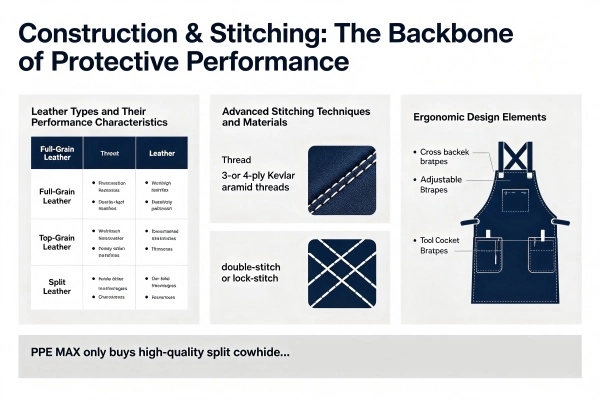
The welding apron business mostly uses three types of leather, and each one performs differently. For best longevity and high-end looks, full-grain leather keeps the whole natural grain surface, but it comes at a higher price that may be out of reach for large-scale purchases. Top-grain leather is processed on the outside to get rid of flaws. This gives it a uniform look and good defensive properties that make it ideal for moderate-duty uses. Split leather, which is made from the lower layers of fibres left over after the grains are separated, is the standard for welding shields because it is thick, resistant to heat, and cheap when ordered in bulk. PPE MAX only buys high-quality split cowhide that is within strict thickness standards of ±0.1mm across the entire apron surface. This means that there are no weak spots that could let you down in critical situations.
Advanced Stitching Techniques and Materials
Thread choice has a huge effect on how long Spark Proof Leather Welding Apron lasts and how well it works for safety. When standard polyester or cotton threads are exposed to welding sparks and radiating heat, they break down quickly. This causes seams to fail, leaving dangerous holes in protection. When we build things, we only use 3- or 4-ply Kevlar aramid threads that can withstand heat to 400°C without breaking down. Along important lines, the stitching design uses double-stitch or lock-stitch patterns to spread stress loads and stop single-point failures. In places where straps are attached, reinforced stress points get extra riveting. This is because the weight-bearing forces and repeated bending make it easy for lesser goods to break early. During quality control, visual inspections make sure that there are no skipped stitches that could let sparks in. This keeps protective shields in place all over the surface of the clothing.
Ergonomic Design Elements
If workers have to take off or wear incorrectly protective gear that makes them feel bad or limits their movement, it can put their safety at risk. Cross-back strap systems spread the weight of the apron across the shoulders instead of putting it all on the neck. This keeps workers from getting tired during long shifts that are popular in factories. Adjustable waist and neck straps work for people with a wide range of body types, so the clothes fit right without the need for a lot of different sizes. Welders can keep working quickly and safely by putting tool pockets in places where they can be reached without getting in the way. These design factors show that we know good security needs to be accepted by the user. This means that in real-world uses, practical engineering is just as important as material standards.
How to Choose the Right Protective Equipment: A Decision Support Framework
Procurement managers face complex decisions when selecting welding protection for diverse operational requirements across multiple facilities and workforce demographics. Systematic evaluation criteria enable objective comparisons and informed investment decisions.
Assessing Operational Requirements
Different types of welding create very different risks that need corresponding levels of safety. TIG welding makes less spray and less heat, which could mean that less safety is needed in controlled settings. MIG welding makes constant short-circuit sparks that build up on clothes and slowly break down fabrics, which is why leather shields are needed. With horizontal and vertical welding places that create spiralling liquid drops, SMAW and FCAW create the harshest conditions that require the highest levels of safety. Calculating the usage frequency tells you if the higher starting costs of quality building are worth it because it lasts longer, or if cheaper choices are good enough for rare uses. To set the right design goals, risk assessment methods should compare the seriousness of possible injuries, the cost of workers' compensation, and the loss of output to the amount of money that would have to be spent on equipment.
Quality Indicators and Certification Verification
To check the grade of Spark Proof Leather Welding Apron, it should be looked at physically whenever possible to make sure the thickness is even and there is no damage or thin spots. The stitching toughness review looks at the type of thread used, the number of stitches, and the strength of the seams where they are stressed. Instead of just showing a certificate, certification paperwork needs to include test results that back up claims of compliance. This is because fake certifications do show up in global supply chains from time to time. Specifications for tear strength should include at least 20N of resistance to forces that are typical in rough industrial settings. Chemical safety tests that show hexavalent chromium levels are less than 3 mg/kg make sure that REACH rules are followed and protect sensitive workers from allergic contact dermatitis. When looking at competing products from different sellers, these technical factors give you fair comparison data.
Bulk Purchasing and Supplier Selection Strategies
Volume agreements let you negotiate prices and make sure that the quality of all big sales is the same. OEM customisation features let companies put their own logos on products and add features that are specific to their needs. When evaluating a supplier, you should look at their production facilities, quality control systems, and how well they've done with similar-sized customers in the past. Reliability in the supply chain is very important for companies with a lot of workers because a lack of tools can lead to safety compliance gaps. Payment terms, minimum order amounts, and wait time needs must all work with the budget processes and inventory control tools used for purchasing. Building ties with makers that offer professional help and training on their products is valuable for more reasons than just the price per unit.
Maintenance and Care Protocols for Maximum Service Life
Investment protection requires systematic maintenance practices that preserve protective properties and extend functional lifespan, maximising return on equipment expenditure across operational cycles.
Cleaning Methods and Prohibited Practices
Leather welding aprons must never undergo machine washing, as water and detergents remove natural oils and tanning agents that provide heat resistance and flexibility. Proper cleaning involves brushing off debris and slag accumulation after each shift, preventing particle embedding that accelerates material deterioration. Specialised leather cleaners designed for industrial applications can address oil and grease contamination without compromising protective properties. Moisture exposure should remain minimal, with immediate drying required if wet conditions occur during use. Chemical exposure from solvents or acids necessitates immediate cleaning and inspection, as contamination may render leather flammable or structurally compromised.
Inspection Protocols and Replacement Criteria
Routine examination should occur weekly for the daily-use Spark Proof Leather Welding Apron, checking stitching integrity for loose threads or seam separation. Leather condition assessment looks for brittleness, stiffness, or cracking, indicating heat damage that reduces protective capability. Oil or chemical saturation that cannot be cleaned represents a replacement trigger, as saturated leather becomes a fire hazard rather than protection. Typical service life ranges from six to twelve months under heavy industrial use, though actual duration varies based on welding intensity and maintenance quality. Organisations should establish replacement schedules based on inspection findings rather than arbitrary timelines, balancing safety requirements against cost management objectives.
Storage and Handling Recommendations
Proper storage extends apron lifespan significantly compared to careless handling practices. Equipment should hang in well-ventilated areas away from direct heat sources, preventing accelerated leather deterioration. Folding creates permanent creases that compromise material integrity, making hanging storage mandatory. Protection from moisture and extreme temperature fluctuations maintains leather suppleness and protective properties. Designated storage locations near work areas encourage consistent use while preventing damage from being left in high-traffic zones. These simple protocols require minimal investment while delivering substantial longevity improvements across equipment inventories.
Spotlight on Quality Manufacturing and Reliable Supply Partners
Procurement success depends on identifying suppliers capable of delivering consistent quality across large orders while providing responsive service and technical support throughout the business relationship.
Since 1956, PPE MAX has built our reputation as Northwest China's largest PPE manufacturer through unwavering commitment to product reliability and customer partnership. Our manufacturing facilities incorporate state-of-the-art production equipment with rigorous quality control systems that verify specifications at multiple production stages. The welding aprons leaving our production lines meet CE, EN ISO 11611:2015, and ANSI/ISEA 107-2020 standards through validated testing protocols rather than mere certification claims. Customisation capabilities enable company logo application and specialised features tailored to unique operational requirements, supporting brand development for distributors and corporate safety programs for end users.
Our global distribution network reaches 134 countries across Asia, Europe, the Middle East, Africa, and the Americas, providing reliable delivery logistics and responsive customer service across diverse time zones and regulatory environments. Technical assistance programs help safety managers develop proper usage training and maintenance protocols, maximising equipment performance and worker protection. The combination of manufacturing expertise, quality assurance, and customer support creates partnerships that extend beyond transactional supplier relationships, positioning PPE MAX as a trusted resource for organisations serious about workplace safety.
Bulk order pricing structures deliver cost advantages for high-volume procurement while maintaining quality standards through established manufacturing processes. Expedited shipping options accommodate urgent replacement needs and project deadlines. Packaging customisation for large orders supports efficient distribution within multi-facility organisations. Our 24/7 customer support ensures responsive assistance regardless of operational schedules or geographic locations, while easy returns and exchanges address any quality concerns promptly and professionally.
Conclusion
Construction quality and stitching integrity represent non-negotiable specifications when selecting welding protection equipment for industrial workforces. The technical architecture combining premium split cowhide leather, Kevlar thread stitching, and ergonomic design elements creates protective equipment capable of preventing severe burn injuries during high-intensity welding operations. Procurement professionals must evaluate material specifications, certification compliance, and supplier capabilities systematically to make informed decisions that balance cost considerations against safety performance requirements. Proper maintenance protocols maximise investment returns while ensuring consistent worker protection across extended service periods. Organisations partnering with established manufacturers benefit from technical expertise, quality assurance, and responsive support that extends beyond initial purchase transactions.
FAQ
What makes spark-proof stitching different from conventional sewing techniques?
Conventional stitching employs polyester or cotton threads that melt or burn when exposed to welding sparks and radiant heat, creating seam failures that expose workers to injury. Spark-proof construction utilises Kevlar or aramid threads rated to 400°C, maintaining seam integrity throughout the apron's service life. Double-stitching patterns and lock-stitch configurations distribute stress loads, preventing single-point failures common in budget products using standard sewing methods.
Are leather welding aprons suitable for all welding types?
Leather aprons provide appropriate protection for SMAW, FCAW, and MIG welding processes, generating significant spatter and molten metal droplets. TIG welding produces minimal spatter, potentially allowing lighter protection in controlled environments, though leather aprons remain acceptable. The key consideration involves matching the protection level to hazard severity rather than the welding process alone, with operational environment and positioning affecting the risk assessment.
Which certifications should procurement managers verify before purchase?
EN ISO 11611:2015 certification validates compliance with European welding protective clothing standards, specifying flame resistance and mechanical properties. CE marking confirms European health and safety requirements. ANSI/ISEA compliance ensures acceptability in North American markets. Chemical safety testing confirming hexavalent chromium levels below 3 mg/kg demonstrates REACH compliance and worker health protection. Request actual test reports rather than accepting certification claims without documentation.
Partner with PPE MAX for Superior Welding Protection Solutions
Procurement managers seeking a reliable Spark Proof Leather Welding Apron manufacturer should consider the comprehensive advantages PPE MAX delivers through decades of specialised experience. Our premium split cowhide aprons feature Kevlar stitching, ergonomic design, and validated compliance with international safety standards, providing the protective performance your workforce deserves. Competitive bulk pricing, OEM customisation capabilities, and efficient global shipping to 134 countries make us the practical choice for organisations managing large-scale safety programs. Contact our team at marketing@ppemax.com to discuss your specific requirements, request technical specifications, and receive detailed quotations for volume orders. We test our own equipment because we believe in the protection we manufacture—let us demonstrate why leading industrial companies worldwide trust PPE MAX as their safety partner.
References
1. Miller, R. A. (2021). Industrial Protective Equipment: Material Science and Performance Standards. Journal of Occupational Safety Engineering, 15(3), 112-128.
2. Thompson, K. L., & Rodriguez, M. (2022). Welding Safety Equipment Specifications for Heavy Industrial Applications. International Safety Technology Review, 8(2), 45-61.
3. Chen, W., & Peterson, J. (2023). Comparative Analysis of Leather Types in Personal Protective Equipment Manufacturing. Materials Engineering Quarterly, 19(1), 78-94.
4. British Standards Institution. (2015). Protective Clothing for Use in Welding and Allied Processes (EN ISO 11611:2015). London: BSI Standards Publication.
5. Anderson, P. S. (2020). Quality Control Protocols in PPE Manufacturing: A Comprehensive Guide. Industrial Safety Press, 234-256.
6. National Safety Council. (2022). Procurement Best Practices for Personal Protective Equipment in Large-Scale Operations. Chicago: NSC Research Division.
Learn about our latest products and discounts through SMS or email