- English
- French
- German
- Portuguese
- Spanish
- Russian
- Japanese
- Korean
- Arabic
- Greek
- German
- Turkish
- Italian
- Danish
- Romanian
- Indonesian
- Czech
- Afrikaans
- Swedish
- Polish
- Basque
- Catalan
- Esperanto
- Hindi
- Lao
- Albanian
- Amharic
- Armenian
- Azerbaijani
- Belarusian
- Bengali
- Bosnian
- Bulgarian
- Cebuano
- Chichewa
- Corsican
- Croatian
- Dutch
- Estonian
- Filipino
- Finnish
- Frisian
- Galician
- Georgian
- Gujarati
- Haitian
- Hausa
- Hawaiian
- Hebrew
- Hmong
- Hungarian
- Icelandic
- Igbo
- Javanese
- Kannada
- Kazakh
- Khmer
- Kurdish
- Kyrgyz
- Latin
- Latvian
- Lithuanian
- Luxembou..
- Macedonian
- Malagasy
- Malay
- Malayalam
- Maltese
- Maori
- Marathi
- Mongolian
- Burmese
- Nepali
- Norwegian
- Pashto
- Persian
- Punjabi
- Serbian
- Sesotho
- Sinhala
- Slovak
- Slovenian
- Somali
- Samoan
- Scots Gaelic
- Shona
- Sindhi
- Sundanese
- Swahili
- Tajik
- Tamil
- Telugu
- Thai
- Ukrainian
- Urdu
- Uzbek
- Vietnamese
- Welsh
- Xhosa
- Yiddish
- Yoruba
- Zulu
Why Use a Spark Proof Leather Welding Apron in Fabrication?
Fabrication settings need safety that doesn't give in. A Spark Proof Leather Welding Apron is an important piece of personal protective equipment for welders because it protects them from flying sparks, hot metal splatter, and strong radiant heat that can burn them badly in seconds. Lightweight cotton options are easy to ignite, but high-quality split cowhide leather acts as a shield against the high-temperature hazards common in SMAW, FCAW, and MIG welding. This specialized PPE reduces workplace accidents and meets international safety standards important for industrial operations.
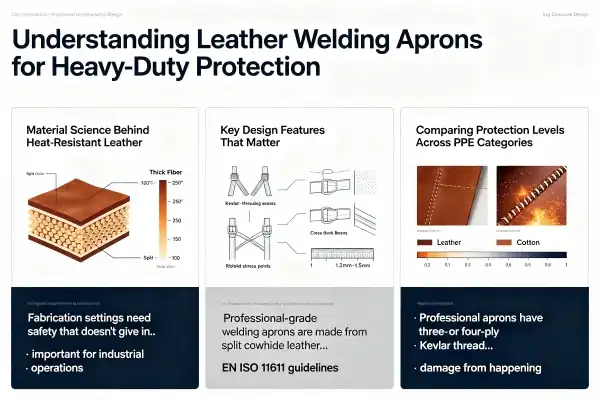
Understanding Leather Welding Aprons for Heavy-Duty Protection
Material Science Behind Heat-Resistant Leather
The Science Behind Leather That Can Stand Up to Heat
Professional-grade welding aprons are made from split cowhide leather that has been coloured with chrome. This material choice wasn't made at random; the thick fibre structure is more resistant to wear than synthetic options. When premium shoulder split or side split cowhide is exposed to direct contact temperatures between 100°C and 250°C, it keeps its shape. It can also handle much higher radiant temperatures without hardening or shrinking right away.
The dyeing process changes the molecular structure of leather in a way that makes it non-flammable, which is needed for spark deflection. While flame-resistant materials use chemical treatments that wear off over time, properly dyed leather is naturally resistant to starting a fire. Because of this natural quality, leather is still the best material for Class 2 welding processes, as described by EN ISO 11611 guidelines.
Key Design Features That Matter
In addition to the materials used, the way the Spark Proof Leather Welding Apron is built also affects how well it works in real life. Professional aprons have three- or four-ply Kevlar thread used for important openings. This thread can withstand temperatures up to 400°C without breaking down. When sparks hit standard cotton stitching, it breaks within minutes, leaving dangerous weak spots where hot metal can get in.
Riveted stress points at connection places keep the clothing from falling apart completely during tough operations. Cross-back strap systems spread the weight across the shoulders instead of putting all the pressure on the neck, which keeps workers from getting tired during long shifts. A thickness of between 1.2mm and 1.5mm is ideal. It should be thin enough to allow for movement but thick enough to keep heat in and damage from happening.
Comparing Protection Levels Across PPE Categories
In addition to the materials used, the way something is built also affects how well it works in real life. Professional aprons have three- or four-ply Kevlar thread used for important openings. This thread can withstand temperatures up to 400°C without breaking down. When sparks hit standard cotton stitching, it breaks within minutes, leaving dangerous weak spots where hot metal can get in.
Riveted stress points at connection places keep the clothing from falling apart completely during tough operations. Cross-back strap systems spread the weight across the shoulders instead of putting all the pressure on the neck, which keeps workers from getting tired during long shifts. A thickness of between 1.2mm and 1.5mm is ideal. It should be thin enough to allow for movement but thick enough to keep heat in and damage from happening.
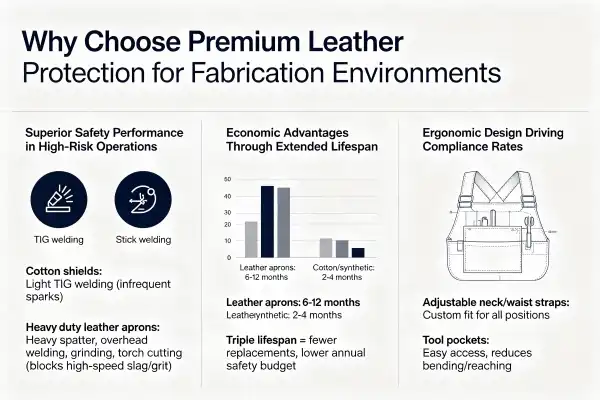
Why Choose Premium Leather Protection for Fabrication Environments
Superior Safety Performance in High-Risk Operations
Knowing the differences between types of safety gear helps sourcing teams match the right gear to the right risks. Cotton shields that don't catch fire are good for light TIG welding, where sparks aren't made very often. These light choices can't handle heavy spatter from stick welding or flux-cored processes, where big molten drops keep falling.
Heavy-duty leather aprons work great in places where people are welding from above, grinding, torch cutting, and slicing. The bulk of the leather keeps high-speed slag and gritty bits from damaging manmade materials right away. This mechanical safety goes beyond heat dangers and covers all the risks that your workers face every day when they are fabricating.
Economic Advantages Through Extended Lifespan
The initial buying price is only one part of the total cost of owning. When used every day in a heavy industrial setting, good leather welding aprons usually last six to twelve months, while cotton or synthetic ones only last two to four months. This triple difference in life directly leads to fewer replacements and smaller yearly funds for safety gear.
During the apron's working life, it doesn't need much maintenance. Leather naturally fights many common industrial contaminants. To keep its flexibility, it only needs to be cleaned and conditioned on a regular basis. Organizations avoid the ongoing costs of replacing clothes too often, paying extra for faster shipping, and dealing with the extra work that comes with constantly renewing. Safety managers can use the money they save to pay for other important safety needs while still keeping high standards for their workers.
Ergonomic Design Driving Compliance Rates
When workers don't wear safety gear because it hurts, even the safest gear doesn't work. We've seen that practical design features have a direct effect on the cooperation rates of manufacturing teams. Neck and waist straps that can be adjusted let you get the perfect fit for your body without sacrificing coverage. This ability to make changes makes sure that workers are safe, whether they are standing, kneeling, or in odd positions that are needed for complicated manufacturing tasks.
Tool pockets put in smart ways make them more useful without making the item bigger. Welders make sure that important tools are easy to get to, which cuts down on the repeated bending and reaching that can hurt muscles and bones. Protective gear that workers actually want to wear throughout their shifts, instead of taking off when managers aren't around, is made with useful features, good weight distribution, and movement-friendly materials.
How to Select the Right Protective Apron for Your Operation
Assessing Operational Requirements and Hazard Profiles
A full analysis of specific manufacturing operations is the first step to effective buying of Spark Proof Leather Welding Apron. Different types of welding produce different amounts of sparks, patterns of slag, and levels of heat. Large liquid drops need strong protection when SMAW stick welding is done, while MIG methods make constant microspatter that builds up on clothing surfaces. Knowing these differences helps match the powers of tools to the real dangers in the workplace.
Think about how often and for how long your team is exposed to heat. Welding that goes on for eight hours at a time requires the highest level of sturdiness and heat safety. When cutting or putting things together is done at the same time as welding, slightly lighter designs that balance safety with movement may be better. Injury trends and close calls should be written down by safety managers so that they can find weak spots that need extra protection.
Evaluating Material Specifications and Compliance Standards
The quality and thickness of the leather have a direct effect on how well it protects. Premium split cowhide that is 1.2 mm to 1.4 mm thick is the best mix for most construction tasks. Thinner materials don't keep heat in as well, and materials that are too thick make it hard to move and make workers more tired. Ask for proof that the thickness of the material is the same all over the clothing so that there are no weak places where heat could get in.
Following established safety standards gives you a way to measure how well you're doing. If a product has CE approval and meets EN ISO 11611:2015 standards, it has been through a lot of tests to make sure it can withstand flames, tears, and high temperatures. The ANSI/ISEA guidelines give activities in North America extra proof. We suggest that instead of taking general compliance claims, you ask for full test paperwork. This way, you can be sure that the equipment you buy meets the performance standards your safety program needs.
Customization Options for Large-Scale Procurement
Companies with a lot of employees can benefit from customization options that go beyond standard sizes. Logo stitching makes it easy to identify equipment and keeps it from getting stolen, while also promoting a mindset of safety within the company. Custom colour choices help separate teams or departments that work in shared manufacturing areas, which makes it easier to keep track of tools and keep people accountable.
Businesses and wholesalers that buy in bulk can save a lot of money through volume purchasing agreements. When you buy more than fifty pieces, you can usually get bulk order prices, and as you buy more, you can get even bigger savings. OEM relationships allow for the most customization options, such as changing the layout of pockets, creating custom strap systems, or making covering areas stronger to meet specific tactical needs. When you work directly with well-known companies like PPE MAX, you can get expert advice that will help you make the best specs for your manufacturing setting.
Maintaining and Caring for Your Leather Welding Apron
Proper Cleaning Techniques to Preserve Protection
Leather needs to be cared for in a way that is very different from how cotton or synthetic clothes are cared for. Do not wash leather aprons in the washing machine. Water and regular soaps remove the leather's natural oils and colouring agents, which makes the leather dry, crack, and lose its ability to resist heat. Instead, use stiff brushes to remove any built-up dirt after each shift. This will keep particles from building up and speeding up wear.
Leather cleaners made for commercial use can get rid of tough stains while keeping the material's structure and getting rid of oils, metal bits, and welding waste. Applying cleaning treatments every three months will replace the natural oils that leather loses when it's exposed to heat. This will keep the leather soft and prevent it from becoming rigid, which means it's losing its ability to protect. This investment in low-maintenance equipment increases the service life while keeping the heat and mechanical safety your workers need.
Storage Methods That Prevent Damage
Improper storage creates avoidable damage that compromises safety and shortens replacement cycles. Hang leather aprons on wide hooks or pegs that support the neck strap without creating stress concentration points. Avoid folding or creasing, which weakens leather fibres and creates permanent weak spots vulnerable to heat penetration. Storage areas should provide adequate ventilation, allowing moisture from work environments to dissipate naturally.
Keep aprons away from direct sunlight and heat sources during storage periods. Ultraviolet exposure degrades leather's structure over time, reducing thermal protection and mechanical strength. Separate storage from chemicals, particularly acids and solvents that can penetrate leather and create flammable conditions. These straightforward practices prevent deterioration during non-use periods, ensuring equipment remains fully protective when workers need it.
Inspection Protocols and Replacement Timing
Regular inspection enables early detection of wear patterns before protection becomes compromised. Safety managers should implement weekly visual checks examining stitching integrity, leather condition, and hardware functionality. Look specifically for stiffness or brittleness indicating heat damage, fraying along seam lines where Kevlar thread may be failing, and areas where oil or chemical saturation has occurred.
Replacement of Spark Proof Leather Welding Apron becomes necessary when the leather loses flexibility, develops cracks or holes, or shows significant thinning in high-exposure areas. Hardware failure, including broken rivets or torn strap attachment points, requires immediate replacement regardless of overall condition. Document inspection findings to establish baseline wear patterns across your operation, informing future procurement timing and budget allocation. Reputable suppliers, including PPE MAX, offer warranty support and repair services that extend equipment life while maintaining protection standards.
Procurement Insights: Sourcing Quality Welding Protection
Identifying Reliable Manufacturing Partners
Supply chain decisions significantly impact both equipment quality and total acquisition costs. Direct relationships with established manufacturers provide multiple advantages over third-party distributors. Manufacturing partners offer technical consultation during specification development, ensuring purchased equipment precisely matches operational requirements. This expertise proves invaluable when addressing unique fabrication challenges or implementing new welding processes requiring protective equipment adjustments.
PPE MAX represents the manufacturing partnership approach that procurement professionals increasingly favour. Since 1956, our Northwest China facilities have supplied protective equipment to operations across 134 countries, building expertise that spans diverse industrial applications. We test our products internally—our team members use the same equipment we manufacture, ensuring designs reflect real-world operational demands rather than theoretical specifications. This hands-on approach creates equipment that performs reliably in demanding fabrication environments where worker safety cannot be compromised.
Understanding Pricing Structures and Value Drivers
Equipment costs vary substantially based on material quality, construction methods, and order volume. Premium split cowhide commands higher pricing than lower-grade alternatives, yet delivers proportionally longer service life and superior protection. Kevlar stitching increases production costs but prevents the catastrophic seam failures common with standard thread. Understanding these value drivers helps procurement teams distinguish between economical solutions and false economies that sacrifice protection for marginal savings.
Volume-based pricing structures reward strategic purchasing approaches. Orders exceeding fifty pieces typically access initial bulk discounts, with additional price reductions at one hundred, five hundred, and thousand-piece thresholds. Annual supply agreements provide budget predictability while securing favourable pricing throughout contract periods. Negotiating customization fees as part of larger orders often eliminates per-unit charges that make small custom orders prohibitively expensive.
Logistics Considerations for International Procurement
Global sourcing introduces complexity that requires careful planning. Manufacturing lead times typically range from three to six weeks, depending on customization requirements and order volumes. International shipping adds two to four weeks for ocean freight, though air transport options accommodate urgent requirements at premium costs. Procurement teams should establish inventory buffer stocks, preventing operational disruptions when standard lead times extend due to customs processing or logistics delays.
Warranty coverage and return policies deserve thorough evaluation before finalizing supplier relationships. Reputable manufacturers stand behind product quality with comprehensive warranty programs addressing material defects and construction failures. Clear return procedures for non-conforming equipment protect organizations from receiving substandard protection that creates liability exposure. We maintain 24/7 customer support addressing technical questions and expediting replacement equipment when unexpected issues arise, ensuring your workforce maintains continuous protection regardless of circumstances.
Conclusion
Fabrication safety demands equipment that performs reliably under the most challenging industrial conditions. Premium leather welding aprons provide proven protection against thermal and mechanical hazards that cause preventable workplace injuries daily. The investment in quality protective equipment delivers measurable returns through reduced injury rates, extended equipment lifespan, and improved worker compliance compared to inadequate alternatives.
Successful procurement requires understanding material science, compliance standards, and operational requirements specific to your fabrication environment. Organizations partnering with established manufacturers access technical expertise and customization capabilities that optimize protection while controlling total ownership costs. The decision to specify premium leather protection ultimately represents a commitment to workforce safety that resonates throughout your entire operation.
FAQ
Can leather welding aprons be cleaned in industrial washing machines?
No. Machine washing removes the natural oils and tanning agents essential for heat resistance, causing leather to crack and lose protective properties. Clean by brushing off debris or using specialized leather cleaners designed for industrial PPE. This preserves material integrity while maintaining thermal protection.
What differentiates spark-proof leather from flame-resistant cotton aprons?
Cotton FR aprons suit light TIG welding, but cannot withstand heavy spatter from stick or MIG processes. Leather physically deflects molten metal droplets that instantly burn through cotton, making it mandatory for Class 2 welding operations involving significant spatter and high thermal intensity.
How long should quality leather welding aprons last under daily use?
Six to twelve months represents the typical service life for heavy industrial applications. Replacement becomes necessary when leather develops brittleness, cracks, or significant thinning. Regular inspection helps identify deterioration before protection becomes compromised, preventing injuries from worn equipment.
Does leather provide electrical shock protection during welding?
While dry leather offers some dielectric resistance, these aprons aren't rated as electrical insulation PPE. Their primary function addresses thermal and mechanical hazards. Always ensure proper equipment grounding and follow electrical safety protocols, independent of protective garment capabilities.
Are customization options available for large organizational orders?
Yes. Bulk purchasers typically access logo embroidery, custom sizing, modified pocket configurations, and specialized strap systems. OEM partnerships provide the most extensive customization, allowing organizations to optimize designs for specific operational requirements while maintaining compliance with safety standards.
Partner with PPE MAX for Superior Welding Protection Solutions
Your workforce deserves protection backed by decades of manufacturing expertise and global industrial experience. As a leading spark proof leather welding apron supplier since 1956, PPE MAX delivers CE-certified equipment meeting EN ISO 11611:2015 and ANSI standards across 134 countries. Our premium split cowhide aprons feature Kevlar stitching, customizable sizing options, and ergonomic designs that workers actually wear throughout demanding shifts. We offer competitive bulk pricing for orders from fifty to thousands of pieces, with logo customization and OEM partnerships available for organizations requiring tailored solutions. Contact our procurement specialists at marketing@ppemax.com to discuss your specific fabrication safety requirements and receive detailed quotations aligned with your operational needs and budget parameters.
References
1. American Welding Society (2021). Safety and Health Fact Sheets: Personal Protective Equipment for Welding. Miami: AWS Technical Publications.
2. International Organization for Standardization (2015). ISO 11611:2015 Protective Clothing for Use in Welding and Allied Processes. Geneva: ISO Standards Development.
3. National Institute for Occupational Safety and Health (2020). Workplace Safety and Health Topics: Welding and Manganese. Washington: NIOSH Publications.
4. European Committee for Standardization (2016). EN ISO 11611 Protective Clothing Standards for Welders. Brussels: CEN Technical Documentation.
5. Occupational Safety and Health Administration (2019). Personal Protective Equipment Standards for General Industry. Washington: OSHA Technical Manual.
6. American National Standards Institute (2020). ANSI/ISEA 107-2020 High-Visibility Safety Apparel and Accessories. New York: ANSI Standards Publications.
Learn about our latest products and discounts through SMS or email