- English
- French
- German
- Portuguese
- Spanish
- Russian
- Japanese
- Korean
- Arabic
- Greek
- German
- Turkish
- Italian
- Danish
- Romanian
- Indonesian
- Czech
- Afrikaans
- Swedish
- Polish
- Basque
- Catalan
- Esperanto
- Hindi
- Lao
- Albanian
- Amharic
- Armenian
- Azerbaijani
- Belarusian
- Bengali
- Bosnian
- Bulgarian
- Cebuano
- Chichewa
- Corsican
- Croatian
- Dutch
- Estonian
- Filipino
- Finnish
- Frisian
- Galician
- Georgian
- Gujarati
- Haitian
- Hausa
- Hawaiian
- Hebrew
- Hmong
- Hungarian
- Icelandic
- Igbo
- Javanese
- Kannada
- Kazakh
- Khmer
- Kurdish
- Kyrgyz
- Latin
- Latvian
- Lithuanian
- Luxembou..
- Macedonian
- Malagasy
- Malay
- Malayalam
- Maltese
- Maori
- Marathi
- Mongolian
- Burmese
- Nepali
- Norwegian
- Pashto
- Persian
- Punjabi
- Serbian
- Sesotho
- Sinhala
- Slovak
- Slovenian
- Somali
- Samoan
- Scots Gaelic
- Shona
- Sindhi
- Sundanese
- Swahili
- Tajik
- Tamil
- Telugu
- Thai
- Ukrainian
- Urdu
- Uzbek
- Vietnamese
- Welsh
- Xhosa
- Yiddish
- Yoruba
- Zulu
Full Mask Respirator in Healthcare: When Is It Necessary?
When healthcare workers are exposed to germs in the air, dangerous fumes, or chemical disinfectants in concentrations that are too high for safety, they need to wear a full mask respirator. A full facepiece respirator has a higher Assigned Protection Factor (APF) than half-face respirators or N95 masks because it covers the whole face, covering both the eyes and the breathing system at the same time. Because of this, it is necessary during cases of infectious diseases, care for people with tuberculosis, processes that create aerosols, and when working with lethal drugs or sterilising agents. Procurement workers who are in charge of field safety need to know when to use this improved breathing protection.
Understanding Full Mask Respirators in Healthcare
What Defines a Full Facepiece Respirator?
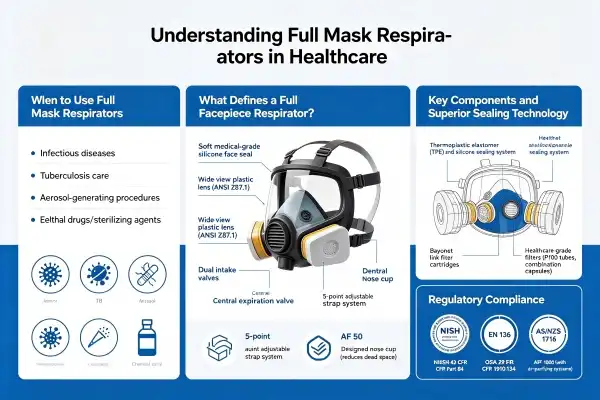
A full facepiece mask is a complete piece of personal protective equipment (PPE) that goes over the whole face, from the forehead to the chin, sealing off all airflow. At PPE MAX, we've made sure that our respirators have soft medical-grade silicone face seals that fit a wide range of face shapes and keep contaminants out, even when you're working out hard. The wide-view plastic lens passes ANSI Z87.1 standards for impact protection and has anti-fog layers to make sure you can see clearly during important processes.
The device has two intake valves that make breathing easier, an expiration valve in the middle that lets CO2 out quickly, and a 5-point changeable strap system that spreads pressure evenly over the head. This design solves the common problem of "dead space"—our designed nose cup reduces carbon dioxide re-breathing, keeping wearers comfortable during long shifts.
Key Components and Superior Sealing Technology
The closing system of any full-face mask respirator is what makes it work. Our thermoplastic elastomer (TPE) and silicone design is nontoxic and resistant to chemicals, so it stays together even when it's exposed to hospital-grade disinfectants. The bayonet link method lets you quickly switch out the filter cartridges without breaking the seal, which is very important in emergencies.
Healthcare-grade filters, such as P100 tubes, catch 99.97% of airborne particles, even viruses that are less than 1 micron in size. Combination capsules protect against formaldehyde, glutaraldehyde, and other volatile organic compounds that are common in sterilisation areas. They do this by dealing with both dust and gas/vapour dangers. This dual-threat defence is very important in places where chemical and biological risks are present.
Regulatory Compliance: NIOSH and OSHA Standards
The Respiratory Protection Standard (29 CFR 1910.134) from OSHA says that certain respirators must be used when technical limits are not enough to lower exposure below the Permissible Exposure Limits. Our goods are certified by NIOSH under 42 CFR Part 84, meet European standard EN 136, and meet Australian standard AS/NZS 1716. This approval for three continents gives buying managers the peace of mind that they can safely use our tools in healthcare activities around the world.
NIOSH gives negative-pressure full facepiece respirators an APF of 50, which is ten times higher than filtering facepiece respirators (FFRs) like N95 masks. When used with powerful air-purifying systems, the APF goes up to 1000, giving the most protection possible during high-risk treatments like bronchoscopy or intubating patients who might have airborne illnesses.
Types and Filters of Full Mask Respirators Relevant for Healthcare
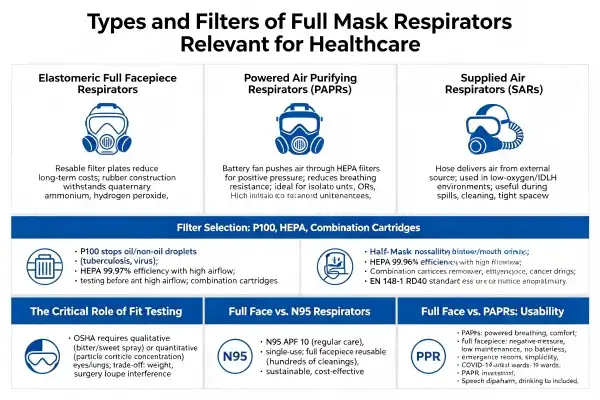
Elastomeric Full Facepiece Respirators
The filter plates in these reusable Full Mask Respirator devices can be changed, which saves healthcare facilities money in the long run when they have to deal with repeated PPE needs. Our rubber types can stand up to strict cleaning methods, including quaternary ammonium compounds, hydrogen peroxide vapour, and UV-C sterilisation, without losing their seal integrity. The speech cushion we built into our design makes it easier to communicate clearly, which is a major problem during patient care.
Powered Air Purifying Respirators (PAPRs)
A battery-powered fan in a PAPR pushes air from the outside through HEPA filters, causing positive pressure inside the facepiece. This gets rid of the stiffness in breathing, which makes it easier to breathe for long periods of time. The better comfort and cooling effect help healthcare workers in isolation units, operating rooms with dangerous cases, or areas where drugs are compounded. But because of the original cost and the need for upkeep, buying teams need to carefully weigh the pros and cons.
Supplied Air Respirators (SARs)
SARs use hose lines to bring breathing air in from an outside source. This is useful in places where oxygen levels are low or where conditions are directly dangerous to life or health (IDLH). Even though they aren't very popular in hospitals, they are very helpful during toxic material spills, cleaning processes, or entering tight spaces on healthcare sites.
Filter Selection: P100, HEPA, and Combination Cartridges
Assessing the dangers will help you choose the right filter. P100 particulate screens stop oil- and non-oil-based droplets, which makes them perfect for isolating people with tuberculosis or stopping a virus spread. The 99.97% performance standard for HEPA screens is the same, but they let more air through for PAPR systems. Combination capsules have layers of activated carbon that get rid of organic vapours from gases used for anaesthesia, ethylene oxide sterilisation, or making cancer drugs.
At PPE MAX, we make sure that our filter connection holes meet EN 148-1 RD40 standards. This means that they will work with a variety of cartridge types. Because of this, facilities can change the amount of protection as clinical situations change without having to buy new mask units.
The Critical Role of Fit Testing
If it's not made right, even the most advanced breathing protection won't work. Before the first use and every year after that, OSHA requires either qualitative or objective fit testing. To find seal leaks using qualitative methods, bitter or sweet spray agents are used, while for quantitative tests, specialised equipment is used to compare the particle concentration inside and outside the facepiece. We make sure that end users get the documented APF that our equipment is meant to give by giving our dealer partners thorough fit testing methods and training programs.
Comparing Full Mask Respirators with Other Respirator Types in Healthcare
Full Face vs. Half Mask Respirators
Half-face respirators cover the nose and mouth, but not the eyes. This is a big problem when there are splash dangers or high-velocity particles around. When suctioning or using a nebuliser to create aerosols, conjunctival transmission paths can make shielding less effective. Our full facepiece design fills in this gap, protecting both the eyes and the lungs at the same time. The trade-off is a little more weight and a chance that it will interfere with some surgery loupes. Procurement experts have to weigh these issues against the need for safety.
Full Face Respirators vs. N95 Filtering Facepiece Respirators
The APF of N95 masks is 10, which is good for regular patient care but not good enough for high-risk situations. These are one-time-use, throwaway items that add to large amounts of trash during pandemic waves. Our rubber full facepiece respirators, on the other hand, can withstand hundreds of cleaning rounds. This makes them a sustainable and cost-effective option for places that need PPE on a regular basis. Over the course of its useful life, a single PPE MAX respirator can replace thousands of throwaway N95 units. This cuts down on costs and damage to the environment by a huge amount.
Full Face Respirators vs. PAPRs: Usability Considerations
Both offer better protection, but driven breathing in PAPRs makes them more comfortable to wear for longer periods of time, while negative-pressure full facepiece types are easier to maintain, less expensive, and don't need batteries. When healthcare procurement managers buy things, they need to think about how the products will be used. For example, emergency rooms that don't know how many patients will come in may like how simple and ready-to-use our flexible respirators are, while COVID-19 wards that are constantly exposed to high risk might be a good place to invest in PAPR.
Communication is not always clear between computers. Our full facepiece speech diaphragm keeps talk clear, though it's a little muffled when compared to PAPRs with external speakers. Our design includes an alternative drinking tube that lets you stay hydrated without breaking the seal. This is very helpful during long surgeries or stays in isolation rooms.
Maintenance, Cleaning, and Longevity of Full Mask Respirators in Healthcare
Step-by-Step Disinfection Protocols
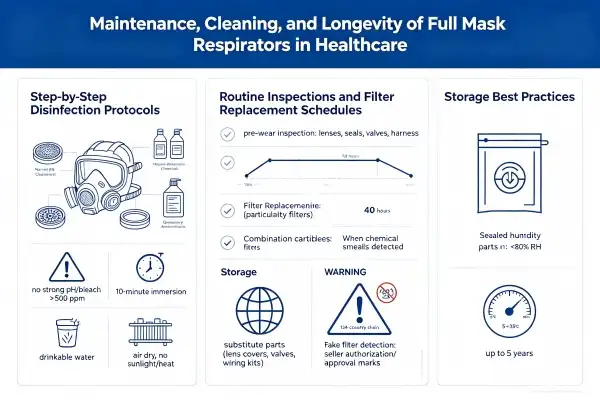
Cross-contamination can happen, but proper cleaning keeps the Full Mask Respirator in good shape. We suggest taking the facepiece apart after each use, taking out the filter chambers, and using hospital-grade disinfectants to clean the parts that can be used again. Cleaners with a normal pH, alcohol-based liquids (70% isopropanol), and quaternary ammonium chemicals can all be used on our equipment. To keep rubber seals in good shape, don't use strong pH agents or bleach amounts higher than 500 ppm.
Immerse the parts in the cleaning solution for as long as the maker says, which is usually 10 minutes. Then, rinse them well with drinkable water. Let everything dry in the air, away from direct sunlight and heat sources that could bend vinyl parts. Put it back together only after it is fully dry, and check the seals for cracks or distortion before using it again.
Routine Inspections and Filter Replacement Schedules
Before each wear, you should do an eye review to make sure the lenses are clear, the seals are flexible, the valves work, and the harness is stretchy. Replace filter tubes as directed by the maker. For particulate filters, this is usually after 40 hours of use, but it can be done sooner if breathing resistance becomes noticeable. When chemical smells can be detected, which means the cartridge is saturated, combination cartridges with activated carbon need to be replaced.
We suggest keeping a stock of substitute parts, such as extra lens covers, valves, and wiring kits. Our world supply chain goes through 134 countries, which ensures that our buying teams can always get real parts. Fake filters are very dangerous, so always check the marks on the product for seller authorisation and approval.
Storage Best Practices
Keep respirators that are clean and dry in sealed bags out of direct sunlight, away from germs, and away from temperature changes. Places set aside for storage should keep the temperature between 5°C and 35°C and the relative humidity below 80%. Elastomeric parts can last up to five years or more if they are stored properly, which maximises the return on investment.
How to Choose and Procure Full Mask Respirators for Healthcare Facilities
Evaluating Essential Product Criteria
When choosing a Full Mask Respirator, healthcare buying managers should put several factors in order of importance. Filtration effectiveness must match risk assessments—P100 for risks only related to particulates, and combo filters for risks related to chemicals. Adjustable straps, even weight distribution, and anti-fog lens coatings are all comfort features that have a direct effect on compliance during long shifts. Our comfortable design at PPE MAX gets rid of pressure points so that service staff will use it more often.
Verification of certification is still very important. Check the NIOSH approval numbers, look over the test results to see what safety factors were given, and make sure that you are following the area standards that apply to where you work. Our goods come with paperwork that says they can be used in North American OSHA areas, European Union member states, and places in the Asia-Pacific region.
The Value of Trusted Manufacturing Partners
PPE MAX has built its name since 1956 on consistent quality and new technology. Our factories in Xi'an, China, use quality control systems that are ISO-certified, and at every stage of production, they do in-process checks. Customers are welcome to visit our state-of-the-art building, which gives them trust in the buying process.
By working with well-known names, you can be sure of getting expert help, training materials, and guaranteed protection. When putting together lung protection programs for big healthcare systems or government procurement departments, our team's help with fit testing, maintenance training programs, and quick responses to technical questions are all very useful.
Bulk Purchasing and Lifecycle Cost Analysis
Smart buying pros look at the total cost of ownership as well as the unit price. Our reused rubber respirators are very cost-effective because they last a long time and can be used over and over again. Bulk buying deals give savings for large orders, unique labels for dealer partners, and easy payment terms for orders that qualify.
Think about the hidden costs, like the room needed to store random items, the cost of getting rid of trash, and the risks to the supply chain during shortages. These worries are eased by our long-lasting, germ-killing gear, which makes sure that field workers always have reliable protection available.
Working with Authorised Distributors
PPE MAX maintains a global network of authorised distributors who provide localised support, maintain spare parts inventories, and ensure authentic product sourcing. Purchasing through authorised channels guarantees warranty coverage, access to product updates, and documentation necessary for regulatory compliance audits. We encourage healthcare procurement teams to verify distributor credentials and request proof of authorisation before finalising contracts.
Conclusion
Determining when full facepiece respiratory protection becomes necessary requires understanding hazard severity, regulatory requirements, and operational constraints unique to healthcare environments. These advanced devices deliver superior protection through complete facial coverage, higher assigned protection factors, and versatile filter options addressing both biological and chemical threats. While initial costs exceed disposable alternatives, lifecycle value, sustainability benefits, and enhanced worker safety justify investment for facilities managing high-risk exposures. Partnering with established manufacturers ensures product reliability, regulatory compliance, and access to technical expertise supporting successful respiratory protection programs.
FAQ
When should healthcare facilities transition from N95 masks to full face respirators?
Facilities should upgrade when exposure risks exceed APF 10 protection levels—during aerosol-generating procedures on confirmed or suspected airborne infectious patients, when handling hazardous drugs requiring eye protection, or in response to public health emergencies involving novel pathogens with uncertain transmission characteristics. Risk assessments conducted by industrial hygienists or infection control professionals guide appropriate selection.
How do healthcare workers maintain communication while wearing full facepiece respirators?
Modern designs incorporate speech diaphragms that transmit voice with minimal distortion. Some users employ voice amplification devices or rely on visual communication aids. Training programs should address communication strategies, and units should establish protocols for critical information exchange during respiratory protection use.
What is the expected service life of an elastomeric full facepiece respirator in healthcare settings?
With proper maintenance, cleaning, and storage, elastomeric components typically last five years, while filters require replacement based on use duration and exposure types. Regular inspections identify wear patterns requiring earlier replacement, ensuring continuous protection and reliability throughout the device's operational life.
Partner with PPE MAX for Reliable Full Mask Respirator Supply
Healthcare facilities and safety distributors require respiratory protection they can trust unconditionally. As a leading full mask respirator manufacturer since 1956, PPE MAX delivers NIOSH-certified, EN 136-compliant equipment designed specifically for demanding healthcare applications. Our comprehensive product range, from elastomeric facepieces to PAPR systems, addresses diverse clinical scenarios, while our global supply network ensures reliable availability across 134 countries.
We understand procurement challenges facing large healthcare organisations—budget constraints, regulatory complexity, and workforce safety responsibilities. Our team provides end-to-end support, including hazard assessments, product selection guidance, fit testing protocols, and maintenance training. Contact our respiratory protection specialists at marketing@ppemax.com to discuss your facility's specific requirements. Let our 65+ years of industry expertise and commitment to worker safety strengthen your PPE procurement strategy.
References
1. National Institute for Occupational Safety and Health. "NIOSH Guide to the Selection and Use of Particulate Respirators." Department of Health and Human Services, 2019.
2. Occupational Safety and Health Administration. "Respiratory Protection Standard 29 CFR 1910.134: Compliance Guide for Healthcare Facilities." U.S. Department of Labour, 2021.
3. European Committee for Standardisation. "EN 136:1998 Respiratory Protective Devices - Full Face Masks - Requirements, Testing, Marking." CEN Technical Committee, 1998.
4. Centres for Disease Control and Prevention. "Interim Infection Prevention and Control Recommendations for Healthcare Personnel During the Coronavirus Disease 2019 Pandemic." CDC Healthcare Infection Control Practices Advisory Committee, 2022.
5. American National Standards Institute. "ANSI Z88.2-2015: Respiratory Protection - Standard Practices and Principles." ANSI Accredited Standards Committee, 2015.
6. International Safety Equipment Association. "Respiratory Protection in Healthcare: Best Practices for Selection, Use, and Maintenance." ISEA Technical Report, 2020.
Learn about our latest products and discounts through SMS or email