- English
- French
- German
- Portuguese
- Spanish
- Russian
- Japanese
- Korean
- Arabic
- Greek
- German
- Turkish
- Italian
- Danish
- Romanian
- Indonesian
- Czech
- Afrikaans
- Swedish
- Polish
- Basque
- Catalan
- Esperanto
- Hindi
- Lao
- Albanian
- Amharic
- Armenian
- Azerbaijani
- Belarusian
- Bengali
- Bosnian
- Bulgarian
- Cebuano
- Chichewa
- Corsican
- Croatian
- Dutch
- Estonian
- Filipino
- Finnish
- Frisian
- Galician
- Georgian
- Gujarati
- Haitian
- Hausa
- Hawaiian
- Hebrew
- Hmong
- Hungarian
- Icelandic
- Igbo
- Javanese
- Kannada
- Kazakh
- Khmer
- Kurdish
- Kyrgyz
- Latin
- Latvian
- Lithuanian
- Luxembou..
- Macedonian
- Malagasy
- Malay
- Malayalam
- Maltese
- Maori
- Marathi
- Mongolian
- Burmese
- Nepali
- Norwegian
- Pashto
- Persian
- Punjabi
- Serbian
- Sesotho
- Sinhala
- Slovak
- Slovenian
- Somali
- Samoan
- Scots Gaelic
- Shona
- Sindhi
- Sundanese
- Swahili
- Tajik
- Tamil
- Telugu
- Thai
- Ukrainian
- Urdu
- Uzbek
- Vietnamese
- Welsh
- Xhosa
- Yiddish
- Yoruba
- Zulu
Signs of damage and wear in rubber insulating gloves
Rubber dielectric gloves serve as critical safety barriers against electrical hazards in industrial environments, protecting workers from potentially fatal electrical shock incidents. Recognizing deterioration patterns in these protective devices ensures workplace safety compliance and prevents catastrophic accidents. Regular inspection for damage indicators such as cracks, punctures, discoloration, and elasticity loss becomes essential for maintaining the integrity of dielectric gloves used across construction, mining, energy, and manufacturing sectors. Understanding these warning signs enables procurement managers, safety officers, and workers to implement proactive replacement schedules, thereby safeguarding personnel while maintaining operational efficiency. Early detection of wear patterns significantly reduces the risk of electrical exposure incidents and ensures continuous protection in high-voltage work environments.
Understanding Rubber Insulating Gloves and Dielectric Gloves
Rubber insulating gloves represent specialized personal protective equipment engineered to create an effective barrier against electrical current flow. These protective devices utilize natural or synthetic rubber compounds that possess exceptional dielectric properties, preventing electrical energy from reaching the wearer's hands during maintenance, installation, or repair activities involving energized electrical systems.
Material Composition and Electrical Properties
The development of electrical protection gloves includes carefully chosen elastic materials that experience thorough testing to meet worldwide security measures. ASTM D120 and IEC 60903 details characterize the execution necessities for these defensive gadgets, setting up voltage evaluations that run from Course 00 (500 volts AC) to Lesson 4 (36,000 volts AC). The fabric composition straightforwardly impacts the glove's capacity to withstand electrical stretch, while keeping up adaptability and toughness under different environmental conditions.
Voltage Rating Classifications and Applications
Industrial applications require particular voltage classifications to coordinate operational prerequisites. Lesson 0 gloves handle up to 1,000 volts AC, making them reasonable for private electrical work, whereas Lesson 2 gloves are rated against 17,000 volts AC for utility line upkeep. Lesson 3 and Course 4 gloves serve high-voltage transmission applications where specialists experience extraordinary electrical possibilities. Understanding these classifications empowers acquisition experts to select suitable security levels for their particular operational environments.
Compliance Standards and Certification Requirements
International security organizations order strict compliance with conventions for electrical defensive gear. The American Society for Testing and Materials (ASTM) and Universal Electrotechnical Commission (IEC) set up testing strategies that assess dielectric quality, physical properties, and aging characteristics. Producers must illustrate compliance through autonomous research facility testing, guaranteeing that each glove clump meets or surpasses indicated execution criteria some time recently dissemination to end users.
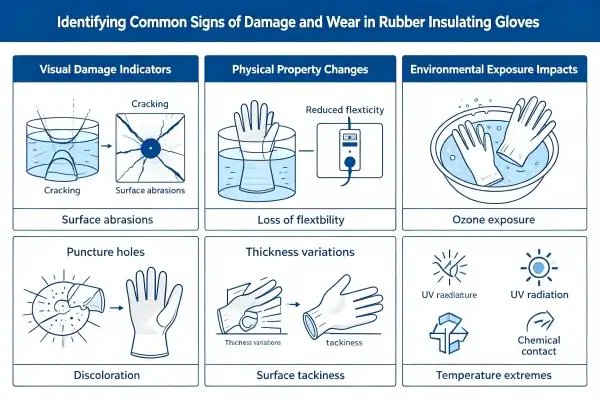
Identifying Common Signs of Damage and Wear in Rubber Insulating Gloves
Regular inspection protocols help identify deterioration patterns that compromise glove integrity and worker safety. Visual examination techniques combined with tactile assessment methods reveal damage indicators that may not be immediately apparent during routine use. Understanding these warning signs enables safety personnel to implement effective replacement schedules that prevent electrical exposure incidents.
Visual Damage Indicators
Cracking speaks to one of the most genuine forms of glove debasement, regularly showing up as hairline breaks that expand through the elastic fabric. These crevices regularly form at push points such as finger joints, palm ranges, and wrist areas where repeated flexing happens amid typical use. Surface scraped areas show as roughened ranges where the smooth elastic surface gets worn or scratched, possibly diminishing the material's dielectric properties.
Puncture harm creates quick security risks by giving direct pathways for electrical current to reach the wearer's skin. Little gaps may result from contact with sharp objects, whereas bigger punctures regularly happen from disgraceful dealing with or sharp objects. Discoloration designs show chemical presentation or ozone corruption, showing up as brown, yellow, or gray patches that flag compromised fabric integrity.
Physical Property Changes
Loss of dielectric gloves becomes apparent when gloves come up short in returning to their unique shape after extending or flexing. This corruption influences both consolation and assurance levels, as the fabric can no longer keep up legitimate contact with the skin or give satisfactory adroitness for exact work assignments. Diminished adaptability shows as solidness that makes it troublesome to twist fingers or grasp devices effectively.
Thickness varieties happen when fabric disintegration diminishes the protection boundary between electrical sources and the worker's hands. Measuring thickness at different focuses uncovers uneven wear designs that may compromise assurance in particular regions. Surface tastelessness shows elastic debasement where the fabric becomes sticky or gummy, recommending chemical breakdown of the polymer structure.
Environmental Exposure Effects
Ozone presentation quickens elastic maturing through oxidation forms that make minuscule splits and diminish fabric quality. Bright radiation breaks down polymer chains, leading to brittleness and surface disintegration that compromises defensive properties. Chemical contact with oils, solvents, or cleaning operators can cause swelling, softening, or solidifying that changes the glove's dielectric characteristics.
Temperature extremes influence elastic properties by causing development and compression cycles that stretch the fabric structure. Delayed introduction to warm temperatures quickens maturing forms, whereas cold temperatures can make the elastic fragile and inclined to breaking. Mildew varieties impact fabric solidity and can advance form or buildup development that degrades defensive capabilities.
Testing and Maintenance Methods to Ensure Glove Safety
Systematic testing protocols verify the continued effectiveness of electrical insulating gloves throughout their service life. These procedures detect microscopic damage that visual inspection cannot identify, ensuring that protective equipment maintains its specified performance characteristics. Regular maintenance practices extend glove longevity while preserving safety margins required for electrical work environments.
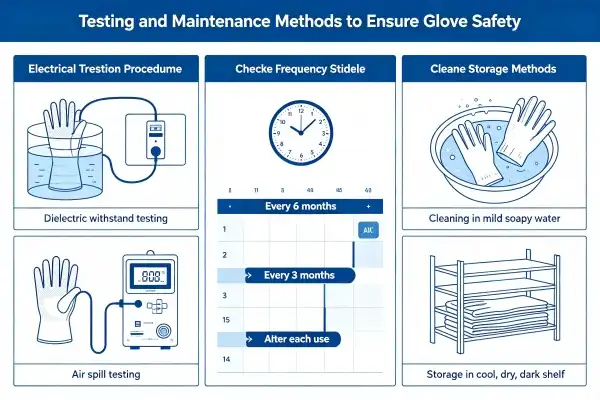
Electrical Testing Procedures
Dielectric withstand testing applies a controlled voltage push to recognize compromised separator properties that may lead to electrical breakdown. This strategy includes expanding the glove with a discharge and submerging it in a conductive water shower while applying test voltage between the water and an inside terminal. Current spillage estimations uncover corruption that may not be unmistakable to the exposed eye.
Air spill testing identifies pinhole surrenders and small punctures by blowing up gloves to indicated weight levels and checking for weight loss over time. This strategy recognizes minuscule breaches in the fabric that may give pathways for electrical current amid genuine use conditions. Testing hardware must keep up calibration measures to guarantee precise discovery of safety-critical defects.
Inspection Frequency Guidelines
Industry benchmarks prescribe particular testing intervals based on glove classification and utilization designs. Course 0 through Lesson 2 gloves require electrical testing each six months, whereas Lesson 3 and Course 4 gloves require testing each three months due to their high-voltage applications. Visual assessment ought to happen after each use, with point-by-point examination performed monthly to distinguish developing harm patterns.
Documentation necessities include order keeping up records of all testing exercises, review results, and glove history to track execution patterns and distinguish potential quality issues. These records bolster compliance reviews and offer assistance to acquisition supervisors assess provider execution over time.
Proper Cleaning and Storage Practices
Cleaning methods must maintain a strategic distance from unforgiving chemicals or abrasive materials that harm elastic surfaces or compromise dielectric properties. Mellow cleanser arrangements with tepid water successfully expel contaminants without influencing fabric astuteness. Intensive washing disposes of cleanser buildup that might pull in dirt or interfere with electrical properties.
Storage dielectric gloves affect glove life span and execution characteristics. Cool, dull situations absent from ozone sources, coordinate daylight, and temperature extremes protect elastic properties and amplify benefit life. Legitimate ventilation avoids dampness collection that seems to advance microbial development or chemical degradation. Gloves ought to be put away level or hung to prevent wrinkling or collapsing that makes stretch concentration points.
Comparative Analysis of Rubber Insulating Gloves and Dielectric Gloves
While the terms "rubber insulating gloves" and "dielectric gloves" are often used interchangeably, subtle distinctions exist in material composition, manufacturing processes, and application-specific design features. Understanding these differences helps procurement professionals select optimal protective equipment for specific operational requirements and environmental conditions.
Material Composition Variations
Natural elastic definitions give amazing electrical separator properties and predominant adaptability at direct temperatures. These materials offer fetched points of interest for standard applications but may have limitations in chemical resistance and temperature extremes. Manufactured elastic compounds provide upgraded execution in unforgiving situations, with made strides resistance to ozone, chemicals, and temperature variations.
Composite materials combine different elastic sorts to optimize particular execution characteristics such as cut resistance, adaptability, or chemical compatibility. These progressive definitions address specialized applications where standard elastic materials may not give satisfactory assurance or durability.
Application-Specific Design Features
Lightweight gloves emphasize ability and comfort for assignments requiring fine motor control and amplified wear periods. These plans regularly include more slender divider areas and ergonomic forming that diminishes hand weariness while maintaining basic defensive properties. The diminished thickness may restrain voltage appraisals but gives predominant material affectability for accurate work.
Heavy-duty variations prioritize the greatest security and strength for high-voltage applications or unforgiving natural conditions. Thicker divider development gives improved cut resistance and higher voltage evaluations at the cost of adaptability and smoothness. Strengthened palm and finger regions amplify benefit life in demanding applications where mechanical wear speaks to a essential concern.
Performance Trade-offs and Selection Criteria
Balancing assurance levels with convenience prerequisites includes assessing particular working environment risks, assignment necessities, and natural conditions. High-voltage applications order the most extreme separator properties regardless of cost considerations, whereas schedule support errands may prioritize adroitness and expanded wear characteristics.
Cost contemplations incorporate beginning buy cost, anticipated benefit life, replacement cost, and add up to taken a toll of ownership. Premium materials may legitimize higher starting costs through amplified benefit life and decreased substitution necessities. Bulk acquiring techniques can optimize estimating while guaranteeing satisfactory stock levels for operational continuity.
Procurement Insights: Choosing and Buying the Right Insulating Gloves
Strategic procurement decisions require a comprehensive evaluation of supplier capabilities, product specifications, and long-term partnership potential. Successful buyers focus on certification authenticity, quality consistency, and technical support capabilities rather than price alone. Building relationships with reliable suppliers ensures access to expertise and responsive service that supports operational efficiency and safety compliance.
Certification Verification and Standards Compliance
Authentic dielectric gloves from recognized testing laboratories assure that products meet specified safety standards and performance requirements. Third-party testing organizations such as UL, CSA, and TUV maintain independence from manufacturers, ensuring objective evaluation of product capabilities. Procurement managers should verify certification validity and request detailed test reports to confirm compliance with applicable standards.
Counterfeit products pose significant safety risks and may lack proper testing or certification documentation. Purchasing from authorized distributors or directly from manufacturers reduces the risk of receiving substandard products that could compromise worker safety. Due diligence includes verifying supplier credentials and requesting certificates of conformity for each product shipment.
Supplier Evaluation Criteria
Manufacturing capabilities encompass production capacity, quality control systems, and technical expertise that ensure consistent product quality and reliable delivery schedules. Established manufacturers with ISO 9001 certification demonstrate commitment to quality management and continuous improvement processes. Site visits and audits provide insight into manufacturing practices and quality control procedures.
Technical support services include application guidance, training resources, and responsive customer service that adds value beyond the product itself. Knowledgeable technical staff can assist with product selection, compliance requirements, and troubleshooting support that reduces internal resource requirements and improves operational efficiency.
At PPE MAX, we bring over six decades of experience in electrical safety equipment manufacturing, serving customers across 134 countries with comprehensive dielectric glove solutions. Our extensive product range includes all voltage classifications from Class 00 to Class 4, manufactured under strict quality control protocols that ensure consistent performance and reliability. As the largest PPE manufacturer in Northwest China, we combine traditional craftsmanship with modern technology to deliver products that meet or exceed international safety standards.
Bulk Purchasing Strategies and Value Optimization
Volume purchasing agreements provide cost advantages while ensuring adequate inventory levels for operational continuity. Long-term contracts with established suppliers offer price stability and priority allocation during periods of high demand or supply constraints. Inventory management strategies balance carrying costs with stockout risks to optimize the total cost of ownership.
Quality assurance programs include incoming inspection procedures, performance testing protocols, and supplier scorecards that track delivery performance, quality metrics, and customer service responsiveness. These systems help identify potential issues before they impact operations and support continuous improvement initiatives with key suppliers.
Conclusion
Regular inspection and dielectric gloves of rubber insulating gloves represent a critical component of electrical safety programs across industrial sectors. Understanding damage indicators such as cracking, punctures, discoloration, and elasticity loss enables proactive replacement decisions that prevent electrical exposure incidents. Proper testing procedures, storage practices, and procurement strategies ensure that protective equipment maintains its effectiveness throughout its service life. Organizations that implement comprehensive glove management programs demonstrate commitment to worker safety while optimizing operational efficiency and compliance with safety regulations.
FAQ
How often should rubber insulating gloves be tested for damage?
Class 0 through Class 2 gloves require electrical testing every six months, while Class 3 and Class 4 gloves need testing every three months due to higher voltage applications. Visual inspection should occur before each use, with detailed monthly examinations to identify developing damage patterns.
Can gloves with minor damage still be used safely?
Any visible damage to rubber insulating gloves compromises their protective capabilities and creates safety hazards. Cracks, punctures, or significant wear patterns indicate that gloves should be immediately removed from service and replaced with new units.
What storage conditions extend glove service life?
Optimal storage requires cool, dark environments away from ozone sources, direct sunlight, and temperature extremes. Proper ventilation prevents moisture accumulation, while storing gloves flat or hung prevents stress concentration from creasing or folding.
How do I verify that purchased gloves meet safety standards?
Authentic certifications from recognized testing laboratories such as UL, CSA, or TUV verify compliance with safety standards. Request detailed test reports and certificates of conformity from suppliers to ensure product authenticity.
What factors influence glove selection for specific applications?
Voltage rating requirements, environmental conditions, dexterity needs, and wear duration determine optimal glove selection. High-voltage applications prioritize maximum insulation, while routine maintenance may emphasize comfort and flexibility.
How can procurement managers evaluate supplier reliability?
Assess manufacturing capabilities, quality control systems, certification authenticity, technical support services, and delivery performance. Site visits and supplier audits provide insight into operational capabilities and quality management practices.
Partner with PPE MAX for Premium Dielectric Gloves Solutions
PPE MAX delivers industry-leading electrical insulating gloves backed by decades of manufacturing expertise and unwavering commitment to worker safety. Our comprehensive product portfolio spans all voltage classifications with rigorous testing protocols that exceed international standards. Procurement managers seeking reliable dielectric glove suppliers benefit from our global distribution network, technical support services, and competitive pricing structures designed for bulk orders. Contact our team at marketing@ppemax.com to discuss your specific requirements and receive personalized guidance on optimal glove selection for your operational environment. Experience the confidence that comes from partnering with a trusted dielectric gloves manufacturer committed to protecting your workforce.
References
1. American Society for Testing and Materials. ASTM D120-14: Standard Specification for Rubber Insulating Gloves. West Conshohocken: ASTM International, 2019.
2. International Electrotechnical Commission. IEC 60903: Live Working - Gloves of Insulating Material. Geneva: IEC Publications, 2019.
3. National Institute for Occupational Safety and Health. Criteria for a Recommended Standard: Working with Electrical Equipment. Cincinnati: NIOSH Publications, 2018.
4. Occupational Safety and Health Administration. Personal Protective Equipment for Electrical Workers: Standards and Guidelines. Washington: OSHA Publications, 2020.
5. Institute of Electrical and Electronics Engineers. IEEE 1048: Guide for Protective Grounding of Power Lines. New York: IEEE Standards Association, 2019.
6. International Association of Electrical Inspectors. Electrical Safety in the Workplace: A Comprehensive Guide to Standards and Best Practices. Richardson: IAEI Publications, 2021.
Learn about our latest products and discounts through SMS or email