- English
- French
- German
- Portuguese
- Spanish
- Russian
- Japanese
- Korean
- Arabic
- Greek
- German
- Turkish
- Italian
- Danish
- Romanian
- Indonesian
- Czech
- Afrikaans
- Swedish
- Polish
- Basque
- Catalan
- Esperanto
- Hindi
- Lao
- Albanian
- Amharic
- Armenian
- Azerbaijani
- Belarusian
- Bengali
- Bosnian
- Bulgarian
- Cebuano
- Chichewa
- Corsican
- Croatian
- Dutch
- Estonian
- Filipino
- Finnish
- Frisian
- Galician
- Georgian
- Gujarati
- Haitian
- Hausa
- Hawaiian
- Hebrew
- Hmong
- Hungarian
- Icelandic
- Igbo
- Javanese
- Kannada
- Kazakh
- Khmer
- Kurdish
- Kyrgyz
- Latin
- Latvian
- Lithuanian
- Luxembou..
- Macedonian
- Malagasy
- Malay
- Malayalam
- Maltese
- Maori
- Marathi
- Mongolian
- Burmese
- Nepali
- Norwegian
- Pashto
- Persian
- Punjabi
- Serbian
- Sesotho
- Sinhala
- Slovak
- Slovenian
- Somali
- Samoan
- Scots Gaelic
- Shona
- Sindhi
- Sundanese
- Swahili
- Tajik
- Tamil
- Telugu
- Thai
- Ukrainian
- Urdu
- Uzbek
- Vietnamese
- Welsh
- Xhosa
- Yiddish
- Yoruba
- Zulu
Do's and Don'ts: A Complete Guide to Maintaining Your Insulating Gloves
Maintaining insulating gloves properly determines whether your electrical workers return home safely each day. These PPE require meticulous care to preserve their dielectric properties and mechanical integrity. When electrical safety professionals follow proper maintenance protocols, these rubber insulating gloves can provide years of reliable protection against electrical hazards. Poor maintenance practices, however, can compromise safety margins and expose workers to potentially fatal electrical shock incidents. Understanding both the correct procedures and common pitfalls creates a foundation for sustainable electrical safety programs across industrial operations.
Understanding Your Insulating Gloves: Key Facts and Safety Standards
Electrical protective gloves represent sophisticated engineering designed to safeguard workers from electrical hazards through reliable dielectric insulation. These critical safety devices utilize high-grade natural rubber latex construction that creates an effective barrier against electrical current flow. The manufacturing process involves precise vulcanization techniques that ensure consistent wall thickness and eliminate potential weak points that could compromise protection.
Types and Construction of Electrical Protective Gloves
Insulating gloves security programs depend on a few unmistakable glove classifications, each built for particular voltage ranges and working conditions. Lesson 00 protection gloves, appraised for most extreme utilize voltages up to 500V AC, serve as the establishment for low-voltage electrical work. These gloves experience thorough confirmation testing at 2500V AC to guarantee satisfactory security edges for their aiming applications. The 0.5mm normal thickness gives ideal adjust between security and smoothness, permitting laborers to perform exact errands whereas keeping up electrical safety.
Composite glove frameworks combine elastic protection gloves with calfskin defender gloves to address both electrical and mechanical dangers. The external calfskin layer shields the elastic from punctures, cuts, and scraped spots that seem compromise electrical assurance. This layered approach amplifies glove life expectancy whereas keeping up the material affectability required for sensitive electrical work.
Critical Safety Standards and Compliance Requirements
International security measures administer each viewpoint of electrical glove execution, testing, and upkeep. The IEC 60903 standard builds up worldwide necessities for electrical protection gloves, indicating development materials, testing conventions, and execution criteria. ASTM D120 gives parallel necessities inside North American markets, guaranteeing reliable security benchmarks over distinctive administrative environments.
These measures order normal testing interims and particular upkeep methods that protect glove astuteness all through their benefit life. Compliance documentation becomes fundamental for mechanical security programs, especially when overseeing huge workforces over numerous areas. Legitimate certification guarantees administrative compliance, while ensuring organizations from risk presentation related to electrical accidents.
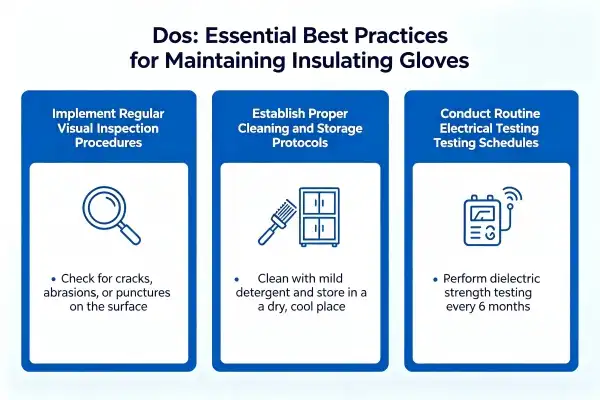
Dos: Essential Best Practices for Maintaining Insulating Gloves
Professional maintenance protocols maximize both safety performance and economic value from electrical protective equipment investments. These established procedures, developed through decades of industry experience, address every aspect of glove care from initial receipt through final retirement. Implementing comprehensive maintenance programs requires systematic approaches that ensure consistent execution across all operational levels.
Implement Regular Visual Inspection Procedures
Visual assessments serve as the essential defense against compromised electrical assurance. Day by day pre-use examinations ought to center on identifying surface harm that seem make electrical pathways through the elastic boundary. Laborers must look at both insides and outside surfaces for cuts, punctures, burns, or other physical harm that compromises security margins.
Inspection conventions ought to incorporate precise examination of high-stress regions where harm commonly happens. Fingertips, palm regions, and wrist sleeves encounter the most prominent wear amid typical utilize and require specific consideration amid visual evaluations. Any obvious harm, notwithstanding of estimate, requires quick glove evacuation from benefit and substitution with certified alternatives.
Documentation of assessment comes about underpins compliance programs, whereas making profitable information almost glove execution designs. Normal examination of harm areas and frequencies makes a difference distinguish preparing needs or gear alterations that might diminish future disappointments. This proactive approach changes schedule support into openings for persistent security improvement.
Establish Proper Cleaning and Storage Protocols
Appropriate cleaning methods protect elastic keenness by expelling contaminants that might quicken corruption. Gentle cleanser arrangements successfully expel most environmental contaminants without harming the elastic compound. Cleaning ought to happen promptly after each utilize to anticipate chemical responses that might compromise dielectric properties over time.
Here are the center cleaning prerequisites that guarantee ideal glove performance:
• Utilize, as it were, mellow, non-alkaline cleansers that won't respond with normal elastic compounds
• Keep up water temperatures underneath 60°C to avoid warm harm to elastic structures
• Flush altogether to kill cleanser buildups that seem pull in extra contaminants
• Discuss dry totally some time recently capacity to avoid moisture-related degradation
These cleaning conventions viably evacuate work environment contaminants while protecting the chemical judgment basic for electrical assurance. Appropriate execution avoids untimely maturing that may constrain early glove retirement and increase substitution costs.
Storage conditions altogether affect glove life span and execution unwavering quality. Controlled situations secure plants from ozone introduction, bright radiation, and temperature extremes that quicken maturing forms. Committed capacity ranges ought to keep up temperatures between 10°C and 21°C with relative mugginess levels underneath 75% to optimize conservation conditions.
Conduct Routine Electrical Testing Programs
Electrical testing approves dielectric execution past what visual assessment can identify. Proficient testing gear applies controlled high-voltage stretch to confirm that gloves keep up their indicated security levels all through their benefit life. Testing recurrence depends on utilization escalated and natural introduction, with most applications requiring semi-annual evaluation.
PPE MAX Course 00 protection gloves experience verification testing at 2500V AC amid fabricating, giving significant security edges for their 500V greatest utilize rating. Field testing ordinarily happens at 75% of verification test voltage to confirm continuous execution without superfluously focusing the elastic compound. This approach equalizations security confirmation with gear preservation.
Testing documentation makes lasting records that illustrate due tirelessness in electrical security administration. These records demonstrate priceless amid administrative assessments and give prove of efficient security administration that can impact protections contemplations. Comprehensive documentation moreover makes a difference distinguish gloves drawing closer retirement some time recently they come up short in service.
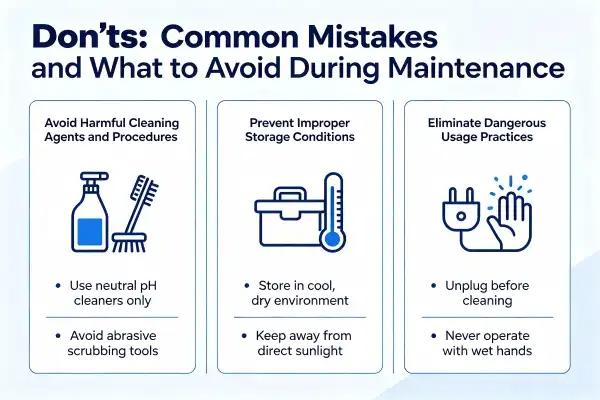
Don'ts: Common Mistakes and What to Avoid During Maintenance
Maintenance errors can transform reliable protective equipment into dangerous safety hazards that expose workers to electrical shock risks. These common mistakes often result from well-intentioned but misguided attempts to extend glove life or simplify maintenance procedures. Understanding these pitfalls helps safety professionals develop protocols that avoid dangerous compromises.
Avoid Harmful Cleaning Agents and Procedures
insulating gloves compounds can extremely harm elastic details indeed when surface appearance remains unaltered. Petroleum-based solvents break up elastic compounds and make imperceptible frail focuses that come up short beneath electrical push. So also, soluble cleaners cause chemical responses that debase cover properties whereas keeping up surface judgment that covers the basic damage.
Temperature extremes amid cleaning make extra risks that compromise long-term unwavering quality. Hot water over 60°C can cause warm corruption that diminishes adaptability and makes stretch concentration focuses. On the other hand, solidifying temperatures make elastic fragile and helpless to break arrangement amid dealing with. Keeping up direct temperatures all through cleaning methods jam fabric properties fundamental for electrical protection.
Prevent Improper Storage Conditions
Environmental introduction speaks to one of the most common causes of untimely glove disappointment over mechanical applications. Coordinate daylight contains bright radiation that breaks down elastic polymers and makes surface splitting that compromises electrical astuteness. Indeed brief introduction to strongly UV sources can start corruption forms that proceed amid ordinary storage.
Ozone introduction, especially common in regions with electrical gear or welding operations, causes quick elastic weakening that may not ended up obvious until progressed stages. Capacity regions ought to keep up ozone levels underneath 2 parts per hundred million to anticipate quickened maturing. Mechanical offices frequently require devoted capacity rooms with controlled climates to accomplish these security levels.
Temperature cycling between extraordinary hot and cold conditions makes mechanical stretch that can cause weariness splitting in elastic compounds. Capacity zones ought to keep up steady conditions inside manufacturer-specified ranges to minimize warm push amassing. This controlled approach essentially amplifies benefit life whereas keeping up dependable security levels.
Eliminate Dangerous Usage Practices
Using harmed gloves speaks to an unsatisfactory chance that no operational weight can legitimize. Indeed minor surface harm can proliferate quickly beneath electrical push, possibly causing disastrous disappointment amid energized work. Security conventions must build up clear criteria for glove retirement that dispose of subjective judgment around harm significance.
Mixing diverse glove classifications without appropriate approval makes erratic assurance levels that can lead to improper application in unsafe circumstances. Each glove lesson experiences particular testing for characterized voltage ranges, and combining distinctive sorts may not give added substance security. Standardizing on fitting classifications for particular work situations dispenses with perplexity whereas guaranteeing satisfactory security margins.
How to Test and Verify the Performance of Your Insulating Gloves?
Systematic testing protocols validate electrical protection throughout glove service life and provide objective criteria for retirement decisions. These procedures combine visual assessment with electrical verification to ensure comprehensive evaluation of protection capability. Professional testing equipment delivers precise results that support confident safety decisions.
Establish Visual Testing Protocols
Comprehensive visual examination requires orderly methods that guarantee steady assessment over diverse administrators and conditions. Appropriate lighting gets to be basic for identifying inconspicuous surface changes that seem demonstrate creating issues. Characteristic sunshine or high-quality Driven light uncovers surface points of interest that might elude take note beneath standard mechanical lighting conditions.
The expansion strategy gives compelling discovery of little punctures or lean spots that might not show up amid casual examination. Carefully expanding gloves with discuss weight permits precise assessment of all surface regions whereas highlighting zones where discuss spills happen. This method uncovers harm that may compromise electrical assurance indeed when no unmistakable surface sign exists.
Implement Electrical Testing Procedures
Professional dielectric testing hardware applies controlled high-voltage push whereas checking current spillage that shows cover debasement. Testing methods take after built up conventions that confirm execution without pointlessly pushing glove materials. Legitimate hardware calibration guarantees exact comes about that back solid security decisions.
PPE MAX Lesson 00 protection gloves illustrate remarkable execution amid electrical testing, reliably assembly IEC 60903 and ASTM D120 necessities all through their benefit life. The high-grade characteristic elastic latex development gives solid dielectric properties that keep up assurance edges indeed after amplified utilize in requesting mechanical environments.
Testing recurrence depends on utilization concentrated and natural conditions, with most applications profiting from semi-annual assessment. High-use situations or introduction to forceful chemicals may require more visit testing to guarantee progressing security. Documentation of testing comes about makes changeless records that illustrate orderly security administration whereas supporting administrative compliance requirements.
Choosing the Right Insulating Gloves for Your Business Needs
Selecting appropriate electrical protective equipment requires careful evaluation of workplace hazards, operational requirements, and performance specifications. The decision process must balance protection levels with practical considerations like dexterity, comfort, and durability to ensure widespread acceptance among workers. Comprehensive evaluation prevents both under-protection and unnecessary restrictions that could compromise operational efficiency.
Evaluate Protection Requirements and Specifications
Voltage rating selection represents the fundamental decision that determines appropriate glove classification for specific applications. Class 00 insulating gloves provide reliable protection for low-voltage electrical work up to 500V AC, making them ideal for telecommunications, HVAC maintenance, and light industrial applications. The 2500V AC proof test rating ensures substantial safety margins that accommodate voltage transients and measurement uncertainties common in real-world conditions.
Material selection influences both protection performance and operational characteristics that affect user acceptance. High-grade natural rubber latex offers superior electrical properties combined with flexibility that maintains dexterity during precision work. The 170-gram weight of PPE MAX Class 00 gloves minimizes hand fatigue during extended use while providing reliable protection throughout demanding work cycles.
Consider Ergonomic and Operational Factors
Glove sizing significantly impacts both protection effectiveness and user comfort during extended wear periods. PPE MAX offers Class 00 insulating gloves in sizes 8 through 11 to accommodate the full range of hand dimensions found in industrial workforces. Proper sizing ensures adequate dexterity for precision work while maintaining protection margins that prevent electrical exposure.
Length options provide additional customization for specific application requirements. Both 11-inch and 14-inch lengths accommodate different work environments and protection needs. Longer gloves provide extended coverage for work involving higher voltages or additional mechanical hazards, while shorter versions optimize dexterity for detailed tasks.
Color coding enhances safety programs by providing visual identification of glove classifications and testing status. PPE MAX Class 00 gloves are available in both red and black colors to support different organizational coding systems. Consistent color application helps prevent mixing of different glove types while supporting quick visual verification of appropriate equipment selection.
About Our Company: Trusted Provider of Certified Electrical Safety Equipment
PPE MAX stands as a distinguished manufacturer of electrical safety equipment with over six decades of experience serving global industrial markets. Since 1956, we have maintained unwavering commitment to protecting workers through innovative product development and rigorous quality management systems. Our comprehensive understanding of electrical hazards and protection requirements guides every aspect of our manufacturing operations.
Manufacturing Excellence and Quality Assurance
Our Class 00 insulating gloves exemplify the manufacturing excellence that has established PPE MAX as a trusted partner for utilities, telecommunications companies, and industrial clients worldwide. Each pair undergoes comprehensive testing that exceeds both IEC 60903 and ASTM D120 requirements, ensuring reliable protection that meets the most demanding application requirements.
Quality control systems integrate advanced testing equipment with experienced technical staff who understand the critical nature of electrical protective equipment. Every manufacturing batch receives individual attention that verifies performance specifications before release to global markets. This systematic approach has earned recognition across 134 countries where PPE MAX products provide daily protection for electrical workers.
Global Distribution and Support Capabilities
International logistics capabilities ensure the reliable delivery of electrical safety equipment to industrial operations worldwide. Efficient packaging systems protect product integrity during shipment while optimizing transportation costs for bulk orders. Standard packaging includes individual pair boxes with 20-pair master cartons that simplify inventory management for large-scale operations.
Technical support services provide comprehensive assistance throughout the product selection and implementation processes. Our experienced team understands the complex requirements of modern electrical safety programs and offers guidance that ensures optimal equipment selection for specific applications. This support continues throughout the product lifecycle with training resources and maintenance guidance that maximizes safety performance.
Conclusion
Proper maintenance of insulating gloves requires systematic attention to cleaning, storage, inspection, and testing procedures that preserve electrical protection throughout extended service life. The combination of daily visual inspections, appropriate cleaning protocols, controlled storage conditions, and regular electrical testing creates comprehensive programs that ensure reliable worker protection. Avoiding common maintenance mistakes while implementing proven best practices maximizes both safety performance and equipment value. Professional testing validation provides objective criteria for retirement decisions that balance safety requirements with economic considerations. These integrated approaches transform electrical glove maintenance from routine tasks into strategic safety management that protects both workers and organizational interests.
FAQ
How often should we test our electrical insulating gloves?
Testing frequency depends on usage intensity and environmental conditions. Most applications require semi-annual electrical testing, with visual inspections before each use. High-stress environments or exposure to aggressive chemicals may necessitate more frequent testing. PPE MAX Class 00 insulating gloves maintain reliable performance throughout standard testing intervals when properly maintained.
Can we use leather gloves over rubber insulating gloves?
Leather protector gloves provide essential mechanical protection for rubber insulating gloves during normal use. This layered approach protects against punctures, cuts, and abrasions that could compromise electrical safety. The leather layer must be clean and dry to prevent contamination of the rubber surface that could affect electrical properties.
What voltage rating do we need for our electrical work?
Class 00 insulating gloves rated for 500V AC maximum use voltage serve most low-voltage electrical applications, including telecommunications, HVAC maintenance, and light industrial work. The 2500V proof test rating provides substantial safety margins for typical workplace conditions. Higher voltage applications require appropriate higher-class gloves with corresponding protection levels.
What storage conditions preserve glove performance?
Optimal storage maintains temperatures between 10°C and 21°C with relative humidity below 75%. Protection from ozone exposure, ultraviolet radiation, and temperature extremes prevents premature aging that could compromise electrical protection. Dedicated storage areas with controlled atmospheres provide ideal preservation conditions for extended service life.
How do we identify gloves that need retirement?
Any visible damage, including cuts, punctures, burns, or chemical attac,k requires immediate glove retirement. Electrical testing failures or approaching expiration dates also necessitate replacement. PPE MAX gloves include clear marking of class, size, and test date information that supports systematic retirement decisions based on objective criteria.
Partner with PPE MAX for Superior Electrical Safety Solutions
PPE MAX delivers comprehensive electrical safety solutions backed by over six decades of manufacturing expertise and global market experience. Our Class 00 insulating gloves represent the pinnacle of electrical protection technology, combining superior materials with rigorous quality control that ensures reliable worker safety. As a leading insulating gloves manufacturer, we provide complete support from initial product selection through ongoing maintenance guidance that maximizes safety performance. Contact our technical team at marketing@ppemax.com to discuss your specific electrical safety requirements and discover how our proven solutions can enhance your workplace protection programs. Our global distribution network ensures reliable delivery of certified electrical safety equipment that meets the demanding requirements of modern industrial operations.
References
1. Institute of Electrical and Electronics Engineers. "IEEE Guide for In-Service Maintenance and Electrical Testing of Live Line Tools." IEEE Standards Association, 2019.
2. Occupational Safety and Health Administration. "Electrical Protective Equipment Maintenance and Testing Guidelines." U.S. Department of Labor, 2020.
3. International Electrotechnical Commission. "Live Working - Gloves of Insulating Material - IEC 60903 Standard Specifications." IEC Publications, 2019.
4. American Society for Testing and Materials. "ASTM D120 Standard Specification for Rubber Insulating Gloves." ASTM International, 2021.
5. National Institute for Occupational Safety and Health. "Criteria for Personal Protective Equipment Used in Electrical Work Environments." Centers for Disease Control and Prevention, 2020.
6. Electric Power Research Institute. "Electrical Safety Guidelines for Industrial Maintenance Operations." EPRI Technical Publications, 2019.
Learn about our latest products and discounts through SMS or email