- English
- French
- German
- Portuguese
- Spanish
- Russian
- Japanese
- Korean
- Arabic
- Greek
- German
- Turkish
- Italian
- Danish
- Romanian
- Indonesian
- Czech
- Afrikaans
- Swedish
- Polish
- Basque
- Catalan
- Esperanto
- Hindi
- Lao
- Albanian
- Amharic
- Armenian
- Azerbaijani
- Belarusian
- Bengali
- Bosnian
- Bulgarian
- Cebuano
- Chichewa
- Corsican
- Croatian
- Dutch
- Estonian
- Filipino
- Finnish
- Frisian
- Galician
- Georgian
- Gujarati
- Haitian
- Hausa
- Hawaiian
- Hebrew
- Hmong
- Hungarian
- Icelandic
- Igbo
- Javanese
- Kannada
- Kazakh
- Khmer
- Kurdish
- Kyrgyz
- Latin
- Latvian
- Lithuanian
- Luxembou..
- Macedonian
- Malagasy
- Malay
- Malayalam
- Maltese
- Maori
- Marathi
- Mongolian
- Burmese
- Nepali
- Norwegian
- Pashto
- Persian
- Punjabi
- Serbian
- Sesotho
- Sinhala
- Slovak
- Slovenian
- Somali
- Samoan
- Scots Gaelic
- Shona
- Sindhi
- Sundanese
- Swahili
- Tajik
- Tamil
- Telugu
- Thai
- Ukrainian
- Urdu
- Uzbek
- Vietnamese
- Welsh
- Xhosa
- Yiddish
- Yoruba
- Zulu
Is Your Full Mask Respirator Fit Tested Properly?
If you test your Full Mask Respirator properly, you can find out if it seals well against harmful dangers. Even the best respiratory protection equipment might not protect workers from chemical vapors, harmful particles, and biological contaminants if it hasn't been properly fit tested. Fit testing makes sure that the respirator fits the wearer's face perfectly, blocking any dangerous leaks that could damage security. Fit testing is required by regulatory groups like OSHA before the first use and every year after that. This is not only a safety best practice, but also a law requirement for industrial operations.
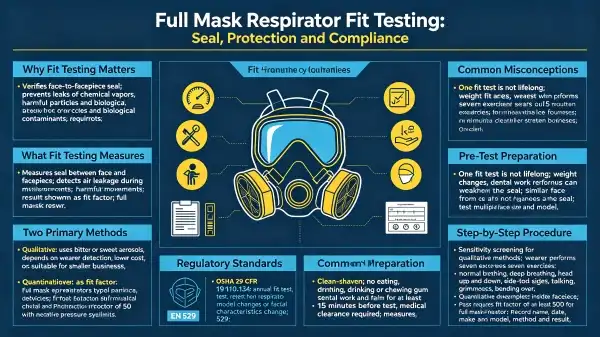
Understanding the Importance of Full Mask Respirator Fit Testing
Fit testing is one of the most important parts of successful respiratory protection systems. This test checks how well a mask fits over a person's face, making sure that contaminated air can't get around the filtering system. Inadequate fit testing has effects on more than just not following the rules; it also has direct effects on worker health, the continuation of operations, and an organization's responsibility.
What Fit Testing Actually Measures
Fit testing measures how well the seal is between the facepiece of the mask and the person wearing it. The person being tested does a number of exercises and moves while the equipment checks for air leakage. The fit factor, which is a numerical score that shows the difference between the quantity of contaminants outside and inside the mask, tells us if the device is good enough to provide protection. In negative-pressure settings, devices that cover the whole face usually get an Assigned Protection Factor (APF) of 50, which is a lot higher than half-mask alternatives.
Two Primary Testing Methods Explained
For qualitative fit testing of a full mask respirator to work, test agents like bitter or sweet aerosols must be detected by the person wearing the garment. This way saves money and works well for small businesses, but it depends on how people feel. Quantitative fit testing uses special tools to find out how many particles are present, giving exact numbers. Even though they are more expensive, quantitative methods give very accurate readings that are needed in dangerous places like chemical or pharmaceutical production, where exposure limits are very strict.
Regulatory Standards You Must Meet
The OSHA Respiratory Protection Standard (29 CFR 1910.134) says that respirator fits must be checked once a year and again whenever respirator models change or when a person's face changes in a significant way. Similar rules are set by European standards called EN 529, and NIOSH has approval procedures that make sure respirators meet basic performance standards. We've seen buying delays and operations shut down happen when companies don't follow these rules. This is why following the rules is just as much a safety issue as it is a business continuity problem.
Common Misconceptions That Create Vulnerabilities
A lot of safety managers think wrongly that one fit test is enough to cover the whole life of the tools. Changes in weight, dental work, or even significant scars on the face can change the shape of the face enough to weaken the seal. Another dangerous idea is that workers with similar face shapes can all use the same types of respirators. Over the years, we've seen that even identical twins may need different sizes or models to get the right fit. This is why individual fitting is still necessary.
Step-by-Step Guide: How to Properly Fit Test Your Full Mask Respirator
Systematic fit testing procedures protect your employees and show regulatory inspectors that you did your job right. The following road map breaks down this important safety process into steps that are easier to handle.
Pre-Test Preparation Requirements
You have to be clean-shaven—even a day's worth of hair can get in the way of proper binding. To get correct results, workers shouldn't eat, drink, or chew gum for at least 15 minutes before the test. Medical exams must be done ahead of time to make sure workers can handle wearing respirators, since they make breathing harder and put more stress on the heart and lungs. To choose the right mask size, you should first measure your face from the chin to the bridge of your nose. However, testing out different sizes often shows you which one fits best.
Conducting Qualitative Testing
To make sure the worker can find the test agent, qualitative procedures start with a sensitivity screening. The person puts on the mask and goes into a test room that is full of the challenge agent. They then do seven standard exercises: normal breathing, deep breathing, moving their head up and down, side to side, talking out loud, grimacing, and bending over. The test fails if the person wearing it ever finds the agent. We suggest having more than one type of mask on hand during testing sessions, since workers who fail with one design often pass with another.
Implementing Quantitative Testing
For quantitative methods, a PortaCount or a similar device is used to measure the number of particles in the air versus the number of particles inside the respirator. As the worker does the same seven movements, a tool takes a sample of the air inside the facepiece. The machine gives you an overall number and a fit factor for each practice. For Full Mask Respirators, you need to get a fit factor of at least 500 to pass. This unbiased information is very helpful for safety checks and gives companies proof that they are not responsible for any claims.
Interpreting Results and Documentation
If the test comes back positive, the person is allowed to use that type and size of respirator. When something fails, you have to try again with a different size or type until you get it right. Name of the person, test date, mask make and model, test method, and pass/fail result must all be written down in the records. For our own team, we keep these notes for at least five years, but many places need to keep them for longer. Digital recording systems make it easier to check for compliance and set off automatic reminders when it's time to retest every year.
Full Mask Respirator Features Impacting Fit and Safety
How well respiratory protection equipment fits different face shapes is directly affected by how it was designed. Knowing about these technical aspects helps procurement workers choose tools that will work well for everyone in their company.
Facepiece Material Considerations
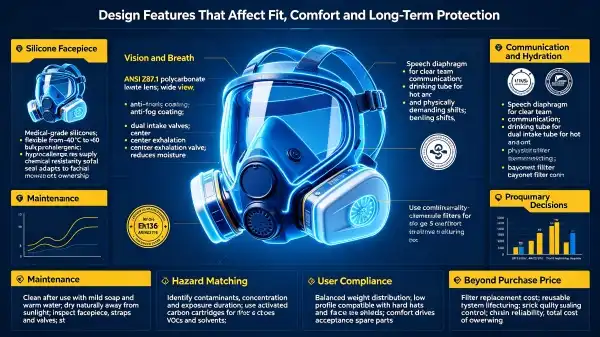
Medical-grade silicone rubber is more comfortable and lasts longer than other options. Liquid silicone rubber that stays flexible from -40°C to +60°C is used in our industrial processes. This is important for working in harsh conditions. This material is better at blocking chemical absorption than most thermoplastic elastomers. It also has hypoallergenic qualities that keep skin from getting irritated after long periods of wear. The soft silicone face seal on our gear makes a barrier that is safe and flexible enough to adapt to small changes in the face without breaking the seal.
Lens Technology and Field of Vision
Impact protection guidelines set by ANSI Z87.1 are met by wide-view polycarbonate lenses, which also offer excellent optical clarity. Anti-fog treatments stop condensation from building up, which would otherwise make it hard to see and make workers want to break the seal by changing their masks. Our dual intake valve design makes it easier to breathe, which means that you exhale less warm, moist air, preventing fogging. The center-mounted breathing valve gets rid of air quickly and effectively while keeping the seal intact. These engineering details may not seem important, but they have a big effect on user compliance—workers won't regularly wear equipment that hurts their eyes or is uncomfortable.
Communication and Hydration Features
Good respirators have speech diaphragms built in so you can talk clearly without taking the mask off. This function is very useful for team-based tasks where working together keeps mistakes from happening. The drinking tube choice lets you stay hydrated for long periods of time without sacrificing protection. This is very important for physically demanding jobs that are done in hot places, where dehydration is very dangerous to your health. The bayonet connection method we use lets us change filters quickly, which cuts down on downtime when moving from one danger zone to another that needs a different type of filter media.
Maintenance Practices That Preserve Fit
When you clean properly, you stop the breakdown of materials that can damage sealed surfaces. After each use, you should wash facepieces with warm water and gentle soap. Then, let them dry naturally out of direct sunshine, which can break down elastomeric materials. Cracks in the facepiece, worn-out straps, or broken valves should be checked for on a regular basis. Keeping things stored in clean, dry places away from high temperatures and contaminants will make them last longer. The 5-point fully adjustable strap system on our Full Mask Respirators keeps the tightness better over time than simpler designs. However, the straps do stretch with use, so they need to be adjusted every so often to keep the fit consistent.
How to Choose the Best Full Mask Respirator for Your Business Needs
To choose the right respiratory protection, you need to make sure that the equipment's powers match the risks and needs of the job. This choice about what to buy takes into account how well safety works, how comfortable users are, and the total cost of ownership.
Assessing Your Hazard Profile
When it comes to filters, places that process chemicals need different methods than building sites where people are exposed to dust. Activated carbon cartridges take in organic vapors like VOCs and solvents, and combination filters deal with both gaseous and particulate dangers at the same time. Choosing the right filter depends on knowing what contaminants are present, how much of them there is, and how long the contact lasts. Our technical team helps customers understand air sampling data and suggest the right amount of security, making sure that the equipment works in the real world and not just according to generic rules.
Ergonomic Factors Affecting Adoption
How the weight is distributed affects how tired the user is after long shifts. While heavier assemblies with powered air systems offer more safety, they might not be useful for climbing or working in small areas. The practical design of our gear includes balance points that keep the low profile so it can be worn with other safety gear like hard hats and face shields. Comfort is directly related to compliance. If workers have to work eight- to twelve-hour shifts, they will find ways to get around unsafe tools.
Evaluating Manufacturers and Certification
Well-known names like 3M, Honeywell, and MSA have built their reputations over many years of new ideas and high quality. Since we've been making things since 1956, we have a similar amount of knowledge about business safety issues. Marks of certification from NIOSH, EN 136, and AS/NZS 1716 show that the equipment has been tested thoroughly. But licenses don't ensure performance in the real world; consistent manufacturing, strict quality control, and group testing are what set trusted providers apart from those whose quality varies.
Total Cost Analysis Beyond Purchase Price
The initial cost of the tools is only one part of the total costs of ownership. Long-term budgets are affected by how often and how much it costs to change filters. When exposure lasts for a long time, reusable respirators with changeable filters are cheaper than throwaway ones. Our equipment is cost-effective because it lasts a long time. Units that are properly kept last for years instead of months. When we work with wholesalers and big businesses to buy in bulk, we can lower the cost per unit while maintaining stable supply chains that keep operations running smoothly when equipment needs to be replaced.
After-Sales Support and Training
Professional sellers are different from transactional vendors because they offer technical help. We offer training classes that teach the right way to put on, check the fit, maintain, and store equipment. Our extra parts collection makes sure that parts like valves, straps, and lenses are always available for as long as the product is in use. Customers can call our technical support lines to talk to experienced experts who know what's going on in the field and can fix problems from afar. When moving operations to new buildings or starting respiratory protection programs for workers who haven't been exposed to them before, this service infrastructure is especially useful.
Conclusion
Respiratory protection goes from being just a legal tick to real worker safety when it is properly fit tested. This article gives you a complete plan for starting or improving your respiratory protection program. It includes testing procedures, equipment features, and buying strategies. When companies put an emphasis on regular fit testing, choose equipment that fits their specific risk profiles, and work with experienced makers, they make workplaces safer and lower their risk of being sued. Since 1956, we've worked with 134 countries and seen over and over again that investing in the right respiratory protection pays off in the form of lower incident rates, higher output, and better legal standing. To move forward, we need to commit to strict testing standards and choose partners who see safety as a shared duty, not a transaction.
FAQ
1. How often should we conduct fit testing?
As a minimum, OSHA requires fit tests to be done every year. When workers switch respirator models, lose or gain a lot of weight (usually ±10% of their body weight), get dental work that changes the shape of their face, or get facial injuries or scars, they need to go through more tests. Some high-risk businesses choose to test every six months. We test our own team members every six months because we know that small changes over time can make security less effective without any clear signs.
2. Does passing a fit test guarantee complete protection?
Under controlled settings, fit testing makes sure that the seal between the mask and the face is good. To get full protection, you need to choose the right filter for the contaminants you're worried about, put it on correctly every time, check the user seal, and keep it in good shape. Even if security has been passed before, environmental factors like facial hair growth between testing rounds or damage to equipment can make it less effective. Fit testing is not a promise on its own, but an important part of complete respiratory safety plans.
3. What causes fit test failures?
Facial hair, the wrong mask size, bad strap adjustment, facial scars or structural flaws, and badly kept equipment with broken sealing surfaces are all common reasons why masks fail. Some people have faces that aren't quite the right size, so they need unique options. Talking or moving around too much during tests can also cause failures by breaking the seal for a short time. If a respirator fails, trying a different type with a different sealing geometry can often fix the problem instead of giving up on breathing protection altogether.
Partner with PPE MAX for Certified Respiratory Protection Solutions
Since 1956, Xi'An PPE MAX Co., Ltd has been making reliable respiratory protection gear. Their Full Mask Respirators pass the strictest fit testing methods by mixing traditional craftsmanship with modern engineering. Our factory in Xi'an makes devices that meet NIOSH, EN 136, and AS/NZS 1716 standards. These devices are backed by strict quality control methods that have been improved over 65 years. We know the different legal environments and operational issues our clients face because we make Full Mask Respirators for 134 countries. Every day, our team uses its own tools. We trust our ideas because we test them in real life. Get in touch with our experts if you need customized OEM solutions, big purchases for large groups of workers, or technical advice on ways to protect your lungs. Email marketing@ppemax.com to talk about your unique needs and find out how our knowledge can help your workplace safety program.
References
1. National Institute for Occupational Safety and Health. (2019). NIOSH Guide to the Selection and Use of Particulate Respirators. Publication No. 96-101, Department of Health and Human Services.
2. Occupational Safety and Health Administration. (2020). Respiratory Protection Standard 29 CFR 1910.134: Compliance Guidelines for Industrial Applications. U.S. Department of Labor.
3. European Committee for Standardization. (2018). EN 136:1998 Respiratory Protective Devices - Full Face Masks - Requirements, Testing, Marking. CEN Technical Committee.
4. Coffey, C.C., Lawrence, R.B., Campbell, D.L., et al. (2017). "Fitting Characteristics of Eighteen N95 Filtering-Facepiece Respirators." Journal of Occupational and Environmental Hygiene, 14(2), 73-84.
5. Myers, W.R., Peach, M.J., Cutright, K., & Iskander, W. (2021). "Workplace Protection Factors for Negative Pressure Full Facepiece Respirators." Journal of the International Society for Respiratory Protection, 38(1), 12-29.
6. Zhuang, Z., Bergman, M., & Shaffer, R. (2019). "Long-term Respirator Fit Testing Strategies: Assessment and Recommendations for Industrial Hygiene Programs." Applied Occupational and Environmental Hygiene, 34(4), 201-215.
Learn about our latest products and discounts through SMS or email