- English
- French
- German
- Portuguese
- Spanish
- Russian
- Japanese
- Korean
- Arabic
- Greek
- German
- Turkish
- Italian
- Danish
- Romanian
- Indonesian
- Czech
- Afrikaans
- Swedish
- Polish
- Basque
- Catalan
- Esperanto
- Hindi
- Lao
- Albanian
- Amharic
- Armenian
- Azerbaijani
- Belarusian
- Bengali
- Bosnian
- Bulgarian
- Cebuano
- Chichewa
- Corsican
- Croatian
- Dutch
- Estonian
- Filipino
- Finnish
- Frisian
- Galician
- Georgian
- Gujarati
- Haitian
- Hausa
- Hawaiian
- Hebrew
- Hmong
- Hungarian
- Icelandic
- Igbo
- Javanese
- Kannada
- Kazakh
- Khmer
- Kurdish
- Kyrgyz
- Latin
- Latvian
- Lithuanian
- Luxembou..
- Macedonian
- Malagasy
- Malay
- Malayalam
- Maltese
- Maori
- Marathi
- Mongolian
- Burmese
- Nepali
- Norwegian
- Pashto
- Persian
- Punjabi
- Serbian
- Sesotho
- Sinhala
- Slovak
- Slovenian
- Somali
- Samoan
- Scots Gaelic
- Shona
- Sindhi
- Sundanese
- Swahili
- Tajik
- Tamil
- Telugu
- Thai
- Ukrainian
- Urdu
- Uzbek
- Vietnamese
- Welsh
- Xhosa
- Yiddish
- Yoruba
- Zulu
Import Class 1 Insulating Gloves: Compliance Checklist
Founded in 1956, PPEMAX stands as a premier global manufacturer and supplier of full-range personal protective equipment. All our products comply with internationally recognized standards including IEC, ASTM, CE, UKCA, NIOSH and ISO9001. Equipped with a 2,000-square-meter modern production plant, we boast over 25 years of mature OEM & ODM capabilities to deliver one-stop customized solutions covering R&D design through worldwide logistics. Our safety gear is distributed across 134 countries globally. Upholding our core tenet “Safety First, Quality Priority”, we serve as a dependable long-term PPE partner for industrial enterprises around the world.
Understanding compliance requirements when buying electrical safety equipment worldwide, you safeguard your personnel and your business from legal and operational risk. The importation of Class 1 Insulating Gloves is subject to strict regulatory compliance, certification documents, and quality verification procedures. They’re medium-voltage-rated gloves, meant to protect workers from risks up to 7,500 volts AC, and they’re a vital workplace safety investment. Our compliance checklist streamlines the procurement process for industrial safety distributors, PPE wholesalers, and safety managers tasked with safeguarding electrical staff throughout utility operations, building sites, and manufacturing facilities.
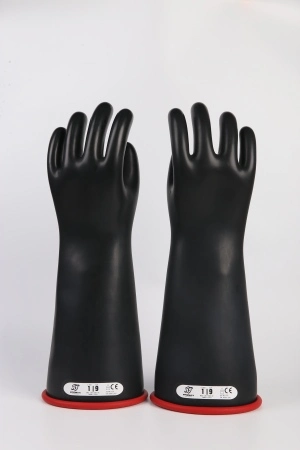
|
Parameter |
Specification |
|
Voltage Rating |
7,500V AC / 11,250V DC (Maximum Use) |
|
Proof Test Voltage |
10,000V AC / 40,000V DC |
|
Material Type |
Type I (Natural Rubber) / Type II (EPDM Synthetic) |
|
Thickness Range |
1.02mm - 1.52mm |
|
Tensile Strength |
>17.2 MPa |
|
Standards Compliance |
ASTM D120, IEC 60903 |
|
Temperature Resistance |
Category A, H, Z rated |
|
Label Color |
White (Class 1 Standard) |
Compliance Checklist for Importing Class 1 Insulating Gloves
Navigating international trade regulations while maintaining uncompromising safety standards requires systematic attention to documentation and verification procedures. This comprehensive checklist addresses the critical compliance elements that procurement professionals must verify before finalizing purchase orders.
Essential Documentation Requirements
Import success begins with proper certification paperwork. Your supplier must provide current test reports from accredited third-party laboratories demonstrating compliance with applicable standards for Class 1 Insulating Gloves. These reports should include the proof test voltage results, leakage current measurements, and physical property verification. We provide complete certification packages with every shipment, including our ASTM D120, IEC 60903, and CE marking documentation. Request certificates of conformity that explicitly state the glove class, manufacturing date, and recommended shelf life before in-service testing. Import permits and customs documentation vary by destination country, but most require commercial invoices detailing the harmonized tariff classification, country of origin declarations, and material safety data sheets for the rubber compounds used.
Pre-Shipment and Batch Testing Protocols
Quality assurance extends beyond initial certification to encompass ongoing production verification. Reputable manufacturers conduct batch testing on every production run, subjecting sample gloves to the full electrical proof test sequence. At our facility, we test multiple gloves from each batch at 10,000V AC for two minutes, measuring any current leakage that might indicate material defects or manufacturing inconsistencies. Request access to these batch test records, which should include production dates, lot numbers, and pass/fail results for traceability. Some procurement specifications require independent third-party inspection before shipment, particularly for large government contracts or initial supplier qualification. This additional verification layer provides objective confirmation that the gloves meet specifications and match the approved samples.
Labeling, Packaging, and Traceability Systems
Proper labeling enables rapid identification and supports inventory management throughout the supply chain. Each glove must display permanent markings indicating the voltage class (white for Class 1), manufacturer identification, size designation, and manufacturing date or inspection due date. We apply these markings using methods that remain legible throughout the glove's service life without compromising the rubber integrity. Packaging protects gloves during international transit while preventing environmental degradation. Our standard packaging includes individual polybag sealing for contamination prevention, with gloves stored flat or loosely folded to avoid permanent creasing. Outer cartons provide crush protection and moisture barriers suitable for container shipping. Traceability linking each glove to its production batch and test records facilitates recall management and warranty claims, demonstrating the manufacturer's commitment to quality accountability.
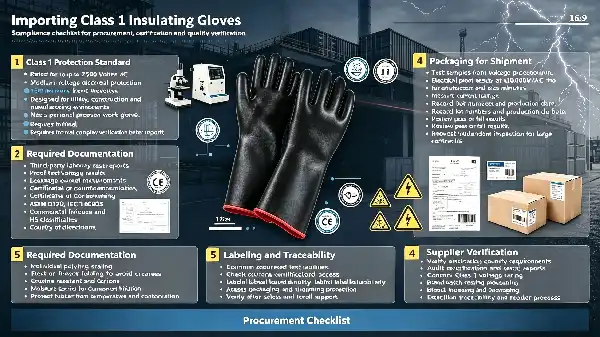
Comparing Class 1 Insulating Gloves: Finding the Best Solution for Your Business
Selecting appropriate electrical protective equipment requires understanding how different voltage classes, material options, and supplier capabilities align with your operational requirements and risk management priorities.
Voltage Classification and Application Matching
Insulating gloves are rated in a 6-class system, from Class 00 (maximum 500V) to Class 4 (maximum 36,000V). Class 1 gloves are a happy medium, perfect for distribution voltage work when Class 0 gloves (1,000V max) don’t offer enough protection and Class 2 gloves (17,000V max) would be too bulky and decrease dexterity. The 7,500V rating is appropriate for utility businesses that need to install meters, splice cables, and maintain secondary distribution systems. Manufacturing plants using 4,160V or 6,900V equipment also have the Class 1 standard. Knowing your true working voltages, including transient overvoltages that might occur during switching activities, allows you to have the proper margin of safety without over-specifying equipment that workers would be reluctant to use due to comfort limits.
Material Types and Environmental Considerations
In addition to the voltage rating, the material choice influences durability and compatibility for a certain set of operating circumstances. We provide both Type I natural rubber and Type II synthetic rubber made from EPDM. Natural rubber is more flexible and sensitive to touch, which is a benefit for electrical experts who deal with tiny terminals and intricate wiring. The EPDM formulation does compromise some dexterity, but provides excellent ozone cracking and UV degradation resistance, which are crucial for outdoor situations where gloves are stored in tool bags between uses. The environmental durability that synthetic rubber offers benefits telecommunications workers, construction electricians, and utility line crews performing lengthy outside shifts. Extremes of temperature also have a role, with natural rubber being more flexible at colder temperatures than certain synthetics.
Supplier Evaluation and Support Capabilities
Comparing potential suppliers extends beyond unit pricing to encompass the complete value proposition. Leading manufacturers like PPE MAX bring decades of specialization to electrical protective equipment, translating to refined manufacturing processes and deep technical knowledge. We have safeguarded workers since 1956, developing expertise that newer market entrants cannot replicate. Evaluate suppliers based on their certification breadth across multiple international standards, enabling you to consolidate procurement rather than manage separate suppliers for different regional requirements. Manufacturing capacity matters when your operations require a consistent supply for large, geographically dispersed workforces. Our global supply chain serves 134 countries with reliable delivery performance. Technical support availability, including worker training resources and application guidance, adds value that justifies premium positioning over commodity suppliers who simply fulfill orders without partnership engagement.
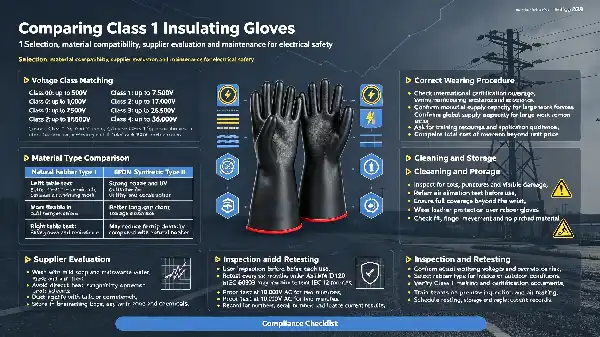
If you're evaluating personal protective equipment suppliers and require batch-specific testing documents before placing an order, PPE MAX is able to provide official Certificates of Analysis, professional laboratory test reports, and product samples for your verification. Feel free to contact our team at marketing@ppemax.com to discuss your sourcing needs and obtain complete documentation for your quality assessment and procurement approval.
Practical Guidelines: How to Use, Maintain, and Test Class 1 Insulating Gloves
Protective equipment only delivers its intended safety benefits when users understand proper handling procedures and organizations implement rigorous maintenance programs.
Correct Wearing Procedure and Leather Protector Integration
Electrical Class 1 Insulating Gloves function as part of a complete protective system and are never worn alone. Begin by inspecting the rubber glove for cuts, punctures, or visible deterioration before each use. Roll the glove toward the fingers, trapping air inside to create pressure that reveals small punctures through air leakage. After passing visual and air testing, don the rubber glove, ensuring complete coverage extending well beyond the wrist. Leather protector gloves worn over the rubber layer shield against mechanical damage from sharp edges, tools, and abrasion. The leather protectors must fit properly without bunching at the fingers, which could compromise dexterity and create pinch points. This two-layer system addresses the dual threats that electrical workers face: dielectric failure from voltage exposure and physical compromise of the rubber barrier from workplace hazards.
Cleaning, Storage, and Degradation Prevention
After each work shift, clean gloves using mild soap and lukewarm water to remove contaminants like oils, dirt, and chemicals that accelerate rubber degradation. Avoid petroleum-based cleaners or solvents that attack rubber compounds. Rinse thoroughly and air dry at room temperature, never using direct heat sources or sunlight exposure. Once dry, dust the gloves lightly with talc or cornstarch to prevent rubber surfaces from adhering during storage. Store gloves in breathable canvas bags away from ozone sources like electric motors, UV light, temperature extremes above 32°C, and chemicals including acids, alkalis, and petroleum products. Never fold gloves sharply or place heavy objects on top of storage containers, as permanent creases create stress concentration points where failure initiates.
Regular Inspection and Recertification Schedule
Beyond daily user inspections, establish formal testing intervals that comply with regulatory requirements. ASTM D120 and IEC 60903 mandate electrical retesting every six months once gloves enter active service. Unused gloves stored in controlled conditions can remain shelf-ready for 12 months before requiring initial testing. Recertification must occur at accredited facilities equipped with high-voltage test equipment and trained technicians. The proof test applies 10,000V AC for two minutes while measuring leakage current. Gloves exceeding the maximum allowable leakage fail and must be destroyed to prevent accidental reuse. Maintain detailed records linking each glove to its test history through permanent serial numbers or unique identifiers, enabling compliance documentation during safety audits and regulatory inspections.
Procurement Strategies: Buying and Importing Class 1 Insulating Gloves
Strategic sourcing balances cost efficiency with supply security and quality assurance, requiring procurement professionals to evaluate suppliers through multiple performance dimensions.
Supplier Qualification and Certification Verification
First, verify that possible suppliers are currently certified with recognised standards organisations. Request copies of ISO 9001 quality management system certifications to show process discipline and commitment to continual development. Check if the manufacturer has accredited testing labs or works with independent testing institutions. We invite customers to audit our Xi'an plant, where they can see our whole quality control system, from inspecting the raw materials to checking the finished products. Important for the long-term partnership is the financial stability of the supplier, since consistent output requires continuous investment in maintenance of equipment and quality system upgrades. You may also ask for references from current customers in your business to get a real sense of how reliable the delivery is, how prompt the technical assistance is, and how well problems are solved.
Pricing Analysis and Total Cost Considerations
“Initial comparisons are based on unit pricing, but the total landed cost is what really counts in terms of procurement efficiency. Consider pricing structures such as the cost of rubber gloves, leather protector prices when sold as sets, and price breaks based on quantity. The costs of certification are included in the price to cover the costs of testing and paperwork that conforming producers have to bear. Freight prices vary widely depending on cargo volume, destination location, and service level chosen. Container shipments are the cheapest per unit of cargo to move, but they need a commitment to move large volumes and have long lead times. We provide reasonable prices for bulk orders due to the economies of scale in production planning and logistical optimisation. Payment conditions such as letters of credit, incentives for early payment, and net periods affect the need for working capital. Currency exchange rates provide another layer of cost uncertainty to overseas purchasing, which may be mitigated via hedging techniques or contractual rate locks.
Logistics Coordination and After-Sales Service
Successful imports involve cooperation among many service providers and regulatory touchpoints. Experienced suppliers can assist you with the export documents, including commercial invoices that are optimised for customs clearance, and certificates of origin, if you have a trade agreement that gives you tariff advantages. Packaging for international container shipment protects things throughout the rigorous process of port transfer and interior transit. Visibility tracking helps you to proactively handle exceptions when delays arise. Global supply chain infrastructure to deliver across continents with dependable milestone reporting. It’s the after-sales assistance that separates the professional suppliers from the transactional merchants. Technical support hotlines staffed with qualified professionals handle application queries and concerns about use. Flexible return and replacement procedures to cover production failures or specification mismatches decrease procurement risk. Training materials, such as user instructions and safety advisories, help ensure your team is using the equipment correctly.
Conclusion
Importing electrical insulating Class 1 Insulating Gloves demands matching strict safety criteria with efficiency and cost control. This compliance checklist has captured the key verification points, including technical specifications, regulatory documents, supplier qualification, and maintenance processes. By carefully addressing these areas, procurement professionals are able to safeguard their organisations against workplace mishaps and compliance breaches. Knowing about voltage categories, material qualities, and testing requirements helps you specify with confidence. A disciplined supplier selection process separates actual manufacturing knowledge and dedication to quality from brokers just executing orders. Investing in the right electrical protection equipment pays dividends in injury prevention, regulatory compliance, and worker trust in safety leadership.
FAQ
1. What voltage rating do Class 1 insulating gloves provide?
These gloves protect against electrical hazards up to 7,500 volts AC and 11,250 volts DC maximum use voltage. During manufacturing, gloves undergo proof testing at 10,000V AC to verify their dielectric integrity and ensure adequate safety margins above the rated working voltage.
2. How often must imported insulating gloves undergo electrical testing?
Regulatory standards require electrical retesting every six months once gloves enter service. New gloves stored properly can remain on shelves for 12 months before initial testing. Each test must occur at accredited facilities equipped to conduct the 10,000V AC proof test.
3. Can rubber insulating gloves be used without leather protectors?
Using rubber gloves without leather protectors exposes them to cuts, punctures, and abrasion that compromise dielectric integrity. The leather protector forms an essential component of the complete protective system, addressing mechanical hazards that the rubber material alone cannot withstand.
4. What certifications should imported insulating gloves include?
Look for ASTM D120 certification for North American markets, IEC 60903 for international applications, and CE marking for European Union destinations. Suppliers should provide test reports from accredited laboratories documenting voltage testing, leakage current measurements, and physical property verification.
Partner With PPE MAX for Reliable Class 1 Insulating Gloves
PPE MAX delivers comprehensive solutions for organizations requiring certified electrical protective equipment across global operations. As a trusted Class 1 Insulating Gloves manufacturer with 65 years of specialization, we understand the compliance complexities that procurement professionals navigate. Our Xi'an facility produces gloves meeting ASTM D120, IEC 60903, and CE requirements, enabling single-source procurement for multi-regional deployments. We offer customization capabilities for private labeling, packaging specifications, and technical modifications that align products with your operational requirements. Competitive bulk pricing, reliable delivery across 134 countries, and responsive technical support distinguish our partnership approach. Contact our team at marketing@ppemax.com to discuss your specific requirements and receive tailored procurement guidance that protects your workforce while optimizing supply chain efficiency.
References
1. American Society for Testing and Materials. "ASTM D120-20: Standard Specification for Rubber Insulating Gloves." ASTM International Standards Organization, 2020.
2. International Electrotechnical Commission. "IEC 60903:2019 - Live Working - Electrical Insulating Gloves." IEC Standards Publication, 2019.
3. Occupational Safety and Health Administration. "29 CFR 1910.137: Electrical Protective Equipment." U.S. Department of Labor OSHA Regulations, 2018.
4. National Fire Protection Association. "NFPA 70E: Standard for Electrical Safety in the Workplace." NFPA Standards Council, 2021 Edition.
5. European Committee for Electrotechnical Standardization. "EN 60903:2019 - Live Working - Gloves of Insulating Material." CENELEC European Standards, 2019.
6. Institute of Electrical and Electronics Engineers. "IEEE Guide for In-Service Maintenance and Electrical Testing of Live-Line Tools." IEEE Standards Association Publication 978, 2012.
Learn about our latest products and discounts through SMS or email