- English
- French
- German
- Portuguese
- Spanish
- Russian
- Japanese
- Korean
- Arabic
- Greek
- German
- Turkish
- Italian
- Danish
- Romanian
- Indonesian
- Czech
- Afrikaans
- Swedish
- Polish
- Basque
- Catalan
- Esperanto
- Hindi
- Lao
- Albanian
- Amharic
- Armenian
- Azerbaijani
- Belarusian
- Bengali
- Bosnian
- Bulgarian
- Cebuano
- Chichewa
- Corsican
- Croatian
- Dutch
- Estonian
- Filipino
- Finnish
- Frisian
- Galician
- Georgian
- Gujarati
- Haitian
- Hausa
- Hawaiian
- Hebrew
- Hmong
- Hungarian
- Icelandic
- Igbo
- Javanese
- Kannada
- Kazakh
- Khmer
- Kurdish
- Kyrgyz
- Latin
- Latvian
- Lithuanian
- Luxembou..
- Macedonian
- Malagasy
- Malay
- Malayalam
- Maltese
- Maori
- Marathi
- Mongolian
- Burmese
- Nepali
- Norwegian
- Pashto
- Persian
- Punjabi
- Serbian
- Sesotho
- Sinhala
- Slovak
- Slovenian
- Somali
- Samoan
- Scots Gaelic
- Shona
- Sindhi
- Sundanese
- Swahili
- Tajik
- Tamil
- Telugu
- Thai
- Ukrainian
- Urdu
- Uzbek
- Vietnamese
- Welsh
- Xhosa
- Yiddish
- Yoruba
- Zulu
What Are Electrical Rubber Gloves? Ratings, Classes, and Uses
Founded in 1956, PPEMAX stands as a premier global manufacturer and supplier of full-range personal protective equipment. All our products comply with internationally recognized standards including IEC, ASTM, CE, UKCA, NIOSH and ISO9001. Equipped with a 2,000-square-meter modern production plant, we boast over 25 years of mature OEM & ODM capabilities to deliver one-stop customized solutions covering R&D design through worldwide logistics. Our safety gear is distributed across 134 countries globally. Upholding our core tenet “Safety First, Quality Priority”, we serve as a dependable long-term PPE partner for industrial enterprises around the world.
Electrical rubber gloves are specialised insulating personal protective equipment that is designed to protect workers from electrical shock and electrocution threats while they are working with energised circuits and equipment. These dielectric gloves are made of natural rubber or synthetic compounds such as EPDM and serve as a crucial barrier to prevent electrical current from passing to the wearer. They are mainly intended to protect utility maintenance personnel, industrial electrical workers, and those working near high voltages, while keeping enough dexterity to do complicated technical jobs. For procurement professionals responsible for labour safety, understanding voltage ratings, class differences, and suitable selection criteria remains critical.
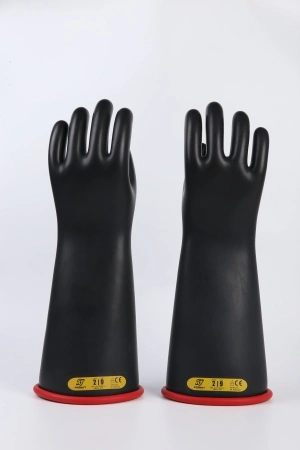
|
Parameter |
Specification |
|
Maximum Use Voltage |
17,000V AC / 25,500V DC |
|
Proof Test Voltage |
20,000V AC / 50,000V DC |
|
Typical Thickness |
2.3mm (ASTM D120 compliant) |
|
Material Type I |
Natural Rubber (high elasticity) |
|
Material Type II |
Synthetic/EPDM (ozone resistant) |
|
Standards Compliance |
ASTM D120, IEC/EN 60903 |
|
Temperature Range |
-40°F to +140°F (-40°C to +60°C) |
|
Color Options |
Orange, Red, Black |
Ratings, Classes, and Safety Standards of Electrical Rubber Gloves
Voltage Classification System Explained
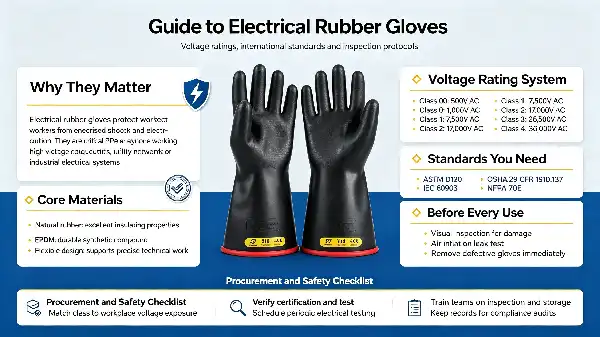
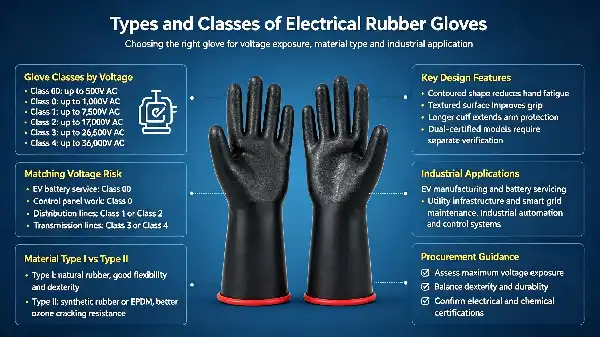
The categorisation system for electrical rubber gloves comprises Class 00 to Class 4, each with specified maximum usage voltages. Class 00 gloves provide protection up to 500V AC and are ideal for low-voltage electrical work, EV battery servicing, and residential utility applications. Class 0 is capable of withstanding up to 1,000V AC for control operations and light distribution maintenance. The greater the voltage exposure, the higher the class rating needed. Class 1 is up to 7,500V AC, Class 2 is up to 17,000V AC, Class 3 is up to 26,500V AC, and Class 4 is maximum protection up to 36,000V AC. Knowing this process helps procurement teams match glove requirements to real workplace electrical dangers.
Compliance with International Safety Standards
The principal North American standard for making and testing electrical insulating gloves is ASTM D120, whereas the international counterpart is IEC 60903. Both standards require thorough proof testing at voltages much above specified usage voltages to confirm dielectric integrity. The gloves should be visually inspected, air-inflated, and electrically tested before first issuance and at specified intervals throughout their service life. OSHA rule 29 CFR 1910.137 mandates that gloves be electrically tested before their initial use and every six months afterward. NFPA 70E includes rules for arc flash protection and adequate maintenance of gloves. At PPE MAX, our production procedures embrace these criteria from the selection of raw materials to final testing, guaranteeing that each shipment of gloves passes the certification requirements for worldwide markets.
Inspection and Testing Protocols
Inspections are the basis for electrical glove safety programs. Before each usage, personnel should visually inspect for embedded foreign objects, punctures, rips, or ozone cracking. The air test consists of inflating the glove and listening for air escaping while feeling for leaks. Periodic electrical testing by qualified labs is necessary. Field checks are not enough. Testing equipment applies prescribed voltages, measures any leakage current, and has rigorous pass/fail criteria. Any glove displaying significant leakage current or physical flaws will be taken out of service immediately. Keeping thorough testing records shows that you’re following regulations and protects your firm during safety audits.
Types and Classes of Electrical Rubber Gloves: Choosing the Right One
Matching Glove Class to Workplace Voltage Exposure
Selection of suitable glove classes needs a correct estimate of maximum voltage exposure. Class 00 is suitable for most household electrical work, smart meter installation, and EV maintenance where the battery pack voltages are normally between 400V and 800V. Industrial control panel work that deals with 480V three-phase systems often employs Class 0 gloves, which provide sufficient safety margins while retaining great tactile sensitivity. Class 1 or Class 2 ratings based on voltage system levels are required for utility distribution activities. The transmission line maintenance works with voltages above 15 kV need Class 3 or Class 4 protection. Procurement teams must record evaluations of voltage exposure and match glove classification appropriately to minimise both under-protection and extra expenditure associated with over-specification.
Type I versus Type II Material Selection
In addition to voltage class, gloves are classified as Type I (natural rubber) or Type II (synthetic rubber). Type I gloves are good for flexibility and dexterity and are ideal for work where tiny parts must be handled with accuracy. Type II construction with EPDM or comparable synthetics has superior resistance to ozone cracking and increases the service life of gloves kept or used outside in high-ozone situations. The trade-off between kinds is between immediate tactile needs and long-term durability concerns. A lot of this has to do with climate and storing potential.”
Specialized Design Features
Modern electrical gloves include design improvements to meet particular industrial applications. Hand fatigue is reduced during long wear with contoured patterns. The textured surfaces provide grip whether working wet or with tools. Longer cuff for reaching inside panels or working above. Lengths vary to protect various amounts of arm. Some manufacturers have compound constructions that provide both chemical resistance and electrical protection. However, procurement teams should confirm that electrical and chemical certifications are still valid when combining protection kinds.
If you're evaluating personal protective equipment suppliers and require batch-specific testing documents before placing an order, PPE MAX is able to provide official Certificates of Analysis, professional laboratory test reports, and product samples for your verification. Feel free to contact our team at marketing@ppemax.com to discuss your sourcing needs and obtain complete documentation for your quality assessment and procurement approval.
Critical Applications Across Industrial Sectors
Electric Vehicle Manufacturing and Service
The explosive growth of electric vehicle production has created enormous demand for Class 00 insulating gloves. Battery pack voltages between 400V and 800V require reliable protection during assembly, quality testing, and service operations. Technicians disconnecting high-voltage systems, servicing inverters, and troubleshooting orange-coded high-voltage cabling depend on gloves providing protection without sacrificing the dexterity needed for working within tight engine compartments. We've partnered with EV manufacturers across three continents, supplying gloves meeting their specific production line requirements.
Utility Infrastructure and Smart Grid Maintenance
Utility workers face diverse electrical hazards from low-voltage secondary distribution through high-voltage transmission infrastructure. Smart meter installation typically involves 240V/480V services where electrical rubber gloves, Class 0 gloves, provide appropriate protection for handling terminal connections and meter locking mechanisms. Distribution line work requires Class 1 or Class 2 ratings depending on system voltage. Our clients in Southeast Asia and the Middle East particularly value gloves combining protection standards with heat resistance for tropical climates, where temperatures inside gloves can become uncomfortable during extended work periods.
Industrial Automation and Control Systems
Manufacturing facilities increasingly rely on complex automation requiring frequent electrical maintenance. Control panels, PLC systems, and switchgear operating at 110V to 480V need servicing without complete system shutdowns. Class 0 and Class 1 gloves enable technicians to safely troubleshoot energized circuits, replace components, and perform testing while production continues. The thin profiles maintain tactile sensitivity essential for manipulating small screwdrivers, adjusting potentiometers, and operating touchscreen interfaces common in modern industrial control environments.
How to Select and Procure Electrical Rubber Gloves for B2B Needs
Establishing Procurement Criteria
Effective procurement starts with complete voltage hazard evaluations that record maximum exposure limits for various occupational tasks. The research needed glove classifications while discovering the potential to standardise on fewer SKUs. Sizing varies by manufacturer, and good fit is critical to protection and use; therefore, procurement standards should include consideration of fit requirements in addition to voltage ratings. Certification paperwork standards should be clearly specified to ensure that vendors submit test reports, compliance certifications, and traceability documents that fulfil the regulatory expectations in your operating countries.
Evaluating Supplier Capabilities
Evaluate possible suppliers based on their quality management systems, production certifications, and testing capabilities. Established manufacturers have their own electrical testing facilities calibrated to national standards. We have to be consistent in our production because gloves that save lives cannot be inconsistent in quality. Premium partners are differentiated from commodity suppliers by their supplier warranty lengths, their replacement procedures for faulty gloves, and their technical support availability. With ongoing investment in testing equipment, quality procedures, and technical skills, PPE MAX has 60 years of manufacturing experience, providing dependable certified protection to customers in 134 countries.
Logistics and Supply Chain Considerations
In global procurement, you have to keep an eye on delivery lead times, customs paperwork, and the dependability of the supply chain. Bulk purchases provide large savings, but actual order amounts are limited by storage needs and shelf life. There is an administrative overhead to electrically test gloves that have not been used for more than 12 months prior to their issuance. Demand forecasting is critical in determining the trade-off between inventory investment and stockout risk. We work closely with distributors, importers, and direct industrial clients to set supply agreements according to their consumption patterns and at reasonable prices thanks to effective production planning.
Electrical Rubber Gloves Usage Best Practices and Inspection Protocols
Proper Donning and Layering Techniques
The right way to wear something starts with using it right. Visual Inspection Workers must examine gloves for visible deterioration by visual inspection before each use. Leather protector gloves used over electrical rubber gloves offer critical mechanical protection against cuts, abrasions, and punctures that might impair dielectric integrity. The rubber glove should be at least two inches longer than the leather protection for electrical tracking. Cuffs should be rolled uniformly for optimal arm coverage. These stacking methods greatly increase glove service life and preserve protective levels.
Field Inspection Methods
The air inflation test is still the easiest inspection procedure to do in the field. The worker rolls the glove up toward the fingers, trapping the air within, and then listens and feels for leaks. Visually, in excellent light, regions of suspicion are more carefully examined. Embedded conductors, surface wounds, or chemical contamination should demand rapid removal of gloves from service. Monthly reporting of these field checks indicates due attention and helps to discover trends that cause premature deterioration.
Cleaning and Storage Requirements
Proper washing eliminates pollution without impacting rubber qualities. Mild soap solutions work well. Avoid petroleum-based cleansers or strong solvents that destroy rubber composites. Rinse thoroughly to avoid residue build-up. Gloves should be thoroughly dry before storing them. Avoid heat sources that hasten ageing. Maximum service life may be obtained by storing in cold, dark, dry conditions away from ozone sources, electrical motors, and direct sunlight. Storage bags made of canvas avoid compression and folding that might produce stress points. These basic maintenance techniques greatly increase the protective life of insulating gloves, therefore reducing the overall cost of ownership for procurement budgets.
Conclusion
Rubber electrical rubber gloves are a vital safety device in many industrial environments with the risk of electric shock to workers. Understanding the voltage classifications from Class 00 to Class 4, understanding the difference between Type I and Type II materials, and choosing gloves tested to ASTM D120 or IEC 60903 standards can provide you with the necessary protection for the real hazards present in your workplace. Glove efficacy throughout its service life is ensured by proper use procedures, frequent inspection, and periodic electrical testing. Procurement professionals who need to balance protection needs with budget limits benefit from working with experienced manufacturers who provide certified goods, technical assistance, and dependable worldwide supply chains. Electrical insulating gloves of superior quality safeguard workers and organisations from the catastrophic repercussions of electrical mishaps.
FAQ
1. What is the mandatory retesting interval for insulating gloves?
According to ASTM F496 and OSHA 1910.137, gloves require electrical testing every six months after issue to service. Gloves in storage cannot be issued if untested within the preceding 12 months. This periodic verification ensures dielectric integrity remains intact despite handling, environmental exposure, and aging effects that could compromise protection.
2. Are leather protector gloves required when using electrical rubber gloves?
Leather protectors are mandatory for Class 1 through Class 4 gloves and strongly recommended for Class 00 and Class 0. They provide essential mechanical protection against cuts, abrasions, and punctures that would compromise the rubber's dielectric properties. The rubber glove must extend beyond the leather protector by at least two inches to prevent electrical tracking.
3. Can these gloves provide chemical protection alongside electrical insulation?
While electrical rubber gloves offer limited resistance to some chemicals, their primary function centers on electrical protection. Chemical exposure can degrade dielectric properties, compromising electrical safety. Applications involving both electrical and chemical hazards require careful evaluation, potentially necessitating specialized gloves certified for both exposures or separate PPE for each hazard type. Consulting manufacturer specifications before exposing gloves to chemicals prevents inadvertent safety compromises.
Partner with PPE MAX as Your Trusted Electrical Rubber Gloves Supplier
Since 1956, PPE MAX has protected workers across 134 countries with certified insulating gloves meeting ASTM D120 and IEC 60903 standards. Our Northwest China manufacturing facilities combine traditional craftsmanship with modern testing capabilities, producing gloves trusted by utility companies, mining operations, and industrial facilities worldwide. We understand the challenges procurement teams face balancing safety requirements, budget constraints, and supply chain reliability. Our technical team assists with voltage hazard assessments, glove class selection, and compliance documentation for your specific regulatory environment. Whether you require Class 00 gloves for EV maintenance or Class 3 protection for transmission line work, we deliver certified quality with competitive bulk pricing and global logistics support. Contact our specialist team at marketing@ppemax.com to discuss your electrical rubber gloves requirements and experience the PPE MAX difference built on six decades of protecting those who build and power our world.
References
1. American Society for Testing and Materials. (2016). ASTM D120-14a: Standard Specification for Rubber Insulating Gloves. ASTM International, West Conshohocken, PA.
2. International Electrotechnical Commission. (2002). IEC 60903:2002: Live working - Gloves of insulating material. International Electrotechnical Commission, Geneva, Switzerland.
3. Occupational Safety and Health Administration. (2007). 29 CFR 1910.137: Electrical Protective Equipment. U.S. Department of Labor, Washington, DC.
4. National Fire Protection Association. (2021). NFPA 70E: Standard for Electrical Safety in the Workplace. National Fire Protection Association, Quincy, MA.
5. American Society for Testing and Materials. (2020). ASTM F496-20: Standard Specification for In-Service Care of Insulating Gloves and Sleeves. ASTM International, West Conshohocken, PA.
6. Cadick, J., Capelli-Schellpfeffer, M., & Neitzel, D. (2012). Electrical Safety Handbook (4th ed.). McGraw-Hill Education, New York, NY.
Learn about our latest products and discounts through SMS or email