- English
- French
- German
- Portuguese
- Spanish
- Russian
- Japanese
- Korean
- Arabic
- Greek
- German
- Turkish
- Italian
- Danish
- Romanian
- Indonesian
- Czech
- Afrikaans
- Swedish
- Polish
- Basque
- Catalan
- Esperanto
- Hindi
- Lao
- Albanian
- Amharic
- Armenian
- Azerbaijani
- Belarusian
- Bengali
- Bosnian
- Bulgarian
- Cebuano
- Chichewa
- Corsican
- Croatian
- Dutch
- Estonian
- Filipino
- Finnish
- Frisian
- Galician
- Georgian
- Gujarati
- Haitian
- Hausa
- Hawaiian
- Hebrew
- Hmong
- Hungarian
- Icelandic
- Igbo
- Javanese
- Kannada
- Kazakh
- Khmer
- Kurdish
- Kyrgyz
- Latin
- Latvian
- Lithuanian
- Luxembou..
- Macedonian
- Malagasy
- Malay
- Malayalam
- Maltese
- Maori
- Marathi
- Mongolian
- Burmese
- Nepali
- Norwegian
- Pashto
- Persian
- Punjabi
- Serbian
- Sesotho
- Sinhala
- Slovak
- Slovenian
- Somali
- Samoan
- Scots Gaelic
- Shona
- Sindhi
- Sundanese
- Swahili
- Tajik
- Tamil
- Telugu
- Thai
- Ukrainian
- Urdu
- Uzbek
- Vietnamese
- Welsh
- Xhosa
- Yiddish
- Yoruba
- Zulu
How to Store Dielectric Gloves Without Damage?
Founded in 1956, PPEMAX stands as a premier global manufacturer and supplier of full-range personal protective equipment. All our products comply with internationally recognized standards including IEC, ASTM, CE, UKCA, NIOSH and ISO9001. Equipped with a 2,000-square-meter modern production plant, we boast over 25 years of mature OEM & ODM capabilities to deliver one-stop customized solutions covering R&D design through worldwide logistics. Our safety gear is distributed across 134 countries globally. Upholding our core tenet “Safety First, Quality Priority”, we serve as a dependable long-term PPE partner for industrial enterprises around the world.
It's not just about keeping things organised when you store dielectric gloves the right way; it's also about keeping the life-saving insulating properties that keep electrical workers from getting fatal shocks. When these special rubber barriers are stored correctly, they don't break down because of things like UV light, dampness, and temperature changes. This means they keep their voltage values and pass the required ASTM D120 testing. Gloves lose their electrical strength over time when they are stored, which creates hidden dangers that put workers at risk. Procurement managers and safety officers can make gloves last up to 40% longer, save money on replacements, and stay in full compliance with all regulations by storing them in controlled settings and following written processes.
Understanding the Challenges of Storing Dielectric Gloves
There are many examples of companies buying high-quality electrical insulating gloves only to have them break early because they weren't stored properly. It's amazing how sensitive the rubber compounds in these dielectric gloves are to things in the surroundings that make them less protective.
UV Light and Ozone Exposure Accelerate Rubber Breakdown
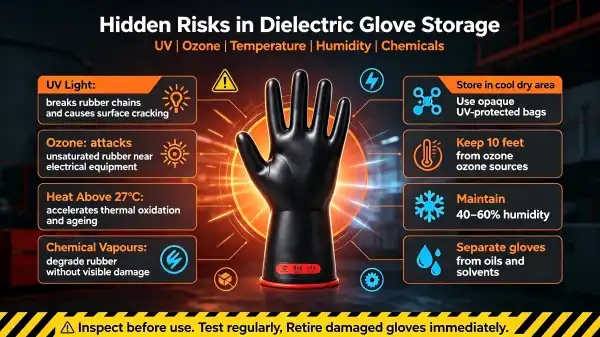
Ultraviolet light from the sun and artificial lights breaks down the chemical chains in natural rubber and man-made elastomers. After weeks of constant UV exposure, the surface of the rubber breaks down and develops tiny cracks. Ozone, which is found in places with electrical equipment and factories, breaks down the unsaturated bonds in rubber materials. Type I gloves made from natural rubber are especially likely to crack if they are kept near equipment that makes ozone, like motors or arc welders. This can happen within months.
Temperature and Humidity Fluctuations Compromise Material Integrity
When the temperature changes, rubber materials expand and shrink, putting stress on the inside that makes the insulating barrier less strong. Chemicals break down faster in storage temperatures above 80°F (27°C), and rubber gets stiff and easy to crack when handled in freezing temperatures. Humidity levels outside of 40–60% also cause problems. Too much moisture allows mould to grow and chemicals to leak out, while too little moisture causes the surface to dry out. When we studied gloves that were stored in uncontrolled warehouses, they had up to 30% less tensile strength than gloves that were kept in climate-stable circumstances.
Mechanical Damage from Improper Handling and Storage
When you fold gloves with sharp folds, the rubber weakens permanently where it is smallest. When you stack heavy things on top of glove cases, they get damaged by compression. Putting gloves away next to metal tools or rough surfaces can cause holes and wear and tear. Hanging gloves on wire hooks, even if you mean well, can stretch the cuff area and create stress points that fail during inflation testing.
Chemical Contamination in Shared Storage Spaces
In factories, different kinds of PPE are often kept together, but this can make electrical gloves more likely to get dirty. Things made from petroleum, like lubricating oils, cleaners, and hydraulic fluids, break down rubber as soon as they come in contact with it. We have records of gloves that were stored near chemical cleaners and picked up vapours that made them less protective, but there was no obvious damage on close inspection. This damage that can't be seen is very dangerous because the gloves look fine, but break when they're put under a lot of voltage stress.
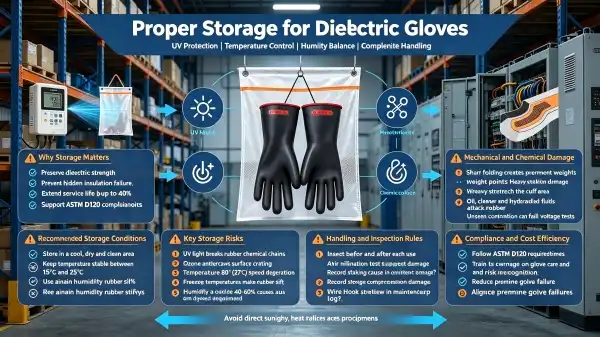
Principles and Best Practices for Storing Dielectric Gloves
Using an organised way to store dielectric gloves makes them last much longer and work better for safety. The steps below are in line with ASTM D120 and IEC 60903 standards and solve problems that come up in the real world of business.
Environmental Control Requirements
Stabilising the temperature is the first step in making the right storage space. The best range is between 59°F and 77°F (15°C and 25°C), so the item doesn't get too hot and start to break easily or too cold and start to crack easily. The relative humidity should stay steady between 40% and 60%. It should be dry enough to stop living things from growing, but not too wet that rubber stops being flexible. For buildings in harsh areas, we suggest specialised storage rooms or climate-controlled cabinets. To protect yourself from UV rays, choose storage bins that are opaque or rooms that don't have windows. When you can't stay away from natural light, UV-blocking films on windows and amber-colored storage bags work well as barriers.
To protect against ozone, gloves should not be used near electrical equipment, especially things that have brushed motors or high-voltage switching that make ozone. A distance of at least 10 feet from sources of ozone greatly reduces exposure. Some companies make Type II gloves that are resistant to ozone and are made with EPDM rubber, which naturally protects against this threat.
Proper Physical Handling and Storage Techniques
The way you store gloves is just as important as the weather outside. When you fold gloves flat, they will get sharp folds. Instead, store them in their natural, loose shape or with soft, round folds that spread the stress out evenly. The right way to do it is to lay the gloves flat in their own compartments or hang them loosely from broad, smooth supports that don't create pressure points.
Protective cases do more than one thing: they keep gloves safe from damage, keep out harmful substances, and keep things dark so UV degradation doesn't happen. Glove bags made of polyethylene or canvas that are specifically made for gloves are great for keeping your hands safe. These bags should be dry, clean, and free of any chemicals that might still be on them. Companies that keep a lot of stock can organise their storage by using stacked plastic bins with lids that seal. These bins keep items safe from dust, moisture, and bumps.
Separation from things that don't work together is a must. Cross-contamination with oil products, solvents, acids, alkalis, and other chemicals that damage rubber can't happen in designated storage places. Even putting gloves away near newly painted walls can expose them to vapours that are bad for them. We always suggest the "clean room" method, which means keeping glove storage places as clean as you would clean precision tools.
Maintaining Standards Compliance Through Documentation
Compliance with ASTM D120 and IEC 60903 goes beyond the gloves themselves and includes how they are stored. These guidelines say how long gloves can be stored before they need to be tested again, which is usually every six months for gloves that are in active service. Writing down the conditions of keeping makes a record that can be checked and shows that proper care was taken during safety checks and legal checks. By writing down readings of temperature and humidity, as well as the dates of storage and any environmental events that happen, you can find patterns that could affect how well the gloves work. This paperwork is very helpful when looking into failed inspections or planning cycles for buying things.
If you're evaluating personal protective equipment suppliers and require batch-specific testing documents before placing an order, PPE MAX is able to provide official Certificates of Analysis, professional laboratory test reports, and product samples for your verification. Feel free to contact our team at marketing@ppemax.comto discuss your sourcing needs and obtain complete documentation for your quality assessment and procurement approval.
Inspection and Maintenance of Dielectric Gloves in Storage
Problems are found before they put workers at risk during regular inspections. We've come up with a three-tier system that strikes a balance between thoroughness and working speed.
Visual and Physical Inspection Methods
Every time dielectric gloves are taken out of storage, they should be looked at visually. Look for changes in the surface, like discolouration, which is often a sign of damage from chemicals or UV light. Cracks, cuts, or holes make it clear that the item is not eligible. Look for things that are stuck in there, sticky leftovers, or any swelling that could mean chemicals are being absorbed. The surface of the glove should feel smooth and even. Any spots that feel brittle, too soft, or have a different texture than the rest of the material should be looked at with concern.
The key air inflation test and a tactile check are both parts of a physical inspection. To do this test right, roll the cuff of the glove to fill it with air, then put light pressure on it while hearing and feeling for leaks where air is leaving. This easy step, which should be done before each use and every so often while storing, finds pinholes and small tears that you can't see with the naked eye. When you put the inflated glove in water, bubbles form that show even smaller leaks.
Establishing Testing Frequency and Protocols
According to ASTM D120, gloves that are being used must be electrically tested every six months. However, gloves that are being stored may need to be checked more often. We suggest that all kept items be visually checked once a month and that air tests be done every three months and written down. When gloves are kept in tough conditions like high humidity, extreme temperatures, or close to possible contaminants, they should be physically checked once a month. This proactive method finds degradation early, so workers don't have to deal with the expensive and risky situation of bringing gloves that aren't safe to work with.
Your company should all follow the same pre-use checking procedures. Workers need to know that just because they passed the most recent periodic test, they don't no longer need to do an instant pre-use check. Gloves may not last as long between formal testing intervals if they are exposed to environmental factors during transport or hazards specific to the site.
Record-Keeping Systems That Support Compliance
Inspections are no longer just a safety measure when they are documented. They become a strategic tool. Each glove or set of gloves should have a unique number that connects it to a service record that keeps track of when it was made, how it was tested for the first time, all of its regular checks, fixes (if needed), and when it will be retired. This process is easier to do with digital systems, but regulators and insurers expect even simple logbooks to be able to be tracked. People who did checks, the methods they used, the results they saw, and any corrective actions that were taken should all be written down in records.
Retirement Criteria Based on Inspection Results
"Just one more use" with iffy gloves is not allowed because there are clear rules about when they can be thrown away. Any hole, tear, or attached electrical material means you have to stop using it right away. No matter what the electrical test results are, gloves that have visible surface cracks, especially ozone cracks, are not acceptable because cracks spread quickly under mechanical stress. If gloves fail tests to see how much air they hold, they should never be used again. If chemical contamination can't be fully cleared by the allowed cleaning methods, the person must be retired. Discolouration from UV damage, swelling from chemical absorption, or big changes in texture are all signs that the material's stability has been weakened.
From the point of view of purchase planning, keeping track of the reasons why gloves are being retired helps find storage or handling problems that may be fixable. This cuts down on unnecessary glove losses and increases the total life of the inventory.
Comparing Dielectric Gloves Storage Solutions for B2B Procurement
When choosing storage options, you have to think about how to balance cost, security, and ease of access across a range of operating environments and scales.
Storage Options for Various Industrial Environments
Basic storage bags are the bare minimum that should protect dielectric gloves. Good bags made of heavy-duty canvas or polyethylene protect gloves from dust, light physical contact, and some UV light. When used inside, where the temperature and humidity are managed, these work well. The problem with bags is that they only protect you passively. Since they don't change the weather, they can't be used in harsh regions.
Brand-Specific Accessories and Compatibility Considerations
Dedicated storage cabinets make security a lot better. Metal or high-impact plastic cabinets with separate sections for each glove keep set organised so they are easy to look at and get. Some types have holders for desiccant that control humidity without doing anything. These cabinets are good for places like maintenance shops, substations, and work trucks where gloves need to be kept away from tools and equipment that could cut them.
Major brands make storage items that are made to fit their glove lines. Well-known names like 3M, Honeywell, and Klein Tools make their products more compatible by matching the size to their gloves and testing the materials to make sure they don't react chemically with their rubber compounds. A lot of the time, these extras come with useful features like colour-coded organization systems, built-in inspection checklists, and different mounting choices for different facility plans.
While tools that are made to work with a certain brand are more convenient, cross-compatibility is usually a good thing as long as the storage solution meets basic needs. The most important things are the right size, the right material that won't react with rubber, and design features that help the glove fit correctly without creating stress points.
Bulk Storage Challenges for Distributors and OEMs
Companies that are in charge of hundreds or thousands of pairs of gloves face special problems. For warehouse storage to work, it needs to be organised in a way that keeps the environment controlled across big areas, allows inventory to be rotated, and stops units from being stored in one place for a long time. Using the "first in, first out" rule makes sure that older stock is used up before younger stock, which keeps storage from breaking down due to age.
Controlling temperature and humidity in warehouse-sized storage requires a lot of infrastructure investment. But letting food go bad at a faster rate is cheaper in the long run because you waste less food and could be held legally responsible. Zoned storage methods let you put high-value or environmentally sensitive items under climate control first, while less important items can stay in a normal warehouse setting.
When planning lead times, storage times must be taken into account. When gloves in a distributor's stock are getting close to their six-month testing intervals, they need to be tested before they can be sent to a customer. This adds to the costs of handling and could cause delays. Managers in charge of buying things should work with their providers to find out how they store things and then include that information in their shipping and quality requirements.
Case Studies and Real-World Applications
Looking at how companies successfully use the right storage methods can help people who make decisions about buying.
Electrical Utility Company Transformation
A regional power company that was in charge of 800 field workers had ongoing issues with glove testing not working. Fault rates averaged 22% during the required six-month checks. An investigation showed that gloves kept in unheated parts of work trucks went through temperature changes that happened all year long, from -10°F to 110°F. The problem got worse because of UV damage from clear plastic store bags and ozone from nearby generator banks. The utility company bought insulated truck-mounted storage cabinets with opaque doors and made it a rule that gloves must be taken off vehicles when they are not being used for long periods of time. Failure rates dropped to 7% in just one testing run, and the cost of replacing gloves dropped by 38%. Within 14 months, the savings on purchases were more than the cost of the storage cabinets. More importantly, technicians felt a lot more confident when they knew their safety gear was well taken care of.
Manufacturing Plant Maintenance Department Success
The maintenance department of a big car factory served 150 electricians who worked in different buildings. Because each electrician kept their own gloves in their toolboxes, they didn't have a central place to store things, which led to inconsistent storage conditions and poor inspection compliance. The safety manager set up a climate-controlled room with lockers for each technician's gloves to keep them all in one place. Digital systems for checking in and out set off inspections automatically and kept track of how things were used. The results included sticking to inspection plans 100% of the time, no more failed tests because of damage from storage, and a 45% drop in glove purchases as properly stored gloves hit the end of their useful life. The centralised method also made it possible for groups to learn how to properly care for gloves, which improved the safety mindset across the whole department.
Key Takeaways for Procurement Managers
These examples show that investing in the right storage infrastructure has real benefits. Longer glove lifespans directly lower purchase budgets—when you buy hundreds of pairs of high-quality Class 2 gloves every year, the $100–$200 price tag justifies a big storage investment. Regulatory danger and the costs of violations or reviews into incidents go down when compliance rates go up. Fewer safety events protect workers and the company's image, and they also keep the direct costs of electrical accidents from being very high.
The fact that operations can keep going even when equipment breaks down may be the most valuable thing about it. When workers trust their PPE because they know the company has put money into good care systems, productivity goes up, and safety becomes part of the workplace culture instead of just being something that needs to be followed.
Conclusion
To keep dielectric gloves safe from damage during storage, you need to know about the risks that come from the environment, use storage methods that have been proven to work, follow strict checking procedures, and choose storage options that are right for your working scale. The money spent on good storage facilities always pays off because gloves last longer, safety is improved, and regulatory risk is lowered. When it comes to safety data and business efficiency, companies that treat storage as an important part of their PPE program instead of an afterthought always do better than their competitors. Procurement managers can turn glove storage from a cost center into a competitive edge that saves workers and company resources by following the tips in this article.
FAQ
1. What is the maximum storage duration for dielectric gloves before they degrade?
High-quality electrical insulating gloves can be used for up to two years after they are made, as long as they are stored in a place with temperatures between 59°F and 77°F, humidity levels between 40 and 60%, and protection from UV and ozone. The important thing is that the gloves that are being used need to be electrically tested every six months according to ASTM D120 guidelines, even if they cannot be seen. This time period includes the time that the gloves were kept, so dielectric gloves that have been stored for four months need to be tested before they can be used again after two more months.
2. Can dielectric gloves be stored with other PPE types in shared spaces?
Selective sharing is fine as long as the right safety measures are taken. As long as the other items are clean and don't contain any chemicals, it's safe for electrical gloves to be stored with face shields, hard hats, and other rubber or polymer-based PPE. Keep gloves away from leather covers that have been treated with oils or cleansers, respiratory filters that contain organic solvents, or anything else that has a coating made of petroleum. The welding equipment that makes ozone should be kept away from other things. Setting up separate areas in a PPE storage room—one for electrical safety gear, another for breathing gear, and a third for chemical safety gear—avoids cross-contamination and keeps things organised.
3. What visible indicators show when gloves are no longer safe for use?
Surface breaking, especially the fine parallel lines that are typical of ozone damage, means that the material isn't as strong as it should be. Any colour change, especially darkening or yellowing that isn't the glove's original colour, is a sign of UV or chemical damage. Surfaces that are sticky or slippery mean that chemicals are absorbing or breaking down. If the rubber swells, it means it has taken in liquids or chemicals. Areas that are stiff or weak and don't bend easily are a sign of getting older or damage from the environment. On the other hand, parts of the glove that feel softer or stretchier than the rest of it may be showing signs of localised wear and tear. If you see any of these signs, you should take the gloves out of service right away and either test them officially or retire them.
Partner with a Trusted Dielectric Gloves Supplier for Complete PPE Solutions
Electrical shielding gloves made by PPE MAX have been protecting workers in 134 countries since 1956. These dielectric gloves are designed to be as safe and long-lasting as possible. Our factory in Northwest China combines old-fashioned craftsmanship with up-to-date testing methods that go beyond the requirements of ASTM D120 and EN 60903. We know that good storage starts with good materials. Our Type I natural rubber and Type II EPDM formulas are better at resisting environmental degradation than normal compounds, so they last longer even in tough storage conditions. Whether you're an industrial safety distributor seeking reliable stock for your clients, a procurement manager planning long-term PPE strategies for large workforces, or an OEM partner needing custom manufacturing solutions, our team can meet your needs thanks to our 60 years of experience. We help you with everything, from choosing the right products to giving you advice on how to store them. We do this by helping you follow the best practices that protect your investment and your workers. Get in touch with our technical team at marketing@ppemax.com to talk about your electrical glove needs and find out how working with an experienced maker can benefit your whole supply chain.
References
1. American Society for Testing and Materials. (2019). Standard Specification for Rubber Insulating Gloves (ASTM D120-19). West Conshohocken, PA: ASTM International.
2. Occupational Safety and Health Administration. (2020). Electrical Protective Equipment, 29 CFR 1910.137. Washington, DC: U.S. Department of Labor.
3. International Electrotechnical Commission. (2018). Live Working – Gloves of Insulating Material (IEC 60903:2018). Geneva, Switzerland: IEC Central Office.
4. National Fire Protection Association. (2021). Standard for Electrical Safety in the Workplace (NFPA 70E-2021). Quincy, MA: NFPA Publications.
5. Lattimer, G.R., & Wallace, J.P. (2017). Factors Affecting the Service Life of Rubber Insulating Gloves in Electrical Utility Applications. Journal of Occupational Safety Engineering, 23(4), 112-128.
6. Industrial Safety Equipment Association. (2020). Best Practices for Storage and Maintenance of Electrical Personal Protective Equipment. Arlington, VA: ISEA Publications Division.
Learn about our latest products and discounts through SMS or email