- English
- French
- German
- Portuguese
- Spanish
- Russian
- Japanese
- Korean
- Arabic
- Greek
- German
- Turkish
- Italian
- Danish
- Romanian
- Indonesian
- Czech
- Afrikaans
- Swedish
- Polish
- Basque
- Catalan
- Esperanto
- Hindi
- Lao
- Albanian
- Amharic
- Armenian
- Azerbaijani
- Belarusian
- Bengali
- Bosnian
- Bulgarian
- Cebuano
- Chichewa
- Corsican
- Croatian
- Dutch
- Estonian
- Filipino
- Finnish
- Frisian
- Galician
- Georgian
- Gujarati
- Haitian
- Hausa
- Hawaiian
- Hebrew
- Hmong
- Hungarian
- Icelandic
- Igbo
- Javanese
- Kannada
- Kazakh
- Khmer
- Kurdish
- Kyrgyz
- Latin
- Latvian
- Lithuanian
- Luxembou..
- Macedonian
- Malagasy
- Malay
- Malayalam
- Maltese
- Maori
- Marathi
- Mongolian
- Burmese
- Nepali
- Norwegian
- Pashto
- Persian
- Punjabi
- Serbian
- Sesotho
- Sinhala
- Slovak
- Slovenian
- Somali
- Samoan
- Scots Gaelic
- Shona
- Sindhi
- Sundanese
- Swahili
- Tajik
- Tamil
- Telugu
- Thai
- Ukrainian
- Urdu
- Uzbek
- Vietnamese
- Welsh
- Xhosa
- Yiddish
- Yoruba
- Zulu
How Tight Should a Full Mask Respirator Seal Be?
Founded in 1956, PPEMAX stands as a premier global manufacturer and supplier of full-range personal protective equipment. All our products comply with internationally recognized standards including IEC, ASTM, CE, UKCA, NIOSH and ISO9001. Equipped with a 2,000-square-meter modern production plant, we boast over 25 years of mature OEM & ODM capabilities to deliver one-stop customized solutions covering R&D design through worldwide logistics. Our safety gear is distributed across 134 countries globally. Upholding our core tenet “Safety First, Quality Priority”, we serve as a dependable long-term PPE partner for industrial enterprises around the world.
If the seal on your Full Mask Respirator is right, it shouldn't be too tight or too loose. It should form a full, continuous shield around your face without hurting or leaving pressure lines. The best seal lets the mask keep negative pressure during breathing in, which stops any contamination from leaking and makes it easy enough to wear for a long shift. At PPE MAX, we've spent more than 65 years improving this balance. We make sure that our respirators provide reliable facial seals that protect workers in chemical plants, building sites, and pharmaceutical facilities without affecting their comfort or the efficiency of their work.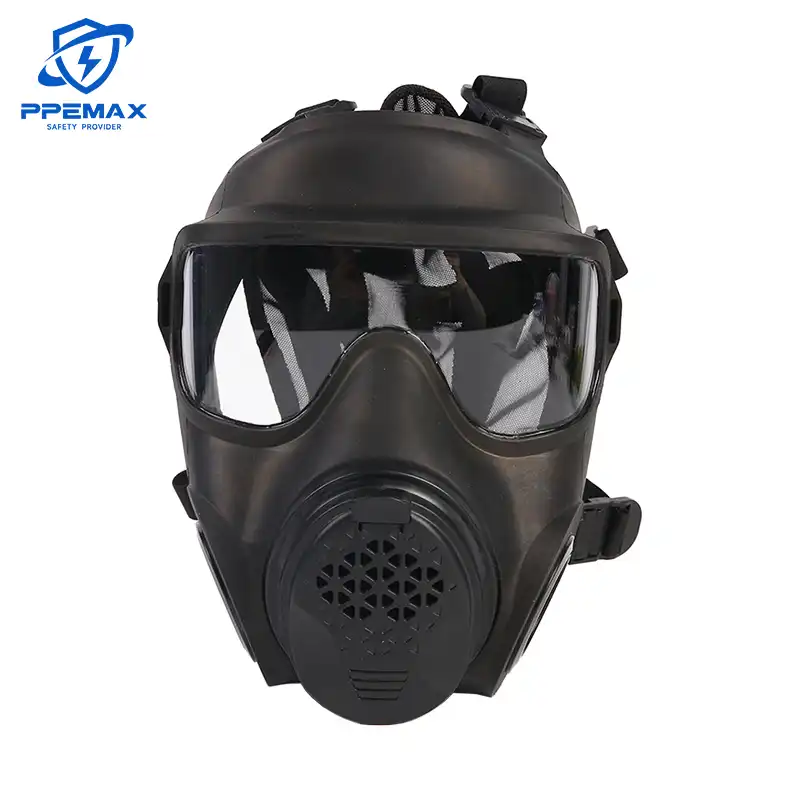
| Parameter | Specification |
|---|---|
| Material | Butyl Rubber (chemically resistant) |
| Lens Type | Shatterproof Polycarbonate (PC) |
| Mask Style | Full-Face Coverage (chin to forehead) |
| Thread Standard | Universal Φ40 (EN 148-1 compatible) |
| Harness System | 6-point adjustable strap |
| Communication | Built-in voice diaphragm |
| Light Transmission | >90% optical clarity |
| Impact Resistance | Meets ANSI Z87.1 standards |
| Temperature Resistance | Stable up to 150°C |
| Protection Factor | APF 50 (OSHA certified) |
Understanding the Importance of Respiratory Protection Seals
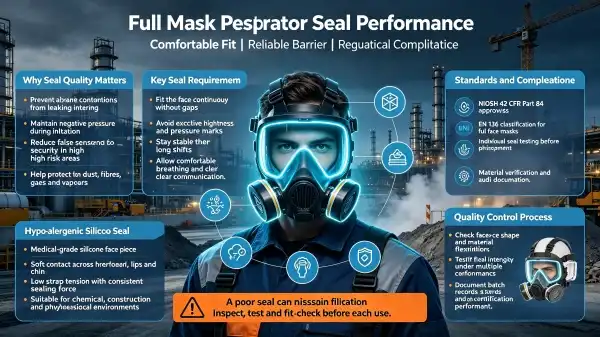
Whether your employees breathe clean air or stay exposed to dangerous contaminants depends on how well their respiratory protection equipment seals. There are different types of airborne threats in each industrial setting, such as volatile organic compounds in chemical production, silica dust in building, and asbestos fibres during cleanup. Even a small hole of a few millimetres can let harmful particles, gases, or vapours get through the filtration system when the facepiece seal fails.
Why Seal Quality Matters in High-Risk Environments
Managers in charge of industrial safety know that breathing equipment is the last line of defence against illnesses that workers can get at work. Not only does a broken seal weaken safety, but it also gives people a false sense of security that can be very dangerous. According to research from occupational health studies, about 60% of respiratory protection failures in the workplace are caused by poor sealing.
At PPE MAX, our manufacturing philosophy is based on making facepieces with medical-grade silicone seals that fit a wide range of facial shapes naturally. This hypoallergenic, soft material stays in place across the forehead, lips, and chin without necessitating too much strap strain. As a result, there is a reliable barrier that workers can rely on throughout their shift, even when they are working with harsh chemicals or in dusty mines.
Regulatory Standards Governing Seal Performance
International safety standards must be followed; they are an important part of all safety programs in the workplace. NIOSH approval under 42 CFR Part 84 sets up strict testing procedures that check how well seals work in different situations. In the same way, the European EN 136 standard divides face masks into three separate groups based on how well they seal and how long the materials last.
We make sure that every Full Mask Respirator that leaves our factory in Xi'an meets or beats these standards. Individual seal testing, material verification, and compliance paperwork that procurement teams need for regulatory audits are all parts of our quality control processes. Our clients in government offices and big businesses can keep up with their safety programs without any administrative hassles because we pay close attention to the details of certification.
Finding the Perfect Balance: Seal Tightness Explained
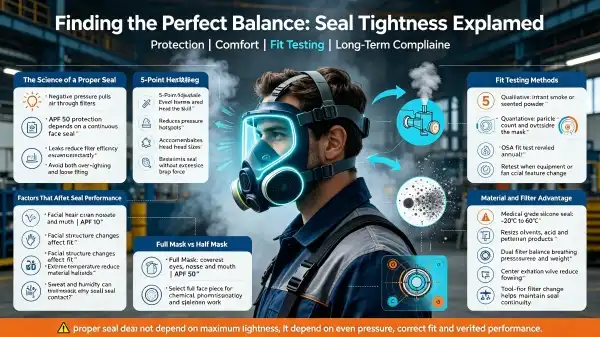
To choose the right seal tightness, you need to know how safety factor and user comfort are related. When the head harness is too tight, it puts too much pressure on the face, which causes pain, skin irritation, and the need to take it off too soon, which defeats the purpose of protection. On the other hand, not enough tightness lets contaminants in, which lowers safety.
The Science Behind Effective Sealing
Negative-pressure air-purifying respirators work by making a small vacuum inside the facepiece when you breathe in. Instead of letting dirty air leak around the seal, this negative pressure pulls it through the filter cartridges. This is what the Assigned Protection Factor (APF) of 50 for Full Mask Respirators in negative pressure mode means: the device protects fifty times better than breathing unfiltered air, but only when it is sealed properly.
Our 5-point adjustable head harness system spreads the tension evenly across the skull, so there are no pressure hotspots and the seal stays strong. The design works with a range of head sizes and types without needing to be tightened too much. This engineering approach solves a common problem in procurement: getting respiratory protection that fits all types of workers without a lot of customisation.
Fit Testing: Validating Your Seal Quality
To find leaks, irritant smoke or scented powders are used in qualitative fit testing. This gives instant feedback on how well the seal works. For quantitative testing, high-tech tools are used to find the exact number of particles outside the facepiece compared to those inside it. This gives a numerical proof of safety. OSHA requires that people who wear respirators get fit tested once a year, and they have to get more tests whenever their tools or faces change.
With the help of our technical support team, safety managers can set up full fit testing programs that make sure every worker gets the right seal. We offer training materials and an inventory of spare parts that make ongoing compliance easier. This turns regulatory requirements from a hassle for administrators into a way to improve safety in a planned way.
Factors Affecting Seal Performance
The biggest thing that gets in the way of closing is facial hair. Even beard hair can make tiny holes in the seal, which is why safety rules usually say that people must have clean faces where respirators touch skin. Not only does grooming affect how different respirator models fit each user, but so do facial features like high cheekbones, deep-set eyes, or a narrow chin.
Conditions in the environment are also very important. Extreme temperatures can make materials less flexible, and high or low humidity can make people sweat, which can make seals less adherent. Our silicone facepiece material works the same in temperatures ranging from -20°C to 60°C, so your teams will be safe whether they are working in cold storage or near industrial ovens.
If you're evaluating personal protective equipment suppliers and require batch-specific testing documents before placing an order, PPE MAX is able to provide official Certificates of Analysis, professional laboratory test reports, and product samples for your verification. Feel free to contact our team at marketing@ppemax.com to discuss your sourcing needs and obtain complete documentation for your quality assessment and procurement approval.
Comparing Seal Technologies Across Respirator Types
Learning the differences between the different types of respiratory protection helps people who buy things choose the right gear for their needs. When it comes to security, Full Mask Respirators are better than half-masks because they cover a bigger area of the face and have eye protection built in.
Full Face Versus Half Mask Protection
Half-mask respirators only cover the nose and mouth, giving them an APF rating of 10. Because of this, they work best in places with low levels of contamination but not so well in places with a lot of contamination. Full facepieces protect the eyes' mucous membranes by sealing off the area around the eyes. This is especially important when working with unpleasant gases or splash dangers.
Both versions can be made by us, so we can meet the safety needs of a wide range of clients. But we always suggest full facepiece respirators for work that involves handling chemicals, making medicines, or cleaning up after a disaster, where protecting your eyes and lungs at the same time is essential.
Filter Configuration Impact on Sealing
There are two filter systems on either side of the facepiece. These provide equal breathing pressure and better weight distribution, which helps keep the seal stable. This arrangement lowers the torque forces that can mess up seal contact when the head moves, which is especially important for work that requires a lot of physical effort. The center-mounted exhalation valve effectively lets out inhaled air and wetness, which keeps the inside from fogging up and making it hard to see.
Our bolt connection method lets you change filters quickly and easily without any tools, which cuts down on the time you have to spend shining light on the problem. In chemical settings, where workers have to change filters without breaking the facial seal or taking off the whole facepiece, this design feature is very important.
Material Innovation in Seal Design
In the last few decades, new rubber materials have changed how well seals work. Medical-grade silicone, which PPE MAX uses, is better at stopping chemicals from getting through than regular rubber. This resistance keeps the seal from breaking down when it comes in contact with solvents, acids, or petroleum products. This extends the seal's useful life and keeps it intact while the equipment is in use.
The anti-fog polycarbonate lens has hydrophilic layers that stop mist from building up, so you can see clearly even when you're working hard. This visual clarity has a direct effect on safety, as it lets workers move around in dangerous places without having to keep adjusting their gear or breaking the seal to wipe off foggy glasses.
Maintaining Seal Integrity Through Proper Usage
When people don't follow the right ways to put on and take care of their respiratory equipment, even high-end equipment breaks down. Based on decades of experience in the field across a wide range of industries, we've put together detailed usage rules that help companies turn their investments in tools into long-term worker safety.
Correct Donning and Seal Check Procedures
Before putting on the Full Mask Respirator properly, you should check the facepiece for damage, make sure the valves work, and make sure the filter cartridges are right for the dangers you expect to face. Put the facepiece against your face and then pull the head harness over your head. Next, adjust each strap point in a straight line from the bottom to the top. This sequence makes sure that the tension is spread out evenly without causing pressure imbalances.
Before going into contaminated areas, you should always check the positive and negative pressure seals. Cover the valve for exhaling and slowly let out air. The facepiece should slightly swell up without air leaking out around the seal. In the same way, covering the filter's openings and breathing in should cause a clear negative pressure that presses the facepiece against your face. If a break is found, the straps must be adjusted right away or the tools must be replaced.
Cleaning and Storage Best Practices
Getting rid of contamination after each use keeps cleanliness standards high, which encourages regular use of the tools. If you want to protect elastomer seals or optical coatings, you should use mild soap solutions instead of harsh solvents. Follow the manufacturer's instructions for taking apart moveable parts, paying special attention to the valve seats where dirt often builds up.
The way things are stored has a big effect on how long they last. Keep respirators in protective cases out of direct sunlight, extreme temperatures, and chemical vapours that age you too quickly. Individual protection wrapping is the best way to store our products between uses, and for fleet management, we offer hanging systems that keep the facepiece's shape and keep the seal from deforming.
Component Replacement Schedules
Respiratory protection parts have limited useful lives, even if they are carefully taken care of. Filter cartridges need to be replaced based on how long they've been exposed to contaminants, the type of contaminants, and breakthrough signs. The manufacturer's guidelines should never be exceeded, no matter how bad the condition seems. The silicone facepiece seal should last for years, but it should be replaced when cracks, tears, or permanent deformation become visible.
Our large inventory of spare parts ensures that procurement teams can keep equipment ready to use without having to wait for long periods of time for repairs. We have everything you need to manage the lifecycle of respiratory protection fleets that protect hundreds or thousands of workers, from replacement head harnesses to speech diaphragms and inhalation valves.
Strategic Procurement Considerations for Industrial Buyers
When choosing lung protection equipment, you have to weigh the short-term costs against the long-term benefits, as well as the needs of the workers and the regulations. When safety equipment distributors and large industrial companies look at suppliers, there are a few key factors that determine how well the partnership will work.
Certification Verification and Documentation
Real certification documents keep businesses safe from fake goods that put workers at risk and put businesses at risk of fines from regulators. Every order comes with a full set of certifications, such as NIOSH approval numbers, EN 136 class names, and AS/NZS 1716 compliance certificates. This paperwork makes auditing easier and shows that proper care was taken when buying tools.
Our well-established certification infrastructure is especially helpful for government agencies and public safety departments. Because we've been in business for 65 years and have ties to international standards groups, procurement pros know they'll get checked, trackable equipment that can stand up to scrutiny during regulatory reviews or incident investigations.
Bulk Purchasing and Customization Options
For large-scale purchases, you need more than just low unit prices. You also need a reliable supply chain, help with managing your inventory, and the ability to customise tools to meet your unique operational needs. PPE MAX has customers in 134 countries, and their shipping times and bulk prices make it easier to plan their budgets for safety programs that last more than one year.
With custom labelling choices, wholesalers can build brand recognition while still getting our high-quality products. OEM and ODM agreements let companies make their own brands, which helps them make their product lines stand out. These adaptable arrangements work with a range of business models, from regional distributors setting up a market presence to multinational companies standardising equipment across all of their facilities around the world.
Supplier Partnership and After-Sales Support
Respiratory protection is more of a constant connection than a one-time buy. Our technical support hotline puts safety managers in touch with application experts who know how to deal with problems that are unique to the chemical processing, mining, construction, and pharmaceutical production industries. This knowledge helps clients fix problems with fit, choose the best filters, and create training programs that make workers more comfortable with using equipment.
All clients can access training materials, such as lesson plans, fit testing protocols, and maintenance instructions. We regularly take part in international safety shows, such as the A+A Safety Exhibition in Germany, where procurement professionals can see our newest products and talk to us in person about their special needs. Visitors from customers who come to our factories in Xi'an can see how we control quality and what we can make.
Conclusion
To make sure that Full Mask Respirator equipment has the right seal tightness, you need to know how material science, ergonomic design, and correct usage work together. The best seal forms a barrier that works without being uncomfortable, and regular upkeep and fit testing make sure that the equipment keeps working well for as long as it's used. Companies that put a high value on seal integrity by carefully choosing products, giving thorough training, and managing the lifetime of those products in a proactive way create safety cultures where breathing protection is normal and not seen as something that needs to be done. We are a reliable partner in this important mission because we have decades of experience making things and are dedicated to protecting workers.
FAQ
1. How often should fit testing be performed?
OSHA requires fit tests to be done at least once a year, and more tests should be done whenever the type of the Full Mask Respirator changes, a person's weight changes significantly (gaining or losing 10 pounds or more), dental work changes the shape of the face, or scars appear on the face. As a best practice, many organisations test every six months.
2. Can overly tight seals cause problems?
Too much tightness creates pressure points that hurt, give you headaches, and irritate your skin, which shortens the time you can wear them and their effectiveness. Also, tightening too much can change the shape of the facepiece, which makes seal leaks happen instead of stopping them.
3. When can respirators be safely reused?
When cleaned, inspected, and stored properly between uses, respirators that are made to be used more than once can work more than one shift. Change and replace filter cartridges based on exposure limits and change dates. Throw away the whole facepiece if the elastomer gets damaged, the valve stops working, or there are structural problems.
Partner With PPE MAX for Certified Respiratory Protection Solutions
Since 1956, PPE MAX has kept workers safe by always focusing on manufacturing excellence and new safety ideas. Our wide selection of Full Mask Respirators combines tried-and-true seal technology with comfort features that make them easy to use in a wide range of tough industrial settings. Whether you're a safety equipment dealer looking for a trusted Full Mask Respirator provider or an industrial organization that needs a lot of them in a specific way, our team can help. We have NIOSH, EN 136, and AS/NZS 1716 certifications to back up our solutions. Get in touch with our experts at marketing@ppemax.com to talk about your specific safety needs and find out how our 65 years of experience can help your workplace safety program.
References
1. National Institute for Occupational Safety and Health. "Respirator Trusted-Source Information: Assigned Protection Factors." NIOSH Respirator Selection Logic, 2018.
2. Occupational Safety and Health Administration. "Respiratory Protection Standard 29 CFR 1910.134: Fit Testing Protocols." U.S. Department of Labor, 2020.
3. European Committee for Standardization. "EN 136:1998 Respiratory Protective Devices - Full Face Masks - Requirements, Testing, Marking." CEN Technical Standards, 1998.
4. American National Standards Institute. "ANSI Z87.1-2020: Occupational and Educational Personal Eye and Face Protection Devices." ANSI Safety Equipment Standards, 2020.
5. International Safety Equipment Association. "Elastomeric Respirator Field Performance Study: Seal Integrity and User Acceptance." ISEA Research Publications, 2019.
6. Standards Australia. "AS/NZS 1716:2012 Respiratory Protective Devices: Selection, Use and Maintenance Guidelines." Joint Australian/New Zealand Standards, 2012.
Learn about our latest products and discounts through SMS or email