- English
- French
- German
- Portuguese
- Spanish
- Russian
- Japanese
- Korean
- Arabic
- Greek
- German
- Turkish
- Italian
- Danish
- Romanian
- Indonesian
- Czech
- Afrikaans
- Swedish
- Polish
- Basque
- Catalan
- Esperanto
- Hindi
- Lao
- Albanian
- Amharic
- Armenian
- Azerbaijani
- Belarusian
- Bengali
- Bosnian
- Bulgarian
- Cebuano
- Chichewa
- Corsican
- Croatian
- Dutch
- Estonian
- Filipino
- Finnish
- Frisian
- Galician
- Georgian
- Gujarati
- Haitian
- Hausa
- Hawaiian
- Hebrew
- Hmong
- Hungarian
- Icelandic
- Igbo
- Javanese
- Kannada
- Kazakh
- Khmer
- Kurdish
- Kyrgyz
- Latin
- Latvian
- Lithuanian
- Luxembou..
- Macedonian
- Malagasy
- Malay
- Malayalam
- Maltese
- Maori
- Marathi
- Mongolian
- Burmese
- Nepali
- Norwegian
- Pashto
- Persian
- Punjabi
- Serbian
- Sesotho
- Sinhala
- Slovak
- Slovenian
- Somali
- Samoan
- Scots Gaelic
- Shona
- Sindhi
- Sundanese
- Swahili
- Tajik
- Tamil
- Telugu
- Thai
- Ukrainian
- Urdu
- Uzbek
- Vietnamese
- Welsh
- Xhosa
- Yiddish
- Yoruba
- Zulu
How to Select the Right Filter or Cartridge for a Full Mask Respirator?
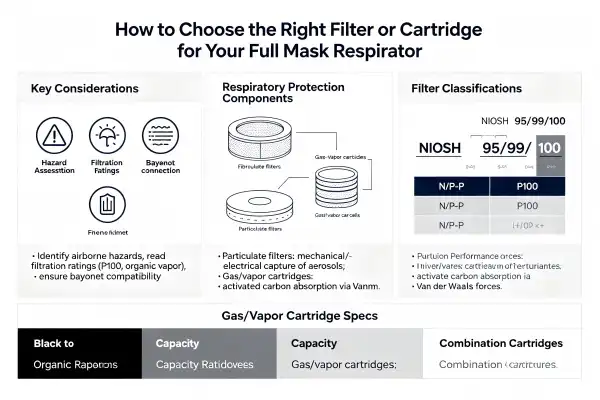
To pick the right filter or cartridge for your Full Mask Respirator, you need to know about the specific airborne hazards at work, how to read filtration efficiency ratings like P100 for particulates or organic vapour cartridges for chemical exposures, and make sure the filter or cartridge works with your respirator's bayonet connection system. To make the right choice, you need to do a full danger assessment that takes into account the type of contamination, concentration levels, and length of exposure while following NIOSH or EN certification standards. This methodical approach makes sure that your respiratory protection gear gives workers the Assigned Protection Factor they need to stay safe in high-risk industrial settings like chemical manufacturing, construction, emergency response, and others where poor air quality poses serious health risks.
Understanding Respiratory Protection Components and Their Functions
The structure of lung defence systems can be broken down into two main groups that deal with different types of pollution. Particulate filters use mechanical and electrical forces to hold solid and liquid aerosols. They do this by catching dust particles, metal fumes, biological agents, and paint overspray before they get into the lungs. Layered fibrous media in these filters make a winding path that forces particles to hit fibres through processes of absorption, impaction, and diffusion.
Gas and vapour cartridges work in very different ways. They both use activated carbon cells that are filled with certain chemicals that absorb molecular toxins. Activated carbon's porous structure gives it a huge surface area—just one gram can cover more than 1,000 square meters—to which chemical vapours can stick through Van der Waals forces. Certain types of danger are targeted by specific impregnants, such as chromium salts for acid gases, copper compounds for ammonia, and silver for certain chemical compounds.
Particulate Filter Classifications and Performance Standards
Particulate filters are put into nine different groups by NIOSH based on how well they screen and how well they fight oil-based droplets. The efficiency rates go from 95% to 99% to 99.97% required performance, which are called the 95, 99, and 100 series, respectively. The letters N, R, and P before the name show whether it is suitable for places without oil (N), resistant to oil degradation for eight hours (R), or built to last for a long time without oil getting in (P). This makes well-known names like N95, P100, and R99 that describe the exact levels of safety.
When buying things, it's important to know about these categories because many workplace settings have oil fumes from machines, welding fluids, or oil handling. Using N-series filters in these situations causes the filters to break down too quickly and lose their protective properties, even if the original filtering performance seems fine. P100 filters are the best at protecting against particles, catching 99.97% of them at their smallest size of 0.3 microns. This is the same level of performance as HEPA filters used in medical and cleanroom settings.
Gas and Vapor Cartridge Specifications
Chemical tubes for Full Mask Respirator are labelled with colour-coded names and have specific capacity ratings that are measured in minutes of breathing time at standard challenge amounts. Organic vapour cartridges, which are black according to North American standards, protect against carbon-based compounds that boil above 65°C. This includes solvents like toluene, xylene, and acetone that are popular in chemical processing, painting, and degreasing. The activated carbon bed soaks up vapours until it is fully saturated. When that happens, a breakthrough happens quickly and without notice unless end-of-service-life signs are added.
Instead of just absorbing acidic vapours, acid gas capsules use alkaline impregnants to neutralise them through a chemical process. This reactive process gives the product a longer useful life when it comes to chemicals, metal cleaning, and water treatment facilities that use hydrogen chloride, sulphur dioxide, and chlorine gas. Combination capsules capture both particles and chemicals, so they can be used in situations where paint overspray and liquid vapours are present at the same time, or when medicinal dust includes volatile active ingredients.
The main problem with all chemical capsules is that they can only hold a certain amount of chemicals and don't have clear signs for when they're full for many types of contaminants. Chemical refills may run out even though they look brand new, while particle screens show obvious loads and higher breathing resistance. To stop peak exposure, it's important to set change-out plans based on exposure tracking data, maker capacity standards, and safety factors.
Core Selection Criteria for Industrial Procurement
A thorough workplace hygiene review that measures the types, amounts, and physical properties of airborne contaminants is the first step in choosing the right filters and cartridges. This test checks to see if the dangers are dust, gas, vapour, or a mix of these. It also checks to see if the levels of contaminants are low enough for air-purifying respirators to work or if they need supplied-air systems. OSHA says that respirators can't be used in IDLH (Immediately Dangerous to Life or Health) settings or oxygen-deficient environments with levels below 19.5%. These are conditions that need self-contained breathing equipment or flight systems.
Hazard Identification and Exposure Quantification
Safety data sheets give basic information about chemical dangers, like the maximum amount of contact that is safe, the chemical's physical properties, and any warning properties, like the threshold limit value for smell. How the odour threshold and exposure limit relate to each other affects whether workers can spot cartridge breakthrough before they are exposed to dangerous chemicals. This is a very important thing to think about when choosing cartridges. The sweet smell of toluene starts to show up at about 2 parts per million, and the safe level of exposure is 20 parts per million, so there is enough notice. On the other hand, carbon monoxide doesn't smell like anything before it gets to levels that are dangerous, so it can't be protected against with an air-purifying mask.
The amount of contaminants has a direct effect on both the needed protection factor and the protection methods that can work. Assigned Protection Factors (APF) describe the amount of safety that is required. For example, OSHA guidelines say that full-face air-purifying respirators should have an APF of 50. This means that a mask that fits properly lowers exposure to 1/50th of the level in the air. If you test the environment and find amounts of contaminants that are more than fifty times the exposure limit, you can't use air-purifying respirators. Instead, you need supplied-air or self-contained systems.
Compatibility Requirements and Connection Standards
Manufacturers of respiratory protection use their own link methods that stop different brands from working with each other. This creates vendor lock-in effects that procurement professionals need to be aware of when choosing their first equipment. Bayonet-style bolts with brand-specific thread sizes, lug positions, and closing surfaces are the most common type of link. There are some third-party cartridges available, but because of legal issues and guarantee consequences, it is usually best to use parts that come from the maker.
PPE MAX respirators have standard RD40 link ports that work with all of our approved filters and refills while still meeting performance standards and seal integrity. Our bayonet connection method lets you change cartridges quickly and easily, without any tools. This cuts down on downtime while filters are being replaced. The two cartridges work together to make the breathing force equal on both sides of the facepiece. This gives you peace of mind and extends the device's useful life.
In addition to mechanical compatibility, chemical compatibility also plays a role in choosing the right cartridge for a given job. Some strong chemicals can damage rubber seals, valve parts, or cartridge housings by making them grow, crack, or break down faster. In acidic settings, tools won't break down if you look over the manufacturer's chemical protection guides.
Proper Installation, Maintenance, and Lifecycle Management
Even perfectly specified filters and cartridges fail to provide advertised protection when improperly installed, maintained, or used beyond their service life. Establishing comprehensive protocols for these operational aspects proves as critical as initial selection decisions.
Installation Procedures and Seal Verification
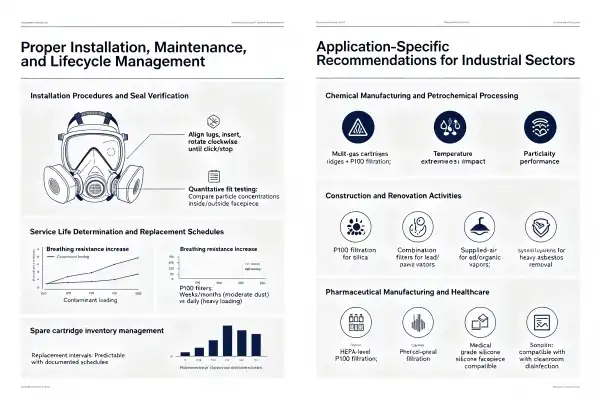
Cartridge installation for Full Mask Respirator begins with inspecting both the respirator connection threads and the cartridge sealing surfaces for damage, contamination, or degradation. Any cracks in the cartridge housing, damaged threads, or compressed gaskets necessitate component replacement before use. The bayonet mounting process requires aligning the cartridge lugs with the facepiece receptacles, inserting the cartridge, and rotating it clockwise until positive engagement occurs—typically marked by an audible click or physical stop.
Quantitative fit testing using specialized equipment provides an objective measurement of seal effectiveness, generating a numerical fit factor by comparing particle concentrations inside and outside the facepiece during standardized exercise protocols. OSHA requires annual fit testing for tight-fitting respirators, with additional testing whenever physical changes like significant weight fluctuation, dental work, or facial scarring might affect seal quality. Our training programs guide procurement teams in establishing compliant fit testing protocols that satisfy regulatory requirements while optimizing worker protection.
Service Life Determination and Replacement Schedules
Particulate filter replacement follows observable indicators: visible contamination, increased breathing resistance, or physical damage to the filter media. Breathing resistance increases progressively as captured particles accumulate, eventually reaching levels that cause user discomfort and prompt replacement. P100 filters typically provide weeks or months of service in moderate dust environments, though heavy loading in grinding, sandblasting, or asbestos abatement operations may necessitate daily replacement.
Chemical cartridge replacement demands systematic approaches because breakthroughs occur without warning in many scenarios. Change-out schedules calculate expected service life based on contaminant vapor pressure, concentration, ambient temperature, work rate, and cartridge capacity data. Conservative safety factors—typically 50% or less of calculated breakthrough time—account for variability in exposure conditions and individual breathing rates. End-of-service-life indicators incorporated into advanced cartridge designs provide visual confirmation of exhaustion for specific chemicals, though their applicability remains limited to particular contaminant classes.
Our technical support team assists clients in developing customized change-out schedules based on their specific exposure profiles and operational patterns. This service includes reviewing industrial hygiene monitoring data, calculating expected cartridge service life, and establishing replacement frequencies that balance protection assurance with cost efficiency. Spare cartridge inventory management becomes straightforward when replacement intervals are predictable and documented.
Application-Specific Recommendations for Industrial Sectors
Different industries present characteristic hazard profiles that drive filter and cartridge specifications toward particular product categories and performance levels.
Chemical Manufacturing and Petrochemical Processing
These sectors encounter diverse chemical exposures ranging from acid gases to organic vapors, often in combination with process particulates. Multi-gas cartridges that integrate protection against organic vapors, acid gases, and ammonia provide comprehensive coverage for many maintenance and operational tasks. The high-consequence nature of exposure incidents in these environments justifies premium protection levels, including P100 particulate filtration combined with high-capacity chemical cartridges.
Temperature extremes in certain chemical processing environments affect cartridge performance, with elevated temperatures accelerating vapor penetration through activated carbon beds. Refrigerated storage facilities present opposite challenges, where cold temperatures may cause moisture condensation that degrades filter efficiency. Application-specific testing and manufacturer guidance inform selection decisions in these boundary conditions.
Construction and Renovation Activities
Silica dust exposure during concrete cutting, sandblasting, and demolition represents a severe long-term health hazard, causing silicosis, an irreversible and potentially fatal lung disease. P100 filtration provides appropriate protection levels, capturing the respirable crystalline silica particles that penetrate deep into lung tissue. Lead-based paint removal combines particulate and chemical hazards, necessitating combination filters that address both the lead-containing dust and organic vapors from modern coating layers applied over historic lead paint.
Asbestos abatement operations demand a full mask respirator with P100 filtration as the minimum acceptable protection level, with supplied-air systems recommended for heavy removal activities. The cancer-causing potential of asbestos fibers creates zero-tolerance exposure scenarios where protection cannot be compromised by cost considerations or user comfort preferences.
Pharmaceutical Manufacturing and Healthcare
Pharmaceutical active ingredient handling poses potent sensitization and toxicity risks at extremely low exposure levels, with occupational exposure limits measured in micrograms per cubic meter. HEPA-level P100 filtration captures these fine pharmaceutical powders before respiratory contact occurs. Combination cartridges address solvent vapors from formulation processes while simultaneously filtering solid particulates.
Our respirators serve pharmaceutical manufacturers across North America, Europe, and Asia who require validated cleaning procedures compatible with Good Manufacturing Practice requirements. The medical-grade silicone facepiece material resists degradation from repeated disinfection cycles using quaternary ammonium compounds, alcohol solutions, and oxidizing agents employed in pharmaceutical cleanroom protocols.
Procurement Strategy and Supplier Evaluation
Large-scale respiratory protection procurement involves considerations beyond individual product specifications, encompassing supplier reliability, certification validity, supply chain resilience, and total cost of ownership.
Certification Verification and Regulatory Compliance
Counterfeit respiratory protection represents a growing concern in global supply chains, with fraudulent products bearing falsified certification markings that provide no actual protection. Verification protocols should include requesting certification documentation directly from testing laboratories, confirming manufacturer registration with regulatory agencies, and inspecting products for consistent quality indicators like molding precision, material uniformity, and legible permanent markings.
PPE MAX maintains current NIOSH approvals for our respirator models and filter combinations, with certification numbers verifiable through the NIOSH Certified Equipment List database. Our European product line carries CE marking with EN 136 compliance for full face masks, validated by notified body assessments. These certifications undergo regular surveillance audits that confirm ongoing compliance with manufacturing quality standards and performance requirements.
Supply Chain Considerations for Multi-National Operations
Organizations operating across multiple countries face complex procurement challenges related to varying certification requirements, import regulations, and regional preferences. A respirator approved under NIOSH standards for U.S. operations may require separate EN certification for European subsidiaries and AS/NZS approval for Australian facilities. Suppliers capable of providing region-specific certified products simplify procurement and ensure consistent protection standards across global operations.
Our manufacturing capacity supports volume orders that supply multi-site organizations, with distribution infrastructure reaching 134 countries through established logistics partnerships. Custom labeling options allow distributors and large end-users to implement internal inventory control systems, facilitating equipment tracking and maintenance scheduling across dispersed facilities. Bulk packaging reduces per-unit costs and minimizes packaging waste, addressing both economic and environmental objectives.
Since 1956, we have refined our manufacturing processes and quality systems to meet the exacting standards of chemical processors, mining operations, pharmaceutical manufacturers, and government agencies. This heritage provides the institutional knowledge and technical capability that transforms supplier relationships from transactional interactions into strategic partnerships built on reliability and mutual commitment to worker safety.
Conclusion
Selecting appropriate filters and cartridges for respiratory protection requires systematic hazard assessment, a thorough understanding of filtration technologies, attention to compatibility specifications, and rigorous lifecycle management. The procurement decisions made by safety professionals and purchasing managers directly determine whether respiratory protection programs achieve their fundamental objective: preventing occupational disease through effective exposure control.
As respiratory protection technology continues advancing with innovations in filter media, cartridge capacity, and user interface design, staying informed about these developments ensures procurement strategies leverage the most effective protection solutions available. The integration of end-of-service-life indicators, ergonomic enhancements, and improved breathability characteristics makes modern respiratory protection more effective and acceptable to end-users than previous generations.
Organizations that view respiratory protection as a strategic investment rather than a compliance burden achieve superior safety outcomes while simultaneously enhancing operational efficiency through reduced absenteeism, lower workers' compensation costs, and improved employee retention in industries where respiratory hazards historically drive workforce turnover.
FAQ
Can full-face respirator filters provide adequate protection against viral pathogens?
P100 filters capture airborne particles down to 0.3 microns with 99.97% efficiency, a performance level that effectively captures viral particles whether suspended individually or attached to respiratory droplets. This filtration capability exceeds the specifications of N95 filtering facepieces while simultaneously providing eye protection through the full facepiece design. Proper seal verification through fit testing remains essential, as leakage around the facepiece perimeter bypasses even the most efficient filter media.
How frequently should chemical cartridges be replaced during continuous use?
Replacement intervals depend on contaminant concentration, cartridge capacity, breathing rate, temperature, and humidity conditions. Manufacturers provide breakthrough time data under standardized test conditions that serve as baseline estimates, which must then be adjusted using safety factors—typically 50% or less of predicted service life—to account for real-world variability. Industries often establish conservative change-out schedules such as daily replacement in high-exposure environments or weekly replacement in moderate conditions, prioritizing worker safety over maximum cartridge utilization.
Are filters and cartridges interchangeable across different respirator brands?
Cartridge interchangeability remains limited due to proprietary connection designs that vary between manufacturers in thread pitch, bayonet lug configuration, and sealing interface geometry. While some aftermarket filters claim broad compatibility, using non-manufacturer components may void equipment warranties, compromise seal integrity, and create liability concerns. Procurement strategies should account for this brand-specific ecosystem during initial respirator selection to ensure long-term component availability and maintain consistent performance standards.
Partner with PPE MAX for Comprehensive Respiratory Protection Solutions
Xi'An PPE MAX delivers enterprise-grade Full Mask Respirator backed by 65 years of manufacturing excellence and engineering innovation. Our systems integrate ergonomic facepiece design with comprehensive filter and cartridge options certified to NIOSH, EN, and AS/NZS standards, providing procurement professionals with single-source solutions that simplify vendor management while ensuring consistent protection quality across international operations.
Purchasing managers and safety directors benefit from our technical consultation services that include exposure assessment support, product specification guidance, and customized training programs for respiratory protection program administrators. Our after-sales commitment extends beyond product delivery to encompass spare parts availability, equipment inspection services, and ongoing technical support that sustains protection program effectiveness throughout the equipment lifecycle. Contact our team at marketing@ppemax.com to discuss your organization's specific requirements and discover how our position as a leading full mask respirator manufacturer translates into measurable value for your safety program and workforce protection objectives.
References
1. National Institute for Occupational Safety and Health. (2018). NIOSH Guide to the Selection and Use of Particulate Respirators. U.S. Department of Health and Human Services, Centers for Disease Control and Prevention, Publication No. 96-101.
2. Occupational Safety and Health Administration. (2020). Respiratory Protection Standard 29 CFR 1910.134. U.S. Department of Labor, Washington, D.C.
3. European Committee for Standardization. (2019). EN 136:1998 Respiratory Protective Devices - Full Face Masks - Requirements, Testing, Marking. CEN Central Secretariat, Brussels, Belgium.
4. American Industrial Hygiene Association. (2017). Respiratory Protection: A Manual and Guideline, Fourth Edition. AIHA Press, Falls Church, Virginia.
5. International Safety Equipment Association. (2021). Guide to Respiratory Protective Equipment Selection and Use in Industrial Applications. ISEA Publications, Arlington, Virginia.
6. Standards Australia/Standards New Zealand. (2016). AS/NZS 1716:2012 Respiratory Protective Devices. Joint Technical Committee SF-010, Sydney, Australia.
Learn about our latest products and discounts through SMS or email