- English
- French
- German
- Portuguese
- Spanish
- Russian
- Japanese
- Korean
- Arabic
- Greek
- German
- Turkish
- Italian
- Danish
- Romanian
- Indonesian
- Czech
- Afrikaans
- Swedish
- Polish
- Basque
- Catalan
- Esperanto
- Hindi
- Lao
- Albanian
- Amharic
- Armenian
- Azerbaijani
- Belarusian
- Bengali
- Bosnian
- Bulgarian
- Cebuano
- Chichewa
- Corsican
- Croatian
- Dutch
- Estonian
- Filipino
- Finnish
- Frisian
- Galician
- Georgian
- Gujarati
- Haitian
- Hausa
- Hawaiian
- Hebrew
- Hmong
- Hungarian
- Icelandic
- Igbo
- Javanese
- Kannada
- Kazakh
- Khmer
- Kurdish
- Kyrgyz
- Latin
- Latvian
- Lithuanian
- Luxembou..
- Macedonian
- Malagasy
- Malay
- Malayalam
- Maltese
- Maori
- Marathi
- Mongolian
- Burmese
- Nepali
- Norwegian
- Pashto
- Persian
- Punjabi
- Serbian
- Sesotho
- Sinhala
- Slovak
- Slovenian
- Somali
- Samoan
- Scots Gaelic
- Shona
- Sindhi
- Sundanese
- Swahili
- Tajik
- Tamil
- Telugu
- Thai
- Ukrainian
- Urdu
- Uzbek
- Vietnamese
- Welsh
- Xhosa
- Yiddish
- Yoruba
- Zulu
How to Prevent Fogging in a Full Mask Respirator?
Founded in 1956, PPEMAX stands as a premier global manufacturer and supplier of full-range personal protective equipment. All our products comply with internationally recognized standards including IEC, ASTM, CE, UKCA, NIOSH and ISO9001. Equipped with a 2,000-square-meter modern production plant, we boast over 25 years of mature OEM & ODM capabilities to deliver one-stop customized solutions covering R&D design through worldwide logistics. Our safety gear is distributed across 134 countries globally. Upholding our core tenet “Safety First, Quality Priority”, we serve as a dependable long-term PPE partner for industrial enterprises around the world.
To keep a Full Mask Respirator from fogging, you need to do a few things: make sure it fits right by having a professional test it, treat the glasses with anti-fog chemicals, make sure there is good circulation by using working exhalation valves, and clean it very carefully. Choosing respirators with medical-grade silicone seals and anti-fog polycarbonate glasses cuts down on mist by a huge amount. Using all of these strategies together protects visibility, improves worker safety, and makes sure that regulations are followed in tough industrial settings where respiratory protection is a must.
| Parameter | Specification |
|---|---|
| Material | Butyl Rubber (chemically resistant) |
| Lens Type | Shatterproof Polycarbonate (PC) |
| Mask Style | Full-Face Coverage (chin to forehead) |
| Thread Standard | Universal Φ40 (EN 148-1 compatible) |
| Harness System | 6-point adjustable strap |
| Communication | Built-in voice diaphragm |
| Light Transmission | >90% optical clarity |
| Impact Resistance | Meets ANSI Z87.1 standards |
| Temperature Resistance | Stable up to 150°C |
| Protection Factor | APF 50 (OSHA certified) |
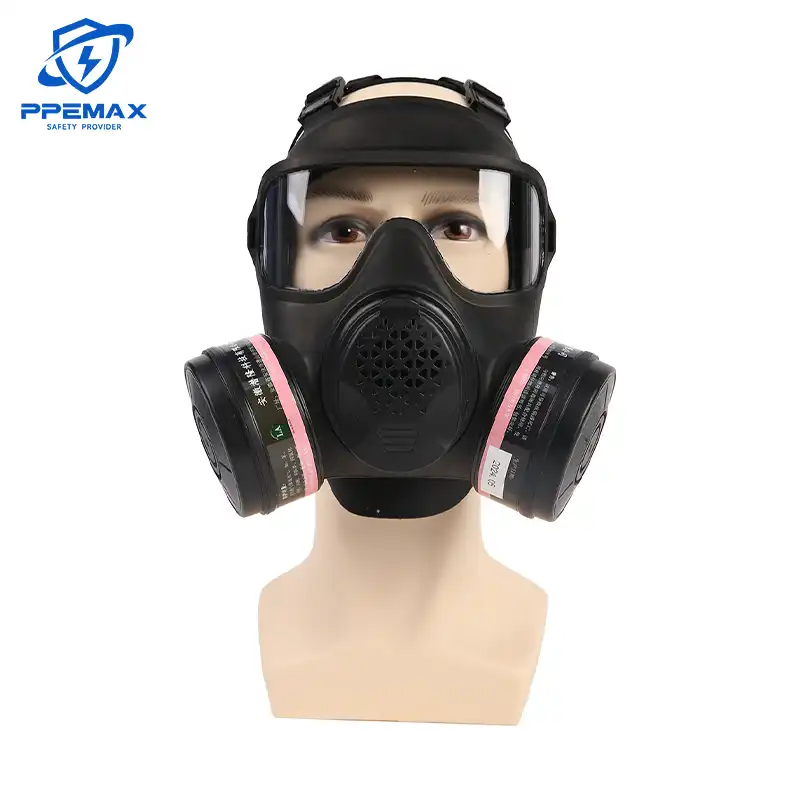
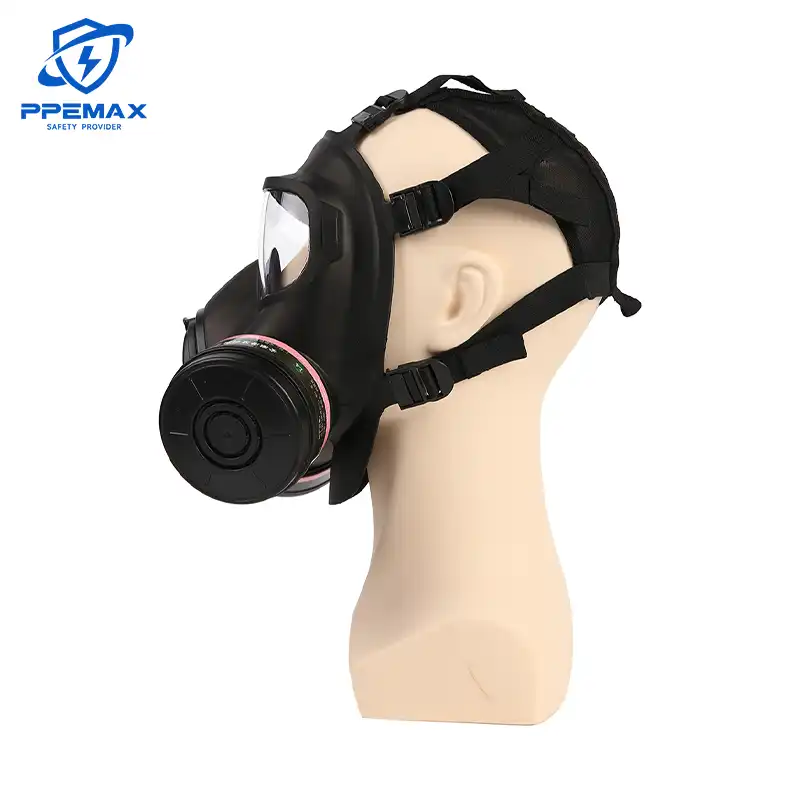
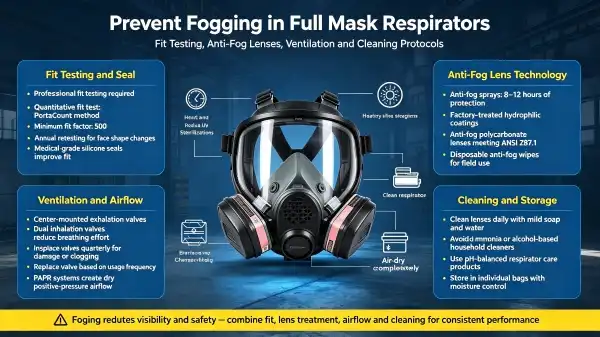
Proven Methods to Prevent Fogging in Full Mask Respirators
Achieving Optimal Fit Through Professional Testing
Proper fit testing protocols are the first step in keeping fog away. Quantitative fit testing with tools like the PortaCount checks for real leaking rates and makes sure that every worker meets the fit factor requirement of 500 or higher for Full Mask Respirators. This objective test finds problems with size that lead to both protection failures and fogging issues.
For companies with a lot of workers, qualitative testing using irritating smoke or bitter/sweet aerosols is a useful option. In addition to the first fitting, retesting once a year takes into account changes in the face, dental work, or weight that could affect how well the shoes fit. For safety reasons, keeping detailed records of fit tests helps procurement teams figure out which mask models consistently seal well across a wide range of worker demographics.
Advanced Anti-Fog Treatments and Technologies
There are many types of modern anti-fog solutions, from short-term fixes to long-term treatments for lenses. Surfactants in anti-fog sprays lower surface tension, which lets water spread out into an opaque film instead of drops that block your view. These sprays usually cover for 8 to 12 hours, and they work well for situations where they are only used sometimes, like when cleaning factories or making medicines.
Permanent hydrophilic coats that are put on during production last longer. At PPE MAX, our respirators have anti-fog polycarbonate lenses that are treated at the factory so they stay clear even after being cleaned many times. These lenses meet the standards for impact resistance set by ANSI Z87.1 and maintain their anti-fog performance over the course of their service life, so you don't have to buy treatments or do the work yourself over and over again.
Emergency reaction teams and mobile repair crews can easily use disposable anti-fog wipes in the field. These pre-moistened wipes quickly and easily create a thin layer of protection, making them useful for workplaces where things can go wrong. Buying these products in bulk as part of a full lung protection program makes sure that workers always have tools on hand to stop fog.
Optimizing Ventilation and Airflow Management
Exhaled air is directed away from the lens surface by exhalation valves that are placed in the right places. Quality full-face masks come with center-mounted valves that let the most moisture escape by making a direct path from the breathing zone to the outside. Dual inhalation valves make it easier to breathe, so you don't have to let out a lot of air, which can add moisture during hard work.
When you check your valves regularly, you can catch performance loss before fogging becomes a problem. Valves should open and close smoothly, without getting stuck, torn, or clogged with dirt or dust. Instead of waiting for clear problems, procurement teams should set replacement plans based on how often the equipment is used during quarterly checks. For building teams that work in dusty places, valve replacements may only need to be done every three months.
Establishing Rigorous Cleaning Protocols
Continuous positive pressure flows in powered air-purifying respirators keep the fog from forming. These systems blow filtered air across the surface of the lens, making a dry microclimate that stops condensation from forming. Even though they cost more at first, PAPRs offer the best fog-free performance in harsh temperature differences or high-stress situations like toxic waste cleanup, where other methods fail to keep things clear.
Fog starts where skin oils, makeup, or old anti-fog products leave behind residues that make fogging worse. Cleaning the lens every day with water and mild soap gets rid of these impurities and returns the surface to its original state. Do not use ammonia or alcohol-based home glass cleaners because they damage lens coverings and speed up the ageing process.
The best results come from cleaning products made especially for respiratory tools. These pH-balanced formulas get rid of organic residues without hurting polycarbonate lenses or silicone seals. Setting up central cleaning stations with approved goods makes sure that the quality of care is the same across big groups. Safety managers should teach cleaning techniques that focus on soft wiping motions instead of rough brushing, which leaves tiny scratches that make fogging worse over time.
After cleaning, let the lenses dry completely in the air before putting them away. When moisture gets stuck in storage cases, it's perfect for mould to grow and materials to break down. Individual respirator storage bags with moisture-absorbing packets keep gear safe between uses and keep clean surfaces from getting dusty.
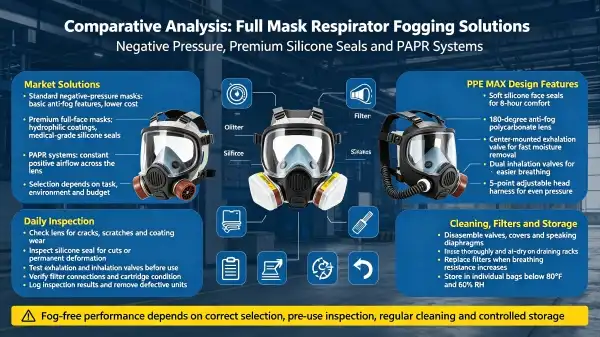
Comparative Analysis: Full Mask Respirator Fogging Solutions in the Market
There are a lot of different ways to reduce fogging on the market for lung protection, and each has its own benefits for certain commercial uses. When procurement workers understand these differences, they can match the skills of the equipment with practical needs and price limits.
Traditional negative-pressure Full Mask Respirators from well-known brands come with basic anti-fog features and are affordable. These models are good for situations where they will only be used sometimes, like in warehouses, general buildings, or facility care, where harsh conditions don't happen very often. Standard glass materials and ventilation systems can handle small changes in temperature well, but they might not work as well when working outside in the winter or when the humidity is high.
High-end full-face types have advanced engineering that is designed to fight fog. Wide-view lenses with constant hydrophilic coatings let you see more clearly around the edges of your vision. Better seal designs made from medical-grade silicone fit different face shapes better, with fewer gaps that block airflow. In dangerous jobs like making chemicals, medicines, and petrochemicals, where clear vision is needed all the time for safety and quality control, these respirators are used in tough situations.
Powered systems are the best way to stop fog because they change the internal environment in a fundamental way. The constant flow of air across the lens creates positive pressure that keeps moisture from building up. These systems are very comfortable to wear for long periods of time, which keeps people from getting tired during long-term emergency response or cleanup projects involving dangerous materials. The cons are that they are more expensive to buy, need more care for their batteries, and are heavier than passive respirators.
PPE MAX full-face respirators have useful fog-prevention features that were developed over many years of making them. Our soft silicone face seals are more comfortable to wear during 8-hour shifts and still provide the hermetic barrier needed for protection and moisture control. The anti-fog wide-view polycarbonate glasses can be seen clearly from 180 degrees, and they have coatings that are put at the factory and won't wear off after hundreds of cleaning cycles. Center-mounted exhale valves get rid of moisture quickly and effectively, and dual intake valves make it easy to breathe, even when you're doing hard physical work.
Our bayonet filter connection method lets you change cartridges quickly without damaging the seal. This cuts down on downtime during processes with more than one phase. The 5-point changeable head harness spreads pressure evenly, which stops seal distortion that makes holes that let fog in. When put together, these design elements make the fog-free performance effective in chemical processing, industrial coating, mining, and building.
If you're evaluating personal protective equipment suppliers and require batch-specific testing documents before placing an order, PPE MAX is able to provide official Certificates of Analysis, professional laboratory test reports, and product samples for your verification. Feel free to contact our team atmarketing@ppemax.com to discuss your sourcing needs and obtain complete documentation for your quality assessment and procurement approval.
Maintenance Best Practices to Sustain Fog-Free Performance
Regular maintenance is what separates respiratory protection programs that keep fog away for good from those that have problems with visibility all the time. Setting up routine check and care plans for Full Mask Respirators extends their useful life and makes sure they work at their best throughout their service life.
Daily Inspection Routines
Before each use, workers should quickly look over and test the functionality of key parts. Check the lens for cracks, scratches, or coating wear that could make it less clear. Check the silicone seal for any cuts, tears, or permanent deformations that would make it impossible to make eye contact. Cover the filter connections and take a few slow, deep breaths. The exhalation and inhalation valves should open and close smoothly, with no resistance or leakage.
It only takes two minutes to do these pre-use checks, but they find problems before they hurt safety or efficiency. Safety managers should use digital tracking systems to keep track of inspection results and find equipment that needs to be fixed or replaced. This way, broken units don't stay in use.
Comprehensive Cleaning After Each Use
Cleaning after use gets rid of contaminants that speed up the breakdown of materials and make fogging more likely. According to the manufacturer's instructions, take apart the parts that can be taken off. These parts usually include valves, valve covers, and speaking diaphragms. Use cold water and an approved cleaning solution to clean everything, but pay extra attention to seal areas where skin oils build up.
Rinse well to get rid of any cleaning product residue, and then let it dry naturally on racks that let the water drain all the way through. Do not dry things with compressed air, as the force can damage valve assemblies or let dirt into the internal passages. Once the respirators are dry, put them away in separate bags or sections that keep dust, sunlight, and damage from happening.
Filter Replacement Strategies
Filters that are clogged make it harder to breathe, which makes you exhale more, which brings in more moisture. Setting replacement plans based on what the maker says and how the product is actually used stops fogging before it happens. Particulate filters usually need to be replaced when it becomes harder to breathe or when the exposure limits written down in usage logs are met.
Chemical cartridges need to be replaced based on how long it takes for certain contaminants to get through, not on how they look. Colour-coded labelling systems help workers keep track of the types of cartridges they have and when they were installed, which is important in fast-paced factories. As part of bulk buying contracts, there should be enough filters on hand to support planned repairs without stopping work.
Storage Environment Considerations
The right way to store things keeps them in good shape and extends their life. Respirators should not be kept in full sunlight because it breaks down rubber materials and lens coatings. Keep storage areas between 50°F and 80°F and below 60% relative humidity to stop mould from growing and materials from breaking down. Do not store respirators in a way that forces the seals to bend or in contact with solvents, oils, or chemicals that react.
Using these maintenance methods requires some training at first, but they pay off in the long run by lowering the cost of replacing equipment and making workers safer. Centralised maintenance tracking systems make it easier for companies to keep track of their respirator fleets across various sites. These systems also make sure that methods are followed consistently and keep records of compliance for regulatory checks.
Case Studies and Success Stories from Industrial Clients
Painting and Surface Coating Operations
A Midwest company that finishes cars got frequent complaints about smoke from spray artists using temperature-controlled rooms to apply waterborne basecoats. When workers took off their Full Mask Respirators to clean the lenses, they broke the seal and let the isocyanate hardeners get on their bodies. This practice broke OSHA rules about respiratory protection and could have led to health problems.
After moving to respirators with permanently anti-fog lens treatments and doing daily valve maintenance, the number of cases of fogging dropped by 87% in the first quarter. As the tools got more comfortable to wear for 45-minute spray rounds, workers were more likely to follow through with their plans. The contractor wrote down these changes in the minutes of the safety meeting, which was required for insurance checks and government inspections.
Chemical Manufacturing Environments
A New Jersey company that makes speciality chemicals had trouble with fogging when workers wearing full-face respirators went into reactor vessels, and the temperature dropped 40°F. Traditional anti-fog sprays only made things clear for 20 to 30 minutes, which wasn't enough for the two hours of tight-space entry needed to check and fix equipment.
When I switched to powered air-purifying respirators with continuous airflow, I no longer had any fogging issues and had better protection for possible exposure situations. In the summer, the positive pressure environment also lowered heat stress, which was a different comfort issue. Even though the cost per unit went up, the investment paid off within 18 months thanks to lower incident rates and more efficient tasks.
Mining and Extraction Industries
In the winter, when machine workers moved from heated cabs to outdoor work areas, they ran into fogging issues at a Western mine operation that was trying to keep silica dust down. The sudden changes in temperature caused lens fogging right away, which took a while to clear up because the air was not very wet.
Putting respirators in heated areas before use as part of pre-warming protocols cuts initial fogging by 60%. Adding this change to the procedure to premium anti-fog lenses and cleaning the valves once a week got rid of any remaining visibility problems. Equipment workers said they were more aware of their surroundings, especially when moving things around near big machinery, where being able to see clearly is very important for avoiding accidents.
Conclusion
To keep Full Mask Respirators from fogging up, you need to choose the right tools, be careful with upkeep, and train your workers all at the same time. Knowing that condensation happens when temperatures change and moisture builds up helps buyers choose respirators with anti-fog glasses, good seals, and good airflow. Using skilled fit testing, setting up cleaning routines, and keeping the valves working properly will ensure fog-free performance for the entire life of the equipment. By getting rid of vision-related work interruptions, companies that include these practices in their respiratory protection programs improve worker safety, make sure they're following the rules, and boost productivity. By lowering accidents and improving operating efficiency in demanding industrial settings, investing in the right tools and doing regular repairs pays off in a way that can be measured.
FAQ
1. How often should respirators be cleaned to prevent fogging?
Cleaning every day after each use is the bare minimum for keeping anti-fog working well. Cleaning may need to be done in the middle of the shift in places with a lot of dust or chemicals. Deep cleaning the Full Mask Respirators once a week, which includes taking apart the valves, extends their life and stops dust buildup that speeds up fogging.
2. Do powered air-purifying systems eliminate fogging?
Powered methods keep the lens surface from fogging up by circulating air under positive pressure all the time. Even when temperatures are very different, moisture doesn't build up because the air is always moving. While other methods have failed to stop fogging in some situations, these systems have been shown to work the best.
3. What certifications validate anti-fog capabilities?
Standards like NIOSH 42 CFR Part 84 and EN 136 call for clear vision but don't rate anti-fog performance specifically. ANSI Z87.1 talks about how lenses can withstand being hit. When looking at models for tough conditions, purchasing teams should ask the maker to provide proof of anti-fog testing methods and field performance data from similar uses.
Partner with PPE MAX for Superior Respiratory Protection Solutions
PPE MAX can help you with your buying problems because they have been making breathing protection for over 60 years. As a top Full Mask Respirator maker since 1956, we come up with ways to stop fogging while still meeting strict NIOSH, EN 136, and AS/NZS 1716 standards. Our anti-fog polycarbonate glasses, medical-grade silicone seals, and improved air systems keep your vision clear even during long work hours. Email our technical team at marketing@ppemax.com to talk about bulk pricing for fleet deployments, get our full product catalogue, or set up tours of our facilities. We help wholesalers in 134 countries by offering private labelling, customisation options, and expert advice that is suited to the needs of your workforce.
References
1. National Institute for Occupational Safety and Health. "Respirator Fit Testing: Protocols and Best Practices for Industrial Settings." Cincinnati: NIOSH Publications, 2021.
2. Occupational Safety and Health Administration. "Respiratory Protection Standards: Compliance Guidelines for Full-Facepiece Respirators." Washington: U.S. Department of Labor, 2020.
3. American National Standards Institute. "ANSI Z87.1-2020: Occupational and Educational Personal Eye and Face Protection Devices." New York: ANSI Standards Committee, 2020.
4. European Committee for Standardization. "EN 136:1998 - Respiratory Protective Devices: Full Face Masks Requirements, Testing, Marking." Brussels: CEN Technical Committee, 2019.
5. Industrial Safety & Hygiene News. "Managing Respirator Fogging in Chemical Processing Environments: A Technical Review." Des Plaines: BNP Media Publications, 2022.
6. Journal of Occupational and Environmental Hygiene. "Temperature Differential Effects on Respiratory Protection Equipment Performance." Akron: American Industrial Hygiene Association, 2023.
Learn about our latest products and discounts through SMS or email