- English
- French
- German
- Portuguese
- Spanish
- Russian
- Japanese
- Korean
- Arabic
- Greek
- German
- Turkish
- Italian
- Danish
- Romanian
- Indonesian
- Czech
- Afrikaans
- Swedish
- Polish
- Basque
- Catalan
- Esperanto
- Hindi
- Lao
- Albanian
- Amharic
- Armenian
- Azerbaijani
- Belarusian
- Bengali
- Bosnian
- Bulgarian
- Cebuano
- Chichewa
- Corsican
- Croatian
- Dutch
- Estonian
- Filipino
- Finnish
- Frisian
- Galician
- Georgian
- Gujarati
- Haitian
- Hausa
- Hawaiian
- Hebrew
- Hmong
- Hungarian
- Icelandic
- Igbo
- Javanese
- Kannada
- Kazakh
- Khmer
- Kurdish
- Kyrgyz
- Latin
- Latvian
- Lithuanian
- Luxembou..
- Macedonian
- Malagasy
- Malay
- Malayalam
- Maltese
- Maori
- Marathi
- Mongolian
- Burmese
- Nepali
- Norwegian
- Pashto
- Persian
- Punjabi
- Serbian
- Sesotho
- Sinhala
- Slovak
- Slovenian
- Somali
- Samoan
- Scots Gaelic
- Shona
- Sindhi
- Sundanese
- Swahili
- Tajik
- Tamil
- Telugu
- Thai
- Ukrainian
- Urdu
- Uzbek
- Vietnamese
- Welsh
- Xhosa
- Yiddish
- Yoruba
- Zulu
How to Choose Electrical Rubber Gloves for EV Work?
Founded in 1956, PPEMAX stands as a premier global manufacturer and supplier of full-range personal protective equipment. All our products comply with internationally recognized standards including IEC, ASTM, CE, UKCA, NIOSH and ISO9001. Equipped with a 2,000-square-meter modern production plant, we boast over 25 years of mature OEM & ODM capabilities to deliver one-stop customized solutions covering R&D design through worldwide logistics. Our safety gear is distributed across 134 countries globally. Upholding our core tenet “Safety First, Quality Priority”, we serve as a dependable long-term PPE partner for industrial enterprises around the world.
To pick the right electrical rubber gloves for working on electric vehicles (EVs), you need to carefully look at the voltage ratings, material qualities, and safety standards. Find out what the highest voltage your team will be exposed to is. In modern EV battery systems, this is usually between 400V and 800V. Then, choose Class 00 or Class 0 gloves that are higher than this level. Focus on goods that meet ASTM D120 and IEC 60903 standards, make sure the gloves fit properly to allow for flexibility when doing difficult tasks like manipulating connectors, and make sure they are resistant to chemicals found in battery electrolytes. Using insulating gloves with leather protectors and setting up regular testing procedures is a complete safety plan that keeps operations running smoothly and protects technicians.
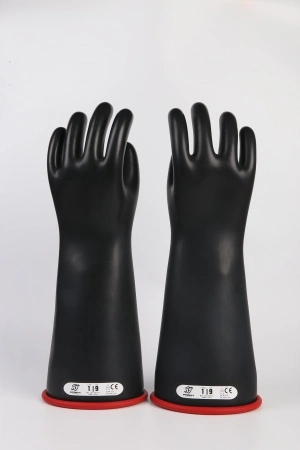
|
Parameter |
Specification |
|
Voltage Rating |
7,500V AC / 11,250V DC (Maximum Use) |
|
Proof Test Voltage |
10,000V AC / 40,000V DC |
|
Material Type |
Type I (Natural Rubber) / Type II (EPDM Synthetic) |
|
Thickness Range |
1.02mm - 1.52mm |
|
Tensile Strength |
>17.2 MPa |
|
Standards Compliance |
ASTM D120, IEC 60903 |
|
Temperature Resistance |
Category A, H, Z rated |
|
Label Color |
White (Class 1 Standard) |
Understanding Electrical Rubber Gloves for EV Work
What Are Electrical Rubber Gloves and How Do They Protect EV Technicians?
When working in high-voltage areas, electrical rubber gloves are the best way to protect yourself from getting an electrical shock. These special hand safety items work by putting a barrier between the skin of the user and conductive objects. The technical features of these gloves are their ability to prevent electricity and their long-lasting resilience. Maximum Use Voltage (from 500V for Class 00 to 36,000V for Class 4) and Proof Test Voltage (up to 40,000V AC) are two important factors. Natural Rubber (which is more flexible and easy to work with) or EPDM (Ethylene Propylene Diene Monomer), which is better at resisting ozone and UV light, are often used to make materials.
Voltage Classification Systems for EV Applications
Maintaining an electric car is hard because of the voltage issues that require exact safety levels. Class 0 insulating gloves are a special kind of PPE designed to keep electrical workers safe from getting shocked or electrocuted while working on circuits with a maximum voltage of 1,000 Volts AC or 1,500 Volts DC. These gloves are identified by a "Red" label that meets ASTM D120 and IEC 60903 standards, and they are the first line of defence for low-voltage industrial and utility applications. Class 00 insulating gloves are used in important business-to-business areas where low-voltage risks come into play with difficult mechanical jobs. Class 00 gloves are the standard safety gear for automotive technicians working in tight engine bays to disconnect high-voltage systems, service inverters, and handle orange high-voltage cables. This is because EV battery packs often operate between 400V and 800V.
Material Options and Performance Characteristics
Choosing between natural rubber and manmade materials has a big effect on how well gloves work. Technicians can easily work with small connectors and touchscreen screens that are popular in current EV testing tools because natural rubber is very flexible. Core benefits include high dielectric strength, anatomical "curved-hand" designs that make hands less tired, and colour-coded interior and exterior layers that make it easier to see for holes. Long-term exposure to ultraviolet rays and ozone would break down real rubber, but EPDM formulations work great in outdoor service settings. These goods have to meet world quality standards, which are ASTM D120 in North America and EN 60903 in Europe. This makes sure that they always work well, even when they are under a lot of mechanical and thermal stress.
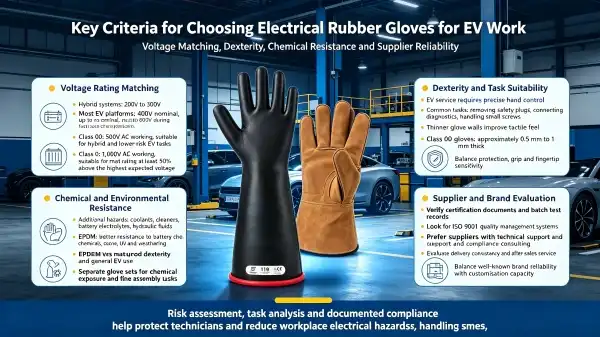
Key Criteria for Choosing Electrical Rubber Gloves for EV Work
Matching Voltage Ratings to Your EV Service Scenarios
The first step in choosing the right electrical rubber gloves is to accurately measure the voltage. Modern hybrid cars may have 200V to 300V systems, while fully electric cars usually run at 400V nominal, with 800V high levels during fast charging. We suggest that procurement teams do thorough risk assessments that record the tasks that expose people to the highest possible voltage. Class 00 gloves with a maximum voltage rating of 500V are good for protecting hybrid systems. Class 0 gloves with a rating of 1,000V AC are better for most modern EV platforms. If you choose gloves that are rated at least 50% above the highest expected voltage, you can account for voltage spikes and mistakes in the tests.
Balancing Dexterity Requirements with Protection Levels
For servicing electric vehicles, you need to be very precise, which is something that regular heavy-duty electrical gloves can't do. Technicians often have to use fine motor skills to do things like take out safety plugs, connect diagnostic equipment, and move small screws inside high-voltage junction boxes. Thinner glove walls make it easier to feel things, but they also lower the maximum voltage ratings. Class 00 gloves are usually between 0.5 mm and 1 mm thick, and they give you great dexterity for working on control panels and installing meters. The thin profile makes it possible to use small screwdrivers and touch screens, which are common in modern industrial settings. Procurement managers have to look at the specific tasks that their teams do and choose gloves that protect well enough without slowing down work.
Chemical Resistance and Environmental Durability
Coolants, cleaning products, and battery fluids are all extra dangers that make electrical risks worse. Lithium-ion battery systems use toxic electrolyte solutions that can damage gloves if they are not properly protected. Chemicals used in batteries, hydraulic fluids, and cleaning solvents used in car settings don't affect EPDM formulas as much. Natural rubber types have a middling level of chemical protection that makes them good for general EV use, but they may break down when they come in contact with petroleum-based products. We've seen that facilities that take care of both regular and electric vehicles do better when they keep separate sets of gloves on hand—EPDM gloves for tasks that require a lot of chemical exposure and natural rubber gloves for tasks that require the most dexterity.
Evaluating Brand Options and Supplier Reliability
On the world market, there are many makers with different levels of quality and support systems. Well-known names like Kimberly-Clark, Honeywell, and Ansell make tested goods that come with full testing records and guarantee programs. Most of the time, these suppliers offer full technical support, which can be useful for large procurement projects because it includes on-site training and compliance consulting. New providers may offer lower prices, but they need to be carefully screened for certifications and testing procedures. Teams in charge of buying things should ask for records of group tests, check that suppliers have ISO 9001 quality management certifications, and see how well they can meet shipping dates. PPE MAX has been making things for more than 60 years, so they know how to combine the dependability of well-known names with the flexibility and customisation that large-scale businesses need.
If you're evaluating personal protective equipment suppliers and require batch-specific testing documents before placing an order, PPE MAX is able to provide official Certificates of Analysis, professional laboratory test reports, and product samples for your verification. Feel free to contact our team at marketing@ppemax.comto discuss your sourcing needs and obtain complete documentation for your quality assessment and procurement approval.
Practical Maintenance and Safety Guidelines for Electrical Rubber GlovesInspection Protocols Before Each Use
Before putting on a pair of gloves, they must all be carefully looked over and inspected. We teach technicians to look at both the inside and outside of things in the right amount of light, looking for holes, cuts, foreign objects stuck inside, or signs of chemical breakdown like tackiness or brittleness. By putting air into gloves and listening for gas escaping, the air inflation test finds tiny holes that can't be seen. When you roll your gloves up tight from the wrist to the fingers, you trap air inside, which lets you hear small leaks. Quality gloves have colour-coded layers that make it easier to find holes. If the different inner layer is exposed, it means the structure of the glove has been compromised, and the glove should be taken out of service right away.
Electrical Testing Requirements and Intervals
Regulatory standards require electrical rubber glove testing regularly, which goes beyond user inspections. ASTM F496 and OSHA 1910.137 say that gloves must be electrically checked every six months after they are put to use. The gloves can't be given out if they haven't been checked in the last twelve months and have been sitting on a shelf. To make sure the dielectric is still good, testing labs put gloves in an electrical solution and use a proof test voltage that is much higher than the maximum use voltage. Facilities that use gloves a lot often work together with mobile testing services that do tests on-site, which makes planning easier. Testing costs should be added to the total cost of ownership estimates by procurement managers because they have a big effect on long-term budgets.
Proper Storage Methods to Extend Service Life
The environment in which gloves are stored has a big effect on how long they last. Keep away from strong sunlight and sources of ozone in cool, dark, dry places. Don't fold or squeeze canvas bags; instead, use them with the ends down. Electric motors, welding tools, and fluorescent lights all make ozone, which speeds up the breakdown of rubber. Extreme temperatures also damage the qualities of materials; storage places should keep their temperatures between 60°F and 80°F. Do not store them wet or inside out, as water can cause mould to grow and materials to break down. Dedicated glove storage cabinets with climate control and ventilation are the best way for facilities to keep track of their large inventories.
Safe Usage Protocols and Complementary Protection
Dielectric gloves are an important part of a complete safety system. Protective leather gloves are required because they protect against cuts, scrapes, and holes that could damage the rubber's dielectric integrity. To keep from tracking, the rubber glove needs to go past the leather cover. For proper voltage separation, the gap distance usually stays at least two inches. Technicians should check that leather covers don't have any rough or sharp edges that could hurt the rubber while it's being used. The protective casing is finished off by adding insulating sleeves for work that involves parts that are above or in small areas where arms touch conductive objects. It is important for training programs to stress that gloves alone are not enough to protect workers. Voltage detection, lockout/tagout processes, and proper grounding are still necessary safety steps.
Comparing Electrical Rubber Gloves to Alternative Protective Gloves
Electrical Rubber Gloves Versus Leather Work Gloves
Leather gloves are the best for most industrial tasks because they are durable and don't tear easily, but they are terrible for electrical settings. When leather is wet, it conducts electricity and doesn't protect against dielectric loss in any condition. Some facilities use leather gloves for "de-energised" EV work, which isn't really safe because leftover energy in capacitors can stay there for a long time after the battery is disconnected. It's important to note that leather is only used for mechanical security over insulation rubber and never as the main electrical defence. Combining rubber gloves for dielectric protection with leather outer gloves for mechanical durability provides complete hand safety that is suitable for EV service.
Latex and Nitrile Gloves in EV Environments
Latex and nitrile disposable gloves protect against chemicals and germs, but don't offer much electrical insulation. These thin barrier gloves are good for low-voltage control work below 50V, like setting car computers or working with body panels, where there are no electrical dangers. Their thickness of 0.1mm to 0.2mm makes them very sensitive to touch, but they can't handle even mild voltage exposure. Specifications for purchases should make it clear how something should be used, so it doesn't get used dangerously. For better hygiene and moisture management, some techs like to wear thin nitrile gloves under insulating rubber gloves. However, this should only be done after making sure that the extra layer doesn't affect fit or flexibility.
Insulated Gloves with Liners Versus Unlined Options
Comfort liners that are built into electrical rubber gloves soak up sweat and keep your hands warm in cold places. Liners made of cotton or synthetic knit make work more comfortable when done for long periods of time. This keeps your hands from getting tired, which could make you less aware of safety. In exchange, the sensitivity to touch is slightly decreased, and the liner needs to be inspected and replaced as separate upkeep tasks. Unlined gloves give you the most flexibility and make cleaning easier, but they may be difficult to wear for long periods of time. The best choice depends on the temperature. For example, facilities in hot climates often choose unlined gloves to reduce heat stress, while facilities in cold climates benefit from heated options. The best balance is gloves with liners that can be taken out and washed separately. This way, hygiene is maintained without having to replace the whole glove.
Procurement Strategies for Electrical Rubber Gloves in the EV Industry
Supplier Verification and Quality Assurance
To find trusted sellers of electrical rubber gloves, you need to do more than just compare prices. Ask for all the paperwork, like ISO 9001 certification, ASTM, or IEC test results for the current batch of products, and quality control processes. Reliable providers allow batch tracking, which connects gloves bought one time to specific production runs in case quality problems happen. Even though they take a lot of time and money, site audits of manufacturing facilities show production skills and quality management maturity that paper permits can't. We've seen that suppliers who are willing to let customers do audits usually have a stronger commitment to quality. It's also important to work with certified distributors who keep their warehouses in good shape and rotate their stock regularly, since bad storage conditions can damage gloves before they are delivered.
Cost Management and Total Ownership Calculations
The price of a glove is only one part of how much they really cost. To find the total cost of ownership, you have to add up the costs of tests, replacements, and lost output. When you buy higher-quality gloves that cost more, they usually last longer and break less often, which lowers your total costs. A forty-dollar glove that lasts eighteen months and fails a few tests is more cost-effective than a twenty-dollar glove that needs to be replaced every six months because it wears out. Bulk buying deals with bulk discounts are good for big businesses, but they need careful inventory management to keep goods from going bad before their expiration dates. We suggest that procurement teams create replacement cycle models based on how often gloves are used and keep track of performance data to find the best time and amount to reorder.
Customization Options for Specialized Applications
It's possible that standard glove options won't meet the specific needs of workers in EV production or service settings. Work in deep battery compartments is safer with custom length choices that cover the forearms. Colour coding that goes beyond standard categories can help facilities put in place better safety rules or staff stocking systems. Some suppliers offer custom packaging options that make it easier to send goods to multiple job sites, or that can be connected to automated vending machines to keep track of usage. The building identification that is embroidered on the gloves makes it less likely for people to take them off without permission and helps with responsibility. For these customisation choices to work, you usually need to place a minimum order and allow for longer lead times, which must be planned for in your buying planning.
Logistics and Supply Chain Reliability
In corporate B2B settings, EV operations and buying efficiency are kept up by fast shipping and reliable logistics solutions. When gloves run out before replacements come because of a supply problem, there is a safety risk. We suggest building relationships with suppliers who keep regional distribution centers stocked so that orders can be filled quickly. When figuring out safety stock, testing plans should be taken into account. This means keeping enough backup inventory to keep things running while the gloves that are already being used go through six-month testing. When you buy something from another country, you have to be very careful because of the different rules for clearing customs and the longer shipping times. Dual-sourcing strategies with qualified alternative suppliers give you options in case your main seller goes out of business. However, you'll have to manage relationships with multiple suppliers and their possibly different product standards.
Conclusion
Choosing the right electrical rubber gloves for working on electric vehicles has a direct effect on both safety and operating efficiency. To properly specify, you need to know about voltage classifications, material properties, and upkeep needs that are unique to service settings for electric vehicles. Comprehensive buying strategies include figuring out the right balance between protection levels and handling needs, looking at the total ownership costs that go beyond the purchase price, and building trusting relationships with suppliers. The steps we've laid out for testing, inspecting, and storing gloves make sure they keep their protective qualities throughout their useful life. Organisations that put structured glove selection and management at the top of their list of priorities protect their most valuable asset—their employees—while getting the most out of the large investments that are needed for proper electrical safety programs.
FAQ
1. What voltage rating do I need for standard EV battery service work?
At the moment, most electric cars use a power range of 400V to 800V. With built-in safety margins, Class 0 electrical rubber gloves are the right way to protect these systems. Hybrid cars with lower voltage platforms (200V–300V) may be able to use Class 00 gloves rated at 500V, but most facilities use Class 0 gloves instead to make training and keeping track of them easier. Always do hazard assessments that are specific to the site and write down the highest level of exposure that could happen. This includes charging systems and diagnostic equipment that may show different voltage levels than propulsion batteries.
2. How do I properly store dielectric gloves when not in use?
Keep gloves away from direct sunlight and sources of ozone in cool, dark, dry places. When you use canvas bags, make sure the cuffs are down. Folding or compressing them can cause stress points that can cause them to crack. Keep the storage temperature between 60°F and 80°F and keep them away from things that make ozone, like electric motors, welding tools, and bright lights. If the gloves are wet or inside out, don't store them. Dedicated storage boxes with temperature control and ventilation make gloves last longer. This is especially important for facilities that work in harsh climates or that keep a lot of inventory on shelves for a long time before they are used.
3. Can I use the same gloves for both AC and DC voltage applications?
Gloves that are approved for use with AC voltages usually work well with DC voltages as well, though DC maximum use values are different from AC ratings. The class 0 gloves can handle up to 1,500V DC and 1,000V AC. Proof test voltages are also different for each type of current. If your main use is with DC systems, make sure you check the manufacturer's DC rates and make sure that testing labs use DC methods to evaluate the gloves. Most EVs use DC battery power, but some may have AC charging methods, so gloves that can handle both types of current are needed.
Partner with PPE MAX for Your Electrical Rubber Gloves Supply Needs
For over 60 years, PPE MAX has been making high-quality electrical rubber gloves that work. Organisations in 134 countries trust our Northwest China production plants to provide them with products that meet ASTM D120 and IEC 60903 standards. We offer Class 00 through Class 4 choices. We know the problems that safety managers and purchasing departments face when they try to buy things in the quickly changing EV sector. We test every product our team makes because we use the things we make too. Get in touch with marketing@ppemax.com to talk about your specific voltage protection needs, look into OEM customisation options, or get technical specs for your next big order of dielectric gloves for sale.
References
1. American Society for Testing and Materials. (2022). ASTM D120-21: Standard Specification for Rubber Insulating Gloves. West Conshohocken: ASTM International.
2. International Electrotechnical Commission. (2023). IEC 60903:2023: Live Working - Electrical Insulating Gloves. Geneva: IEC Standards Publications.
3. Occupational Safety and Health Administration. (2021). 29 CFR 1910.137: Electrical Protective Equipment Standards. Washington: U.S. Department of Labor.
4. National Fire Protection Association. (2024). NFPA 70E: Standard for Electrical Safety in the Workplace. Quincy: NFPA Press.
5. Society of Automotive Engineers. (2023). SAE J2950: High Voltage Safety Design Requirements for Electric Vehicle Battery Systems. Warrendale: SAE Technical Standards Board.
6. American Society for Testing and Materials. (2023). ASTM F496-23: Standard Specification for In-Service Care of Insulating Gloves and Sleeves. West Conshohocken: ASTM International.
Learn about our latest products and discounts through SMS or email