- English
- French
- German
- Portuguese
- Spanish
- Russian
- Japanese
- Korean
- Arabic
- Greek
- German
- Turkish
- Italian
- Danish
- Romanian
- Indonesian
- Czech
- Afrikaans
- Swedish
- Polish
- Basque
- Catalan
- Esperanto
- Hindi
- Lao
- Albanian
- Amharic
- Armenian
- Azerbaijani
- Belarusian
- Bengali
- Bosnian
- Bulgarian
- Cebuano
- Chichewa
- Corsican
- Croatian
- Dutch
- Estonian
- Filipino
- Finnish
- Frisian
- Galician
- Georgian
- Gujarati
- Haitian
- Hausa
- Hawaiian
- Hebrew
- Hmong
- Hungarian
- Icelandic
- Igbo
- Javanese
- Kannada
- Kazakh
- Khmer
- Kurdish
- Kyrgyz
- Latin
- Latvian
- Lithuanian
- Luxembou..
- Macedonian
- Malagasy
- Malay
- Malayalam
- Maltese
- Maori
- Marathi
- Mongolian
- Burmese
- Nepali
- Norwegian
- Pashto
- Persian
- Punjabi
- Serbian
- Sesotho
- Sinhala
- Slovak
- Slovenian
- Somali
- Samoan
- Scots Gaelic
- Shona
- Sindhi
- Sundanese
- Swahili
- Tajik
- Tamil
- Telugu
- Thai
- Ukrainian
- Urdu
- Uzbek
- Vietnamese
- Welsh
- Xhosa
- Yiddish
- Yoruba
- Zulu
Can Class 1 Insulating Gloves Be Used in Substations?
Founded in 1956, PPEMAX stands as a premier global manufacturer and supplier of full-range personal protective equipment. All our products comply with internationally recognized standards including IEC, ASTM, CE, UKCA, NIOSH and ISO9001. Equipped with a 2,000-square-meter modern production plant, we boast over 25 years of mature OEM & ODM capabilities to deliver one-stop customized solutions covering R&D design through worldwide logistics. Our safety gear is distributed across 134 countries globally. Upholding our core tenet “Safety First, Quality Priority”, we serve as a dependable long-term PPE partner for industrial enterprises around the world.
Class 1 Insulating Gloves can be worn in substations as long as the highest voltage doesn't go over 7,500 volts AC or 11,250 volts DC. Technicians who work on low- to medium-voltage electronics for repair, inspection, and troubleshooting need these Class 1 Insulating Gloves to protect their hands from dielectric damage. But a correct voltage estimate is very important before launch. Many substations work with higher voltages, which means that workers need gloves that are marked Class 2 or higher. Knowing the voltage environment in your substation is important for following OSHA and ASTM D120 rules and keeping your workers safe from electrical shock and arc flash risks.
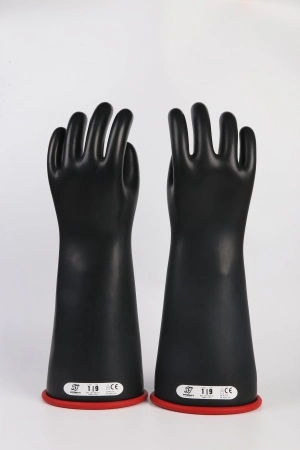
|
Parameter |
Specification |
|
Voltage Rating |
7,500V AC / 11,250V DC (Maximum Use) |
|
Proof Test Voltage |
10,000V AC / 40,000V DC |
|
Material Type |
Type I (Natural Rubber) / Type II (EPDM Synthetic) |
|
Thickness Range |
1.02mm - 1.52mm |
|
Tensile Strength |
>17.2 MPa |
|
Standards Compliance |
ASTM D120, IEC 60903 |
|
Temperature Resistance |
Category A, H, Z rated |
|
Label Color |
White (Class 1 Standard) |
Understanding Class 1 Insulating Gloves and Their Application in Substations
Electrical safety in substations requires precision, and picking out the right safety gear is a choice that has a direct effect on the lives of workers. Class 1 Insulating Gloves are made to protect electrical workers from getting shocked up to 7,500 volts AC. This means they can be used in certain utility tasks where voltage levels stay below this level. We've spent more than 65 years perfecting this important safety barrier at PPE MAX. Our gloves meet ASTM D120, IEC 60903, and OSHA compliance standards, which are recognised in 134 countries.
What Makes Class 1 Gloves Suitable for Substation Work?
Substations have a range of power conditions. Transmission substations can go as high as 765 kV, while distribution substations usually work between 4 kV and 35 kV. It is best to wear Class 1 Insulating Gloves when working on equipment at the distribution level, control panels, secondary circuits, and relay tests where the voltage is less than 7,500V AC. The Class 1 Insulating Gloves are made of natural rubber latex and range in thickness from 0.7mm to 1.5mm. This gives them the right amount of dielectric strength and flexibility for jobs like tightening terminals or working disconnect switches.
As part of our production process, we test each Class 1 Insulating Glove thoroughly at 10,000V AC to make sure it can handle voltage surges that are higher than its stated capacity. This safety margin is very important in substations where voltage levels can temporarily rise due to switching operations or lightning strikes. Because the Class 1 Insulating Gloves don't break down easily in ozone and UV light, they are especially useful in outdoor substations where bad weather is always present.
Voltage Compatibility and Safety Benefits
Knowing the voltage class ratings keeps you from making terrible mistakes. A Class 1 Insulating Glove protects up to its highest use voltage, but it should never be used on circuits that go over this limit. Voltage identification is harder in substations because there are many bus systems, transformers, and switches that work at different voltages. Before putting on Class 1 Insulating Gloves, substation workers have to check the voltage in the circuit using technical sketches, equipment nameplates, and voltage detectors.
The benefits to safety go beyond simple insulation. To protect against arc flash, Class 1 Insulating Gloves should be worn with arc-rated clothes and face shields as part of a stacked PPE system. The Class 1 Insulating Gloves also protect against contact burns, capacitive discharge, and the buildup of static electricity that are common in substations. At PPE MAX, we use these Class 1 Insulating Gloves with leather covers that meet ASTM F696 standards to protect against damage from sharp edges on electrical cabinets and transformer bushings. This all-in-one method solves the problem of both the electrical and mechanical dangers that come with working in a substation.


How to Properly Test and Maintain Class 1 Insulating Gloves for Substation Environments
Electrical gloves lose their protective quality through micro-perforations, ozone cracking, and dielectric breakdown, all of which can't be seen. Too many close calls have happened because gloves weren't tested or weren't kept up properly. That's why we support strict testing standards that go above and beyond what the law requires.
Mandatory Dielectric Testing Protocols
According to ASTM D120, electrical tests must be done on rubber-insulated gloves every six months after they are put to use. This time frame is cut down to every three months in harsh substation environments with high temperatures, chemical exposure, or heavy use. For Class 1 Insulating Gloves, the proof test voltage of 10,000V AC is applied while the Class 1 Insulating Gloves are submerged in water. If the leakage current goes over certain limits, it means that the insulation is failing, which means that the Class 1 Insulating Gloves must be taken off right away.
We suggest working with approved testing labs that can provide official paperwork. This will make sure that your PPE collection has a clear chain of custody that can be checked by anyone. Digital tracking systems now make it possible to check Class 1 Insulating Glove test dates in real time, which lowers the chance that worn-out gloves will get into the field. At our factory in Xi'an, we use automated dielectric testing equipment to check all of our production units before they are shipped. This makes sure that the quality of the Class 1 Insulating Gloves is perfect from the moment they get to your purchasing department.
Visual Inspection and Storage Best Practices
In the time between official electrical tests, daily eye checks are the best way to keep the Class 1 Insulating Gloves from breaking. Before each use, technicians should check Class 1 Insulating Gloves for cuts, punctures, foreign items stuck inside, and worn-down surfaces. The "air inflation test" is still the best way to check something in the field. Simply blow up the Class 1 Insulating Glove, roll the cuff to catch air inside, and look for air leaks that mean the integrity has been compromised.
Class 1 Insulating Gloves last a lot longer if they are stored properly. Class 1 Insulating Gloves should be kept in secure fabric bags out of direct sunlight, heat sources that are hotter than 120°F, and machines that make ozone, such as electric motors. When storing Class 1 Insulating Gloves, never fold or crease them because the stress builds up at the fold lines and wears down the material faster. Keep rubber Class 1 Insulating Gloves away from leather protection when storing them for a long time to keep the rubber from stretching. Because of their ergonomic design and high sensitivity to touch, these methods keep our Class 1 Insulating Gloves the best choice for precise work in substations that need to handle small parts and control switches.

If you're evaluating personal protective equipment suppliers and require batch-specific testing documents before placing an order, PPE MAX is able to provide official Certificates of Analysis, professional laboratory test reports, and product samples for your verification. Feel free to contact our team at marketing@ppemax.com to discuss your sourcing needs and obtain complete documentation for your quality assessment and procurement approval.
Comparing Class 1 Insulating Gloves with Other Protective Gloves Used in Substations
Different voltage levels are needed for different substation operations, so choosing the right Class 1 Insulating Gloves is a smart choice that affects both safety and operating efficiency. By knowing what makes Class 1 Insulating Gloves better than other options in terms of performance, procurement managers can make the best use of their PPE inventory while keeping costs low.
Voltage Rating Differences and Implications
Classification of electrical gloves goes from Class 00 (500V AC maximum use) to Class 4 (36,000V AC maximum use). Class 1 Insulating Gloves are in the middle. They are good for work at the distribution level in substations, but not good enough for work at the transmission level. Class 0 gloves, which can handle 1,000V AC, are smaller and allow for more flexibility, but they don't offer enough protection for most substation tasks. On the other hand, Class 2 gloves rated for 17,000V AC can be used to maintain medium-voltage switchgear and transformers, but they are less flexible because the material is thicker.
The proof test voltage adds another layer of safety—Class 1 Insulating Gloves can handle 10,000V during testing, even though their maximum use rating is only 7,500V. This 33% safety range covers differences in how the product was made and wear and tear while it is being used. When tested at 20,000V, Class 2 gloves have the same margin sizes. But the voltage safety cushion should never be thought of as working headroom. No matter how well the proof test works, the maximum use voltage is still the highest level that can be used safely.
Material Characteristics and Innovation
Type I natural rubber latex, which is used in traditional Class 1 Insulating Gloves because it is very flexible and elastic, is used. This material works great in the wide range of temperatures that are common in substations. It stays flexible in the winter and doesn't break down in the summer. Type II synthetic rubber (EPDM) is better at resisting ozone and UV light, which makes it last longer outside by preventing surface cracks from being exposed to the elements. Many substation workers now choose Type II Class 1 Insulating Gloves for long-term setups outside, while keeping Type I Class 1 Insulating Gloves for work with switchgear inside that needs the most flexibility.
New types of materials include synthetic mixes that contain nitrile substances that make them more resistant to chemicals and holes without making the Class 1 Insulating Gloves much thicker. These advanced formulas solve the ongoing problem of finding the right balance between protection and comfort for long periods of time. At PPE MAX, our research team is always looking into new materials, but we never sacrifice stability that has been proven to work for small performance gains. Our Class 1 Insulating Gloves are made with natural rubber, which has been used for a long time, and are made with modern precision. They provide consistent safety for the millions of substation jobs that are done around the world every year.
Selecting and Procuring Class 1 Insulating Gloves for Substation Operations
When buying PPE strategically, it's not enough to just compare prices; you need to look at things like quality standards, the stability of the supply chain, and the total cost of ownership. Low-quality Class 1 Insulating Gloves put companies at risk of more liability than their saves on the purchase price. On the other hand, high-quality suppliers offer a compliance guarantee that protects both workers and the company's image.
Certification and Compliance Criteria
Check the full ASTM D120 and IEC 60903 certification paperwork to start the purchase evaluations. Manufacturers that are trustworthy give thorough test reports that include measurements of proof voltage performance, leakage current, and material composition. Colour-coded cuffs—white for Class 1 Insulating Gloves—make it easy to see the voltage rating right away. This keeps people from mixing up Class 1 Insulating Gloves, which could be fatal on multi-voltage substation sites. Ask for a CE mark for operations in Europe and make sure that US sites are in line with OSHA rules.
Industry certificates, audits of manufacturing facilities, and references from companies of a similar size all show that a supplier is trustworthy. We invite purchasing teams to visit our cutting-edge production facility in Xi'an. Our commitment to quality is clear in the way we make our Class 1 Insulating Gloves. By taking part in big industry events like the A+A Safety Exhibition in Germany, we can compare our Class 1 Insulating Gloves to those of our competitors in a fair way. This builds trust through direct comparison instead of marketing claims.
Procurement Models and Value Assessment
Large organisations that manage big substation networks can save a lot of money by buying in bulk. Volume commitments make it possible for customised packaging, dedicated inventory reserves, and better pricing structures, which make it easier to plan your budget. But bulk sales need careful demand forecasts because Class 1 Insulating Gloves have limited shelf lives (12 months before the first test), which makes having too much inventory a problem.
Just-in-time procurement models work best for businesses that have stable, predictable trends of usage and good ties with their suppliers. This method keeps inventory of Class 1 Insulating Gloves to a minimum so that operating capital isn't wasted and products stay fresh for as long as possible. Our global supply chain reaches 134 countries and supports both types. We also offer flexible order amounts, ranging from small test purchases to full container loads. Our low prices don't come from cutting corners on quality; they come from 65 years of continuously improving production methods and making them more efficient. The technical support and training services that come with bulk orders are very valuable because they help your substation workers do better at field inspections and follow the right usage protocols for Class 1 Insulating Gloves.
Case Studies and Industry Insights: Real-world Use of Class 1 Insulating Gloves in Substations
There is proof from real-life situations that properly chosen and kept Class 1 Insulating Gloves keep workers safe and help them do their jobs more efficiently. These examples from real life show important success factors and new best practices that are affecting modern safety programs in substations.
Successful Risk Mitigation in Distribution Substations
A big utility company in the Midwest with more than 200 distribution substations made it so that all workers on 12.47 kV equipment and distribution transformers had to wear Class 1 Insulating Gloves. Their full PPE program included our Class 1 Insulating Gloves, as well as tests every six months, daily visual checks, and practical skills training that focused on the right way to put on safety gear. Over five years, the utility had no electrical contact injuries, even though thousands of repair jobs were done each year while the power was on. Post-implementation polls showed that technicians' trust rose a lot when they used properly rated, well-kept Class 1 Insulating Gloves, which also decreased operational stress and increased task focus.
An international mining company put Class 1 Insulating Gloves on everyone who worked in their North American processing plants. These plants have substations that power 4,160V motors and electrical distribution systems. At first, people didn't want to follow strict Class 1 Insulating Glove rules, but after a near-miss where a small hole was seen, saving a possible electrocution, they became less resistant. The event made it clear how important it is to do pre-use checks and use leather protectors correctly. The mining company now keeps extra pairs of Class 1 Insulating Gloves at each site so that backup sets are always available during testing cycles. This keeps operations running smoothly and in line with regulations.
Emerging Trends and Future Innovations
Digital certification systems now keep track of each Class 1 Insulating Glove's test history by using RFID tags or QR codes that connect to databases in the cloud. These systems automatically mark Class 1 Insulating Gloves as expired, send out reminders to be tested again, and make compliance records that meet the needs of regulatory checks. Early users say that the systems make administration much more efficient and improve compliance security compared to manual logbook systems that are prone to transcription mistakes and record gaps.
New developments in material science could lead to Class 1 Insulating Gloves that are lighter while still having the same dielectric performance. This could be done by improving insulation at the molecular level. Nanotechnology could one day allow real-time integrity tracking by using built-in sensors to find small damage in Class 1 Insulating Gloves before it leads to a catastrophic failure. While these new ideas are still being worked on, tried-and-true technologies should be put into use first. We promise to improve tried-and-true safety methods before introducing new ones. This way, you can be sure that your employees will be safe using tried-and-true Class 1 Insulating Gloves instead of new ones.
Conclusion
When working in a substation with voltages up to 7,500V AC, Class 1 Insulating Gloves are an important safety tool that must be carefully chosen, tried thoroughly, and kept in good condition. Some important things to think about when making a choice are getting the voltage right, making sure the Class 1 Insulating Gloves meet all ASTM D120 and IEC 60903 standards, and including them in full PPE plans that cover both electrical and mechanical risks. Buying in bulk from well-known companies ensures that the approval is real and that the supply chain is reliable, which is important for long-term safety performance. Case studies from real life show that disciplined Class 1 Insulating Glove management programs keep workers from getting electrical injuries and help operations run more smoothly in tough substations where worker safety must not be compromised.
FAQ
1. Can Class 1 Gloves Be Used for All Substation Voltage Levels?
No, Class 1 Insulating Gloves can only be used with voltages up to 7,500V AC. Transmission substations that work at voltages of 69 kV or higher need Class 1 Insulating Gloves that are either Class 2, Class 3, or Class 4. Before choosing a glove class, you should always check the circuit voltage.
2. How Often Must Gloves Be Tested in High-Use Substation Environments?
Electrical tests must be done every six months according to standard testing times. In harsh settings or with a lot of use, tests on Class 1 Insulating Gloves may need to be done every three months to make sure there are enough safety margins. Leather protectors need to be looked at every day, but they don't need to be tested electrically.
3. What Are the Consequences of Using Expired or Untested Gloves?
Using Class 1 Insulating Gloves after their test date is over is against OSHA rules and puts you at great risk of being sued. If Class 1 Insulating Gloves aren't checked, the insulation could fail without being noticed, causing an electrical shock, burns, or death. The routine work of making sure that testing rules are followed is very small compared to the harm that could happen.
4. Should I Choose Type I or Type II Rubber for Outdoor Substations?
Type II synthetic rubber is better at resisting ozone and UV light for long-term outdoor use, making Class 1 Insulating Gloves last longer in harsh circumstances. Type I natural rubber is the most flexible and can be used inside or outside on occasion. Talk to your supplier about how to match the properties of the Class 1 Insulating Gloves material to the needs of your operation.
Partner with PPE MAX for Certified Class 1 Insulating Gloves Solutions
To keep your substation workers safe, you need more than just Class 1 Insulating Gloves. You need a reliable Class 1 Insulating Gloves maker with experience working around the world. PPE MAX has been making certified electrical safety equipment for 65 years and sells it to utility companies, factories, and government offices in 134 countries. Before being sent out, we make sure that every Class 1 Insulating Glove meets the standards set by ASTM D120, IEC 60903, and OSHA with our thorough quality control system.
We know how hard it is for big operations to meet strict safety standards when they have to buy Class 1 Insulating Gloves. Our team creates custom solutions for buying in bulk at prices that are competitive and show how efficiently the Class 1 Insulating Gloves are made without sacrificing quality. As part of our technical support services, we offer hands-on training, the creation of testing protocols, and the ability to make changes that fit your specific business needs. Contact our knowledgeable staff at marketing@ppemax.com to talk about how we can improve your substation safety program with approved Class 1 Insulating Gloves that have been used for decades and proven to work. Your employees deserve to be safe on the job, so work with a Class 1 Insulating Gloves provider that will do everything they can to make sure they get home every day safely.
References
1. American Society for Testing and Materials. (2021). ASTM D120-20 Standard Specification for Rubber Insulating Gloves. ASTM International, West Conshohocken, PA.
2. International Electrotechnical Commission. (2020). IEC 60903: Live Working - Gloves of Insulating Material. IEC Standards Publication, Geneva, Switzerland.
3. Occupational Safety and Health Administration. (2019). OSHA 29 CFR 1910.137: Electrical Protective Equipment. United States Department of Labor, Washington, DC.
4. National Fire Protection Association. (2021). NFPA 70E: Standard for Electrical Safety in the Workplace. NFPA Publications, Quincy, MA.
5. Institute of Electrical and Electronics Engineers. (2018). IEEE Guide for In-Service Maintenance and Electrical Testing of Live-Line Tools. IEEE Standards Association, Piscataway, NJ.
6. Cadick, J., Capelli-Schellpfeffer, M., & Neitzel, D. (2021). Electrical Safety Handbook, 4th Edition. McGraw-Hill Education, New York, NY.
Learn about our latest products and discounts through SMS or email