- English
- French
- German
- Portuguese
- Spanish
- Russian
- Japanese
- Korean
- Arabic
- Greek
- German
- Turkish
- Italian
- Danish
- Romanian
- Indonesian
- Czech
- Afrikaans
- Swedish
- Polish
- Basque
- Catalan
- Esperanto
- Hindi
- Lao
- Albanian
- Amharic
- Armenian
- Azerbaijani
- Belarusian
- Bengali
- Bosnian
- Bulgarian
- Cebuano
- Chichewa
- Corsican
- Croatian
- Dutch
- Estonian
- Filipino
- Finnish
- Frisian
- Galician
- Georgian
- Gujarati
- Haitian
- Hausa
- Hawaiian
- Hebrew
- Hmong
- Hungarian
- Icelandic
- Igbo
- Javanese
- Kannada
- Kazakh
- Khmer
- Kurdish
- Kyrgyz
- Latin
- Latvian
- Lithuanian
- Luxembou..
- Macedonian
- Malagasy
- Malay
- Malayalam
- Maltese
- Maori
- Marathi
- Mongolian
- Burmese
- Nepali
- Norwegian
- Pashto
- Persian
- Punjabi
- Serbian
- Sesotho
- Sinhala
- Slovak
- Slovenian
- Somali
- Samoan
- Scots Gaelic
- Shona
- Sindhi
- Sundanese
- Swahili
- Tajik
- Tamil
- Telugu
- Thai
- Ukrainian
- Urdu
- Uzbek
- Vietnamese
- Welsh
- Xhosa
- Yiddish
- Yoruba
- Zulu
How Reliable Are Dielectric Gloves in High-Voltage Applications?
Dielectric gloves are the most important thing that electrical workers can wear to protect themselves from possibly deadly electrical dangers. These special rubber separators work very well in high-voltage settings as long as they are chosen correctly, kept in good shape, and used according to strict safety rules. Their usefulness depends on how well they are matched by classification (Class scores from 00 to 4 relate to maximum use voltages from 500V to 36,000V) and how well they are tested according to ASTM D120 and IEC 60903 standards. To find out if these gloves will always keep workers from getting electrocuted during utility maintenance, substation operations, and industrial electrical work, you need to know what materials they are made of, how to maintain them, and what applications they are not suitable for.
Understanding Dielectric Gloves and Their Reliability in High-Voltage Environments
The Fundamental Role of Electrical Insulation
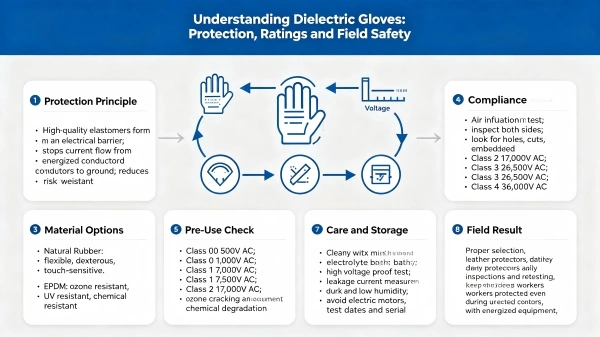
When working with live electrical systems, you need tools that put up a barrier between human skin and electrified wires that doesn't let any electricity pass through it. Electrical shielding gloves use high-quality elastomer materials that are designed to stop current flow even when voltage stress is very high. The insulation concept is based on molecular patterns in natural rubber or man-made materials like EPDM that stop electrons from moving. This stops electrical paths from going through a worker's body to ground. This safety measure is especially important when working on overhead lines, transformers, or switches, because touching live parts by mistake can be very dangerous and even kill you.
Material Composition and Performance Characteristics
The rubber materials that were used to make these shields have a direct effect on how long they last and how well they work. Natural rubber versions are more flexible and sensitive to touch, so techs can work with small parts and do complicated wiring jobs without losing their dexterity. This material works best in places with low levels of ozone and average temperatures. Synthetic options, especially EPDM blends, are better at resisting damage from ozone, UV light, and chemicals. This makes them last much longer in outdoor utility settings and industrial settings where hydraulic fluids or petroleum-based contaminants are present.
The current design of electrical safety gloves includes bent hand patterns that keep muscles from getting tired after long periods of use. Color-coded layers on the inside and outside make it easy to quickly check for holes or contamination, and different wall thicknesses across Classes balance the amount of protection with the need for hand movement. These technical concerns have a direct effect on how well workers accept and consistently use the product, which are two things that determine safety results in the real world.
Voltage Classification Systems and Standards Compliance
Understanding Class ratings is important for procurement workers who work in a variety of electricity settings. Class 00 gloves are good for low-voltage control circuits and car battery systems because they protect against up to 500V AC. Class 0 adds safety up to 1,000V AC, which covers most electrical car repairs and light industrial tasks. Linemen who work on distribution lines wear Class 1 gloves, which can handle 7,500V, and Class 2 gloves, which can handle 17,000V. For high-voltage cable work, Class 3 and Class 4 cover up to 26,500V and 36,000V, respectively.
Proof test voltages are much higher than the highest use values. For example, Class 2 gloves are tested at 20,000V AC, which provides a lot of safety margins. Following the rules set by OSHA 29 CFR 1910.137, ASTM D120, and EN 60903 ensures that the quality of the products is always checked, as well as their performance. Specific test methods, acceptance standards, and time periods for retesting are required by these rules. They are the basis of reliable electrical security systems.
Evaluating the Performance and Safety of Dielectric Gloves in Practice
Rigorous Inspection Protocols Before and After Use
To keep the safe quality of dielectric gloves, they need to be inspected regularly so that any possible problems are found before they happen. The daily air test is still the most useful way to check the field. Workers roll up the cuff of the glove to catch air inside. They then put pressure on the area while hearing and feeling for air escaping, which could mean there are cuts or punctures. If you look at it closely enough in well-lit conditions, you can see ozone checking, which looks like small surface cracks that are separated by thin lines. You can also see foreign objects buried in the material, chemical breakdown, or damage from sharp edges.
In addition to daily checks, electrical testing every six months gives a more accurate picture of how well the insulation is working. To do these tests, gloves are put in an electrolyte bath with water or an electrical solution in them while a high-voltage AC is applied. By measuring the leakage current, you can tell if the rubber keeps up its insulating strength. Any glove that has a leaking current value higher than the maximum allowed value must be taken out of service right away. This methodical technique, which is recorded with test dates and serial numbers, makes sure that big deployments of workers can be tracked and held accountable.
Proper Maintenance Extends Service Life and Safety Margins
Rubber materials break down faster when they are exposed to environmental pollution, stored incorrectly, or handled roughly. Cleaning instructions call for light soap solutions and water temperatures that don't go above 120°F, because that's what breaks down the molecular chains of elastomers. Thoroughly drying something before putting it away stops it from breaking down or growing bacteria when it gets wet. Cool temps, low humidity, and shade should be kept in storage areas to keep ozone and UV exposure to a minimum.
When you have to do normal work, you have to wear leather guard gloves over rubber insulation to keep your hands from getting damaged. Without these upper layers, the thin rubber barrier would be damaged by wear and tear, puncture forces, and sharp edge contact. If workers don't cover their insulated gloves, they could do damage that can't be seen but could lead to failure when they are exposed to electricity again.
Real-World Performance Under Extreme Conditions
Case studies from utility companies show how well-kept electrical safety gloves kept workers safe when they came into touch with live 15kV distribution lines. In one recorded case, a worker working on a generator accidentally touched an energized bushing while wearing Class 2 gloves with leather guards. The gloves stopped the flow of current, and later electrical tests showed that they still did their job as insulators even after being under a lot of stress. This event made it clear how important it is to choose the right Class and how safe leather overs can be.
In a different case involving substation repair, workers were wearing gloves to keep them from getting hurt when a circuit breaker suddenly turned on when they thought it was off. Existing verification processes and the right choice of gloves created a safety cushion that stopped a possible death. Real-life tests show that insulating gloves work well in a wide range of unpredictable field conditions as long as workers follow established rules like choosing the right voltage class, wearing required leather protectors, doing regular inspections, and following electrical safety procedures.
Making the Right Choice: Dielectric Gloves Buying Guide for B2B Clients
Critical Selection Criteria for Procurement Professionals
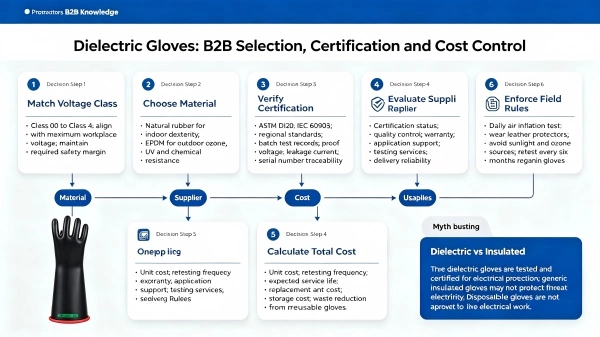
To choose the right electrical insulation gloves, you need to look at a lot of scientific and practical factors. When choosing a voltage grade, workers must take into account the highest voltage they may face, along with necessary safety margins. The type of material determines the best setting for it. For example, natural rubber is best for controlled indoor environments, while EPDM is best for utility work outside where ozone can get to it. It's important to find a balance between safety gaps and job requirements because wall thickness affects both level of protection and dexterity.
Flexibility has a direct effect on how well workers accept and use it. Because stiff gloves make hands less sensitive to touch and make them tired, workers take them off during jobs, which takes away all protection. Comfort features, like shaped forms and the right size, make it easier to use properly. Some things that affect durability are resistance to ozone checking, tensile strength retention, and puncture resistance. These all affect how often something needs to be replaced and how much it costs to own.
Comparing Leading Manufacturers and Certification Requirements
Global producers of dielectric gloves set themselves apart by the types of materials they use, how strictly they control quality, and how many certifications they have. Well-known brands keep their licenses up to date with several international standards, such as ASTM, IEC, and regional versions. This makes it easier to use multinational purchasing strategies. Warranty terms and expert support after the sale vary a lot. For example, the best sellers offer replacement guarantees for production flaws and help with choosing the right product for each application.
Transparency in testing paperwork is what sets quality-focused makers apart from commodity suppliers. Reliable manufacturers give thorough test records with proof of test voltages, leakage current values, and physical property measures for every batch of their products. This paperwork helps people who work in buying make sure that rules are followed and keeps the audit trails that safety management systems need.
Optimizing Bulk Procurement and Supplier Relationships
When making big purchases, you have to weigh the unit cost against the total lifetime costs. Negotiations about volume price should take into account how often the units need to be tested, how long they are expected to last in real-world conditions of use, and how much it costs to repair units that break. By teaming up with dielectric glove suppliers who know the problems your business faces, you can get access to scientific knowledge that goes beyond just getting the product.
Shipping factors include the right packing to keep the goods safe during transport, keeping the right temperature during storage, and knowing how long something can last. The timing of purchases should match the required testing plans. This way, new goods can go into service right away, and suppliers have enough time to make things and check the quality.
Addressing Common Questions and Misconceptions About Dielectric Gloves
Distinguishing Between Dielectric and Insulated Gloves
Using the wrong words for "dielectric," "insulated," and "electrical" gloves leads to mistakes in purchasing. True electrical shielding gloves that meet ASTM D120 or IEC 60903 standards have been tried and approved for protecting against electricity up to certain voltage levels. Generic "insulated" gloves might keep your hands warm or dry in bad weather without being electrically tested or certified. Electrical insulated gloves are required by law for work with live electricity, so this difference is very important for following the rules and keeping workers safe.
Reusable Versus Disposable Options
In the workplace, throwaway nitrile or rubber gloves can be useful, but they don't protect against electricity and should never be used instead of approved electrical insulating gloves. Even though they cost more to buy and test at first, reusable rubber insulators provide safe protection for hundreds of uses as long as they are kept in good shape. The requirement for electrical testing every six months is the same no matter how often it is used. This creates ongoing operational costs that buying plans must account for. When it comes to the environment, reusable choices are better because they produce less waste than throwaway options.
Common Mistakes That Compromise Safety
A common mistake is misinterpreting voltage ratings. For example, mixing up the proof test voltage with the highest use voltage results in security that isn't good enough. Due to lack of time or comfort, workers sometimes skip daily air tests, which means that worn-out gloves stay in use. Rubber insulators can be damaged mechanically if leather covers are not worn, and they break down faster if they are stored in direct sunlight or near equipment that makes ozone. Specifications for purchases that focus on the lowest unit cost without checking for certification, testing help, or expert advice often lead to poor security and higher long-term costs.
Future Outlook and Innovations in Dielectric Gloves for High-Voltage Applications
Emerging Material Technologies and Performance Enhancements
The goal of research into dielectric gloves composite elastomer mixes is to find ways to combine the flexibility of natural rubber with the durability of manufactured materials. Nanotechnology uses look into adding conductive particles in specific amounts that keep shielding in place while letting static charges that bother workers escape. These new materials should last longer, work better in a wider range of temperatures, and be less likely to break down chemically, all without affecting the sensitivity needed for precise electrical work.
Surface treatments that prevent ozone checking and UV damage are used to make things last longer. This is especially helpful for utility uses where things are stored outside in direct sunlight and age faster. Improvements to the manufacturing process, such as automatic inspection systems that use machine vision and AI algorithms, can find flaws in the smallest details that human testers can't see. This makes the quality of each production batch more consistent.
Smart Glove Technologies and Safety Monitoring
Inserting thin-film sensors into the design of gloves makes it possible to track safety in real time. Prototype systems can sense when an electrical field is present and warn workers of potentially dangerous situations before they come into contact with them. Temperature sensors find spikes that mean electrical arcing or a component failure. Wear signs keep track of the total amount of stress and let you know when replacement is needed, even if the part doesn't look worn.
When making these sensor-enabled designs, engineers have to weigh the benefits of new technology against real issues like power supply, data transfer, the durability of electrical parts in harsh settings, and the cost of mass production. If commercialization goes well, it will probably start with high-risk uses where more investment supports better safety. As costs go down through mass production, it will slowly spread to more markets.
Regulatory Evolution and Strategic Procurement Recommendations
International standards groups are always changing the rules based on new information they find out about incidents, studies, and feedback from the business. Changes that are coming to IEC 60903 and ASTM D120 could include stricter testing methods, new Class categories for voltage ranges that are becoming common in green energy systems, or different inspection schedules that depend on how often they are used instead of set times. Purchasing managers should stay up to date on changes to regulations to make sure that their inventory stays in line with the rules and that goods they have on hand don't become obsolete.
Strategic suggestions stress the importance of integrating the whole safety program rather than just buying one product at a time. Putting money into thorough training makes sure that workers know the right way to choose, check, and use things. By building relationships with informed suppliers, you can get professional help with investigating incidents, choosing products for new uses, and getting advice on how to meet changing regulatory requirements. When buying things, putting quality over low cost by ensuring certification, testing support, and proven performance is the best way to get long-term value. This is because it lowers the number of accidents, cuts down on replacements, and boosts worker trust in safety gear.
Conclusion
In high-voltage situations, the dependability of electrical insulating gloves depends on three things that work together: choosing the right voltage class for the risk of exposure at the start, keeping the gloves in good shape with regular checks and electrical tests, and always following the instructions for using them, which include wearing leather protectors and following electrical safety rules. Modern rubber insulating technology provides excellent protection in utility repair, industrial electrical work, and other specific situations when companies use complete plans that cover these factors. Instead of just focusing on the initial buy price, procurement strategies that balance technical requirements, certification verification, and lifetime costs create long-lasting safety programs that keep workers safe and improve operating efficiency. The development of materials technology and new smart tracking tools shows that things will keep getting better, but choosing the right voltage and doing regular repair will always be the most important parts of safe electrical protection.
FAQ
How often do electrical insulating gloves require retesting?
Electrical testing of gloves in use is required by OSHA and ASTM guidelines every six months. There is no difference in how often this time applies—gloves that are stored and not used still need to be tested every six months. If gloves show signs of damage, are exposed to strong chemicals, or are thought to be under electrical stress, they need to be tested more often. Companies that keep a lot of gloves in stock usually use alternate testing plans to make sure that the gloves are always available while still following the rules.
Can you repair damaged electrical safety gloves?
Without a doubt, not. Any glove that has cuts, punctures, ozone checking, items stuck in it, chemical breakdown, or other damage must be taken out of service and thrown away right away to avoid accidental use. Once it's broken, the thin rubber barrier doesn't protect anything, and efforts to fix it can't make it electrically insulating again or pass later tests. This "zero tolerance" policy for broken equipment stops accidents that could be fatal when security isn't strong enough.
What determines the service life of insulating gloves?
Longevity is affected by many things, such as the type of material used, how it is stored, how often it is used, its exposure to ozone and UV radiation, its contact with chemicals or petroleum products, and the mechanical stress it faces while being used. Gloves that are kept in good shape and used in controlled settings may last for several years. Gloves that are worn outside in harsh circumstances or that are used a lot may need to be replaced within months. Regular electrical testing gives concrete proof of performance, no matter how someone looks or how old they are.
Partner with a Trusted Electrical Safety Gloves Manufacturer for Your High-Voltage Protection Needs
Companies that need reliable dielectric gloves that meet the strictest safety standards can turn to PPE MAX, which has been making high-quality products for 68 years. As the biggest PPE maker in Northwest China, we know that procurement experts need more than just goods. They need partners who can provide consistent quality, technical knowledge, and quick support in 134 countries. Our production of electrical safety gloves strictly follows the rules set by ASTM D120, IEC 60903, and regional licensing bodies. We back this up with detailed testing records and systems that allow us to track each batch.
Whether you need standard Class configurations for regular maintenance tasks or custom specs for specific industrial uses, our OEM manufacturing skills can help you find solutions that meet your needs and protect your workers. Our technical team can help you choose the right voltage class, provide support for user training, and create maintenance protocols that increase safety and reduce the number of replacement rounds needed. Volume buying programs save you money without lowering the quality standards that your safety programs need.
Email our electrical safety experts at marketing@ppemax.com to talk about your needs for high-voltage security. We give you full information about our products, including certification paperwork, sample evaluation programs, and bulk price structures that help you make smart buying choices. Your workers deserve to be safe, and you should back their safety with decades of proven dependability and factory know-how.
References
1. American Society for Testing and Materials. (2022). ASTM D120-20: Standard Specification for Rubber Insulating Gloves. West Conshohocken, PA: ASTM International.
2. International Electrotechnical Commission. (2023). IEC 60903:2023 – Live working – Electrical insulating gloves. Geneva, Switzerland: IEC Publications.
3. Occupational Safety and Health Administration. (2021). 29 CFR 1910.137 – Electrical Protective Equipment. Washington, DC: U.S. Department of Labor.
4. National Fire Protection Association. (2024). NFPA 70E: Standard for Electrical Safety in the Workplace. Quincy, MA: NFPA Publications.
5. Cadick Corporation. (2023). Electrical Safety Handbook (4th Edition). New York: McGraw-Hill Professional.
6. Institute of Electrical and Electronics Engineers. (2022). IEEE Guide for Testing and Maintenance of Electrical Insulating Rubber Equipment. Piscataway, NJ: IEEE Standards Association.
Learn about our latest products and discounts through SMS or email