- English
- French
- German
- Portuguese
- Spanish
- Russian
- Japanese
- Korean
- Arabic
- Greek
- German
- Turkish
- Italian
- Danish
- Romanian
- Indonesian
- Czech
- Afrikaans
- Swedish
- Polish
- Basque
- Catalan
- Esperanto
- Hindi
- Lao
- Albanian
- Amharic
- Armenian
- Azerbaijani
- Belarusian
- Bengali
- Bosnian
- Bulgarian
- Cebuano
- Chichewa
- Corsican
- Croatian
- Dutch
- Estonian
- Filipino
- Finnish
- Frisian
- Galician
- Georgian
- Gujarati
- Haitian
- Hausa
- Hawaiian
- Hebrew
- Hmong
- Hungarian
- Icelandic
- Igbo
- Javanese
- Kannada
- Kazakh
- Khmer
- Kurdish
- Kyrgyz
- Latin
- Latvian
- Lithuanian
- Luxembou..
- Macedonian
- Malagasy
- Malay
- Malayalam
- Maltese
- Maori
- Marathi
- Mongolian
- Burmese
- Nepali
- Norwegian
- Pashto
- Persian
- Punjabi
- Serbian
- Sesotho
- Sinhala
- Slovak
- Slovenian
- Somali
- Samoan
- Scots Gaelic
- Shona
- Sindhi
- Sundanese
- Swahili
- Tajik
- Tamil
- Telugu
- Thai
- Ukrainian
- Urdu
- Uzbek
- Vietnamese
- Welsh
- Xhosa
- Yiddish
- Yoruba
- Zulu
Full Mask Respirator Maintenance: What Matters Most?
Founded in 1956, PPEMAX stands as a premier global manufacturer and supplier of full-range personal protective equipment. All our products comply with internationally recognized standards including IEC, ASTM, CE, UKCA, NIOSH and ISO9001. Equipped with a 2,000-square-meter modern production plant, we boast over 25 years of mature OEM & ODM capabilities to deliver one-stop customized solutions covering R&D design through worldwide logistics. Our safety gear is distributed across 134 countries globally. Upholding our core tenet “Safety First, Quality Priority”, we serve as a dependable long-term PPE partner for industrial enterprises around the world.
When it comes to maintaining a full-face respirator, three elements matter most: consistent cleaning protocols, timelyfull-face respirator maintenance, and regular fit testing. These components form the foundation of Full Mask Respirator protection integrity in industrial environments. Without diligent upkeep of valves, seals, and filtration cartridges, even the highest-rated equipment risks compromising worker safety. Maintenance extends beyond compliance—it directly influences worker confidence, productivity, and the total cost of ownership for respiratory protection programs across chemical, pharmaceutical, and manufacturing sectors.
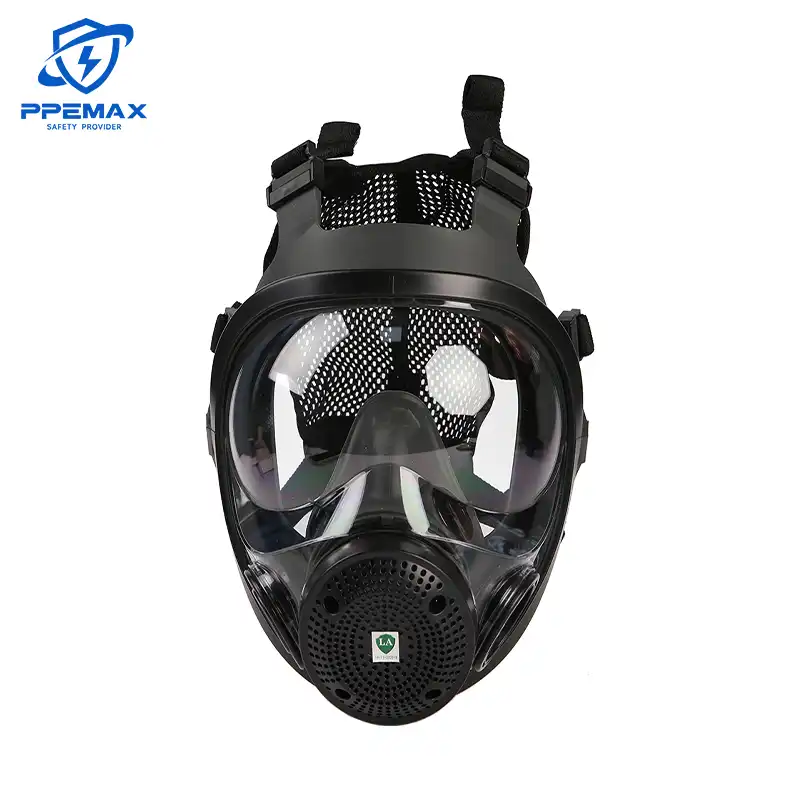
| Parameter | Specification |
|---|---|
| Product Type | Full Face Respirator Gas Mask |
| Mask Body Material | Premium Liquid Silicone (Skin-friendly & Comfort Fit) |
| Visor Material | High-transmittance Polycarbonate (Anti-impact & Anti-scratch) |
| Connection Interface | Standard 40mm NATO Thread (RD40) |
| Head Harness | 5-Point Adjustable System (Even Weight Distribution) |
| Field of Vision | Panoramic View (≥ 85%) |
| Inhalation Resistance | ≤ 30 Pa |
| Exhalation Resistance | ≤ 98 Pa |
| Total Inward Leakage | ≤ 0.05% |
| Anti-Fogging System | Integrated Independent Inner Nose Cup |
| Compatible Filters | All Standard 40mm Chemical/Particle/CBRN Filters |
| Product Weight | Approx. 450g - 500g (Without Canister) |
| Safety Compliance | EN 136 / GB2890-2009 Standards |
| Applications | Industrial Painting, Chemical Handling, Construction, Welding, Agriculture |
Understanding Full Mask Respirator MaintenanceWhy Maintenance Defines Protection Levels
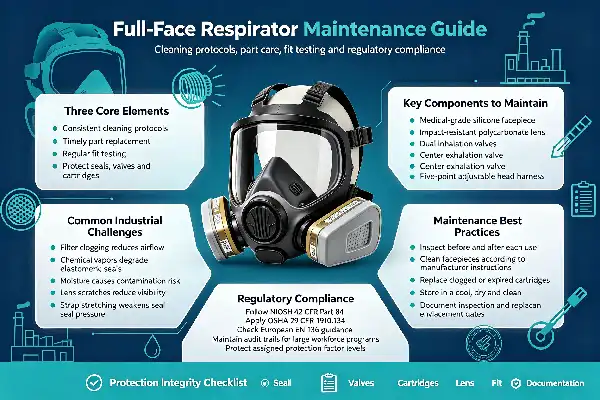
When respiratory protection equipment is used in tough conditions, the integrity of the seals determines whether harmful substances get through the defenses. Multiple interconnected parts need to be maintained in a planned way. These include elastomeric facepieces made from medical-grade silicone, polycarbonate lenses designed to be impact-resistant and optically clear, dual inhalation valves that make breathing easier, center-mounted exhalation valves that get rid of air quickly, and adjustable head harness systems that spread pressure evenly across five anchor points. To keep the Assigned Protection Factor, which is usually 50 for negative-pressure systems, each element needs special care.
Common Maintenance Challenges in Industrial Settings
During industrial activities, problems often arise that make respiratory safety programs less effective. Filter clogging happens when particles build up and block airflow, making it harder to breathe and making the user tired. When chemical vapors, high temperatures, or UV radiation come in contact with elastomeric seals, the materials break down. This causes the seals to lose their flexibility and create possible leak paths. When there is a lot of wetness in the air and the facepiece openings aren't cleaned properly, bacteria or fungi can grow and cause contamination. Lens scratches from rough handling make it harder to see, and strap stretching from frequent use makes the seal less secure. These patterns have been seen in many different areas, and they show why maintenance rules can't stay the same—they need to change based on the conditions and levels of exposure in each workplace.
Regulatory Standards Governing Maintenance
Compliance systems set up by NIOSH under 42 CFR Part 84 and OSHA's Full Mask Respirator protection standard (29 CFR 1910.134) require repair methods to be written down. According to European EN 136 classifications, manufacturers must list cleaning methods that are safe for the materials they make. These rules know that approval doesn't mean much if the way care is done pollutes, breaks down materials, or makes the fit worse. Facilities that are in charge of sending out large groups of workers must set up audit trails that show they consistently follow manufacturer guidelines and government standards.
Key Elements of Full Mask Respirator Maintenance
Cleaning and Disinfection Protocols
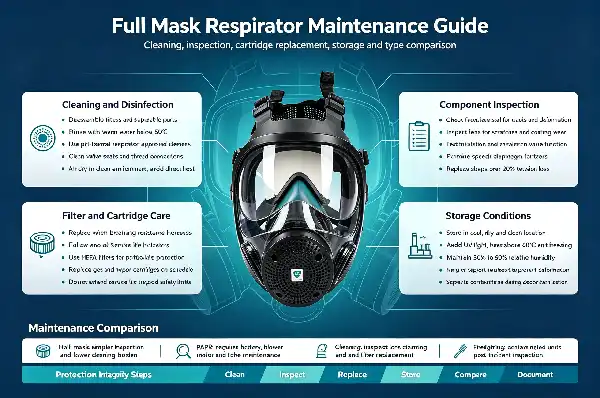
Effective cleaning starts right away after each use, so contaminants don't build up and materials don't break down. The process has several important steps that keep the device's integrity and get rid of harmful residues. First, take apart the machine by carefully removing the filters, refills, and parts that can be separated according to the manufacturer's instructions. Rinsing with warm water (not more than 50°C) gets rid of loose particles without hurting rubber seals or polycarbonate glasses.
Cleaning products that have been approved can save or destroy something. Mild cleansers made just for maintaining respirators keep materials in good shape in a way that harsh chemicals would damage. We tested different mixtures at PPE MAX facilities and found that pH-neutral solutions get rid of oils, particles, and biological matter without making the surface crack or the seal swell. Soft-bristled tools are used to gently brush the valve seats and thread connections, which are places where residues build up. After washing, you should rinse your face well to get rid of any soap residue that could hurt your skin or weaken sthe skin's barrierover time. Air drying in clean settings stops the retention of moisture that helps the skin's barrier grow, and direct heat sources that could bend parts are still strictly forbidden.
Inspection Routines for Critical Components
Visual inspection finds strictures before they become protection failures. The facepiece seal needs to be carefully checked for any cracks, tears, or lasting deformations that would make it impossible to make eye contact. Even small flaws can lead to leaks that get around filter systems. Lens inspection finds scratches, crazing, or coating wear that makes the lens less clear or less resistant to impact. When the speech diaphragm is visible, it needs to be checked for tears or separations that would make speaking impossible.
Testing the functionality of the valves ensures that the mechanisms for inhalation and exhalation work correctly. Cover the filter's intake and take a deep breath in. The facepiece should slightly fall off your face, indicating that the valve seals are doing their job of stopping leaks from the inside. Cover the exhaling valve and let out air. Air should only leave through certain routes, which proves that the outward flow control works. Head harness straps are tested for elasticity; straps that are too stretched out can't keep up the right amount of face seal pressure. When straps lose more than 20% of their original tension, our technical teams at PPE MAX say they should be replaced.
Filter and Cartridge Replacement Strategies
How long a filter lasts depends on how much it is exposed to, the type of contaminant, how fast it breathes, and how humid the air is around it. At 0.3 microns, HEPA filters are 99.97% effective at catching particulates, but they need to be replaced when breathing becomes more difficult or when they show signs of surface loading. P100 cartridges protect against particulates and oils in the same way, while gas and mist cartridges have activated carbon sheets that become saturated depending on the amount of contaminants present and the length of time they are exposed to them.
Some chemical cartridges come with end-of-service-life signs (ESLIs) that change color when the cartridges' absorptive capacity runs out. Without these signs, replacement schedules are set in stone: either they are based on time (every month or three months, depending on how often they are used) or they use smell or taste to find breakthroughs, though the latter method is clearly unsafe. Conservative replacement methods protect workers better than extending service times to cut costs. In this case, protecting workers must be more important than cutting costs.
Storage Conditions That Preserve Equipment Integrity
The right way to store things makes them last longer and keeps them ready to be used right away. UV light can damage elastomeric parts, but they can be kept safe in clean, dry places out of direct sunlight. Controlling the temperature is important. Temperatures above 40°C speed up the aging process, and freezing temperatures can break silicone. Managing humidity stops mold from growing; the best conditions are between 30 and 60% relative humidity. Putting electronics in storage containers or cabinets keeps them safe from dust, damage, and chemicals. We put the facepieces of respirators upside down or hang them from the ceiling to keep them from permanently deforming from weight pressure. Cross-contamination risks can be avoided by storing contaminated units separately while they are being decontaminated.
If you're evaluating personal protective equipment suppliers and require batch-specific testing documents before placing an order, PPE MAX is able to provide official Certificates of Analysis, professional laboratory test reports, and product samples for your verification. Feel free to contact our team at marketing@ppemax.com to discuss your sourcing needs and obtain complete documentation for your quality assessment and procurement approval.
Comparative Analysis: Full Mask Respirator Maintenance vs. Other Respirator Types
Maintenance Intensity Compared to Half-Mask Respirators
Half-mask respirators that cover the nose and mouth need to be cleaned less often because they have fewer parts and smaller surface areas. Their simpler valve designs and lack of lens systems make inspections faster. The differences in the maintenance burden become important when a lot of workers are sent to a site. A factory with 500 workers who wear full-face protection spends a lot more time cleaning, inspecting, and keeping records than a factory with the same number of workers who wear half-masks. This fact affects decisions about what to buy when exposure levels allow for either level of protection.
Powered Air-Purifying Respirator (PAPR) Maintenance Complexity
PAPR systems have extra mechanical parts that need to be maintained by people who know a lot about them. Battery packs need charging methods that stop memory effects and loss of capacity. Blower motors pick up dust and dirt over time, so they need to be cleaned and replaced after a certain number of hours of use. Breathing tubes and units worn around the waist add more ways for contamination to spread. Better comfort and higher protection factors are traded off against more complicated maintenance and higher component costs. Chemical factories that use isocyanates or pharmaceutical plants that deal with dangerous compound exposure often say that this level of complexity is worth it because it protects workers better and boosts productivity.
Application-Specific Maintenance Considerations
When people paint, they breathe in overspray mists that quickly cover the lenses and clog the filters, meaning they need to be cleaned and replaced more often. Material suitability checks are needed in places where chemicals are handled because some solvents can damage certain elastomers or lens coatings. Firefighting uses equipment that is subject to high heat and physical stress, so it needs to be inspected very carefully after an event. Abrasive dust is created by mining, so strong pre-filters and regular seal checks are needed. By understanding these application-specific needs, maintenance programs can deal with real-world situations instead of just following general advice.
Best Practices and Tips to Maximize Full Mask Respirator Lifespan
Establishing Maintenance Schedules Based on Usage Patterns
Maintenance frequency is based on how much something is used. Chemical handling situations that happen every day need to be cleaned at night and inspected carefully once a week. Intermittent use for emergency reaction lets upkeep happen once a month with checks before use. Calendar-based plans keep equipment from breaking down while it's being stored. Even useless devices are inspected every three months to catch problems caused by age before they are needed in an emergency. Digital tracking systems help big businesses keep track of maintenance schedules across many locations by automatically notifying workers when service is overdue and creating proof of compliance.
Training Programs That Reduce User-Induced Damage
Mistakes happen less often when workers understand how upkeep works. Training programs should teach the right way to put on and take off clothes so that the straps don't get too stressed, the right way to clean clothes so that the materials stay intact, and the right way to store clothes so that they don't get damaged. Hands-on examples are more useful than written notes alone because workers remember what they have learned when they see it done over and over again. At PPE MAX production sites, we have refresher workshops every three months to talk about typical mistakes that are found during equipment audits. This investment strengthens the safety culture and keeps equipment from breaking down too soon.
Documentation Systems for Audit Readiness
For Full Mask Respirator compliance, maintenance records must be able to be checked. For small businesses, manual logbooks work, but they get hard to use as the business grows. Digital management systems keep records of each device's history, including when it was cleaned, what was found during inspections, what parts were replaced, and the results of fit tests. These databases let you look at trends to find problematic groups of devices or patterns of use that are speeding up wear. During OSHA inspections or third-party audits, detailed documentation shows that the program works and that the company is committed to following the rules.
Avoiding Common Maintenance Pitfalls
The most common violation we see in industrial sites is not replacing filters when they should be. Going beyond the manufacturer's recommended service times to save money ends up increasing exposure risks. Not doing fit testing after maintenance doesn't take into account the fact that mistakes made when putting the seal back together or replacing parts can affect its quality. Using cleaning products that aren't supposed to be used saves money at first, but they damage materials and need to be replaced sooner than planned. Microbes can get into equipment that hasn't been dried properly before it is stored, which means it has to be thrown away. These shortcuts hurt programs that protect people's lungs and put companies at risk of being sued.
Choosing Reliable Full Mask Respirator Brands and Suppliers for Maintenance Support
Evaluating Manufacturer Reputation and Support Infrastructure
Companies like 3M, MSA, Honeywell, and Dräger have built their names over many years by consistently providing high-quality products and full expert support. Their networks of authorized dealers provide original replacement parts, so there are no risks of fake parts that could weaken protection. Experts in respiratory protection work on technical hotlines to help fix strange maintenance problems. End users and safety managers can learn how to properly maintain their product lines through training programs offered by reputable providers. These extra services have a big effect on the total cost of ownership, which is different from the price of the car itself.
Assessing Replacement Parts Availability and Cost Structure
Program viability is based on how reliable the supply line is. When filters, valves, or straps need to be replaced, suppliers with large parts inventories make sure that there is little downtime. When a lot of people agree to buy in bulk, the cost per unit goes down, and the supply stays steady. Our company, PPE MAX, keeps manufacturing capacity open just for replacement parts because we know that our respiratory protection systems need support for many years after they are first sold. Distribution relationships in 134 countries make sure that products are available in the area, which cuts down on shipping delays when replacements are needed quickly.
Balancing Quality Investment Against Budget Constraints
When buying something, weighing the initial costs against the costs that will come up over its lifetime leads to better long-term value. Premium respirators made from better materials can handle tougher conditions and need to be replaced less often. Their longer service lives make up for the higher prices they cost to buy. On the other hand, economy models that are better for less demanding uses offer enough protection at lower spending levels. Smart buyers look at the total cost of ownership, which includes the price of the item, the labor needed to maintain it, the cost of replacement parts, and how long the item is expected to last. At PPE MAX, we offer customization options that let customers choose features that exactly meet their operational needs and budget.
Supplier Technical Capabilities and Customization Options
Large industrial operations benefit when suppliers offer engineering support for the creation of respiratory protection programs. Site surveys figure out what kind of tools are needed for each type of danger. Custom labels help businesses with multiple locations keep track of their goods. OEM/ODM manufacturing lets sellers build their own names through private labeling. Because PPE MAX has been making things for 68 years, we can work with procurement teams to come up with complete respiratory protection solutions that meet the specific needs of each operation while still strictly following international safety standards such as NIOSH, EN 136, and AS/NZS 1716 certifications.
Conclusion
Maintaining respiratory protection is more than just a regulatory must—it shows a deep commitment to worker safety and operational excellence. This complete plan covers important parts of care, such as cleaning schedules, inspection schedules, filter replacement plans, and the best way to store things. Comparing one type of full-face respirator to another helps people who buy things match protection systems to the needs of the job. Best practices that stress training, paperwork, and strategic scheduling make tools last longer and protect people more effectively. Choosing a supplier based on expert support, availability of parts, and lifecycle value can help you make better business choices that will pay off in the long run. Companies that follow these maintenance rules protect their most valuable assets, which are the workers who depend on the equipment for their health and safety every shift.
FAQ
1. How Often Should Filters Be Replaced?
When to change a filter depends on the type of filter, the amount of contamination, and how long it was exposed to it. Particulate screens need to be changed when breathing becomes harder or once a month in places with a lot of dust. Chemical cartridges have service lives that are set by the maker and depend on the types of contaminants and their amounts. These service lives can range from single-shift disposable units to multi-week reuse cartridges. When conservative replacement schedules are used, worker safety comes before saving money.
2. What Cleaning Agents Are Safe for Respirator Maintenance?
Only use cleaning products that have been approved by the manufacturer or mild, pH-neutral detergents that are made just for elastomeric respirators. Harsh chemicals, disinfectants made from bleach, and solvents made from gasoline can damage polycarbonate glasses and rubber seals. Most contaminants can be removed effectively with warm water and mild soap, without damaging the material. At PPE MAX, our technical paperwork lists cleaning products that have been tried to make sure they are safe for use with our products.
3. When Should Fit Testing Occur?
Test for a quantitative or qualitative fit test before the first use, then once a year after that, after any maintenance that requires taking the facepiece apart, after a major weight change that changes the shape of your face, and after dental work or an injury that changes the shape of your face. Fit testing makes sure that the maintenance procedures kept the seal's integrity and that it was put back together correctly. Keeping records of the results of fit tests helps make sure that regulations are being followed during checks.
Partner With PPE MAX for Superior Respiratory Protection Solutions
PPE MAX is a reliable company that makes and sells full-face respirators. They offer approved breathing protection and have been doing so for 68 years, since 1956. Our wide range of products includes soft silicone face seals, anti-fog polycarbonate lenses with a wide field of view, and bayonet filter connections that work with particulate, gas, and vapor cartridges. We work with large operations in 134 countries in the chemical, pharmaceutical, mining, and construction industries, as well as industrial safety distributors and procurement departments. Take advantage of our NIOSH, EN 136, and AS/NZS 1716 certifications, large stock of spare parts, technical support hotline, and ability to customize for OEM/ODM partnerships. You can email our Full Mask Respirator protection experts at marketing@ppemax.com to talk about your maintenance problems, get product specifications, or set up a visit to our Xi'an manufacturing operations. Find out how our end-to-end products can help you protect your employees and lower your total cost of ownership.
References
1. National Institute for Occupational Safety and Health (2019). "NIOSH Guide to the Selection and Use of Particulate Respirators." DHHS (NIOSH) Publication No. 96-101.
2. Occupational Safety and Health Administration (2020). "Respiratory Protection Standard 29 CFR 1910.134: Compliance Guide for Industrial Applications."
3. European Committee for Standardization (2018). "EN 136:1998 Respiratory Protective Devices - Full Face Masks - Requirements, Testing, Marking."
4. American National Standards Institute (2021). "ANSI Z88.2 Standard Practices for Respiratory Protection: Maintenance, Care and Storage Protocols."
5. International Safety Equipment Association (2022). "Industrial Respirator Maintenance Best Practices: Comprehensive Technical Manual for Safety Managers."
6. Colton, C.E. and Birkner, L.R. (2020). "Respiratory Protection Handbook: Maintenance Strategies for Full Face Respirators in Chemical Processing Industries." Industrial Hygiene Press.
Learn about our latest products and discounts through SMS or email