- English
- French
- German
- Portuguese
- Spanish
- Russian
- Japanese
- Korean
- Arabic
- Greek
- German
- Turkish
- Italian
- Danish
- Romanian
- Indonesian
- Czech
- Afrikaans
- Swedish
- Polish
- Basque
- Catalan
- Esperanto
- Hindi
- Lao
- Albanian
- Amharic
- Armenian
- Azerbaijani
- Belarusian
- Bengali
- Bosnian
- Bulgarian
- Cebuano
- Chichewa
- Corsican
- Croatian
- Dutch
- Estonian
- Filipino
- Finnish
- Frisian
- Galician
- Georgian
- Gujarati
- Haitian
- Hausa
- Hawaiian
- Hebrew
- Hmong
- Hungarian
- Icelandic
- Igbo
- Javanese
- Kannada
- Kazakh
- Khmer
- Kurdish
- Kyrgyz
- Latin
- Latvian
- Lithuanian
- Luxembou..
- Macedonian
- Malagasy
- Malay
- Malayalam
- Maltese
- Maori
- Marathi
- Mongolian
- Burmese
- Nepali
- Norwegian
- Pashto
- Persian
- Punjabi
- Serbian
- Sesotho
- Sinhala
- Slovak
- Slovenian
- Somali
- Samoan
- Scots Gaelic
- Shona
- Sindhi
- Sundanese
- Swahili
- Tajik
- Tamil
- Telugu
- Thai
- Ukrainian
- Urdu
- Uzbek
- Vietnamese
- Welsh
- Xhosa
- Yiddish
- Yoruba
- Zulu
Full Mask Respirator Import Guide for International Buyers
Founded in 1956, PPEMAX stands as a premier global manufacturer and supplier of full-range personal protective equipment. All our products comply with internationally recognized standards including IEC, ASTM, CE, UKCA, NIOSH and ISO9001. Equipped with a 2,000-square-meter modern production plant, we boast over 25 years of mature OEM & ODM capabilities to deliver one-stop customized solutions covering R&D design through worldwide logistics. Our safety gear is distributed across 134 countries globally. Upholding our core tenet “Safety First, Quality Priority”, we serve as a dependable long-term PPE partner for industrial enterprises around the world.
Importing respiratory protection devices requires attention to technical standards, regulatory compliance, and supplier dependability. This paper provides procurement experts with practical guidance on purchasing Full Mask Respirator equipment that provides full-face eye and respiratory protection. We go over essential considerations for making the choice to import, from understanding filtration technology and certification requirements to building reliable supplier partnerships. This resource will help you untangle complex procurement challenges while ensuring your workforce is protected by certified, effective protection that meets occupational health standards and operational demands, if you are managing safety programs in chemical plants, construction sites, or government agencies.
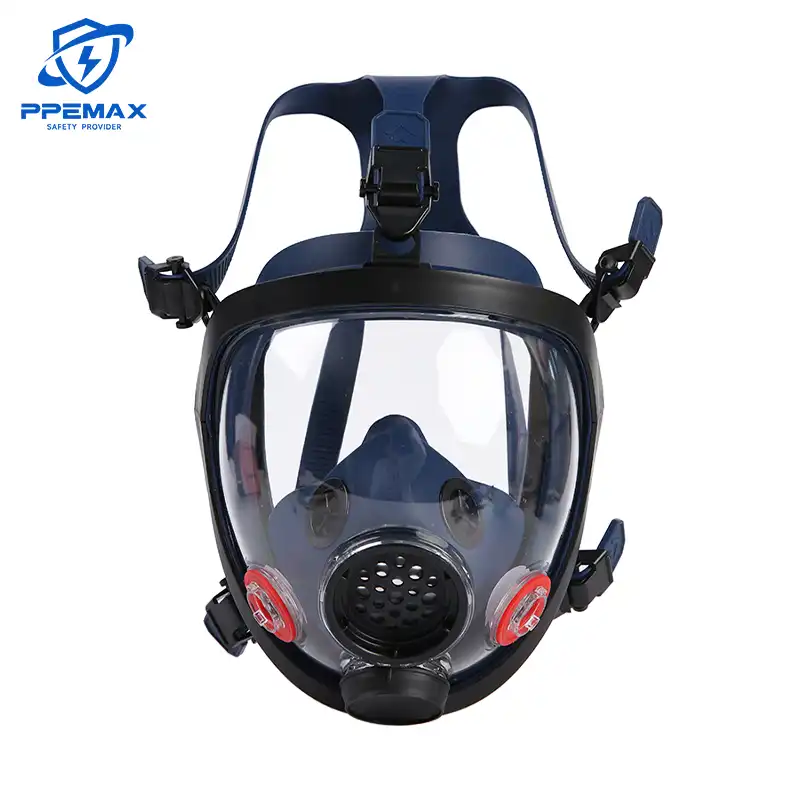
| Parameter | Description |
|---|---|
| Type | Self Priming |
| Material | Silicone (Face Seal) |
| Lens Material | Polycarbonate (PC) with Wide Panoramic View |
| Headband System | Five-Point Adjustable Elastic Headband |
| Cartridge Connectors | Dual Compatibility: Bayonet-Style & RD40 Connectors |
| Filter Compatibility | Filter Cartridges & Filter Canisters |
| Minimum Order Quantity | 100 Units |
| Production Capacity | 3,000 Units per Month |
| Customization | Full OEM & Custom Solutions Available |
| Price Positioning | Competitive Pricing with Manufacturer-Direct Advantages |
Full Mask Respirator vs Half Mask Respirator: Choosing the Right Protection
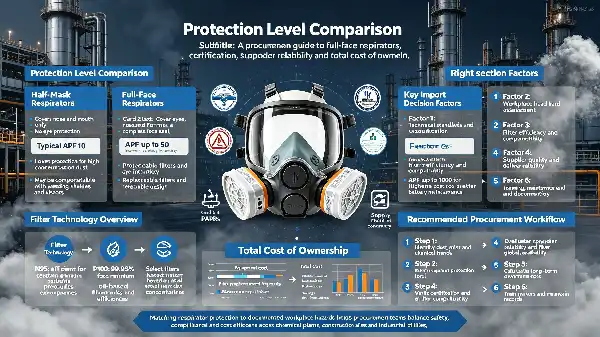
Selecting appropriate respiratory protection for a full-face respirator requires balancing protection levels, comfort, and operational requirements. Understanding the distinctions between protection classes of Full Mask Respirator helps procurement teams make informed decisions aligned with specific workplace hazards.
Design and Coverage Differences
Half-mask devices cover only the nose and mouth, leaving eyes unprotected and achieving an APF of 10 under OSHA standards. Complete facial coverage extends protection to include eyes, preventing irritation from airborne contaminants while delivering APF 50. This fivefold increase in protection capacity makes full-face options necessary when contaminant concentrations exceed safe levels for half-mask use or when eye irritation poses an immediate risk.
Comfort and Usability Considerations
Extended wear scenarios reveal distinct advantages for each design. Half-masks offer lower-profile compatibility with welding shields and safety visors, creating less heat buildup during moderate physical activity. Complete facial protection provides superior seal integrity regardless of facial hair around the jaw, though proper shaving around the seal area remains essential. Speech diaphragms in advanced models facilitate clear communication without compromising protection. Some designs incorporate drinking tube options, allowing hydration during extended use without mask removal—a valuable feature during emergency response operations.
Filter Efficiency and Cost Analysis
Both designs accept similar filter types, but reusability considerations differ. Disposable N95 filtering facepieces serve short-term, lower-hazard applications cost-effectively but create ongoing replacement expenses. Reusable elastomeric models with replaceable cartridges deliver long-term value through extended service life. P100 filters provide higher particulate efficiency than N95 equivalents, capturing oil-based aerosols that N95 filters cannot handle. When evaluating total cost of ownership, consider filter replacement frequency, storage requirements, and maintenance labor—factors that significantly impact budget planning for large workforce deployments.
Powered Air-Purifying Respirators (PAPRs)
PAPR systems represent another protection tier, using battery-powered blowers to force filtered air into a hood, helmet, or facepiece. These units eliminate breathing resistance, reducing worker fatigue during extended shifts. They accommodate facial hair that would compromise tight-fitting respirators and provide cooling airflow in hot environments. The APF reaches 1000 for pressure-demand models. However, higher acquisition costs, battery maintenance requirements, and increased weight make PAPRs economically viable primarily for specialized applications or workers unable to use tight-fitting alternatives.
Each protection level serves distinct operational needs. Matching equipment specifications to documented workplace hazards ensures both regulatory compliance and optimal resource allocation across your safety program.
Importing Full Mask Respirators: Key Criteria and Compliance for International Buyers
Knowledge of certification criteria, documentation procedures, and verification processes for suppliers is vital for successful international procurement. Regulatory compliance preserves legal position and labour safety.
Essential Certifications by Market
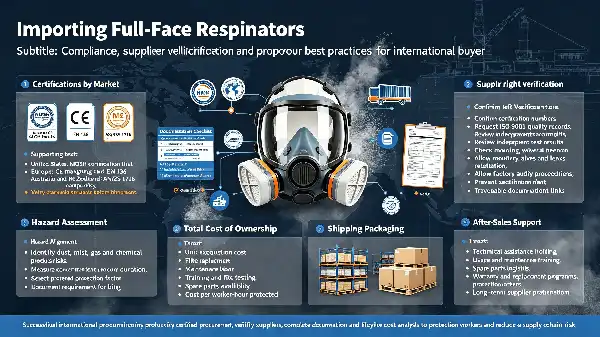
United States rules require devices to be certified by NIOSH under 42 CFR Part 84, showing requirements of inhalation resistance, exhalation resistance, and filtration efficiency. European markets need CE labelling with EN 136 conformity, categorising masks into Class 1, 2, or 3 according to construction, durability, and performance. Buyers in Australia and New Zealand specify AS/NZS 1716 certification. Understanding your target market’s standards eliminates expensive rejected shipments at customs. “PPE MAX is fully certified for all major markets, so it is easy for importers to comply when selling to a variety of territories.
Documentation and Customs Clearance
The right papers get you over the border quicker. The standard documentation includes commercial invoices with HS codes (often 9020.00 for breathing equipment), certificates of conformity that demonstrate compliance with the norms of the destination, and test results from recognised labs for Full Mask Respirator. Certain countries may need import permits (especially for government purchases) or handling equipment for prohibited chemicals. Some jurisdictions need translated paperwork or notarised declarations of authenticity. Working with experienced manufacturers who understand international shipping regulations helps avoid paperwork mistakes that lead to inspection delays.
Supplier Verification and Counterfeit Prevention
With the rise of inferior items, supplier verification becomes crucial. Well-known producers have clear certification documents and are ready for factory checks. Request ISO 9001 quality management certification and laboratory test records for each model. Verify certification numbers directly with the granting entities, e.g., NIOSH or notified bodies for CE marking. Visual evaluation of quality indicators includes: uniform moulding, no flash or voids, smooth valve operation, and secure retention of the lens. PPE MAX’s proven track record, with 65 years’ manufacturing background and presence in 134 countries, is precisely what serious purchasers should expect from prospective partners.
Packaging Standards for International Shipping
Each item is individually packaged to keep it safe during transportation and maintain hygiene requirements. Bulk packing alternatives cut down the cost per item for big purchases, but must be carefully considered for storage conditions during shipment. Climate-controlled containers safeguard silicone components from temperature fluctuations that might affect their flexibility. The custom labelling allows distributors to establish localised brand awareness, while still being able to track back to the manufacturer's certificates. Talk about packaging parameters early in discussions to guarantee items you receive can be sent to your warehouse and meet downstream distribution needs.
These compliance basics safeguard your investment and make sure that imported equipment will provide the approved protection your personnel rely on. Doing good due diligence in supplier selection pays rewards throughout the product lifetime.
If you're evaluating personal protective equipment suppliers and require batch-specific testing documents before placing an order, PPE MAX is able to provide official Certificates of Analysis, professional laboratory test reports, and product samples for your verification. Feel free to contact our team at marketing@ppemax.com to discuss your sourcing needs and obtain complete documentation for your quality assessment and procurement approval.
Best Practices for Procurement: From Ordering to After-Sales Support
Strategic procurement extends beyond initial purchase decisions. Comprehensive evaluation frameworks and supplier relationship management ensure sustained value delivery.
Aligning Equipment to Workplace Hazards
-Conduct full exposure evaluations before specifying equipment. Industrial hygiene assessments identify the kind of pollutant, its concentration, and length of exposure; all of which are facts that determine suitable protective factors to pick. In chemical processing settings, multi-gas cartridges are commonly needed, and construction dust requires high-efficiency particle filtration. Some emergency response situations may need equipment compatible with the provided air systems. Documenting these objectives provides objective standards that permit competitive bidding while maintaining technical sufficiency.
Optimizing Bulk Order Negotiations
Volume commitments provide better pricing and supply chain priority. Discuss minimum order quantities, delivery timelines, and payment conditions. Set defined quality acceptance standards with sampling processes for big shipments. Look at inventory management options – some suppliers provide consignment programs or staggered delivery to help manage cash flow and stock levels. PPE MAX’s worldwide distribution network provides just-in-time delivery solutions that decrease warehouse expenses without the danger of stock-outs during high-demand times.
Component Availability and Supply Chain Resilience
Replacement filters, valve assemblies, and harness components are all part of operating costs. Check availability and lead times for parts during supplier assessment. If you need to replace parts, having a standard set of equipment platforms with good aftermarket service will avoid operations from being disrupted. Consider keeping buffer supplies of important consumables in relation to the size of the workforce and the rates of consumption. Suppliers who provide complete spare parts catalogues and technical assistance exhibit dedication to long-term partnership ties rather than transactional interactions.
Total Cost of Ownership Analysis
The purchase price is a single component of costs. Include the cost of training, fit testing, maintenance labour, and replacement parts during the life of the equipment. Because the customer will have to replace the unit less often, you may charge more for higher-quality devices that last longer. Don’t concentrate on unit acquisition cost; calculate cost per worker-hour protected. This comprehensive strategy provides real economic benefit and allows data-driven budget justification to organisational leadership.
After-Sales Support and Technical Assistance
Technical help is responsive to handle operational problems swiftly to minimise downtime. Assess vendors on the availability of training programs, spare parts logistics, and hotline access. PPE MAX gives complete training on the right usage and maintenance procedures so that your safety teams can get the most out of the equipment. Troubleshooting seal failures or filter compatibility is addressed immediately with our technical support hotline. This continuing collaboration strategy changes providers from equipment suppliers to strategic safety consultants.
These procurement best practices provide sustainable safety systems that safeguard workers while showing budgetary discipline. The quality of the supplier connection is frequently as significant as the item itself.
Maintenance, Cleaning, and Fit Testing for Full Mask Respirators
Equipment longevity and protective performance depend on rigorous maintenance protocols. Systematic care extends service life while ensuring continued compliance with safety standards.
Cleaning and Disinfection Protocols
Take apart detachable pieces like valves and filter cartridges after each use. Wash facepiece and lens with warm water and moderate detergent. Use gentle brushes to remove contaminant residue without harming surfaces. Rinse carefully to remove any soap residue, which may cause skin irritation on repeated use. Sanitise using quaternary ammonium solutions or manufacturer-approved sanitisers and contact-time criteria. Avoid petroleum-based cleansers or chemicals that can damage elastomeric materials. Make sure that everything is totally dry before you reassemble to avoid trapping any moisture in the valves that might affect performance.
Storage Best Practices
Store cleaned respirators in tight bags or in designated cupboards away from direct sunlight, extremes of temperature, and chemical exposure. Silicone seals and polycarbonate lenses fade over time due to UV exposure. Storage spaces must be maintained between -40°C and 60°C to retain material qualities. Hang masks on harness straps, not on facepieces, which might permanently deform the facepieces and compromise seal integrity. Rotate stock on a first-in, first-out basis to avoid age-related degradation.
Fit Testing Requirements
Quantitative fit testing uses sophisticated technology to quantify the actual leak rate and hence provides an objective seal check. OSHA requires fit testing before first use, upon introduction of a new model, and yearly afterward. For smaller operations, qualitative approaches using bitter or sweet aerosols are less costly. Testing must be done when workers are doing motions typical of normal breathing, deep breathing, head rotation, bending, and conversing. - Failing tests need testing a variety of sizes or models until an appropriate seal is achieved. Document all fit test findings in individual worker files for regulatory inspection compliance.
Troubleshooting Common Issues
Strap adjustment is not correct in certain cases. Facial hair interferes with seals, or facepieces are deformed. “Rechecking harness tension and ensuring seals are good before entering hazardous areas prevents exposures. Lens fogging indicates dysfunction of the exhalation valve or misalignment of the nose cup—both readily addressed during regular maintenance. Clogging of the filter causes difficulty breathing and is an indication for replacement prior to specified intervals. For safety and cost-effectiveness, specific criteria for replacement based on difficulty breathing rather than arbitrary time frames are best.
These maintenance disciplines convert equipment investment into continued workforce protection. The guidelines for proper care need as much consideration as the original buying selections.
Conclusion
Importing a Full Mask Respirator is a balancing act between the technical requirements, regulatory constraints, and supplier capabilities. We’ve discussed important decision-making considerations, from the basics of protection levels and certification criteria to the development of maintenance procedures and vendor relationships. Good purchasing teams match equipment choices to recorded workplace dangers, fully research manufacturers, and put solid life-cycle management plans in place. International standards and anti-counterfeiting are difficult, and skilled manufacturing partners are crucial. Organisations concerned about worker safety know that the quality of equipment, the responsiveness of the provider, and continuing technical assistance are more important than the lowest price. Your purchase selections directly affect the health outcomes of your workforce and your organization’s safety performance.
FAQ
1. How Often Should Filters Be Replaced?
Filter replacement depends on contaminant type, concentration, and work duration. Particulate filters require changing when breathing resistance increases noticeably or according to manufacturer schedules. Gas and vapor cartridges need replacement when wearers detect contaminant odor, taste, or irritation—breakthrough indicators signaling saturation. Many operations establish time-based schedules as conservative measures, typically replacing cartridges after 8-40 hours of use, depending on exposure levels. Maintain replacement logs documenting change-out dates and usage hours to refine schedules based on actual conditions.
2. Can Respirators Be Safely Reused?
Elastomeric models with replaceable filters support extensive reuse when properly maintained. Clean and disinfect after each use, following manufacturer protocols. Inspect components before each use, checking for cracks, tears, or deformed sealing surfaces. Replace damaged parts immediately. Disposable filtering facepieces should not be reused except under strict emergency guidelines with proper decontamination procedures. The cost savings from reusable platforms become substantial across large workforces.
3. What Distinguishes Respirators from Gas Masks?
While terms are sometimes used interchangeably, gas masks traditionally refer to military-grade equipment designed for chemical warfare agents with specific canister configurations. Industrial respiratory protection follows occupational health standards with modular filter systems targeting workplace contaminants. Both provide facial coverage and filtration, but certification standards, filter availability, and intended hazards differ significantly.
Partner with PPE MAX for Certified Respiratory Protection Solutions
PPE MAX brings 65 years of manufacturing excellence to your respiratory protection procurement. As Northwest China's largest PPE supplier serving 134 countries, we deliver NIOSH, EN 136, and AS/NZS 1716-certified Full Mask Respirator devices engineered for demanding industrial environments. Our manufacturing facilities in Xi'an combine advanced production capabilities with stringent quality control, ensuring every unit meets international standards. We offer comprehensive customization for OEM partnerships, bulk order pricing that respects your budget constraints, and readily available spare parts inventory supporting uninterrupted operations. Our technical team provides fit testing guidance, maintenance training, and ongoing support throughout your equipment's service life. Connect with a trusted full-mask respirator manufacturer committed to protecting your workforce. Reach our team at marketing@ppemax.com to discuss your specific requirements and receive detailed technical specifications tailored to your operational hazards.
References
1. National Institute for Occupational Safety and Health (2019). "Respirator Selection Logic: 42 CFR Part 84 Respirator Standards and Testing Procedures." NIOSH Publication Series, Centers for Disease Control and Prevention.
2. European Committee for Standardization (2018). "EN 136:1998 Respiratory Protective Devices - Full Face Masks - Requirements, Testing, Marking." CEN Technical Standards Documentation.
3. Occupational Safety and Health Administration (2020). "Respiratory Protection Standard 29 CFR 1910.134: Compliance Guidelines for General Industry." United States Department of Labor.
4. International Safety Equipment Association (2021). "Global PPE Compliance and Certification Requirements: A Procurement Professional's Reference Guide." ISEA Industry Standards Publication.
5. American National Standards Institute (2020). "ANSI Z87.1-2020: Occupational and Educational Personal Eye and Face Protection Devices - Standards and Testing Protocols." ANSI Approved Standards.
6. Standards Australia International (2019). "AS/NZS 1716:2012 Respiratory Protective Devices: Selection, Use and Maintenance Guidelines for Industrial Applications." Australian Standards Limited.
Learn about our latest products and discounts through SMS or email