- English
- French
- German
- Portuguese
- Spanish
- Russian
- Japanese
- Korean
- Arabic
- Greek
- German
- Turkish
- Italian
- Danish
- Romanian
- Indonesian
- Czech
- Afrikaans
- Swedish
- Polish
- Basque
- Catalan
- Esperanto
- Hindi
- Lao
- Albanian
- Amharic
- Armenian
- Azerbaijani
- Belarusian
- Bengali
- Bosnian
- Bulgarian
- Cebuano
- Chichewa
- Corsican
- Croatian
- Dutch
- Estonian
- Filipino
- Finnish
- Frisian
- Galician
- Georgian
- Gujarati
- Haitian
- Hausa
- Hawaiian
- Hebrew
- Hmong
- Hungarian
- Icelandic
- Igbo
- Javanese
- Kannada
- Kazakh
- Khmer
- Kurdish
- Kyrgyz
- Latin
- Latvian
- Lithuanian
- Luxembou..
- Macedonian
- Malagasy
- Malay
- Malayalam
- Maltese
- Maori
- Marathi
- Mongolian
- Burmese
- Nepali
- Norwegian
- Pashto
- Persian
- Punjabi
- Serbian
- Sesotho
- Sinhala
- Slovak
- Slovenian
- Somali
- Samoan
- Scots Gaelic
- Shona
- Sindhi
- Sundanese
- Swahili
- Tajik
- Tamil
- Telugu
- Thai
- Ukrainian
- Urdu
- Uzbek
- Vietnamese
- Welsh
- Xhosa
- Yiddish
- Yoruba
- Zulu
Full Mask Respirator for Chemical Spills: Ready?
Founded in 1956, PPEMAX stands as a premier global manufacturer and supplier of full-range personal protective equipment. All our products comply with internationally recognized standards including IEC, ASTM, CE, UKCA, NIOSH and ISO9001. Equipped with a 2,000-square-meter modern production plant, we boast over 25 years of mature OEM & ODM capabilities to deliver one-stop customized solutions covering R&D design through worldwide logistics. Our safety gear is distributed across 134 countries globally. Upholding our core tenet “Safety First, Quality Priority”, we serve as a dependable long-term PPE partner for industrial enterprises around the world.
When a chemical leak hits your plant, it's not a matter of whether you have respiratory protection – it's an issue of whether your crew can trust it totally. A Full Mask Respirator is the whole barrier your personnel need to cover the full face with a tight seal to keep out harmful vapours, gases and particles. They are not only half-face options; they provide eye protection along with high-efficiency lung filtration and have an Assigned Protection Factor of 50 or above. That means your people are really protected from short-term danger of exposure and long-term health effects when seconds count most.
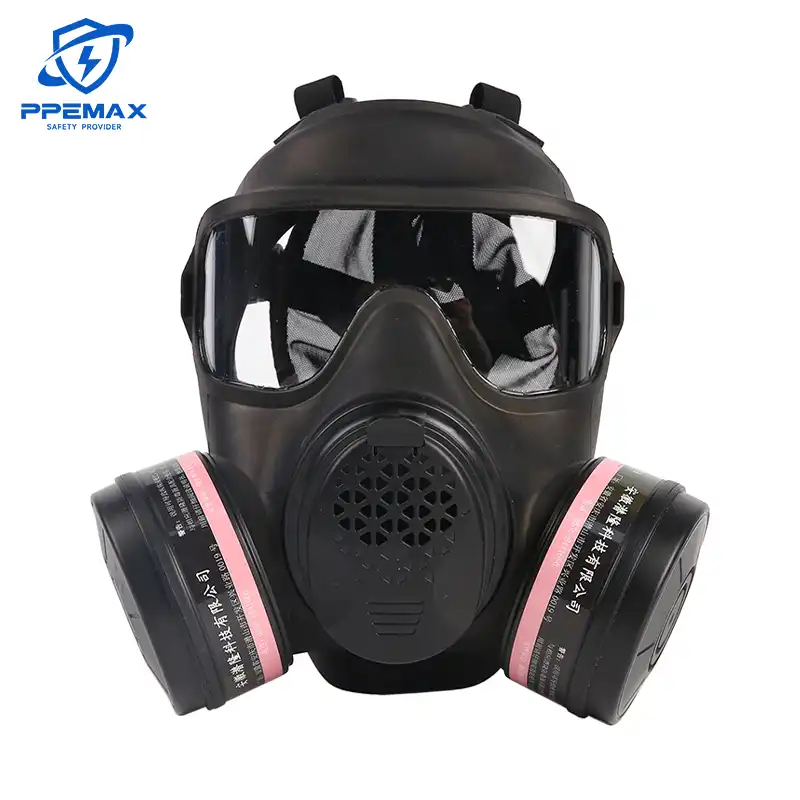

| Parameter | Specification |
|---|---|
| Material | Butyl Rubber (chemically resistant) |
| Lens Type | Shatterproof Polycarbonate (PC) |
| Mask Style | Full-Face Coverage (chin to forehead) |
| Thread Standard | Universal Φ40 (EN 148-1 compatible) |
| Harness System | 6-point adjustable strap |
| Communication | Built-in voice diaphragm |
| Light Transmission | >90% optical clarity |
| Impact Resistance | Meets ANSI Z87.1 standards |
| Temperature Resistance | Stable up to 150°C |
| Protection Factor | APF 50 (OSHA certified) |
Understanding Full Mask Respirators for Chemical Spills
What Makes Full Face Protection Different
When chemical situations strike, you need equipment that operates without compromise. A full-face respirator protects the eyes, nose, mouth, and surrounding skin of the face from direct contact with airborne pollutants. The continuous barrier across the forehead, cheeks and chin avoids leaks that might expose personnel to irritating or dangerous chemicals during evacuation or containment operations.
Our respirators are constructed with medical-grade silicone facepieces that are resistant to chemical penetration and comfortable for prolonged use. The wide-view polycarbonate glass is ANSI Z87.1 impact-resistant and has anti-fog coatings to ensure vision in high-humidity spill settings. Dual inhalation valves minimise breathing resistance, enabling people to move fast without tiredness.
Core Functions in Emergency Response
Respiratory apparatus must meet many threats at once during chemical discharges. Toluene, xylene and other volatile organic chemicals produce dizziness and nausea immediately, while acid gases such as chlorine and ammonia cause mucous membrane irritation within seconds. Our units are equipped with bayonet-mounted filters approved for certain classes of contaminants, allowing for quick customisation depending on chemicals encountered at each occurrence.
The centrally located exhaust valve does a great job of expelling CO2 and moisture, therefore reducing the fogging of lenses that degrades situational awareness. This engineering information is crucial when responders go over unknown terrain or operate equipment in the containment operation. The 5-point adjustable head harness effectively distributes pressure and maintains seal integrity even with severe physical activity.
Regulatory Standards and Certification
42 CFR Part 84 (NIOSH approval). This is the minimum level of respiratory protection in U.S. industrial settings. Our full face versions are EN 136 Class 2 compliant, showing performance in foreign markets. The certificates guarantee that the respirator offers a correct fit, filter efficiency, and material integrity under test settings that are standardised.
Procurement managers must ensure that vendors are providing proof of compliance with OSHA requirements, including 29 CFR 1910.134, which requires fit testing and training programmes. PPE MAX has been producing under more stringent quality control systems than these criteria since 1956; thus, every item leaving our production site in Xi'an meets the parameters your safety programmes expect.

How to Select the Right Full Mask Respirator for Chemical Spill Protection
Assessing Your Hazard Profile
You must begin the process of choosing a Full Mask Respirator by fully evaluating the hazards. What chemicals are stored, handled, or transported at your facility? Organic vapours need activated carbon cartridges, while acid gases use certain sorbent media. Dust or mist particulate risks need P100 filters, which remove 99.97% of airborne particles down to 0.3 microns.
It is recommended that air monitoring be conducted to determine background levels of exposure under normal operating conditions and to simulate possible concentrations during worst-case spill scenarios. This data tells you whether your team will require air-purifying respirators with proper cartridge combinations or supplied-air systems for oxygen-deficient or immediately harmful to life and health atmospheres.
Filter Compatibility and Protection Levels
Modern full-face platforms may be equipped with a variety of filter combinations using standard RD40 or EN 148-1 threaded connectors. Our respirators are single or dual cartridge, and we have combination filters for the mixed danger situations that are seen in chemical and petrochemical activities.
Protection capacity varies widely across filter types. A formaldehyde or mercury vapour-specific unit protects against various exposures than a 100 parts per million organic vapour cartridge. Knowing these differences can help you avoid the deadly error of employing insufficient filters for the real pollutants present at your job. Our technical support staff will help purchasers in comparing filter specs to their recorded danger assessments to ensure they are getting the correct protection factors.
Evaluating Reusability and Total Cost
Disposable filtering facepieces are convenient, but full face respirators with replacement parts are a better value for organisations preparing for chemical spills. A comprehensive maintenance regimen will provide years of service from your original investment in durable silicone or thermoplastic elastomer facepieces.
Calculate overall cost based on filter replacement frequency, cleaning materials, storage needs and fit testing intervals. A quality full face unit from PPE MAX generally lasts five years with regular inspection and maintenance, but cartridges may require replacement after single-use exposure to high concentrations or according to manufacturer change schedules. The long life of our products makes them very cost-efficient for mid- to big organisations with emergency response capabilities in more than one facility.
Advanced Options: PAPR Systems
For chemical spills anticipated to have longer reaction times, powered air-purifying respirators are the best answer. These systems employ battery-powered blowers to pull polluted air through filters and provide cleansed air to the facepiece under positive pressure. This setup raises the Assigned Protection Factor to 1000 and lowers the effort to breathe.
PAPR technology is suitable for operations where employees must conduct physically demanding duties during spill cleanup or if employees cannot get a satisfactory fit with negative-pressure respirators because of facial hair or structural characteristics. The positive pressure also offers a cooling airflow, reducing heat stress during the warmer months, especially in restricted locations.

If you're evaluating personal protective equipment suppliers and require batch-specific testing documents before placing an order, PPE MAX is able to provide official Certificates of Analysis, professional laboratory test reports, and product samples for your verification. Feel free to contact our team at marketing@ppemax.com to discuss your sourcing needs and obtain complete documentation for your quality assessment and procurement approval.
Proper Use and Maintenance of Full Mask Respirators in Chemical Spill Scenarios
Conducting Reliable Fit Testing
No full-mask respirator is going to provide you the protection it is supposed to unless it fits properly. OSHA requires a fit test, qualitative or quantitative, before first use and yearly afterwards. Quantitative testing employs specialised equipment to determine actual leakage. Qualitative procedures use detection of test substances such as sweet-tasting saccharin or bitter Bitrex around the seal.
We instruct our customers on user seal checks each time before usage, even between yearly fit testing. Workers should take a deep breath and hold it; if the facepiece is good, it should collapse slightly and stay so. As you exhale, air should only escape via the exhalation valve, not around the face seal. These basic techniques detect seal failures and prevent exposure.
Donning and Doffing Procedures
“Good donning technique paves the way for effective protection. Before use, personnel should check the respirator for fractures, rips or valve damage. Put the chin in the chin cup, pull the harness over the head, and tighten straps starting from the bottom and working up, making sure pressure is distributed evenly. Don’t overtighten; it won’t improve the seal and will create pain.
Care must be used while doffing in polluted regions to avoid self-exposure. The respirator must be removed only in clean atmospheres or in certified decontamination areas. Lift forward and up, grasping the harness, not the facepiece, so you do not contact contaminated surfaces. Store old respirators in containers for cleaning or disposal, and never place them on surfaces where pollutants might be transferred to the respirators.
Cleaning and Disinfection Protocols
Respirators need thorough cleaning after each use to eliminate chemical residues, skin oils, and microbiological contamination. Remove breathing and exhalation valves and other replaceable components. Wash parts in warm water using a light detergent. Use gentle brushes to reach into nooks without breaking silicone or elastomer materials.
Use EPA-registered disinfectants suitable for materials used in the respirator. Do not use alcohol-based solutions, which may damage elastomers over time. Rinse well to eliminate any residues of cleaning agent, which may irritate skin or influence qualities of the material. Air dry in clean areas away from sunshine or heat sources that may accelerate material deterioration. The simplicity of our valve designs and ease of cleaning reduces maintenance time and helps improve hygiene compliance.
Storage and Shelf Life Management
Respirators will last longer and be ready when needed in an emergency if they are stored properly. Store cleaned, dried units in sealed bags or containers that protect against dust, sunlight, and temperature extremes. Do not crush or distort facepieces, which will affect seal integrity. Store in separate places apart from the areas where chemicals are stored to avoid contamination via off-gassing.
Silicone and elastomer materials will break down over time even if you don’t use them often. Manufacturers will test the substance under controlled settings to determine shelf life. Every three months, check storage respirators for symptoms of degradation such as discolouration, cracking, or loss of elasticity. Replace any component or whole unit that shows indications of ageing regardless of whether it has ever been used. This proactive strategy assures your emergency equipment will operate when you need it most.
Procurement Best Practices for Full Mask Respirators in B2B Environments
Evaluating Supplier Credibility
The respiratory protection market contains counterfeit products that look authentic but fail during real-world use. Verify supplier credentials by requesting proof of manufacturer authorization, reviewing business registration documentation, and checking references from comparable organizations. Established manufacturers like PPE MAX provide transparent certification documentation and traceability for every production batch.
Request product samples for evaluation before committing to bulk orders. Test fit across your diverse workforce, assess comfort during simulated work tasks, and verify compatibility with existing safety equipment like hard hats and hearing protection. This due diligence prevents costly mistakes and builds confidence in your procurement decisions.
Balancing Cost and Safety Requirements
Budget constraints tempt organizations to prioritize initial purchase price over lifecycle value of a Full Mask Respirator. However, respiratory protection represents a critical control in your safety hierarchy—one where compromise creates unacceptable risk. Compare total cost of ownership, including replacement parts availability, filter costs, and warranty coverage, rather than focusing solely on unit price.
Negotiate volume pricing structures that reward commitment while maintaining quality standards. We offer bulk purchasing options with custom labeling for distributors and end users managing multiple locations. These arrangements provide cost savings without sacrificing the performance specifications your safety programs require.
Supply Chain Continuity Planning
Respirator effectiveness depends on timely access to replacement filters, valves, and spare parts. Establish relationships with suppliers who maintain inventory depth and reliable logistics networks. PPE MAX serves 134 countries through strategically positioned distribution channels, ensuring your facilities receive critical components when needed.
Include supply chain resilience in vendor evaluation criteria. Does the manufacturer operate multiple production facilities? Can they scale production during industry-wide demand surges? What lead times apply to standard versus custom orders? These questions reveal whether a supplier can support your long-term operational requirements beyond initial purchase fulfillment.
Documentation and Training Support
Comprehensive procurement includes more than physical products. Request training materials, maintenance guides, and technical specifications that support your respiratory protection program. Manufacturers who invest in customer education demonstrate commitment to proper product use and regulatory compliance.
PPE MAX provides training programs covering proper use, maintenance protocols, and fit testing procedures. Our technical support hotline connects procurement managers and safety professionals with experienced specialists who understand real-world application challenges. This after-sales support transforms a transaction into a partnership that strengthens your safety culture.
Case Studies and Real-World Applications
Chemical Manufacturing Plant Success
Repeated citations of a New Jersey pharmaceutical business for non-compliance with insufficient respiratory protection during solvent handling activities. They selected full-face respirators with combined organic vapour and P100 filters after a complete danger evaluation. Implementation includes quantitative fit testing of all involved staff and sets quarterly inspection schedules.
Within six months, OSHA inspection findings indicated zero respiratory protection violations. Workers said it was more comfortable than earlier equipment, resulting in higher compliance with mandated usage requirements. “The facility safety manager observed that buying quality respirators from a mature manufacturer saved money in the long run with fewer filter changes and longer-lasting facepieces.
Hazardous Waste Remediation Project
An environmental contractor cleaning up a Superfund site needed to safeguard teams working with unknown chemical combinations. They used supplied-air full-face respirators for optimal protection during the first characterisation operations and then switched to air-purifying respirators with the appropriate cartridges after the pollutants were detected.
The project safety coordinator highlighted the need for equipment flexibility and supplier response. When faced with unexpected asbestos exposure, they promptly secured HEPA filters to retrofit their current facepieces, preventing delays to the project. This flexibility, along with adequate training and maintenance practices, helped complete the $2.3 million cleanup with no incidences of respiratory exposure.
Emergency Response Team Preparation
Full-face respirators with PAPRs were given to the hazmat response team at a petrochemical complex of Gulf Coast refineries. The positive-pressure systems provide long-term operation in the event of facility evacuations and offer cooling airflow in the high-temperature environment of the area.
“The equipment has enhanced their response effectiveness in three chemical release incidents in the last two years,” said team leadership. Integrated speech diaphragms allowed responders to speak clearly and push themselves physically without respiratory strain. The investment in premium protective technologies paid off in the form of decreased incident length and better staff safety.
Conclusion
When the stakes are enormous, chemical spill preparation respiratory protection must pass the test. Full face respirators provide complete protection against the wide range of dangers encountered in industrial situations, including efficient filtration, eye protection, and a tight seal on the face. Selection involves comprehensive danger assessment, verification of regulatory compliance, and engagement with manufacturers that show a commitment to quality via certifications and customer support.
Correct usage habits, attention to maintenance, and smart purchase procedures turn equipment standards into real worker safety. Companies that invest in superior respiratory protection from trusted providers like PPE MAX develop safety programmes that meet regulatory standards and safeguard their most precious asset – their people.
FAQ
1. How often should respirator filters be replaced during chemical spill response?
Filter replacement frequency depends on contaminant concentration, exposure duration, and manufacturer specifications. During active spill response, replace filters immediately after use if high concentrations were encountered. Cartridges exposed to threshold limit values may function through multiple shifts, but track cumulative exposure time against manufacturer service life ratings. Implement end-of-service-life indicators or change schedules based on your specific chemicals and workplace monitoring data.
2. Can one respirator model protect against multiple chemical types?
Full face respirators accommodate different filter cartridges designed for specific contaminant classes—organic vapors, acid gases, ammonia, mercury vapor, and particulates. A single facepiece accepts various cartridge combinations, enabling protection against multiple hazards by changing filters. However, ensure each cartridge is rated for the specific chemicals present. Combination cartridges address mixed environments, but consult manufacturer guidance and conduct proper hazard assessment before assuming universal protection.
3. What certifications should procurement professionals verify before purchase?
Verify NIOSH approval under 42 CFR Part 84 for use in United States facilities. International operations require EN 136 compliance for European markets or AS/NZS 1716 for Australia and New Zealand. Request certification documentation directly from manufacturers rather than relying on distributor claims. Confirm that specific model numbers appear on approval certificates and that certifications remain current—NIOSH maintains searchable databases of approved respirators for verification purposes.
Partner with PPE MAX for Chemical Spill Protection Solutions
Protecting your workforce during chemical emergencies requires respiratory equipment that combines proven performance with reliable supply chain support. As a leading Full Mask Respirator manufacturer since 1956, PPE MAX brings 65+ years of engineering expertise to every unit we produce. Our NIOSH-approved respirators feature medical-grade silicone construction, wide-view anti-fog lenses, and compatibility with comprehensive filter options tailored to your specific hazards.
Procurement managers and safety directors benefit from our global supply capability spanning 134 countries, ensuring your facilities maintain readiness regardless of location. We offer customization options, bulk purchasing programs, and technical guidance that transforms product specifications into effective protection programs. Contact our team at marketing@ppemax.com to discuss your chemical spill preparedness requirements, request product samples, or arrange facility visits to our Xi'an manufacturing operations. Let us demonstrate how partnering with an experienced Full Mask Respirator supplier strengthens your safety culture while meeting rigorous industrial standards.
References
1. National Institute for Occupational Safety and Health. "Respirator Trusted-Source Information: NIOSH Approval Process and Standards." Centers for Disease Control and Prevention, 2023.
2. Occupational Safety and Health Administration. "Respiratory Protection Standard 29 CFR 1910.134: Compliance Guidelines for Industry." U.S. Department of Labor, 2022.
3. American National Standards Institute. "ANSI Z88.2-2019: Practices for Respiratory Protection in Industrial Environments." American Industrial Hygiene Association, 2019.
4. European Committee for Standardization. "EN 136:1998 Respiratory Protective Devices: Full Face Masks Requirements, Testing, Marking." CEN Technical Committee, 2020 revision.
5. International Safety Equipment Association. "Chemical Protective Equipment Selection Guide: Integrating Respiratory and Dermal Protection Systems." ISEA Publications, 2021.
6. American Conference of Governmental Industrial Hygienists. "Threshold Limit Values and Biological Exposure Indices: Chemical Substance Respiratory Hazard Classification." ACGIH Documentation, 2024 edition.
Learn about our latest products and discounts through SMS or email