- English
- French
- German
- Portuguese
- Spanish
- Russian
- Japanese
- Korean
- Arabic
- Greek
- German
- Turkish
- Italian
- Danish
- Romanian
- Indonesian
- Czech
- Afrikaans
- Swedish
- Polish
- Basque
- Catalan
- Esperanto
- Hindi
- Lao
- Albanian
- Amharic
- Armenian
- Azerbaijani
- Belarusian
- Bengali
- Bosnian
- Bulgarian
- Cebuano
- Chichewa
- Corsican
- Croatian
- Dutch
- Estonian
- Filipino
- Finnish
- Frisian
- Galician
- Georgian
- Gujarati
- Haitian
- Hausa
- Hawaiian
- Hebrew
- Hmong
- Hungarian
- Icelandic
- Igbo
- Javanese
- Kannada
- Kazakh
- Khmer
- Kurdish
- Kyrgyz
- Latin
- Latvian
- Lithuanian
- Luxembou..
- Macedonian
- Malagasy
- Malay
- Malayalam
- Maltese
- Maori
- Marathi
- Mongolian
- Burmese
- Nepali
- Norwegian
- Pashto
- Persian
- Punjabi
- Serbian
- Sesotho
- Sinhala
- Slovak
- Slovenian
- Somali
- Samoan
- Scots Gaelic
- Shona
- Sindhi
- Sundanese
- Swahili
- Tajik
- Tamil
- Telugu
- Thai
- Ukrainian
- Urdu
- Uzbek
- Vietnamese
- Welsh
- Xhosa
- Yiddish
- Yoruba
- Zulu
What Size Electrical Rubber Gloves Should You Order?
Founded in 1956, PPEMAX stands as a premier global manufacturer and supplier of full-range personal protective equipment. All our products comply with internationally recognized standards including IEC, ASTM, CE, UKCA, NIOSH and ISO9001. Equipped with a 2,000-square-meter modern production plant, we boast over 25 years of mature OEM & ODM capabilities to deliver one-stop customized solutions covering R&D design through worldwide logistics. Our safety gear is distributed across 134 countries globally. Upholding our core tenet “Safety First, Quality Priority”, we serve as a dependable long-term PPE partner for industrial enterprises around the world.
Selecting the right size of electrical rubber gloves is a critical factor in worker safety, operational efficiency, and regulatory compliance. Gloves that are excessively tight or too loose reduce insulating effectiveness and hand dexterity, increasing the risk of shock while working near voltages. There are many instances when we have seen procurement teams buy standard sizes without taking into consideration the variety of the workforce. This results in less wear time, more glove turnover, and weakened safety margins. This comprehensive guide walks B2B procurement managers, safety engineers, and industrial distributors through the entire sizing decision process, from measuring hand dimensions and understanding voltage class requirements to bulk ordering strategies that balance cost with safety performance across global operations.
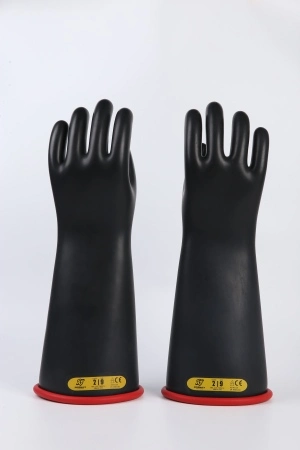
|
Parameter |
Specification |
|
Maximum Use Voltage |
17,000V AC / 25,500V DC |
|
Proof Test Voltage |
20,000V AC / 50,000V DC |
|
Typical Thickness |
2.3mm (ASTM D120 compliant) |
|
Material Type I |
Natural Rubber (high elasticity) |
|
Material Type II |
Synthetic/EPDM (ozone resistant) |
|
Standards Compliance |
ASTM D120, IEC/EN 60903 |
|
Temperature Range |
-40°F to +140°F (-40°C to +60°C) |
|
Color Options |
Orange, Red, Black |
Understanding Electrical Rubber Gloves and Their Sizing Basics
Rubber electrical gloves are the first line of defence between workers and deadly electrical currents in utility maintenance, industrial production, and infrastructure projects. These unique insulating gloves are tested to high international standards (ASTM D120 in North America and IEC 60903 internationally) and are classified into voltage classes, from Class 00 (certified for 500V AC) to Class 4 (qualified for 36,000V AC). The required material thickness is different for each voltage rating and has a direct impact on the size selection.
Why Sizing Matters for Insulation Integrity
The dielectric characteristics of insulating rubber rely on keeping the wall thickness continuous without expanding beyond material limits. If the glove is overly tight on the hand, the effective thickness of the insulation at regions of stress (especially at the knuckles and between the fingers) is reduced. This creates possible locations of failure if there is an electrical exposure. Bigger gloves, on the other hand, tend to bunch and wrinkle, creating air pockets where the insulation is less homogeneous and tactile sensitivity is lacking where you need it for delicate operations such as meter installs or circuit board repairs.
Standard Hand Measurement Protocols
The first step to accurate fitting is to take your measurements correctly by hand. The circumference of the hand is measured around the broadest part of the palm (excluding the thumb) using a flexible measuring tape. Please note the dimension in inches or millimetres. Then measure hand length from the crease of the wrist to the tip of the middle finger. In industry size charts, circumference is the main sizing indication, with length being a supplementary point of validation. These measures correspond to glove sizes 7-12, and most manufacturers provide thorough sizing matrices, with many product lines also offering half sizes.
The procurement teams must measure their complete workforce and establish the sizing distribution profile. This data is useful for establishing bulk purchase numbers and for avoiding overstocking sizes that aren’t utilised often, revealing whether your team is typically smaller or bigger. We propose that measurements be taken throughout the safety training cycles and that the records be updated yearly in order to reflect changes in the workforce.


Key Factors to Consider When Choosing Electrical Rubber Glove Size
In addition to the hand’s fundamental dimensions, numerous important elements influence appropriate size options for industrial applications of electrical rubber gloves. With an understanding of these constraints, procurement can order based on real-world use situations, not generic size assumptions.
Hand Dimension Variables and Ergonomic Fit
Male and female workers differ greatly in hand breadth and palm thickness, which vary considerably amongst groups. Women’s palms are often smaller than men’s, relative to hand length, so a glove that fits around the circumference might still be bulky without adequate contouring. Most leading manufacturers now provide ergonomically contoured sizing that accommodates these anatomical variances for better comfort during longer use and grip security while handling tools or conductors.
Finger length dimensions also influence the fit quality. Those with smaller fingers than the size of their palm may find that gloves of conventional length reach too far over the tips of their fingers, reducing tactile input and snagging on equipment. To address this problem, several lines have “short” versions within each size group.
Voltage Rating and Material Thickness Impact
Gloves with higher voltage classes need larger walls of rubber to provide sufficient insulation, which affects the fit and flex of the glove considerably. 00 gloves for low voltage work (up to 500V) tend to be about 0.5mm thick, and provide great dexterity for specialised work such as EV battery servicing or smart meter installations. Class 0 gloves are rated for 1,000V AC and may be as thick as around 1.0mm. Class 3 gloves for distribution line work (26,500V AC) can be more than 3.5mm thick in the walls.
This increase in thickness implies that, frequently, personnel have to size up when going from lower to higher voltage classes. For example, a technician who wears size 9 Class 00 gloves may need size 10 Class 2 gloves to get appropriate flexibility to handle tools and conductors. Thicker gloves have increased material stiffness that limits natural hand mobility. Oversized gloves are better than tight specs that limit movement and speed hand fatigue.
Usage Duration and Task-Specific Requirements
Gloves that are used continuously during an eight-hour shift have different size considerations than gloves that are worn periodically for short-duration jobs. The more you wear them, the more any fit problems become apparent. Tight gloves impede blood flow and induce hand cramping; loose gloves produce friction hot patches and impair trust in grip. If you want to wear them for longer periods of time, we suggest choosing a size at the upper end of the permissible range, to provide comfort as well as protection.
Sizing decisions are also a function of task difficulty. Tactile sensitivity is retained with thin, better-fitting gloves which perform well for detailed work with tiny fasteners, touch screen interfaces on control panels or delicate wire handling. For heavy machine work or tough construction situations, a somewhat looser fit that allows for easier donning and doffing of gloves for job changes is fine.

If you're evaluating personal protective equipment suppliers and require batch-specific testing documents before placing an order, PPE MAX is able to provide official Certificates of Analysis, professional laboratory test reports, and product samples for your verification. Feel free to contact our team at marketing@ppemax.com to discuss your sourcing needs and obtain complete documentation for your quality assessment and procurement approval.
Comparing Electrical Rubber Gloves by Size and Other Key Features
Of all protective handwear, insulating rubber gloves are in a class by themselves because of their specialised manufacture and regulatory requirements. The reason why they are different from other industrial gloves also explains why the sizing requirements are stricter and why a one-size-fits-all approach does not work.
Material-Specific Sizing Characteristics
Electrical rubber gloves are made from natural rubber or EPDM (Ethylene Propylene Diene Monomer) compounds that are particularly formulated for dielectric performance, not leather protector gloves or chemical-resistant polymer gloves. Natural rubber has excellent flexibility and dexterity, with elasticity maintained in the temperature range from -20°C to +50°C. This suppleness lets natural rubber gloves adapt better to hand shapes and generally permits scaling down against EPDM equivalents.
EPDM gloves provide superior ozone degradation resistance over natural rubber and are the glove of choice for outdoor utility work or any other use when ambient ozone levels are high. The tradeoff is material stiffness: EPDM gloves don’t feel as supple, and you have to size up for equivalent comfort. Procurement requirements should define the major work environment (indoor vs. outdoor, regulated vs. changeable climate) to pick acceptable material compositions and alter size recommendations appropriately.
Brand Comparison and Bulk Procurement Capabilities
Most of the big manufacturers such as Honeywell provide large size ranges from 7 to 12 with half sizes included, to suit a variety of workforce demographics. Within each voltage class, they usually have conventional, ergonomic, and extended-cuff versions. Klein Tools focuses on applications for utility workers and offers strengthened palm designs that function on sizing guidelines owing to the extra layers of material. Honeywell’s Salisbury specialises in high voltage classes and offers bespoke sizing services for utilities with large-scale glove projects.
We have worked with mining enterprises in Chile and infrastructure contractors in the UAE that have needed specialised sizing surveys for their foreign workforces with a variety of demographic characteristics. These initiatives have shown that one size does not fit all in the world of distribution in different operations – procurement has to be based on demographic data and divide shipments to satisfy regional sizing differences. Manufacturers’ varied minimum order numbers by size allow you to control inventories precisely, without pushing procurement teams to make commitments for too much volume overall.
Case Study: Sizing Impact on Operational Safety
A European distribution utility performed a full-scale assessment and replacement program, decreasing reportable electrical events by 23%. Previously, they were ordering 70% size 10 gloves based on past purchase trends, even though workforce measurements suggested that 40% of lineworkers really needed size 9 or 11 to get the best fit. The better size match decreased hand fatigue during lengthy outage restoration operations, enhanced voluntary glove compliance, and prevented improvised sizing changes such as wearing several glove layers that affected insulation integrity.
How to Inspect, Test, and Maintain Electrical Rubber Gloves for Optimal Fit and Safety
Proper sizing is only the start of glove safety. Ongoing inspection and maintenance will maintain the quality of fit and insulating performance throughout the life of the glove. Rubber materials inherently deteriorate with usage, exposure to the environment and contact with chemicals, and this may change the fit properties and protective capacities.
Routine Inspection Procedures for Fit and Condition
Before each use, visual and tactile checks should be made, especially in regions of size stress concentration. Inspect the finger crotch and knuckle areas for thinning, cracking, or changes in surface roughness that indicate material fatigue. Overstretched gloves reveal considerable stress whitening at the flex points, which indicates a breakdown of the material. Loose gloves are also subject to uneven wear patterns and surface abrasions from excess movement of the material against tools and equipment.
Test for air inflation on a monthly basis or when fit problems occur. Roll the glove cuff over to trap air within. Apply light pressure to locate any pinhole or micro-crack leaks. This test is a double check of the insulation integrity and will show locations where incorrect sizing has strained the material. Any glove exhibiting signs of air leakage should be promptly withdrawn from service regardless of its visual condition.
Dielectric Testing and Sizing Validation
ASTM F496 and OSHA 1910.137 require electrical testing of electrical rubber gloves in active duty every 6 months, or unused inventory within 12 months. Testing labs use high-voltage probes on the glove filled with water and submerged in a conductive bath to measure leakage of current, which signals breakdown of insulation, to test the glove. Inappropriate glove sizing, especially when tight during usage, increases failure rates in dielectric testing owing to rapid material deterioration at stress concentration locations.
Testing certifications should contain size verification, meaning the gloves supplied must be checked for compliance with the labelling, and there should be no dimensional changes after use or incorrect storage. Testing data may assist procurement managers in identifying sizing concerns within their glove stock and bring to light sizes that have an outsized failure rate as ones needing fit reassessment.
Storage and Cleaning Guidelines to Preserve Fit
Store gloves in cool, dark, and dry areas away from sources of ozone, direct sunlight, and severe temperatures. Hang or lie flat in ventilated containers to avoid compression folds and permanent creases that influence fit. Never store gloves the wrong way out, since this strains the seams and alters the proportions. Wash gloves with gentle soap and water. Do not use petroleum-based solvents; they can deteriorate the rubber and change the flexibility of the material. Allow gloves to dry thoroughly away from heat sources before storing; otherwise, mildew and softening of the material may occur, which compromises the stability of sizing.
Standardised storage practices at different work locations will provide gloves with similar fit qualities regardless of where they are deployed. This is especially critical for companies with stocks spanning overseas operations because temperature differences have a major role in how quickly the rubber ages.
Procurement Considerations: Ordering Electrical Rubber Gloves in the Right Size
Translating workforce sizing information into effective procurement approaches involves balancing inventory costs against operational and safety hazards associated with a lack of sufficient size availability. Smart procurement methods take into consideration consumption patterns, supply chain lead times, and the ability to adapt workforce changes without too much stock obsolescence.
Conducting Workforce Sizing Surveys
Conduct systematic sizing surveys that capture existing workforce demographics and projected changes (via recruiting or position transfers). Record measurements for all electrical workers by work environment (interior maintenance vs. outside distribution), voltage exposure class, and shift patterns. This segmentation reflects whether different sizing distributions are needed for different operational areas. For example, maintenance teams may primarily use Class 0 gloves in climate-controlled facilities and have different sizing distributions than line crews that use Class 2 and Class 3 gloves in variable outdoor conditions.
Look at the survey data to see what proportion falls into the size distribution. Then use safety stock multipliers for the consumption rate and replacement cycles. Sizes that move over a lot need deeper inventory, whereas sizes that are infrequently used may be ordered just-in-time, assuming supplier lead times permit. We suggest having two months of estimated consumption on hand for common sizes and one month for speciality sizes and adjusting accordingly depending on supplier dependability and delivery logistics to your locations.
Custom Sizing Options and Trade-offs
Standard size is sufficient for most workforces. But certain operational scenarios warrant expenditures in bespoke sizing. Utilities with specialised glove programs for high voltage gearbox operations may demand bespoke cuff lengths to meet certain outerwear integration needs. Large industrial facilities with populations that fall between typical size increments may request bespoke intermediate sizing, especially if staff retention makes the investment economically feasible.
Typically, custom sizing may add four to eight weeks to lead times and will need larger minimum order quantities, sometimes of at least 500 pairs per size. The cost premium is 15% to 40%, depending on the specification complexity. Procurement teams should do break-even analysis to evaluate the expense of bespoke size against the safety events, lower productivity, and hastened glove replacement caused by inadequate standard sizing.
Supplier Certification and Documentation Requirements
The selection of insulating rubber gloves requires careful verification of suppliers based on their production certifications, quality control systems, and ability to provide compliance documents. Ensure that your suppliers are ISO 9001 certified for quality management and that their testing labs are accredited to ISO/IEC 17025. "Request sample test reports that show dielectric testing procedures, acceptance criteria, and traceability systems that link individual glove lots to manufacturing dates and material batches."
Certified vendors will send a certificate of compliance with each shipment that identifies the voltage class, size range, date of manufacture, and test results. This documentation is crucial for regulatory compliance audits and establishing the chain of culpability in the event of any glove failures. Global distributors that serve several regulatory jurisdictions must ensure that suppliers are able to offer region-specific paperwork such as CE marking for European markets, ANSI certification for North American applications, and comparable conformity declarations for other regions.
Logistics and Global Distribution Considerations
International sourcing presents factors that impact your inventory planning and sizing strategies. Lead times for shipping from production centers in Asia to end customers in Europe or the Americas might be eight to twelve weeks for marine freight, needing higher safety stock commitments. Air freight reduces delivery time to 1–2 weeks but raises unit prices by 20%–50%, and is thus viable primarily for emergency replenishment or initial stocking of new sites.
Establish regional distribution sites for large-scale, multi-country operations and warehouse common-size shipments nearer to end customers. It also minimises the cost of emergency replenishment and may handle regional differences in size, since the demographics of Asian labour may support a smaller size than those of European or North American companies. Consignment inventory arrangements with suppliers for high-volume applications, where the provider carries the storage expenses but you get rapid access to the complete size range.
Conclusion
Choose the right size of electrical rubber gloves for your staff to ensure their safety and to enhance procurement efficiency and operating expenses. The size method is built on the foundation of precise hand measurements, voltage class requirements, material properties, and the needs of the job. Procurement experts who take the effort to conduct workforce size surveys, develop partnerships with authorised vendors, and follow systematic inspection methods create safety systems that not only demonstrably minimise electrical occurrences but also limit glove replacement costs. The advice throughout this article provides industrial purchasers with the technical knowledge and practical frameworks to make educated size choices that balance worker protection, regulatory compliance and budget realities in varied operating situations.
FAQ
1. How Do I Verify Glove Fit After Delivery?
Conduct fit testing sessions where workers don gloves and perform representative hand movements—making fists, gripping tools, and manipulating typical work objects. Properly fitted gloves allow full finger articulation without excessive material bunching at knuckles or finger crotches. The glove should extend approximately one inch beyond fingertips without creating stiff, unwieldy extensions that interfere with tactile feedback. Check that the cuff length covers the wrist with adequate overlap for integration with leather protectors and outerwear. Document any sizing concerns immediately and work with suppliers to exchange ill-fitting inventory before distributing gloves to field operations.
2. Can Gloves Be Resized or Altered After Manufacturing?
Insulating rubber gloves cannot be safely resized, trimmed, or modified after manufacturing without voiding safety certifications and compromising insulation integrity. Any alteration disrupts the engineered dielectric properties and material uniformity that testing protocols validate. Gloves that don't fit properly must be returned or repurposed to appropriately sized workers rather than altered to force fit.
Partner with PPE MAX for Precision-Sized Insulating Glove Solutions
Securing correctly sized electrical rubber gloves for your global workforce demands a supplier with deep technical expertise, flexible procurement capabilities, and unwavering commitment to safety standards. PPE MAX has protected industrial workers since 1956, combining six decades of manufacturing experience with hands-on product testing by our own team members who use the equipment we produce. Our Northwest China production facilities serve clients across 134 countries, offering comprehensive voltage class coverage from Class 00 through Class 4 with extensive sizing ranges accommodating diverse workforce demographics.
We specialize in bulk procurement programs for distributors, utilities, and industrial contractors requiring mixed-size shipments, custom sizing options, and certified documentation for international regulatory compliance. Our technical specialists provide on-site sizing consultations, workforce measurement protocols, and ongoing inventory management support that optimizes your safety equipment investment. As both an electrical rubber gloves manufacturer and a committed partner in occupational safety, we understand that proper sizing represents the foundation of effective electrical protection programs. Contact our procurement team at marketing@ppemax.com to discuss your specific sizing requirements, request sample sizing kits for workforce evaluation, or explore custom sizing capabilities that address unique operational challenges your teams face daily.
References
1. American Society for Testing and Materials (ASTM). "ASTM D120-20: Standard Specification for Rubber Insulating Gloves." ASTM International, 2020.
2. Occupational Safety and Health Administration (OSHA). "29 CFR 1910.137: Electrical Protective Devices." U.S. Department of Labor, 2021.
3. International Electrotechnical Commission (IEC). "IEC 60903:2019: Live Working – Gloves of Insulating Material." IEC Standards, 2019.
4. American Society for Testing and Materials (ASTM). "ASTM F496-20: Standard Specification for In-Service Care of Insulating Gloves and Sleeves." ASTM International, 2020.
5. National Fire Protection Association (NFPA). "NFPA 70E: Standard for Electrical Safety in the Workplace." NFPA Publications, 2021.
6. Institute of Electrical and Electronics Engineers (IEEE). "IEEE 1584-2018: Guide for Performing Arc-Flash Hazard Calculations." IEEE Standards Association, 2018.
Learn about our latest products and discounts through SMS or email