- English
- French
- German
- Portuguese
- Spanish
- Russian
- Japanese
- Korean
- Arabic
- Greek
- German
- Turkish
- Italian
- Danish
- Romanian
- Indonesian
- Czech
- Afrikaans
- Swedish
- Polish
- Basque
- Catalan
- Esperanto
- Hindi
- Lao
- Albanian
- Amharic
- Armenian
- Azerbaijani
- Belarusian
- Bengali
- Bosnian
- Bulgarian
- Cebuano
- Chichewa
- Corsican
- Croatian
- Dutch
- Estonian
- Filipino
- Finnish
- Frisian
- Galician
- Georgian
- Gujarati
- Haitian
- Hausa
- Hawaiian
- Hebrew
- Hmong
- Hungarian
- Icelandic
- Igbo
- Javanese
- Kannada
- Kazakh
- Khmer
- Kurdish
- Kyrgyz
- Latin
- Latvian
- Lithuanian
- Luxembou..
- Macedonian
- Malagasy
- Malay
- Malayalam
- Maltese
- Maori
- Marathi
- Mongolian
- Burmese
- Nepali
- Norwegian
- Pashto
- Persian
- Punjabi
- Serbian
- Sesotho
- Sinhala
- Slovak
- Slovenian
- Somali
- Samoan
- Scots Gaelic
- Shona
- Sindhi
- Sundanese
- Swahili
- Tajik
- Tamil
- Telugu
- Thai
- Ukrainian
- Urdu
- Uzbek
- Vietnamese
- Welsh
- Xhosa
- Yiddish
- Yoruba
- Zulu
Electrical Rubber Gloves: Why Dielectric Testing Saves Lives
Founded in 1956, PPEMAX stands as a premier global manufacturer and supplier of full-range personal protective equipment. All our products comply with internationally recognized standards including IEC, ASTM, CE, UKCA, NIOSH and ISO9001. Equipped with a 2,000-square-meter modern production plant, we boast over 25 years of mature OEM & ODM capabilities to deliver one-stop customized solutions covering R&D design through worldwide logistics. Our safety gear is distributed across 134 countries globally. Upholding our core tenet “Safety First, Quality Priority”, we serve as a dependable long-term PPE partner for industrial enterprises around the world.
Electrical rubber gloves serve as the frontline defense protecting workers from life-threatening shock hazards in energized environments. These specialized insulating gloves deliver critical protection against high-voltage exposure across utility grids, industrial facilities, and electrical maintenance operations. Dielectric testing functions as the essential verification process that confirms glove integrity, detecting invisible flaws such as micropunctures, material degradation, or manufacturing defects that could otherwise lead to fatal electrical accidents. When performed systematically, this testing protocol transforms PPE from passive equipment into actively verified life-saving gear, ensuring workers can confidently perform their duties knowing their protection has been validated to withstand electrical stress.
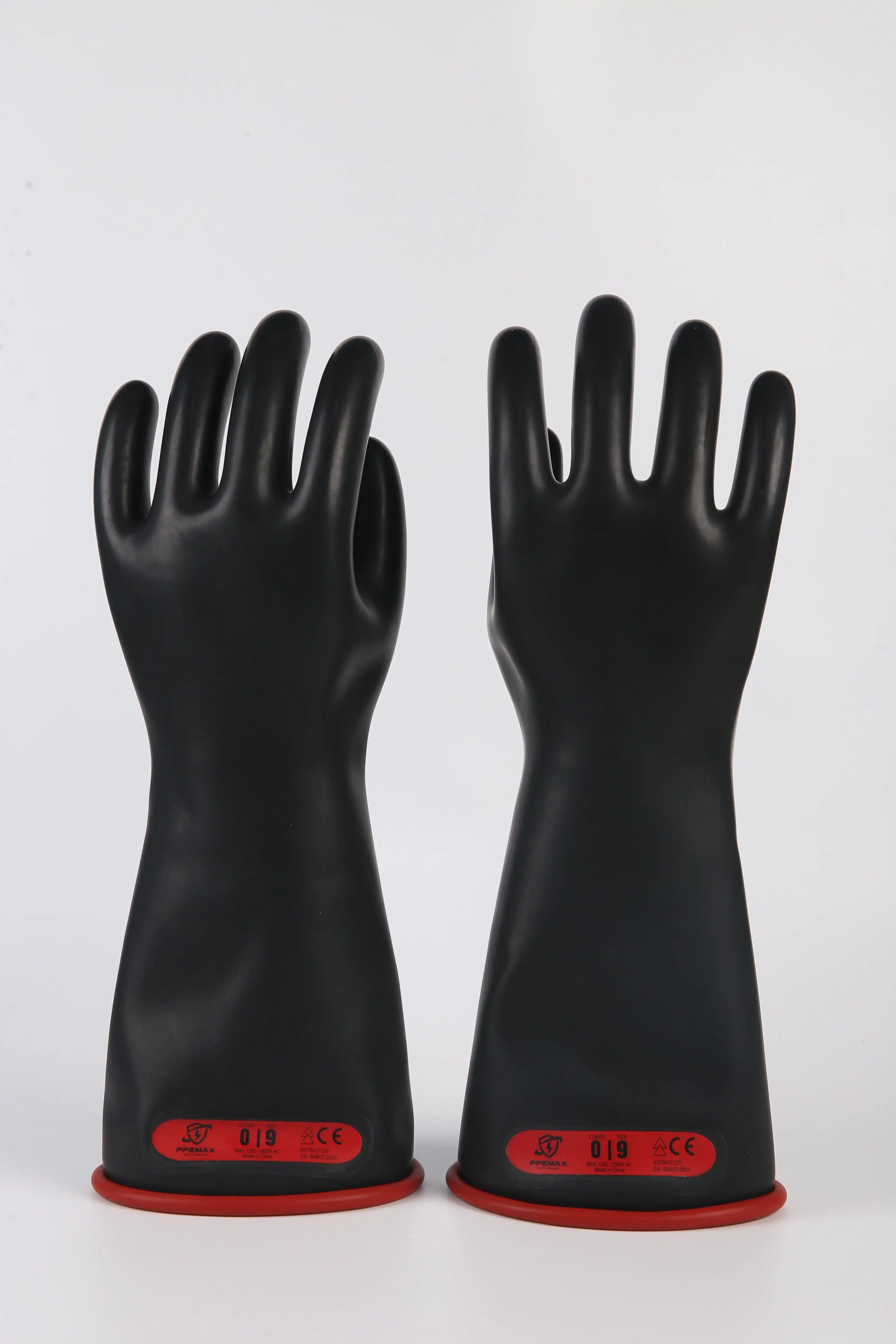
|
Parameter |
Specification |
|
Maximum Use Voltage |
1,000V AC / 1,500V DC |
|
Proof Test Voltage |
5,000V AC / 20,000V DC |
|
Label Color |
Red (ASTM D120/IEC 60903) |
|
Material Type |
Type I (Natural Rubber) / Type II (EPDM) |
|
Thickness |
1.02mm (0.040 inches) |
|
Length Options |
11", 14", 16" inches |
|
Cuff Styles |
Straight, Bell, Contour |
|
Standards Compliance |
ASTM D120, IEC 60903, OSHA 29 CFR 1910.137 |
Understanding Electrical Rubber Gloves and Their Safety Importance
Voltage-rated insulating gloves are a type of safety equipment that is based on the science of material insulation and electrical resistance. By making a barrier with very high electrical resistance, these gloves stop current from moving through a worker's body. Whether it's natural latex or synthetic EPDM, the molecular structure of the rubber gives it the ability to stop electron flow even when the voltage is very high.
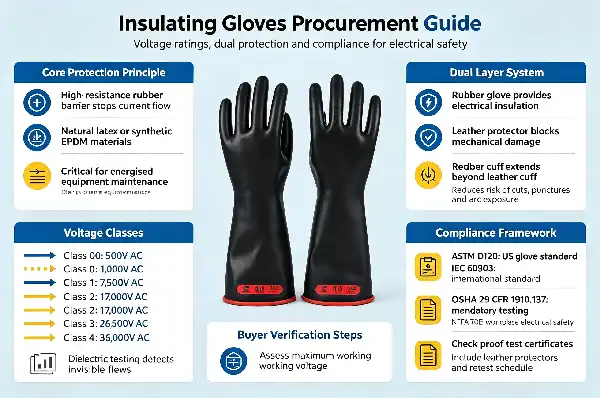
Classification Based on Voltage Ratings
Insulating gloves are divided into six groups based on the highest voltage they can handle. The groups go from Class 00, which is made for 500V AC, to Class 4, which can handle 36,000V AC. Class 00 and Class 0 gloves are most common in low-voltage jobs like fixing EV batteries and installing home meters. Their thin design lets workers do difficult tasks with ease. Class 3 gloves, which can withstand 26,500V AC, protect people who work for utilities and manage distribution lines and substations. Each classification goes through proof testing at voltage levels that are much higher than its maximum use rate. For example, Class 3 gloves have to be able to handle 30,000V AC during their proof test in order to be certified.
When procurement managers know these differences, they can perfectly match safety gear to working risks. A repair worker who is fixing problems with 480V industrial control panels needs very different safety gear than a lineman who is working on 15kV distribution lines. When gloves don't match, they either add too much bulk that slows down work or not enough protection that puts lives at risk.
The Role of Leather Protectors and Supporting Equipment
Insulating gloves can't be used by themselves. When leather guard gloves are worn over the rubber layer, they protect against cuts, abrasions, and punctures that could damage the dielectric. To stop electrical tracking, the rubber glove needs to be at least two inches longer than the leather protector. This multi-layered approach takes care of both electrical and physical risks at the same time, because in the real world, workplaces have more than one threat at the same time.
Standards Compliance: The Foundation of Global Procurement
ASTM D120 and IEC 60903 set the standards for how insulated gloves should be made, tested, and performed, which are used all over the world. In the United States, OSHA law 29 CFR 1910.137 requires their use and regular testing, and NFPA 70E has detailed rules for electrical safety. These standards make sure that gloves bought in Asia work the same way as gloves bought in Europe or the Americas. This creates the stability that is needed for businesses that do business across borders. Third-party approval that checks for compliance gives buying professionals peace of mind that the PPE they buy meets both legal requirements and worker safety needs.
Why Dielectric Testing is Vital: Saving Lives Through Effective Inspection
Microscopic flaws in insulating electrical rubber gloves that make them fatally weak can't be seen with the naked eye. An opening that you can't see with the naked eye lets thousands of volts get to the hand of a worker. Material breakdown caused by ozone, chemical pollution, or UV harm lowers dielectric strength without showing any clear changes. Because of this, it is not only a good idea to do regular electrical checking, it is a must.
The Systematic Testing Process
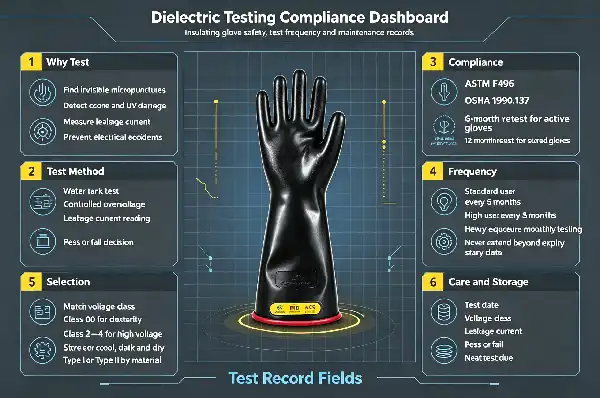
In dielectric testing, gloves are put under controlled electrical stress while current leakage is watched for signs of insulation failure. During the process, each glove is inflated and buried in a tank of water. It is then put through a proof voltage that is many times higher than its stated capacity. Leakage current is measured by special equipment. If the number is higher than the allowed level, the glove is taken out of service right away. This methodical approach finds gloves that aren't working right before they get to the field, where they could hurt or kill someone.
As part of the testing protocol, the physical properties are also looked at, such as the lack of embedded foreign material and how elastic and flexible the material is. These tests show that gloves keep their protective qualities even after being worn and exposed to the surroundings for long periods of time during industrial work.
Real-World Impact: When Testing Prevents Tragedy
Industry incident records show that workers didn't notice that their gloves were broken until they were tested regularly. A utility company in the Midwest found that 7% of its active-rotation Class 2 gloves had leakage currents that were too high during a routine testing cycle. These gloves had passed a visual inspection just a few days before. Each failed glove meant that a possible death was avoided. In the same way, a mining company's testing program found that gloves used near battery banks were losing their chemical integrity. This was done before any workers were shocked.
These cases show that dielectric testing can be used for both quality control and life insurance. The money spent on testing tools and methods is returned many times over because electrical accidents don't happen, which saves lives and money.
Compliance and Liability Protection for Organizations
Systematic testing not only keeps workers safe, but it also creates written proof of due diligence. According to ASTM F496 and OSHA 1910.137, gloves that are being used must be tested every six months, and gloves that are being stored must be tested every twelve months. Companies that keep detailed records of their testing show that they follow the rules during audits and build strong defenses in case of harm. On the other hand, companies are at great legal and financial risk if accidents happen because they didn't test. The audit trail that regulators and insurers need is made up of date stamps, test results, and failure analyzes that are produced by testing programs.
If you're evaluating personal protective equipment suppliers and require batch-specific testing documents before placing an order, PPE MAX is able to provide official Certificates of Analysis, professional laboratory test reports, and product samples for your verification. Feel free to contact our team at marketing@ppemax.com to discuss your sourcing needs and obtain complete documentation for your quality assessment and procurement approval.
How to Choose and Maintain Electrical Rubber Gloves for Maximum Safety
To choose the right insulated gloves, you need to match the voltage class to the highest level of exposure you expect and then add a safety cushion. Class 2 gloves, which can handle up to 17,000V, are the right safety gear for electrical work that involves 7,200V distribution lines. However, the voltage grade is only the beginning of the decision-making process for specifications.
Balancing Protection with Operational Requirements
While thicker, higher-rated gloves protect better, they make it harder to feel things and move your hands easily. This causes a real tension: workers need enough protection without having gloves that are too big to do their jobs well. Because they are so thin, Class 00 gloves are great for working with small parts, touchscreens, and precision tools in automobile and control panel settings. Class 3 gloves protect against much higher voltages, but they can be hard to use when workers need to handle small parts or complicated equipment settings.
Choosing the right material adds another factor to this equation. The natural rubber used to make Type I gloves makes them more flexible and dexterous. Type II gloves, which are made of EPDM synthetic rubber, don't break down quickly in outdoor environments because of ozone. Type II gloves are better for jobs that will be done outside, even though they are a little less flexible.
Testing Frequency and Documentation Requirements
The maximum time frame for testing gloves that are still being used, six months, is not a suggestion that testing should be put off until that date. In places with a lot of use, tests may need to be done every three months or even once a month to catch problems early. Date stamps, test voltages, leakage current readings, and pass/fail decisions must be written down for each testing event. Color-coded date stamps are put right on the gloves by many groups so that testing results can be seen right away.
If gloves have been stored for a year without being tested, they can't be used until they are fully electrically tested, even if they have never been worn. This requirement takes into account the fact that rubber wears down over time, no matter how it is used.
Maintenance Practices That Extend Service Life
Cleaning it the right way gets rid of dirt and grime without hurting its insulating properties. For everyday cleaning, mild soap and water are enough. Harsh solvents, petroleum products, and abrasive cleaners hurt rubber materials and make them break down faster. To keep mold from growing and materials from breaking down, gloves must dry completely after being washed and before being stored.
How gloves are stored has a big effect on how long they last. Environments that are cool, dark, and dry guard against the main things that break things down: heat, UV light, ozone, and water. Electrical equipment that makes ozone, steam pipes that make heat and humidity, or windows that let UV light in are all places where gloves should never be kept. Canvas storage bags keep things from being squished and folded, which can cause stress points and cracks. Storing gloves with the insides out or while they are still wet will cause them to break early.
Clarifying Waterproof Performance
Insulating gloves don't let water in for short periods of time, but they're not waterproof gloves that can be submerged for a long time. They can still protect you in light rain or brief contact with wet surfaces, but workers shouldn't submerge them on purpose or work in standing water while they're on. If there is dirt and moisture on the glove's surface, electricity can travel along those lines. But the rubber itself stays protective when it's wet. Knowing the difference between these two terms helps workers decide when electrical rubber gloves can still be used and when extra safety measures need to be taken.
Comparing Electrical Rubber Gloves: Making Informed Procurement Decisions
When making choices, people who work in procurement have to balance security, cost, and operational needs. Knowing the different jobs that each type of glove does makes these choices easier to understand.
Dielectric Versus Mechanical Protection
Insulating rubber gloves and leather work gloves are used for very different things. Because they have a high insulating strength, rubber gloves protect against electrical dangers. Leather gloves protect against cuts, scrapes, and holes. Neither one can be used instead of the other. It is required that rubber insulating gloves be worn with leather protection because the two work well together. The rubber blocks out electricity, and the leather protects against damage that could weaken that insulation.
Trying to save money by only wearing leather gloves when working with electricity is very dangerous, since leather doesn't protect against electric shock very well. In the same way, insulating gloves that don't have leather protectors on them are unsafe because they can get punctured or worn down.
Leading Manufacturers and Their Specializations
There are a lot of different companies that make insulated gloves, and each has its own strengths. Honeywell Salisbury is known for being durable and having a wide range of voltage classes available. This makes them a popular choice for utility companies that deal with a variety of electrical settings. Their products consistently last a long time in harsh field conditions. Ansell works on ergonomic design and new materials that make things more comfortable to wear for long periods of time. This is important for workers who wear gloves for their whole jobs. Novax gloves focus on thin-wall construction in lower voltage classes, which makes them easier to use for precise electrical work.
Each maker is certified to strict ASTM and IEC standards, but their warranty terms, replacement policies, and expert help are all different. Not only should procurement managers look at the glove's specs, but they should also look at how responsive the manufacturer is, how many replacement parts are available, and how willing they are to help with implementation in the field.
Cost-Quality Considerations in Bulk Procurement
Even though premium gloves cost more at first, they often end up being cheaper in the long run because they last longer and break less often. A forty-dollar Class 2 glove that lasts eighteen months costs less per day of use than a twenty-eight-dollar glove that needs to be replaced after nine months. Failure rates in testing are especially helpful because makers whose gloves regularly pass dielectric testing don't have to deal with the extra work and costs of replacing units that don't work.
When you buy in bulk, you can save money through volume discounts, but only if you store the gloves properly so they don't break down before they're used. To keep from having too much old inventory that can't be stored for too long, businesses should balance the amount they order with how much they use it.
Lightweight Versus Heavy-Duty Applications
When working with electricity inside, in protected areas like substations, switch rooms, and control centers, lighter gloves that allow for more flexibility can be used. Heavy gloves that can handle rough handling, weather, and abrasion are needed for outdoor service work, building sites, and industrial facilities. By matching glove specifications to real-world work environments, both over-engineering (making expensive gloves with features that aren't needed) and under-protection (making gloves that break too soon in tough conditions) can be avoided.
Procurement Insights: Where and How to Buy Electrical Rubber Gloves
Verification of the supplier is the first step in effective procurement. On the market, there are both real manufacturers and distributors selling fake or low-quality goods that don't have real certification. By asking for copies of test results, ASTM certification paperwork, and credentials for the production site, you can tell the difference between reliable providers and those that aren't.
The Value of Established Supply Partnerships
Long-term partnerships with trusted providers offer many benefits above and beyond just delivering goods. Partners that have been around for a while know what you need, keep the quality of their products high, and offer expert help when you have questions about how to use or maintain their products. They also offer flexibility in times of emergency, such as fast shipping when stock is low, custom sizing for workers with non-standard measurements, or private labeling for companies that want to build their own PPE brand.
We at PPE MAX have spent decades building up the ability to work with other companies in this way. We have been making insulating gloves since 1956, so we know a lot about how to do it. We are also present in 134 countries, so we know how to meet the different regulatory and operational needs of global procurement.
Bulk Orders and Customization Options
Buying in bulk can save you money, especially when you mix it with custom specs. Customized fitting plans help companies with a lot of workers make sure that gloves fit perfectly on a wide range of hand sizes, which increases comfort and safety. Custom packing cuts down on the time it takes to handle items during shipping, and private labeling helps companies with their branding efforts.
When negotiating, you shouldn't just focus on the unit price. You should also look at the total delivered cost, which includes shipping, handling, and any testing or certification paperwork that is needed to meet regulatory requirements. Flexible payment terms, contract inventory programs, or just-in-time delivery from suppliers can help you get the most out of your cash flow and inventory management.
Digital Procurement and Quality Verification
Online shopping platforms make it easier to buy things, but they need to be checked out carefully. Product listings should have full details like voltage class, material type, size range, certification standards met, and suggested testing frequency. Supplier websites should show information about the factories where their products are made, how they control quality, and proof that they are certified.
Customer reviews and comments can help you figure out how well a seller works in the real world and how reliable they are, but you should be skeptical of them. Before committing to large orders, companies that want to make big purchases should ask for samples to test to see how well the gloves work in their specific work environments.
Conclusion
Electrical rubber gloves are workers' most important defense against possibly fatal dangers are insulated gloves, but only when they keep their proven protective integrity. When these gloves are put through dielectric testing, they go from being static equipment to actively proven life-saving protection. This test finds flaws in the gloves that can't be seen before they cause accidents. Choosing the right glove classes, sticking to strict testing schedules, and following the right care instructions all add up to complete protection programs that keep workers safe and show that they are following the rules. When purchasing managers work with well-known providers, put quality above initial cost, and keep up with regular testing programs, they're not just investing in equipment; they're also investing in the lives of the workers who count on that equipment to get them home safely every day.
FAQ
1. How often must insulating gloves undergo dielectric testing?
According to ASTM F496 and OSHA 1910.137, gloves that are being used must be electrically tested every six months. Gloves that have been stored and haven't been checked in the last twelve months can't be given out, even if they've never been worn. In places with a lot of activity, tests may need to be done more often.
2. Can insulating gloves be used safely in wet conditions?
Rubber-insulated gloves don't lose their dielectric properties when they get wet, so you can wear them in light rain or for a short time on objects that are wet. But they aren't meant to be submerged for long periods of time or work in still water, because the top wetness and dirt can create electrical paths.
3. What signs indicate insulating gloves require immediate replacement?
If you see holes, cuts, foreign objects buried in the gloves, ozone cracking (small surface cracks), major swelling, or any change in texture or color that suggests chemical exposure, take the gloves off the job right away. Any glove that fails the dielectric test has to be thrown away so that it can't be used by accident.
Partner with PPE MAX: Your Trusted Electrical Rubber Gloves Supplier
After more than 60 years of making great products, PPE MAX can help your electrical safety programs. We sell insulating gloves for all voltage levels, from Class 00 to Class 4. These gloves are made according to ASTM D120 and IEC 60903 standards and come with full testing documentation that meets all regulatory needs around the world. Our Northwest China facility combines advanced production skills with strict quality control. It serves clients in 134 countries and is reliable enough for life-critical applications that they trust it. Our team offers complete solutions that are made to fit your needs, whether you need to buy in bulk for a big workforce, set up a custom-size program, or make your own PPE brand. Email our team at marketing@ppemax.com to talk about your insulated glove needs, get product samples, or look into ways to work together with a company that makes electrical rubber gloves that are dedicated to worker safety through quality assurance.
References
1. American Society for Testing and Materials. (2016). ASTM D120-14: Standard Specification for Rubber Insulating Gloves. West Conshohocken, PA: ASTM International.
2. International Electrotechnical Commission. (2018). IEC 60903: Live Working - Gloves of Insulating Material. Geneva, Switzerland: IEC Central Office.
3. Occupational Safety and Health Administration. (2021). 29 CFR 1910.137: Electrical Protective Equipment. Washington, DC: U.S. Department of Labor.
4. National Fire Protection Association. (2021). NFPA 70E: Standard for Electrical Safety in the Workplace. Quincy, MA: NFPA Publications.
5. American Society for Testing and Materials. (2019). ASTM F496-19: Standard Specification for In-Service Care of Insulating Gloves and Sleeves. West Conshohocken, PA: ASTM International.
6. Institute of Electrical and Electronics Engineers. (2020). IEEE Guide for In-Service Maintenance and Electrical Testing of Live-Line Tools. Piscataway, NJ: IEEE Standards Association.
Learn about our latest products and discounts through SMS or email