- English
- French
- German
- Portuguese
- Spanish
- Russian
- Japanese
- Korean
- Arabic
- Greek
- German
- Turkish
- Italian
- Danish
- Romanian
- Indonesian
- Czech
- Afrikaans
- Swedish
- Polish
- Basque
- Catalan
- Esperanto
- Hindi
- Lao
- Albanian
- Amharic
- Armenian
- Azerbaijani
- Belarusian
- Bengali
- Bosnian
- Bulgarian
- Cebuano
- Chichewa
- Corsican
- Croatian
- Dutch
- Estonian
- Filipino
- Finnish
- Frisian
- Galician
- Georgian
- Gujarati
- Haitian
- Hausa
- Hawaiian
- Hebrew
- Hmong
- Hungarian
- Icelandic
- Igbo
- Javanese
- Kannada
- Kazakh
- Khmer
- Kurdish
- Kyrgyz
- Latin
- Latvian
- Lithuanian
- Luxembou..
- Macedonian
- Malagasy
- Malay
- Malayalam
- Maltese
- Maori
- Marathi
- Mongolian
- Burmese
- Nepali
- Norwegian
- Pashto
- Persian
- Punjabi
- Serbian
- Sesotho
- Sinhala
- Slovak
- Slovenian
- Somali
- Samoan
- Scots Gaelic
- Shona
- Sindhi
- Sundanese
- Swahili
- Tajik
- Tamil
- Telugu
- Thai
- Ukrainian
- Urdu
- Uzbek
- Vietnamese
- Welsh
- Xhosa
- Yiddish
- Yoruba
- Zulu
China Dielectric Gloves for Malaysia Industrial Parks
Founded in 1956, PPEMAX stands as a premier global manufacturer and supplier of full-range personal protective equipment. All our products comply with internationally recognized standards including IEC, ASTM, CE, UKCA, NIOSH and ISO9001. Equipped with a 2,000-square-meter modern production plant, we boast over 25 years of mature OEM & ODM capabilities to deliver one-stop customized solutions covering R&D design through worldwide logistics. Our safety gear is distributed across 134 countries globally. Upholding our core tenet “Safety First, Quality Priority”, we serve as a dependable long-term PPE partner for industrial enterprises around the world.
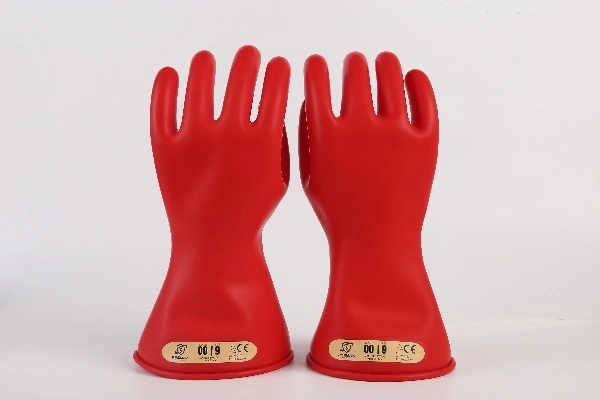
With industrial parks in Malaysia – petrochemical, power generation, semiconductor, and heavy manufacturing – growing at a fast pace, electrical safety procedures need to be strict. The dielectric gloves are the first line of defence against electrical risks, offering vital insulation protection for personnel who operate on energised equipment. Malaysia continues to invest in infrastructure and attract global manufacturing partners. Sourcing certified electrical protection from trustworthy Chinese manufacturers provides industrial safety managers a strategic edge in compliance, cost-effectiveness, and supply chain resilience.
|
Parameter |
Type I (Natural Rubber) |
Type II (Synthetic/EPDM) |
|
Maximum Use Voltage |
500V AC / 750V DC |
500V AC / 750V DC |
|
Proof Test Voltage |
2,500V AC / 10,000V DC |
2,500V AC / 10,000V DC |
|
Maximum Thickness |
0.75mm (30 mils) |
0.75mm (30 mils) |
|
Length Options |
11-14 inches |
11-14 inches |
|
Color Code |
Beige Label |
Beige Label |
|
Temperature Range |
Standard |
Extended (-25°C to +55°C) |
|
UV/Ozone Resistance |
Standard |
Enhanced |
Choosing the Right Dielectric Gloves for Industrial Use in Malaysia
Voltage Classification and Risk Assessment
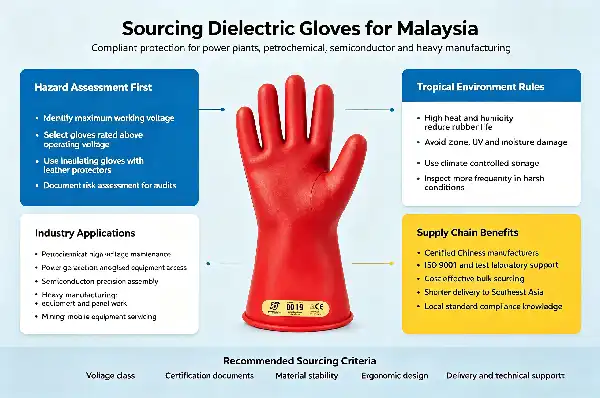
Proper dielectric glove selection is based on studies of electrical hazards. Safety managers must calculate maximum working voltages for all situations of operation, and then choose gloves rated far above those voltages. The two-glove method pairs insulating gloves with leather protection to extend service life without losing tactile sensitivity. For mining operations in Malaysia, the mobile equipment needs dielectric gloves with Class 0 protection (up to 1,000 volts), but utility contractors operating on distribution lines need Class 2 (up to 17,000 volts). Awareness of these contrasts avoids over-specification, which increases costs and decreases dexterity, and under-specification, which endangers worker safety.
Environmental Considerations for Tropical Climates
Rubber degrades more quickly in Malaysia’s hot, humid weather due to ozone, UV radiation, and absorption of moisture. Premium electrical insulating gloves are stabilised and antioxidant-treated to help prevent environmental stress cracking. Storage methods are just as important. Climate-controlled facilities keep the gloves in good shape between uses. Chinese makers specially develop rubber compounds knowing the Southeast Asian markets because they are concerned that ordinary recipes might wear out faster in Malaysia.
Balancing Protection with Operational Efficiency
The thickness of the glove will affect both the insulating capabilities and the manual dexterity. Malaysian assembly procedures that need precision motor control choose smaller Class 00 products, with lower voltage ratings for better tactile feedback. Heavy industries need the utmost protection and accept some loss of dexterity while dealing with high-energy systems. Leading Chinese manufacturers provide ergonomic designs with textured grips, curved fingers, and anatomical sizing to reduce hand strain from long periods of use – an important consideration for Malaysian shift workers who operate 10-12 hour shifts.
Chinese Manufacturing Advantages
Chinese electrical protection firms targeting Malaysia’s industrial sector provide many strategic benefits. ISO 9001 quality systems and dedicated electrical testing labs are housed in existing buildings. The volume of production offers an affordable price without sacrificing the criteria of certification. Closer proximity to ports in Southeast Asia decreases shipping time and logistical costs compared to suppliers in Europe or North America. Many Chinese exporters have customer care teams knowledgeable in Malaysian regulations, SIRIM certification procedures, and local industry norms. This combination of technical skills, low cost, and local knowledge makes Chinese suppliers the preferred partners for Malaysian industrial purchasing departments.
Procurement Guide: How to Buy Dielectric Gloves in Bulk for Industrial Parks
Sourcing Channels and Supplier Selection
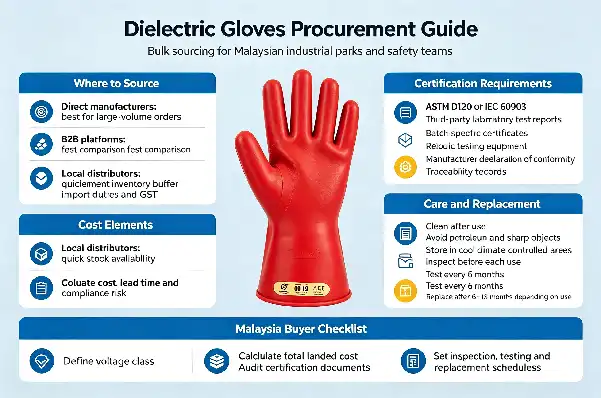
Malaysian industrial parks typically procure electrical safety equipment through three primary channels. Direct engagement with Chinese manufacturers offers maximum customization and competitive pricing, particularly for large-volume orders exceeding 500 pairs quarterly. This approach requires careful supplier vetting, including factory audits and sample testing. B2B platforms provide marketplace access to multiple suppliers, facilitating price comparison and specification matching, though buyers must independently verify credentials. Local Malaysian distributors stocking Chinese-manufactured products offer convenience and immediate availability, typically at premium pricing reflecting warehousing and service value. Each channel presents distinct trade-offs between cost, lead time, and procurement complexity.
Pricing Structures and Budget Considerations
Electrical insulating dielectric gloves pricing varies substantially based on voltage class, order volume, and certification requirements. Class 00 gloves typically range from USD 8-15 per pair in bulk quantities, whereas Class 2 protection commands USD 35-60 per pair. Malaysian buyers should anticipate additional costs, including leather protector gloves (USD 5-12 per pair), periodic electrical testing equipment, and replacement inventory buffers. Annual consumption for a mid-sized manufacturing facility often reaches 200-400 pairs, representing significant expenditure justifying strategic supplier partnerships. Chinese manufacturers frequently offer tiered pricing structures rewarding volume commitments, extended payment terms for established accounts, and bundled accessory packages that improve total cost of ownership.
Logistics and Import Considerations
Shipping from Chinese production hubs to Malaysian ports typically requires 7-14 days of ocean freight, with air freight reducing transit to 3-5 days at substantial cost premiums. Container consolidation opportunities exist for large orders, optimizing freight expenses. Malaysian customs clearance requires proper HS code classification (typically 4015.19), commercial invoices documenting product specifications, and certificates of conformity demonstrating standards compliance. Experienced Chinese exporters provide comprehensive documentation packages that streamline customs processing. Procurement managers should account for approximately 10-15% import duties and GST, factoring these costs into total landed pricing when comparing domestic versus international sourcing options.
Certification Verification and Quality Assurance
Genuine certification documents are the foundation of compliance in procurement. Test results from qualified labs (eg TÜV, SGS, or CNAS-certified facilities) from reputable Chinese manufacturers show conformity to ASTM D120 or IEC 60903 standards. These records should include the date of testing, the voltage rating, and the lot numbers of the items sent. Malaysian customers should ask for manufacturer declarations of conformity, material composition certifications, and traceability mechanisms that connect delivered items to test records. Additional guarantees may be obtained with the use of incoming inspection procedures, such as visual inspection, measurement verification, and periodic third-party testing. At PPE MAX, we keep open documentation because we know that Malaysian industrial customers need evidence of compliance that can be verified to fulfil their internal safety standards and regulatory audits.
If you're evaluating personal protective equipment suppliers and require batch-specific testing documents before placing an order, PPE MAX is able to provide official Certificates of Analysis, professional laboratory test reports, and product samples for your verification. Feel free to contact our team at marketing@ppemax.com to discuss your sourcing needs and obtain complete documentation for your quality assessment and procurement approval.
Maintenance, Testing, and Lifespan of Dielectric Gloves in Industrial Use
Proper Care Under Malaysian Conditions
Tropical environments pose unique challenges for rubber-based electrical protection. After each use, gloves require cleaning with mild soap solutions to remove contaminants, oils, and perspiration that accelerate degradation. Complete air-drying away from direct sunlight prevents moisture retention that promotes fungal growth. Storage in opaque, breathable containers within climate-controlled areas (ideally 15-25°C with 50-70% relative humidity) extends service life. Malaysian facilities lacking dedicated PPE storage rooms should implement sealed cabinets with desiccant packets. Gloves must never contact petroleum products, solvents, or sharp objects. Proper care protocols, documented in facility standard operating procedures, transform product longevity from an uncertainty into a predictable maintenance expense.
Inspection and Testing Protocols
Class 00-2 gloves must be tested for electrical properties at intervals not more than six months, as per ASTM D120. A visual examination is conducted before use for punctures, rips, embedded foreign objects, and surface degradation. The air inflation technique of inflating the gloves for leak detection offers field-level verification between official electrical testing. Malaysian industrial parks generally have three levels of inspection systems: pre-shift inspections by users, monthly evaluations by supervisors, and semi-annual laboratory testing. Gloves that do not comply should be taken out of service immediately and destroyed so they cannot be inadvertently used again. More Chinese vendors are providing colour-coded date systems and integrated tracking labels that simplify scheduling inspections, enabling Malaysian safety authorities to keep up with compliance documents.
Service Life Expectations and Replacement Indicators
Properly maintained electrical insulating gloves typically deliver 6-18 months of operational service, depending on usage intensity and environmental exposure. Class 00 products used in controlled manufacturing environments often reach upper lifespan limits, whereas Class 2 gloves deployed in outdoor utility work may require replacement within 8-12 months. Visible degradation signs include surface cracking, discoloration, stiffness loss, and tackiness. Malaysian operations should establish replacement schedules based on usage patterns rather than solely relying on appearance-based judgments. Maintaining inventory rotation systems and tracking individual glove service history optimizes replacement timing, balancing safety requirements against procurement budgets.
Ensuring Safety and Compliance: Industry Best Practices for Malaysia Industrial Parks
Regulatory Alignment with Malaysian Standards
We must have suitable personal protective equipment as required by the Occupational Safety and Health Act 1994 and the laws of Malaysia while working with electricity. The Department of Occupational Safety and Health (DOSH) performs workplace inspections to ensure compliance, including the sufficiency of PPE specifications and maintenance records. Malaysian companies have a legal obligation to provide approved safety equipment and adequate worker training. SIRIM QAS International also offers local certification services. However, international standards ( ASTM, IEC, EN) often meet regulatory requirements with the correct paperwork. Working with vendors that understand the Malaysian regulatory environment, including the language requirements for safety instructions and labelling, makes compliance easier to manage.
Case Study: Enhanced Safety Outcomes in Selangor Manufacturing
In 2022, a multinational automobile components manufacturer in the Shah Alam industrial zone in Selangor switched to a qualified Chinese manufacturer for its electrical safety procurement from European vendors. The strategy change achieved 40% cost reductions while still meeting ASTM D120 certification criteria. The facility had no electrical contact accidents involving maintenance staff in over 18 months, an improvement over the three minor incidents in the prior period. Contributing aspects were better glove availability (bigger inventory due to cost savings), better compliance by workers (addressing concerns about worn gloves staying in service), and bespoke fitting choices that increased comfort and dexterity. This instance shows that well-qualified Chinese manufacturers may give safety performance equal to that of typical Western suppliers, but with a better value proposition.
Emerging Innovations in Electrical Protection
Advanced manufacturing processes continue to enhance dielectric glove performance. The composite materials include synthetic rubbers that provide greater chemical resistance for personnel exposed to the harsh conditions typical of Malaysian palm oil processing and chemical manufacture. We also handle workplace health issues beyond electrical risks by using ergonomic design advances to prevent hand fatigue. Smart glove technologies with embedded RFID chips allow for the automation of inventory management and the scheduling of inspections, which may be especially useful for big Malaysian industrial parks that need to manage thousands of PPE pieces across many sites. Chinese manufacturers are investing more in R&D, partnering with multinational safety equipment firms to provide advanced technology to Asian markets at affordable price ranges.
Conclusion
As Malaysia’s industrial growth continues, there is a need for dependable electrical safety measures that can balance regulatory compliance, employee safety, and productivity. Chinese makers of electrical insulating dielectric gloves have become sophisticated partners, able to fulfil demanding international requirements while providing significant benefits in cost, customisation and regional logistics. Malaysian procurement experts should focus on suppliers who can provide certifications, have adapted products for tropical climates, and can offer extensive support services when procuring safety equipment. Transparency, thorough documentation, and a shared commitment to worker safety are the cornerstones of partnerships that help maintain compliance and achieve operational excellence in industrial operations. It’s more than a transactional purchase – it’s an investment in staff well-being and organisational resilience.
FAQ
1. How do I verify that Chinese dielectric glove certifications are authentic?
Request complete test reports from accredited laboratories showing ASTM D120 or IEC 60903 compliance. Legitimate manufacturers provide batch-specific documentation including test dates, voltage ratings, and laboratory accreditation details. Contact testing facilities directly to confirm report authenticity. Reputable suppliers welcome factory audits and third-party verification. Malaysian buyers should establish relationships with suppliers, maintaining transparent quality systems and documented traceability from raw materials through finished products.
2. What distinguishes dielectric gloves from standard insulated work gloves?
Electrical insulating gloves undergo rigorous dielectric testing, verifying specific voltage resistance, whereas general insulated gloves provide only basic protection against cold or abrasion. Certified electrical protection carries voltage class ratings (Class 00 through 4) based on standardized testing protocols. Standard work gloves lack this verification and must never substitute for properly rated electrical protection. Malaysian safety regulations require voltage-rated, certified products for energized electrical work—general-purpose gloves create compliance violations and serious safety risks.
3. How frequently should electrical testing occur for Malaysian industrial use?
ASTM D120 requires testing every six months for Class 00-2 gloves. Malaysian tropical conditions may warrant more frequent inspection intervals—quarterly testing provides enhanced assurance given accelerated environmental degradation potential. Gloves showing visible damage require immediate removal regardless of the testing schedule. Facilities should maintain detailed testing records documenting each glove's inspection history, supporting both regulatory compliance and liability protection.
Partner with PPE MAX for Certified Dielectric Gloves
Malaysian industrial safety managers seeking dependable electrical protection should connect with experienced dielectric glove manufacturers who understand regional requirements and international standards. PPE MAX has served global industries since 1956, delivering certified insulating gloves to 134 countries, including extensive Southeast Asian operations. Our ASTM and IEC-compliant products feature tropical-climate formulations, comprehensive testing documentation, and competitive bulk pricing structures designed for industrial park procurement needs.
Contact our team at marketing@ppemax.com to discuss voltage classification requirements, customization options, and logistics coordination for Malaysian delivery. We provide detailed certification packages, sample evaluation programs, and technical consultation supporting informed sourcing decisions. Whether equipping a single facility or coordinating multi-site procurement across Malaysian operations, PPE MAX combines manufacturing expertise with responsive service that prioritizes your workforce safety and regulatory compliance. Request your tailored quotation today and discover why leading industrial organizations trust PPE MAX as their preferred dielectric gloves supplier.
References
1. Malaysian Department of Occupational Safety and Health. (2020). Guidelines on Personal Protective Equipment. Ministry of Human Resources, Malaysia.
2. American Society for Testing and Materials. (2019). ASTM D120-20: Standard Specification for Rubber Insulating Gloves. ASTM International, West Conshohocken, PA.
3. International Electrotechnical Commission. (2018). IEC 60903:2018 - Live Working - Gloves of Insulating Material. IEC Central Office, Geneva, Switzerland.
4. Occupational Safety and Health Act 1994 (Act 514) and Regulations. (2017). Malaysian Ministry of Human Resources, Kuala Lumpur, Malaysia.
5. Industrial Electrical Safety Practices in Southeast Asian Manufacturing. (2021). Asia-Pacific Safety Research Institute, Singapore.
6. Tropical Climate Effects on Rubber Dielectric Properties: A Comparative Study. (2022). Journal of Occupational Safety in Developing Economies, Volume 14, Issue 3.
Learn about our latest products and discounts through SMS or email