- English
- French
- German
- Portuguese
- Spanish
- Russian
- Japanese
- Korean
- Arabic
- Greek
- German
- Turkish
- Italian
- Danish
- Romanian
- Indonesian
- Czech
- Afrikaans
- Swedish
- Polish
- Basque
- Catalan
- Esperanto
- Hindi
- Lao
- Albanian
- Amharic
- Armenian
- Azerbaijani
- Belarusian
- Bengali
- Bosnian
- Bulgarian
- Cebuano
- Chichewa
- Corsican
- Croatian
- Dutch
- Estonian
- Filipino
- Finnish
- Frisian
- Galician
- Georgian
- Gujarati
- Haitian
- Hausa
- Hawaiian
- Hebrew
- Hmong
- Hungarian
- Icelandic
- Igbo
- Javanese
- Kannada
- Kazakh
- Khmer
- Kurdish
- Kyrgyz
- Latin
- Latvian
- Lithuanian
- Luxembou..
- Macedonian
- Malagasy
- Malay
- Malayalam
- Maltese
- Maori
- Marathi
- Mongolian
- Burmese
- Nepali
- Norwegian
- Pashto
- Persian
- Punjabi
- Serbian
- Sesotho
- Sinhala
- Slovak
- Slovenian
- Somali
- Samoan
- Scots Gaelic
- Shona
- Sindhi
- Sundanese
- Swahili
- Tajik
- Tamil
- Telugu
- Thai
- Ukrainian
- Urdu
- Uzbek
- Vietnamese
- Welsh
- Xhosa
- Yiddish
- Yoruba
- Zulu
Electrical Rubber Gloves: When Should You Replace Them?
Electrical rubber gloves are the first line of defence against shock dangers, but even the best insulated gloves can break if they are not replaced regularly. If you see damage like cracks or holes in them, if the required dielectric testing fails, or if you use them for longer than the manufacturer recommends, which is usually every six months of active use, you should replace them right away. Damage to the environment from ozone, chemical contact, or bad storing also means replacing, no matter how old the item is. Proactive replacement plans keep workers from getting hurt on the job, make sure that regulations are followed, and protect your employees from electricity accidents that could be deadly.
Understanding Electrical Rubber Gloves and Their Lifespan
Knowledge of the lifespan of electrical rubber gloves is vital for safety. Insulating gloves keep workers safe by putting an insulating shield between their hands and electrical equipment that is already on. The voltage grades for these specialised safety devices range from Class 00 to Class 4, with a maximum use voltage of 500V to 36,000V. Class 00 gloves are used for low-voltage tasks like installing smart meters and maintaining the batteries in electric vehicles. In these jobs, workers need to be very dexterous to work with small circuit connections and touch screens. Class 3 gloves, which can handle up to 26,500V AC, are used for high-voltage utility work on transmission lines and in substations, where the chance of an arc flash rises greatly.
Material Composition and Degradation Factors
The durability of these safety gloves depends on how well the materials are made. Natural rubber is the best material for delicate jobs that need fine motor skills because it is very flexible and sensitive to touch. EPDM (Ethylene Propylene Diene Monomer) synthetic rubber is better at resisting ozone and UV damage, which makes it last longer in outdoor settings where ozone cracking is a big problem. At PPE MAX, we've seen that gloves that are kept near equipment that makes ozone can lose 40% of their dielectric strength in just three months if they are in direct sunshine.
Extreme temperatures speed up the ageing process of rubber by breaking down polymer chains and oxidation. Gloves that are used in temperatures above 104°F or below 14°F wear out more quickly. Chemicals, especially oil-based products, cleaners, and cleaning agents, can damage insulation by making it grow, become softer, or lose its surface. How often you use something is very important; gloves that are bent and stressed every day develop tiny cracks that can't be seen at first glance, but can be found through strict testing procedures.
Environmental and Storage Considerations
How you store your gloves has a huge effect on how long they last. ASTM D120 says that gloves should be kept in cool, dark, dry places that are out of direct sunlight and away from sources of ozone. We suggest using fabric bags with the cuffs facing down and avoiding any twisting or compression that could cause stress spots. Gloves must be completely dry before being stored because moisture speeds up the breakdown process. At our plant in Northwest China, we keep climate-controlled storage areas where the temperature and humidity stay the same all year. This keeps the consistency of the gloves from the time they are made until they are sent to our partners in 134 countries.
When Should You Replace Electrical Rubber Gloves? Key Indicators and Standards
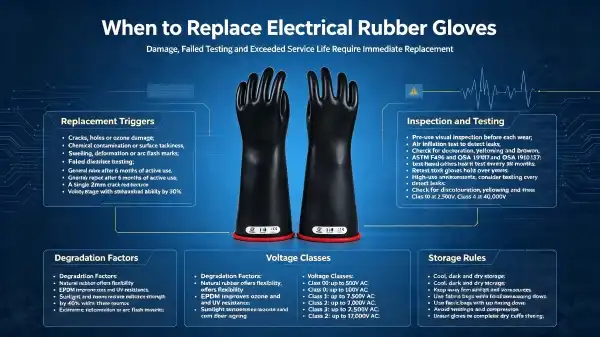
Regulatory systems set clear deadlines for change and factors that depend on certain conditions for electrical rubber gloves. Electrical testing must be done on gloves every six months after they are put to use, according to ASTM F496 and OSHA 1910.137. Notably, gloves that have been sitting in stock for a year or more cannot be given if they haven't been tested in that time. This is an important fact for procurement managers who keep a lot of PPE on hand.
Visual and Physical Inspection Protocols
Daily checks before each use are your first line of defence against glove failure. Workers should do the air inflation test, which involves putting air inside the glove and listening for air leaving, which could mean there are holes or tears. If you look closely, you should be able to see discolouration, especially yellowing or browning, that could be caused by ozone damage or UV exposure. Surface tackiness is a sign of chemical pollution that needs to be replaced right away.
Cracks, even very small ones, are terrible for dielectric stability. We found that a single 2mm crack can lower the voltage-withstanding ability by 70% during our tests at PPE MAX. If the rubber core swells or changes shape, it means that chemicals have attacked it. Any damage to the body, burn marks from arc flashes, or embedded objects must be taken out of service right away. Recording inspection results creates responsibility trails that are needed for compliance checks and to protect people from harm.
Mandatory Testing Intervals and Procedures
High voltage is used in dielectric tests to find insulation problems that can't be seen with the naked eye. Voltages used for proof tests range from 2,500V for Class 00 gloves to 40,000V for Class 4 gloves. Testing centres put gloves in conductive water tubs and measure the leakage current. Readings above certain limits show that the insulation has broken down. Under ASTM D120, Class 0 insulating gloves with unique red stickers must be tested at 5,000V AC, even though their maximum use rate is only 1,000V. This gives workers five times more safety during voltage changes.
Tracking testing records lets replacement tactics be planned ahead of time. Gloves whose leaking current keeps going up in successive tests should be thrown away before they break. Changing the temperature during tests shows hidden flaws caused by inconsistent production or damage in the field. The six-month testing period is the longest that can be used. Testing should be done every three months in high-use areas.
Comparison of Electrical Rubber Gloves: Durability, Safety, and Replacement Frequency
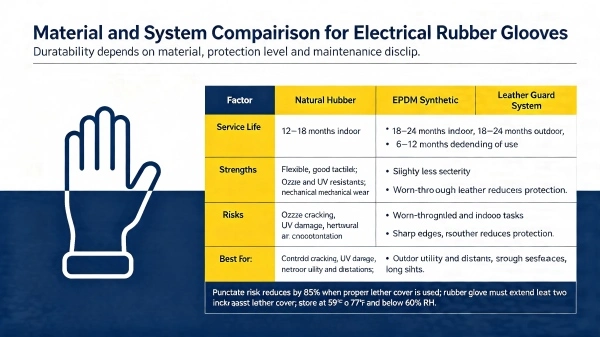
The choice of material has a huge effect on the cost of repair and on worker safety for electrical rubber gloves. Natural rubber is very flexible, but it can crack when used outside because of the ozone. Some tactile awareness is given up by synthetic materials in exchange for better protection of the surroundings.
Material Performance Characteristics
Natural rubber gloves stay flexible at a lot of different temperatures and give workers better "feel" when they're using tools and controls. If you take care of these gloves properly, they should last between 12 and 18 months in controlled indoor circumstances. In outdoor utility uses where ozone and UV light would quickly break down natural rubber, EPDM formulas extend service life to 18 to 24 months. Our material testing lab at PPE MAX looks at samples under conditions that speed up ageing and simulate five years of field exposure. This makes sure that our standards are based on real-world performance and not just theoretical limits.
Composite materials with many polymer layers provide strength while keeping electricity from flowing through them. These high-tech designs make them less likely to get punctured when working on utility poles or substations, where sharp edges and rough surfaces are always a danger. Anatomically bent designs keep workers' hands from getting tired after long shifts, so they can keep their grip strength throughout their shifts. This is an important safety feature that keeps tools from falling near live equipment.
Role of Leather Protectors in Extending Glove Life
As a last resort, leather guard gloves can take mechanical abuse that would otherwise damage insulation rubber. When these guards get worn through, which can happen anywhere from 6 to 12 months based on the conditions of the job, they need to be replaced. To stop electrical tracking—which is when energy moves along dirty surfaces—the rubber glove must go at least two inches past the leather cover. Replacing both rubber gloves and leather covers at the same time increases the effectiveness of the whole system while keeping costs down.
These are the most important benefits of combined glove systems:
- Better Protection Against Punctures: Leather protectors protect against rough concrete floors, sharp metal edges, and wire strands that are widespread in electrical work settings. Our field studies show that punctures in rubber gloves are 85% less likely to happen when the right covers are always used.
- Longer Service Life: Leather guards can double the useful life of rubber insulating gloves by absorbing wear and tear and mechanical stress. This directly lowers the number of replacements needed and the total cost of ownership for large workforces.
- Better Grip Security: Textured leather surfaces make it safer to hold tools, even when they're wet, when rubber surfaces become slippery. This stops workers from fumbling near live equipment, which could damage gloves or hurt workers.
- Thermal Protection: Leather adds a layer of heat protection during arc flashes, buying valuable moments that can keep people from getting badly burnt. When worn with clothes that don't catch fire, this gives complete safety for dangerous electrical work.
Best Practices for Maintaining and Extending the Life of Electrical Rubber Gloves
Systematic repair programs extend the life of electrical rubber gloves while keeping their safety features. Glove care should be emphasised in training programs from the moment workers get their gear.
Proper Usage and Handling Techniques
When putting on gloves, the cuff has to be rolled outward so that dirt or other things don't get stuck inside. Workers should check their hands for jewellery, toenails that are too sharp, or anything else that could pierce the rubber from the inside. When taking off gloves, they should be carefully taken off and turned inside out to make checking and washing easier. Checking to see if two tools are compatible is very important. Some tools with sharp edges or heated areas may need extra safety measures besides regular leather covers.
Avoiding pollution stops deterioration from happening too soon. For example, hand creams with petroleum in them can get into rubber and weaken its electrical strength within days. Before putting on gloves, workers should wash their hands with light soap. Gloves need to be cleaned with solutions recommended by the manufacturer. Mild soap and water are usually enough. Harsh chemicals, organic solvents, and rough cleaning make rubber break down faster. Rinsing gloves well gets rid of any poisons that are still on them, and they need to dry completely in the shade before being stored.
Storage Environment Controls
Temperature-controlled storage between 59°F and 77°F cuts down on thermal stress cycles as much as possible. To keep mould from growing and water from absorbing, the humidity should stay below 60%. The air can flow through canvas storage bags, but light can't get in. Metal buckets and plastic bags should not be used because they hold water. Keeping gloves separated by voltage class and rotating the inventory based on first-in, first-out rules makes sure that older stock is used before newer sales, which keeps the shelf life from running out.
Electrical motors, transformers, battery chargers, and other equipment that make ozone must be kept away from storage areas. Even small amounts of ozone can cause damage that you can't see until something terrible fails while it's being used. At PPE MAX, we give storage guidelines that are tailored to the plans of our clients' facilities. These guidelines help us find the best places to store things so that they are easy to get to and safe for the environment.
Documentation and Inspection Protocols
Structured inspection programs make people responsible and allow them to be tracked. By giving each pair of gloves a unique identification number, it is possible to keep track of their testing history, field use, and participation in incidents. Digital inspection forms keep track of the results of eye checks, air tests, and user comments about problems with comfort or performance. Using predictive analytics on this data shows trends that indicate when certain amounts of gloves or usage situations need to be replaced more quickly.
Every year, training programs should be updated to cover common mistakes like storing things incorrectly or not inspecting them enough before use. It's helpful for procurement teams to know what's going on in the field. For example, workers may not want to wear heavy gloves that slow them down and cause them to take unsafe shortcuts. Choosing gloves that are both protective and useful increases obedience, which in turn increases worker safety.
Procurement Guide: Buying Electrical Rubber Gloves with Replacement in Mind
Strategic procurement of electrical rubber gloves weighs the prices of the now against the benefits over time. To get the best safety and price, buyers must look at many things at the same time.
Certification and Compliance Verification
Baseline quality standards are set by ASTM D120 certification in North America and IEC 60903 approval in foreign markets. These standards spell out the physical qualities, testing methods, and voltage withstand requirements. Fake gloves that aren't certified by a real company pose huge risks—they might look real, but their electrical properties will be very different. At PPE MAX, every shipment of gloves comes with approval paperwork that can be linked to specific testing results for that batch. This gives purchasing managers proof that the gloves are safe, so they can use them during safety checks.
The highest voltage exposure plus the right safety margins determine the class grade. Working with 480V control screens needs at least Class 00 protection, but many safety managers choose Class 0 for extra protection against voltage spikes. When working with high-voltage power lines, you need Class 3 or Class 4 protection, and if your gloves fail, you could get hurt or even die.
Cost-Benefit Analysis and Total Ownership Calculations
The unit price of premium gloves is higher, but they last longer and protect you better. Total cost of ownership is found by adding up how often something needs to be replaced, how much it costs to test, how much it costs to get rid of, and any incident-related losses. A glove that costs 30% more but lasts twice as long saves money and makes people safer. Bulk buying strategies take advantage of high prices, but buyers have to weigh the savings against the fact that inventory goes bad over time—gloves that break down in storage are useless.
Establishing relationships with certified providers guarantees regular quality and on-time deliveries. Industrial safety dealers, wholesalers, and direct end-users in the mining, energy, manufacturing, and infrastructure sectors are all served by PPE MAX. With the help of our Northwest China manufacturing hub, which is the biggest PPE production centre in the region and has been around since 1956, our global distribution network covers 134 countries and offers localised support.
Supplier Selection and Quality Assurance
Reputable makers keep a close eye on quality throughout the whole production process. Material sourcing verification makes sure that rubber materials meet the requirements without using cheaper alternatives that put safety at risk. In-process testing finds flaws in goods before they get to customers. Final inspection procedures check each batch's physical qualities, voltage tolerance, and accuracy of measurements.
Working with skilled providers gives you access to technical know-how that goes beyond just providing products. Consulting about applications helps match the right gloves for the right jobs. Support for training makes sure that end users know how to choose, use, and maintain the right equipment. When replacement parts run out or when accident investigations need thorough product specs, responsive customer service takes care of pressing needs right away.
Conclusion
Electrical safety relies on replacing gloves on time, following the rules for doing so, doing regular checks, and making smart choices about what to buy. Testing gloves every six months, replacing them right away if they look damaged, and getting rid of gloves that are no longer useful for the environment all help to avoid accidents and make sure people follow the rules. By choosing materials that balance the flexibility of natural rubber with the sturdiness of synthetics and by storing and cleaning them properly, you can extend the life of the protection while keeping its integrity. Focusing on certified goods, total ownership costs, and seller dependability during strategic procurement improves both safety and budget efficiency. Companies that have complete glove management systems protect their workers and show a dedication to worker health, which has been a sign of industry leadership since the start of workplace safety standards.
FAQ
1. How often must electrical rubber gloves undergo dielectric testing?
According to ASTM F496 and OSHA 1910.137, gloves must be tested every six months after they are put to use. If the gloves were tested more than 12 months ago, they can't be given out. Testing every three months is a good way to find damage earlier in areas that get a lot of use.
2. Can damaged electrical rubber gloves be repaired or patched?
Repairs are not allowed at all. Even small holes, cracks, or fixes can suddenly weaken the dielectric stability. Any harm that can be seen needs to be taken out of service and replaced right away. The risk of getting an electric shock from worn-out gloves is much higher than the cost of buying new gloves.
3. What are the risks of using expired or damaged insulating gloves?
When glove protection fails, workers could get an electrical shock that kills them. Companies can get in trouble with OSHA, have their insurance rates go up, and be held legally responsible for accidents involving faulty PPE. Compliance needs inspection records that can be shown and new paperwork that is sent in on time.
4. Do different voltage classes require different replacement schedules?
The time of replacement is not just based on voltage class, but also on health and test results. Higher-voltage gloves aren't used as often, which could make them last longer, but contact with the world has the same effect on all classes. According to regulations, testing times stay the same for all groups.
Partner with PPE MAX: Your Trusted Electrical Rubber Gloves Supplier
Making the workplace safer starts with getting reliable safety gear from a reliable electrical rubber gloves maker that wants you to succeed. Since 1956, PPE MAX has been a specialist in its field for 68 years. It is the biggest PPE manufacturer in Northwest China, and its products are sold in 134 countries around the world. We sell certified insulating gloves from Class 00 to Class 4 that meet ASTM D120 and IEC 60903 standards. These gloves come with full testing paperwork and expert support. Not only does our team make defence, but we also test and use our own tools and put our name on quality that saves lives. We offer full support for all of your purchasing needs, whether you need large amounts for big building projects, special OEM solutions, or expert advice on when to replace things. Contact our team at marketing@ppemax.com right away for full product details, bulk prices, and advice on how to improve your electricity safety program with protection that has been proven to work for decades.
References
1. American Society for Testing and Materials. (2021). ASTM D120-20: Standard Specification for Rubber Insulating Gloves. ASTM International, West Conshohocken, PA.
2. Occupational Safety and Health Administration. (2020). 29 CFR 1910.137: Electrical Protective Equipment Standards. U.S. Department of Labour, Washington, DC.
3. International Electrotechnical Commission. (2019). IEC 60903: Live Working—Gloves of Insulating Material. International Standards Organisation, Geneva, Switzerland.
4. National Fire Protection Association. (2021). NFPA 70E: Standard for Electrical Safety in the Workplace. NFPA Publications, Quincy, MA.
5. Institute of Electrical and Electronics Engineers. (2018). IEEE Guide for Testing and Evaluation of Dielectric Properties of Electrical Insulating Materials. IEEE Standards Association, Piscataway, NJ.
6. American National Standards Institute. (2020). ANSI Z87.1-2020: Occupational and Educational Personal Eye and Face Protection Devices—Safety Equipment Performance Standards. ANSI Publications, Washington, DC.
Learn about our latest products and discounts through SMS or email