- English
- French
- German
- Portuguese
- Spanish
- Russian
- Japanese
- Korean
- Arabic
- Greek
- German
- Turkish
- Italian
- Danish
- Romanian
- Indonesian
- Czech
- Afrikaans
- Swedish
- Polish
- Basque
- Catalan
- Esperanto
- Hindi
- Lao
- Albanian
- Amharic
- Armenian
- Azerbaijani
- Belarusian
- Bengali
- Bosnian
- Bulgarian
- Cebuano
- Chichewa
- Corsican
- Croatian
- Dutch
- Estonian
- Filipino
- Finnish
- Frisian
- Galician
- Georgian
- Gujarati
- Haitian
- Hausa
- Hawaiian
- Hebrew
- Hmong
- Hungarian
- Icelandic
- Igbo
- Javanese
- Kannada
- Kazakh
- Khmer
- Kurdish
- Kyrgyz
- Latin
- Latvian
- Lithuanian
- Luxembou..
- Macedonian
- Malagasy
- Malay
- Malayalam
- Maltese
- Maori
- Marathi
- Mongolian
- Burmese
- Nepali
- Norwegian
- Pashto
- Persian
- Punjabi
- Serbian
- Sesotho
- Sinhala
- Slovak
- Slovenian
- Somali
- Samoan
- Scots Gaelic
- Shona
- Sindhi
- Sundanese
- Swahili
- Tajik
- Tamil
- Telugu
- Thai
- Ukrainian
- Urdu
- Uzbek
- Vietnamese
- Welsh
- Xhosa
- Yiddish
- Yoruba
- Zulu
Dielectric Gloves: Solvent, UV, or Heat — Which Degrades?
Founded in 1956, PPEMAX stands as a premier global manufacturer and supplier of full-range personal protective equipment. All our products comply with internationally recognized standards including IEC, ASTM, CE, UKCA, NIOSH and ISO9001. Equipped with a 2,000-square-meter modern production plant, we boast over 25 years of mature OEM & ODM capabilities to deliver one-stop customized solutions covering R&D design through worldwide logistics. Our safety gear is distributed across 134 countries globally. Upholding our core tenet “Safety First, Quality Priority”, we serve as a dependable long-term PPE partner for industrial enterprises around the world.
When it comes to safeguarding workers from electrical risks, dielectric gloves are the vital barrier between deadly voltage and human safety. These vital defences, however, are constantly under attack by three main environmental enemies: chemical solvents, UV radiation, and heat exposure. Heat is the most damaging of these degrading variables. In harsh temperatures, molecular breakdown occurs rapidly, and the integrity of the insulation is lost in a matter of hours. Solvents activate chemical processes that may impair integrity in days to weeks. UV radiation is much slower, taking months of exposure to appreciably degrade protective properties. By understanding these degradation paths, procurement professionals and safety managers may make educated choices to safeguard people and operational budgets.
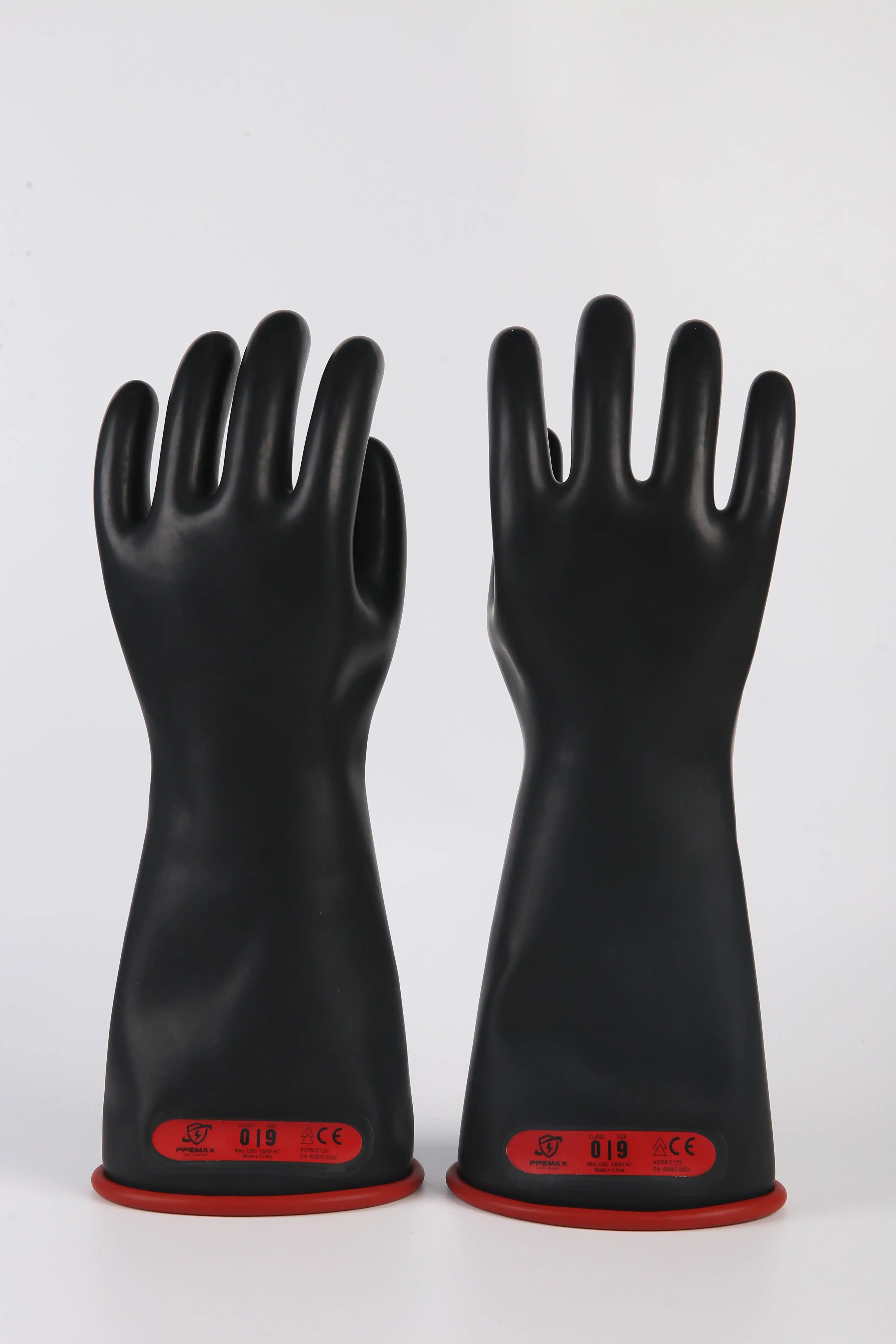
|
Parameter |
Specification |
|
Maximum Use Voltage |
1,000V AC / 1,500V DC |
|
Proof Test Voltage |
5,000V AC / 20,000V DC |
|
Label Color |
Red (ASTM D120/IEC 60903) |
|
Material Type |
Type I (Natural Rubber) / Type II (EPDM) |
|
Thickness |
1.02mm (0.040 inches) |
|
Length Options |
11", 14", 16" inches |
|
Cuff Styles |
Straight, Bell, Contour |
|
Standards Compliance |
ASTM D120, IEC 60903, OSHA 29 CFR 1910.137 |
Understanding Electrical Insulation Gloves and Their Vulnerabilities
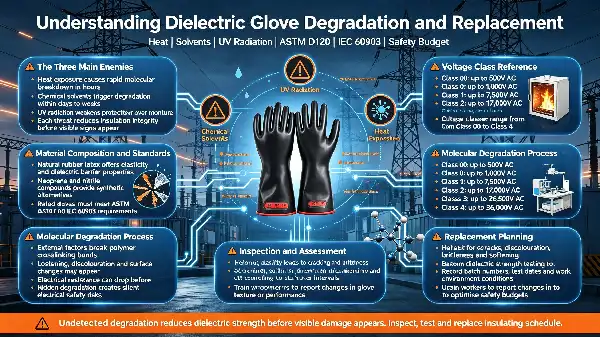
Insulating electrical gloves are the first line of defence in high-voltage settings such as utility maintenance and industrial electrical operations. The protective barriers are composed mostly of natural rubber latex or synthetic elastomers such as neoprene and nitrile compounds. Every substance has its own molecular structures, which determine how it can defend and what are their vulnerabilities.
Material Composition and Safety Standards
The rubber compounds used in voltage-rated gloves must fulfil the demanding criteria of ASTM D120 and IEC 60903. These standards include six voltage classes from Class 00 (500 volts AC) to Class 4 (36,000 volts AC). We test each batch of manufacture for optimum dielectric strength, tensile characteristics, and dimensional correctness. The polymer chains in these materials provide an electrical barrier due to their non-conductive character. But these same molecular structures are under continual attack from the environment.
The Science Behind Material Degradation
At the molecular level, rubber degrades when the integrity of polymer chains is broken by external factors. Chemical processes, photodegradation or heat disintegration may destroy the crosslinking links that give elasticity and strength. The molecular disruption produces obvious changes: cracking, discolouration, becoming brittle, or softening. Even more troubling, deterioration often decreases electrical resistance before physical symptoms are evident, posing concealed safety hazards that may escape detection by ordinary visual examination.
Why Degradation Assessment Matters
With over 6 decades at PPE MAX, we have seen how undetected dielectric glove degeneration may lead to workplace mishaps. For procurement managers, it's a fine line to walk – to maximise equipment use without sacrificing safety. The economic effect is more than the cost of replacement; it also includes the possibility of downtime, regulatory fines, and most importantly, worker wellbeing. Accurate deterioration evaluation allows predicted replacement plans that optimise safety and budget allocation.
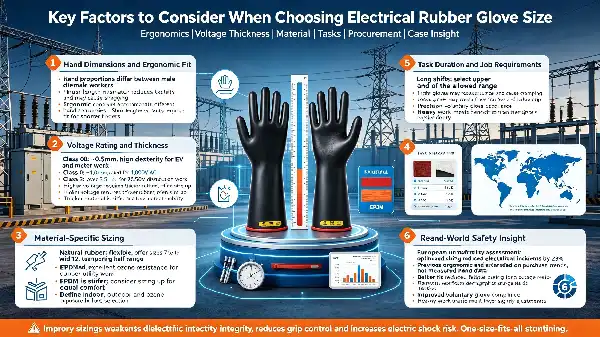
Chemical Solvent Exposure: The Hidden Threat
Rubber is attacked by several chemical agents in the industrial workplace. Petroleum-based lubricants, hydraulic fluids, paint thinners and industrial cleaners pose unique hazards to electrical protection equipment.
How Solvents Attack Rubber Materials
Solvent molecules diffuse into the rubber, breaking down the polymer crosslinks and plasticizing the matrix. Hydrocarbon solvents may promote swelling by migrating into the polymer network, whereas chlorinated chemicals can remove plasticisers that make the material flexible. We have shown that even a short exposure to strong chemicals may lower dielectric strength by 20 to 30 percent in the first exposure cycle. The cumulative deterioration breaks down safety margins; frequent contact speeds up the harm.
Recognizing Solvent Damage Indicators
By looking at it, you may see a number of signs that chemicals have been used. Surface tackiness is a sign of loss of plasticiser or partial disintegration of rubber compounds. Swelling larger than usual dimensions indicates solvent absorption inside the material structure. A change in colour, especially to a darker colour or irregular areas, is indicative of chemical reactions in the polymer matrix. If the texture becomes sticky or brittle, this is another warning indication that the material's integrity is deteriorating.
Prevention Through Material Selection and Handling
Using solvent-resistant varieties is a proactive response to the hazards of exposure. Nitrile-based materials have better resistance to petroleum products than natural rubber. When we design gloves for toxic situations, we construct protective overgloves or barrier layers to safeguard the main electrical insulation. Chemical containers should be isolated from storage processes, with clean places for protective clothing and equipment. Cleaning methods must identify permitted agents, generally mild soap and water, which remove pollutants without adding new deterioration concerns.
If you're evaluating personal protective equipment suppliers and require batch-specific testing documents before placing an order, PPE MAX is able to provide official Certificates of Analysis, professional laboratory test reports, and product samples for your verification. Feel free to contact our team at marketing@ppemax.com to discuss your sourcing needs and obtain complete documentation for your quality assessment and procurement approval.
Ultraviolet Radiation and Material Breakdown
Outdoor electrical work and equipment stored near windows or under ambient lighting face continuous UV exposure. This invisible radiation carries energy sufficient to break molecular bonds within rubber compounds.
The Photodegradation Process
UV wavelengths between 290 and 400 nanometers possess enough energy to cleave carbon-carbon and carbon-hydrogen bonds in polymer chains of dielectric gloves. This photochemical reaction generates free radicals that propagate damage throughout the material structure. Natural rubber proves particularly susceptible due to its unsaturated polymer backbone. We've measured tensile strength losses exceeding 40 percent after just six months of continuous outdoor exposure in high-UV regions.
Visible Signs of UV Deterioration
Surface cracking appears as fine networks of fissures, typically starting on areas receiving direct sunlight. Discoloration ranges from yellowing to brown or gray tones, depending on rubber composition and additive packages. Loss of surface gloss indicates degradation of the outer material layer. Texture changes toward brittleness emerge as polymer chains shorten and cross-linking density decreases. These physical manifestations signal deeper structural compromise that affects electrical insulation performance.
UV Protection Strategies
Proper storage away from direct sunlight and fluorescent lighting dramatically extends service life. We recommend opaque storage containers or cabinets in climate-controlled environments. UV-stabilizing additives within rubber formulations provide internal protection, though these antioxidants deplete over time. Protective coatings or overgloves with UV-blocking properties add an external defense layer. Inspection intervals should shorten for equipment used outdoors, with replacement triggered by any visible UV damage indicators rather than calendar schedules alone.
Thermal Degradation: The Accelerated Threat
The fastest process of deterioration is heat exposure from ambient temperatures and heat sources via radiation or contact with hot surfaces. Thermal energy speeds up all chemical processes, including those that tear down protective compounds.
Temperature Effects on Rubber Properties
Natural rubber is normally stable up to 70°C (158°F), beyond which degradation is accelerated. We have shown, using the Arrhenius equation for materials science, that the degradation rates almost double for every 10°C rise in temperature. At 100 °C (212 °F), rubber may lose important qualities in hours, not months. Some synthetic elastomers are stable at higher temperatures, with some compounds retaining their properties up to 120 °C (248 °F). However, even these materials have their thermal limitations.
Heat-Induced Material Changes
Thermal deterioration occurs via many processes in dielectric gloves. If the polymer chains are broken down by heat, the material loses its elasticity and can no longer bend without shattering. The hardening is caused by additional crosslinking processes which are driven by heat energy. Differential expansion causes stress concentrations that lead to the formation of surface cracks. The most harmful may be the fact that electrical resistance may decrease without any physical changes being visible, therefore posing concealed hazards when working with high voltages.
Selection Criteria for High-Temperature Environments
For thermal situations, procurement requirements should include heat-resistant formulations with known temperature ratings. In composite buildings, the use of diverse materials in layers may offer electrical insulation as well as thermal protection. For both electrical and thermal risks, speciality gloves with aramid fibre reinforcement or aluminized outer layers are used. Thicker stuff has more thermal mass, but less tactile sensitivity. There's a trade-off between protection and dexterity with thickness.
Which Degradation Factor Poses the Greatest Risk?
Solvent, UV, and heat degradation are compared, and relative severity is context-dependent. Heat is the quickest material deteriorator under harsh temperatures, and it may damage electrical protection during a single work shift near high-temperature equipment. At modest speeds, chemical solvents cause gradual deterioration that builds up insidiously over weeks. This usually goes unnoticed until catastrophic breakdown during usage. UV radiation is the slowest to act but will inevitably damage outdoor equipment and result in a steady but expected decrease in strength.
The real-world failure study carried out in our testing laboratory demonstrates that coupled exposures lead to synergistic effects that are worse than individual causes. Degradation of gloves subjected to heat and solvents was 3-4 times quicker than heat alone. UV pre-exposure renders things more vulnerable to assault by subsequent chemicals. UV exposure leads to cracking. Crack growth is accelerated by hot-cold cycling.
The best approach to protection is a combination of precautions. We propose that periodic electrical testing be conducted every six months utilising air inflation procedures to identify pinhole leaks and using dielectric testing equipment to confirm voltage resistance. Obvious signs of damage may be seen by visual examination before each use. • Environmental controls: Proper storage and handling practices minimise deterioration causes. Rotating glove inventory helps to ensure that no pair has too much cumulative exposure. When procurement budgets allow.
The selection of materials matching real exposure circumstances is the basis of longevity. We work with safety managers to examine their individual hazard profiles (i.e., outdoor vs. indoor usage, temperature ranges, chance of exposure to chemicals, etc.) and then offer formulas appropriate for those situations. This customised method offers superior protection at a lower life cycle cost than standard equipment choices.
Conclusion
Degradation of electrical insulating gloves due to exposure to solvents, UV radiation, and heat is a chronic problem in occupational safety management. Heat is the fastest cause of damage; subtle chemical breakdown is created by solvents, and UV radiation causes slow but inexorable degradation. To safeguard well, we need to understand how they work, have detailed inspection procedures, and pick materials designed for the kind of exposure. At PPE MAX, we’ve learned from our 67 years of manufacturing expertise in 134 countries that a glove’s lifespan relies as much on quality construction as it does on educated user behaviours. Procurement experts who use degradation awareness as part of their selection criteria strike the ideal balance between worker safety and operational efficiency.
FAQ
1. Can rubber insulating gloves completely prevent electrical shock?
Properly rated and maintained rubber insulating gloves provide exceptional electrical protection when matched to voltage levels and used correctly. They cannot guarantee absolute protection if degraded, damaged, or misapplied. Routine testing and inspection remain essential to verify ongoing protective capability.
2. How often should voltage-rated gloves undergo electrical testing?
OSHA and ASTM standards mandate electrical testing every six months for gloves in regular service. We recommend testing immediately after any suspected damage event, regardless of the scheduled interval. Organizations with rigorous safety programs often test quarterly to maintain higher confidence levels.
3. What determines whether exposed gloves can be safely reused?
Reusability depends entirely on degradation assessment outcomes. Gloves passing electrical testing and visual inspection without cracks, punctures, swelling, or other damage indicators remain serviceable. Any confirmed degradation signs mandate immediate retirement. When uncertainty exists, protective testing provides definitive answers.
Partner with PPE MAX for Superior Electrical Safety Solutions
Your workforce deserves electrical insulation gloves engineered to withstand the harshest degradation factors while maintaining uncompromising protective performance. PPE MAX has protected workers since 1956, combining advanced material science with rigorous quality control to deliver voltage-rated gloves trusted across 134 countries. As a leading dielectric gloves manufacturer in Northwest China, we provide comprehensive solutions from OEM production to custom branding. Our technical team assists with material selection tailored to your specific solvent, UV, and thermal exposure conditions. Contact our procurement specialists at marketing@ppemax.com to discuss bulk ordering, certification documentation, and tailored safety solutions that protect your team while optimizing your equipment investment.
References
1. ASTM International. "ASTM D120-20: Standard Specification for Rubber Insulating Gloves." Annual Book of ASTM Standards, 2020.
2. International Electrotechnical Commission. "IEC 60903:2014: Live Working - Gloves of Insulating Material." IEC Standards Publication, 2014.
3. National Institute for Occupational Safety and Health. "Electrical Safety: Safety and Health for Electrical Trades Student Manual." NIOSH Publication No. 2009-113, 2009.
4. Occupational Safety and Health Administration. "1910.137: Electrical Protective Devices." OSHA Standards Interpretation, U.S. Department of Labor, 2018.
5. Rodgers, Malcolm B. "Degradation of Elastomeric Insulating Gloves in Service." IEEE Transactions on Dielectrics and Electrical Insulation, vol. 15, no. 2, 2008, pp. 509-517.
6. Wypych, George. "Handbook of Material Weathering." 6th Edition, ChemTec Publishing, Toronto, 2018.
Learn about our latest products and discounts through SMS or email