- English
- French
- German
- Portuguese
- Spanish
- Russian
- Japanese
- Korean
- Arabic
- Greek
- German
- Turkish
- Italian
- Danish
- Romanian
- Indonesian
- Czech
- Afrikaans
- Swedish
- Polish
- Basque
- Catalan
- Esperanto
- Hindi
- Lao
- Albanian
- Amharic
- Armenian
- Azerbaijani
- Belarusian
- Bengali
- Bosnian
- Bulgarian
- Cebuano
- Chichewa
- Corsican
- Croatian
- Dutch
- Estonian
- Filipino
- Finnish
- Frisian
- Galician
- Georgian
- Gujarati
- Haitian
- Hausa
- Hawaiian
- Hebrew
- Hmong
- Hungarian
- Icelandic
- Igbo
- Javanese
- Kannada
- Kazakh
- Khmer
- Kurdish
- Kyrgyz
- Latin
- Latvian
- Lithuanian
- Luxembou..
- Macedonian
- Malagasy
- Malay
- Malayalam
- Maltese
- Maori
- Marathi
- Mongolian
- Burmese
- Nepali
- Norwegian
- Pashto
- Persian
- Punjabi
- Serbian
- Sesotho
- Sinhala
- Slovak
- Slovenian
- Somali
- Samoan
- Scots Gaelic
- Shona
- Sindhi
- Sundanese
- Swahili
- Tajik
- Tamil
- Telugu
- Thai
- Ukrainian
- Urdu
- Uzbek
- Vietnamese
- Welsh
- Xhosa
- Yiddish
- Yoruba
- Zulu
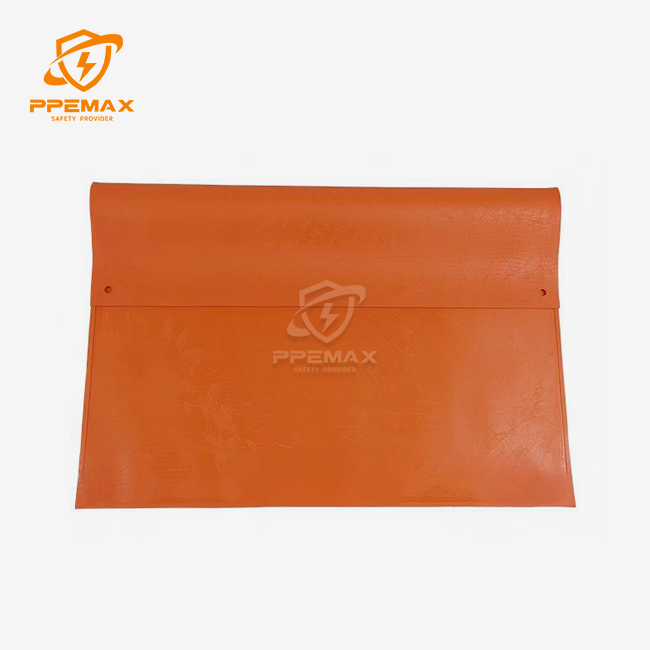
Insulating Hose
Material: Rubber
Color: Orange
Class: Class 2/3
Size Choice: 1.3/1.8M
Insulating Hose for High-Voltage Environments — Non-Conductive, Fluid-Safe Protection
Xi'An PPE MAX Co., Ltd makes Insulating Hose for moving fluids at high voltage. Standard hoses can't meet the electrical safety requirements in those settings. Each hose is built from carbon-free synthetic rubber. Non-conductive fiber reinforcement is part of the structure. Dielectric strength is rated above 20 kV per inch. At 75 kV/ft, leakage current stays below 50 microamperes per foot. The products meet ASTM F18/F18M and SAE J517 (Non-Conductive 100R7/100R8). They work from -40°C to +100°C.
About Xi'An PPE MAX Co., Ltd
PPE MAX started in 1956. Since then, industrial safety equipment has been its focus. Our engineering and testing team checks every product spec by hand. Electrical proof testing is part of that work, and datasheets alone are not enough. Source from PPE MAX and you get a team that treats product safety as a technical responsibility, not a marketing claim.


What Is This Product?
This product is a flexible conduit that does not conduct electricity. It carries fluids such as hydraulic oil, deionized water, or coolants through areas with high electrical potential. Current cannot pass to ground or between phases.
Most industrial hoses are made with carbon black. That material conducts electricity. This products work on a different recipe. Their tube and cover are made of synthetic rubber with no carbon, or with very low conductivity. EPDM is the usual pick, and special thermoplastics also show up. For strength, the build uses non-conductive high-tenacity fibers. Aramid and Polyester are the common ones.
This design directly addresses three critical industry problems:
- Arc flash prevention during aerial utility work
- Elimination of electrolytic corrosion in generator cooling systems caused by stray currents
- Leakage current management in high-voltage power electronics environments

Standard Specifications
| Parameter | Value / Standard |
|---|---|
| Dielectric Strength | >20 kV per inch |
| Leakage Current | <50 µA/ft at 75 kV/ft (ASTM F18) |
| Electrical Proof Test | 37.5 kV/ft or 75 kV/ft |
| Resistance | >1 Megaohm per inch |
| Burst Pressure Safety Factor | >4:1 |
| Operating Temperature | -40°C to +100°C |
| Cover Color | Orange (Non-Conductive) |
| Reinforcement Material | Aramid or Polyester (non-conductive) |
| Tube / Cover Material | Non-polar synthetic rubber (EPDM / Thermoplastic) |
| Standards Compliance | SAE J517 (100R7/100R8), ASTM F18/F18M |

Product Features
- Carbon-free rubber construction: nothing in the hose wall carries a current
- Non-conductive fiber reinforcement: Aramid or Polyester braid maintains flexibility without sacrificing electrical isolation
- Orange cover with lay-line marking: makes visual ID easy. It also helps you trace compliance with standards (e.g., "Orange Non-Conductive," "ANSI 92.2")
- Wide thermal tolerance: works the same from -40°C to +100°C
- Electrochemical Degradation (ECD) resistance: the inner tube resists turning conductive. That stays true when coolant and DC voltage stress act on it over time
Performance Details
Electrical proof testing. Each batch goes through a complete electrical proof test. It measures leakage current against the 50 µA/ft threshold. Any batch above that limit is rejected before it ships. Per batch, you can ask for test documentation. It shows the applied voltage and the measured leakage current.
Fluid compatibility. The tube compound, an Insulating Hose, resists ethylene glycol-based coolants and hydraulic fluids. It does not swell. It does not pick up contamination that could add conductivity.
Pressure integrity. The hose passes hydrostatic and impulse tests verifying the bond between non-conductive reinforcement layers and rubber under pressure spikes — a requirement in aerial device hydraulics.
Electrochemical degradation resistance. The inner tube is built to slow ion migration through the hose wall. That migration is the main long-term failure mode in high-voltage cooling circuits. Check conductivity once a year. This lets you track any internal degradation across the service life.
Applications for Insulating Hose
Aerial Device Hydraulics (Utility Sector)
On bucket trucks, these hoses feed hydraulic fluid to the boom tools. At the same time they keep ground crews insulated from live overhead lines. In this application, ASTM F18 compliance is required as standard.
Water-Cooled Power Electronics
Deionized cooling water runs through the hose between high-voltage components and grounded heat exchangers. You find this setup in HVDC converter stations, thyristor valves, and large electric furnaces. Pot-to-ground faults have to be prevented. Ion migration inside the hose wall also has to be resisted.
Induction Furnace Cooling
Cooling water goes through induction coils at metal foundries. That setting brings high radiated heat. Intense electromagnetic fields are present too. The hose works as an electrical isolator. It stops arcing between the coil turns and the external water supply.

Why Source from PPE MAX?
PPE MAX has made safety equipment since 1956. Every production batch gets electrical proof testing at 37.5 kV/ft and 75 kV/ft. Our own testing team handles that step. B2B customers we supply work in power generation. Utility maintenance is one more sector we serve. Industrial manufacturing is another.
Our team works with buyers one on one. Specifications get confirmed with them. Traceability paperwork is part of the job. Custom requests get support too. If your application has parameters outside the standard table above, contact us before placing an order. We will tell you straight whether the product fits.

Packing
Each hose gets packed so it can't be damaged in transit and won't soak up moisture on the way. Lay-line marking on every hose assembly lets you trace it back. Bulk Insulating Hose orders can be labelled and packed the way you need them.
FAQ
Q: Will standard hydraulic fittings work on This product?
A: The usual JIC/NPT geometries do fit. Swaging is where things go wrong. Press too hard and the inner liner gets pierced, which opens a conductive path. Where high voltage is involved, use stainless steel or other non-conductive fittings that resist corrosion. That keeps electrolysis from starting.
Q: Does that orange cover prove the hose is non-conductive?
A: An orange cover does meet SAE J517 rules for non-conductive hose. Color by itself proves nothing, though. Look at the lay-line markings to confirm the standard (for example, "ANSI 92.2").
Q: What does moisture do to performance?
A: Water carries current. Let the reinforcement layer soak up moisture, whether from a damaged cover or bad storage, and dielectric strength falls a long way. So QC checks include moisture absorption tests on the reinforcement fibers.
Q: How long does the hose usually last in a cooling application?
A: Expect 5–10 years in high-voltage cooling systems. The rate of electrochemical breakdown in your own fluid chemistry and at your operating voltage sets the lifespan. Check conductivity once a year. That way internal contamination shows up before it turns into a hazard.
Q: If the equipment is grounded, will a standard rubber hose work as a substitute?
A: No. On aerial lifts and induction furnaces, that hose is the main safety insulator. Ordinary carbon-black rubber gives current a direct path to ground. It fails OSHA rules for these uses.
Q: What tells me a batch passed the electrical tests?
A: Each batch includes test documentation showing applied voltage and measured leakage current. This documentation is provided with shipment and is also available in advance upon request. Contact us to discuss documentation requirements before ordering.
Contact Us
Need specifications, samples, or a quote? Email us at bettybing@ppemax.com. We'll reply with Insulating Hose product details and documents that fit your application.
Learn about our latest products and discounts through SMS or email