- English
- French
- German
- Portuguese
- Spanish
- Russian
- Japanese
- Korean
- Arabic
- Greek
- German
- Turkish
- Italian
- Danish
- Romanian
- Indonesian
- Czech
- Afrikaans
- Swedish
- Polish
- Basque
- Catalan
- Esperanto
- Hindi
- Lao
- Albanian
- Amharic
- Armenian
- Azerbaijani
- Belarusian
- Bengali
- Bosnian
- Bulgarian
- Cebuano
- Chichewa
- Corsican
- Croatian
- Dutch
- Estonian
- Filipino
- Finnish
- Frisian
- Galician
- Georgian
- Gujarati
- Haitian
- Hausa
- Hawaiian
- Hebrew
- Hmong
- Hungarian
- Icelandic
- Igbo
- Javanese
- Kannada
- Kazakh
- Khmer
- Kurdish
- Kyrgyz
- Latin
- Latvian
- Lithuanian
- Luxembou..
- Macedonian
- Malagasy
- Malay
- Malayalam
- Maltese
- Maori
- Marathi
- Mongolian
- Burmese
- Nepali
- Norwegian
- Pashto
- Persian
- Punjabi
- Serbian
- Sesotho
- Sinhala
- Slovak
- Slovenian
- Somali
- Samoan
- Scots Gaelic
- Shona
- Sindhi
- Sundanese
- Swahili
- Tajik
- Tamil
- Telugu
- Thai
- Ukrainian
- Urdu
- Uzbek
- Vietnamese
- Welsh
- Xhosa
- Yiddish
- Yoruba
- Zulu
Which Countries Import the Most Insulating Gloves from China?
Founded in 1956, PPEMAX stands as a premier global manufacturer and supplier of full-range personal protective equipment. All our products comply with internationally recognized standards including IEC, ASTM, CE, UKCA, NIOSH and ISO9001. Equipped with a 2,000-square-meter modern production plant, we boast over 25 years of mature OEM & ODM capabilities to deliver one-stop customized solutions covering R&D design through worldwide logistics. Our safety gear is distributed across 134 countries globally. Upholding our core tenet “Safety First, Quality Priority”, we serve as a dependable long-term PPE partner for industrial enterprises around the world.
The United States is the largest importer of insulating gloves from China, ahead of Canada, Germany, and the United Kingdom. These countries are key markets with electrical safety standards, resulting in repeat, high-volume buying. Major manufacturing hubs such as India, Japan, and South Korea also retain robust commodity imports, reflecting their rising utility sectors and infrastructure upgrade programs. Emerging economies in the Middle East and Latin America are boosting their import activities due to rising knowledge of electrical risks and compliance needs. Knowing these regional tendencies assists procurement experts in identifying trustworthy supply chains and competitive purchasing possibilities.
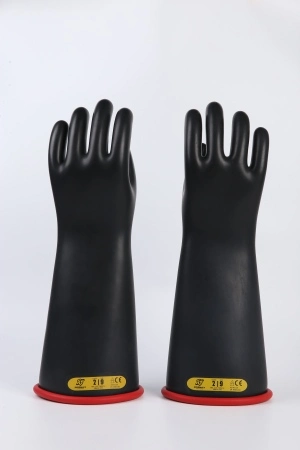
|
Parameter |
Specification |
|
Maximum Use Voltage |
17,000V AC / 25,500V DC |
|
Proof Test Voltage |
20,000V AC / 50,000V DC |
|
Typical Thickness |
2.3mm (ASTM D120 compliant) |
|
Material Type I |
Natural Rubber (high elasticity) |
|
Material Type II |
Synthetic/EPDM (ozone resistant) |
|
Standards Compliance |
ASTM D120, IEC/EN 60903 |
|
Temperature Range |
-40°F to +140°F (-40°C to +60°C) |
|
Color Options |
Orange, Red, Black |
Global Demand for Insulating Gloves: Market Overview
The global need for electrical safety devices has never been higher. Across sectors, from renewable energy installations to telecommunications infrastructure, the requirement for dependable hand protection continues to grow. Many governments throughout the globe have rigorous laws on workplace safety, which in turn force organisations to invest in approved protective gear that complies with or surpasses international standards.
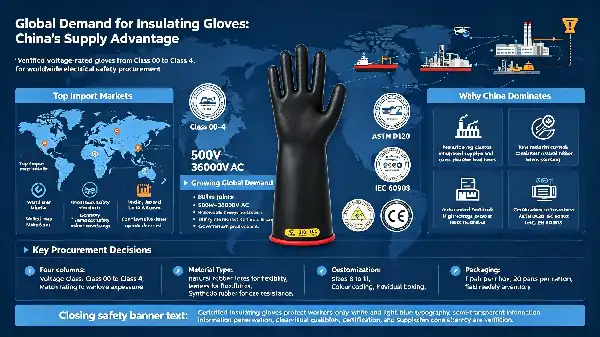
China has emerged as the dominant supplier in this scenario, not by chance, but by intentional investment in innovative manufacturing technology, experienced labour forces, and thorough quality assurance systems. Chinese manufacturers provide voltage-rated gloves from Class 00 to Class 4, for use from low-voltage meter work up to high-tension gearbox line maintenance. This adaptability, along with cost-effectiveness and scalable manufacturing capacity, presents Chinese suppliers as a vital partner for B2B clients with huge workforces and intricate safety needs.
Why China Dominates Electrical Safety Equipment Manufacturing
A number of related aspects provide Chinese manufacturers with their competitive edge. Since 1956, firms like PPE MAX have operated in specialised manufacturing clusters, such as those in Shaanxi Province, promoted by industrial strategy for decades. These clusters benefit from integrated supply chains, which reduce raw material prices and lead times. Consistent quality across huge manufacturing runs is ensured via natural rubber latex procurement, precise moulding, and automated testing facilities.
The certification infrastructure in China has become much more sophisticated. Reputable producers keep certification for ASTM D120, IEC 60903, EN 60903, and regional standards to ensure their goods fulfil the different regulatory environments consumers face internationally. Proof testing and periodic retesting are performed by testing facilities equipped with high-voltage equipment. They provide documented confirmation that each batch of the equipment functions as stated. This hard-line approach answers the main worry of procurement professionals: that cost reductions will not be at the expense of worker safety.
Market Dynamics Driving Procurement Decisions
Buyers consider numerous aspects while buying electrical protection equipment. Voltage ratings are still critical for accuracy – ordering Class 00 gloves with a maximum usage voltage of 500V AC when the applications are higher voltage is an unacceptable risk. The material type is similarly important; natural rubber latex gives higher flexibility and dielectric strength while synthetic alternatives offer increased resilience to ozone deterioration and harsh temperatures.
Procurement teams are also increasingly asking for customisation options that fit their operational needs. The gloves are available in sizes 8 through 11 and are suitable for a wide range of workers, decreasing hand fatigue during prolonged usage. The colour marking (red or black for Class 00 items) provides a quick visual identification on work sites, avoiding potentially deadly misapplication. Packaging arrangements (e.g., 20-pair cartons with individual boxing) facilitate inventory control and delivery to field teams.
Top Countries Importing Insulating Gloves from China
North America: Regulatory Rigor Drives Consistent Demand
The main geographical market for Chinese electrical safety insulating gloves is the United States and Canada. OSHA rule 29 CFR 1910.137 requires particular insulating glove classes to be used depending on voltage exposure, providing a compliance-driven procurement environment. For the utility firms that operate ageing electrical grids, Class 00 to Class 3 gloves are a regular safety stock rotation need. The six-month in-service testing cycle mandated by ASTM F496 adds to the demand, requiring organisations to have enough inventory on hand to fulfil testing schedules without affecting operations.
Large purchasers have included telecommunications companies updating 5G infrastructure. Installation specialists installing cell tower electronics and fibre optic distribution systems need low-voltage protection that does not compromise their hand dexterity during complicated connection work. Class 00 gloves are well suited to these applications, providing 500V AC protection without sacrificing the tactile sensitivity required to handle tiny components. PPE MAX is available in 11- and 14-inch lengths to suit different reach needs and seasonal garment bulk, solving practical field issues frequently neglected in off-the-shelf products.
Europe: Premium Quality Meets Strict Compliance Standards
Germany, the UK, and France dominate imports in Europe, thanks to strict EU laws on personal safety equipment. The adoption of EN 60903 harmonised standards has made cross-border buying easier, but purchasers still want high levels of product documentation, traceability, and manufacturer transparency. In Germany, the industrial sectors of the economy, especially the automobile industry and chemical industry, need gloves with greater mechanical protection and a voltage rating for situations with combined electrical and mechanical dangers.
“Supplier relationships are very important to British utility operators, and they will be seeking a full after-sales support package. Technical training programs that teach personnel correct donning techniques, visual inspection protocols, and storage requirements provide value above and beyond the product itself. PPE MAX offers comprehensive maintenance instructions and quick technical hotlines to support the holistic safety management strategy used by European organisations. CE marking certification ensures compliance with European standards for health, safety, and environmental protection, and eliminates regulatory hurdles for distributors operating in several countries within the EU market.
Asia-Pacific: Rapid Industrialization Fuels Bulk Orders
Huge glove imports due to large power sector growth in India. The nation’s move to renewable energy, especially the expansion of solar farms, creates demand for Class 00 and Class 0 gloves for installation teams working on photovoltaic inverters and medium-voltage collecting systems. Requests for customisation commonly involve branded packaging for major construction companies monitoring subcontractor compliance across various project locations. Those suppliers that can handle enterprise-scale operations may distinguish themselves by being able to place 1,000-pair shipments with business logos and safety information printed on individual boxes.
Japan and South Korea are both on accuracy and consistency. Electrical protection without contamination is required in cleanroom conditions for electronics manufacturers and semiconductor production facilities. Although voltage ratings are still important, buyers in these areas are more concerned with particle shedding properties, chemical compatibility with specialised solvents, and dimensional tolerances that impact automated dispensing systems. High-margin markets with high standards are a field where Chinese manufacturers who fulfil such demanding requirements have the technical performance to support a premium price.
Emerging Markets: Growing Safety Awareness Expands Opportunities
Middle East development booms, especially in the UAE and Saudi Arabia, have increased demand for the purchase of electrical safety equipment. Mega-projects like smart city infrastructure, desalination plants, and petrochemical complexes use global workforces needing standardised PPE across all trades. This is why more and more government procurement departments are ordering globally certified gloves instead of generic ones, knowing that with the right protection, they will experience fewer project delays due to electrical mishaps.
Latin American marketplaces are at different degrees of development. Brazil has a well-developed industrial base, which keeps the import levels of utility maintenance and manufacturing applications stable. Mexico’s status as a near-shoring destination for North American manufacturers has created demand for ASTM-compliant safety equipment that meets their parent company’s requirements. Wholesale distributors in Central and South America like suppliers who provide flexible minimum order numbers and mixed container loads that include different glove classes, so they may serve a diversified client base without a huge investment in excess inventory.
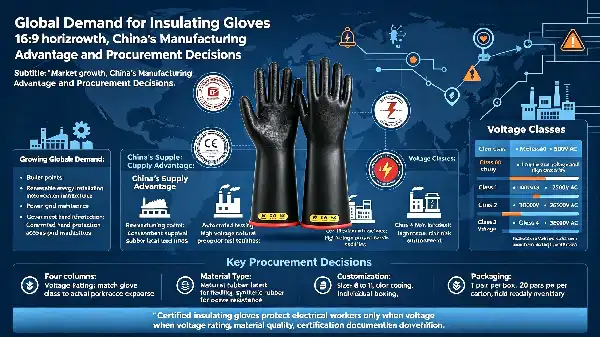
If you're evaluating personal protective equipment suppliers and require batch-specific testing documents before placing an order, PPE MAX is able to provide official Certificates of Analysis, professional laboratory test reports, and product samples for your verification. Feel free to contact our team at marketing@ppemax.com to discuss your sourcing needs and obtain complete documentation for your quality assessment and procurement approval.
Factors Influencing Country-Specific Import Volumes
Regulatory Environments Shape Procurement Priorities
The basic framework for the items that customers are legally permitted to use is provided by national and regional safety standards. Countries that embrace IEC 60903 standards are following international best practice and making it easier for multi-national firms to pursue global sourcing strategies. Markets that hold on to historical standards or have their own testing processes need vendors who are skilled at navigating varied compliance environments. Herein lies the value of PPE MAX’s array of certifications (from ASTM D120, IEC 60903, and numerous National Approvals), enabling customers to procure from a single vendor regardless of where the gloves are deployed.
The strength of enforcement varies widely. Where active workplace safety inspectorates and substantial consequences for non-compliance exist, this drives demand for documented, certified equipment. In these markets, buyers want full product documentation such as test reports on a batch basis, certifications of material, and traceability records tying each pair of gloves to the date of manufacture and proof test findings. This amount of documentation protects organisations during audits and shows due diligence during incident investigations.
Economic Growth and Industrial Activity Correlation
Import volumes correspond closely with infrastructural expenditure and industrial production. As countries are rapidly electrifying, in either rural grid expansion or urban smart grid deployment, electrical worker safety must improve commensurately. The increasing mining activities in distant areas create a continuous need for Class 2 and Class 3 gloves for the maintenance of high-voltage mobile equipment. Growth in manufacturing sectors, especially in energy-intensive sectors, generates replacement demand as gloves approach their service life.
Financial crises show quite intriguing dynamics. “Discretionary spending is down, but safety equipment purchasing is relatively recession-proof.” Compliance with regulations is not optional, and it does not depend on the state of the economy. Organisations understand that the cost of electrical mishaps is far more than the investment in preventative equipment. With budget limits, buyers may go toward value-tier items, and therefore it is important to price at a competitive level without sacrificing verified performance.
Logistics and Supply Chain Considerations
Buyers often believe geographic proximity is important in supplier selection. But it’s not. In modern container shipping, the economics favour big-volume routes between major Chinese ports and destination nations, with freight costs being small percentages of the overall landed prices for dense, high-value items like certified gloves. Absolute transit length is less important than lead time predictability; customers using just-in-time inventory systems choose suppliers who provide precise shipment forecasts and proactively communicate any issues that can delay delivery.
Supplier relationships are highly dependent on the warranty rules and how defects are resolved. Even with the most stringent quality control, electrical insulating gloves might have manufacturing defects—pinholes, thin patches, or dimensional discrepancies that can be found during reception inspection. Suppliers who have no questions asked replacement policies and pre-paid return shipping show their trust in their quality processes and ease the administrative load of the customer. We are committed at PPE MAX to reacting quickly to quality issues since we know that one bad pair of gloves damages trust in the whole supplier relationship.
Comparing Chinese Insulating Gloves with Other Global Brands
The landscape of electrical safety equipment has evolved dramatically. Established brands like Honeywell, Ansell, Klein Tools, and Salisbury built reputations through decades of consistent performance and innovation. Chinese manufacturers initially competed primarily on price, serving budget-conscious market segments willing to accept limited technical support. That paradigm has shifted fundamentally.
Performance Parity Through Material Science Advancement
Modern Chinese glove manufacturers employ natural rubber latex formulations indistinguishable from those used by premium Western brands. Sulfur vulcanization processes, accelerator packages, and anti-degradant additives optimize the balance between dielectric strength and physical durability. PPE MAX's Class 00 gloves demonstrate this evolution: 0.5mm average thickness provides flexibility for intricate work while maintaining superior insulation properties. Tensile strength exceeding 14 MPa and elongation at break surpassing 700% ensure resistance to punctures and tears during field use.
Testing protocols validate these claims objectively. AC proof testing at 2500V—five times the maximum use voltage—verifies insulation integrity under stress conditions exceeding any realistic application scenario. Ozone resistance testing per ASTM D1149 confirms that gloves maintain protective properties despite exposure to electrical discharge byproducts. UV radiation resistance extends service life for outdoor utility applications where sunlight exposure during storage on bucket trucks could otherwise degrade material properties.
Cost-Efficiency Without Compromise
Price competitiveness remains a Chinese manufacturing advantage, though the margin has narrowed as quality has improved. Bulk purchasers ordering 500-pair or larger quantities access volume discounts that can reduce per-unit costs by 30-40% compared to Western brands with equivalent specifications. This economic benefit compounds over time: organizations employing hundreds of electrical workers and maintaining rotational glove inventories realize substantial savings that can be redirected toward additional safety investments or workforce development programs.
The value proposition extends beyond initial purchase price. Chinese suppliers increasingly offer customization at no or minimal upcharge—corporate branding, specialized packaging, or dimensional modifications accommodating regional hand size distributions. Western brands typically impose minimum order quantities of 5,000+ units for such customization, placing it beyond reach for mid-sized distributors or regional utilities. PPE MAX's flexible manufacturing approach democratizes access to tailored solutions, supporting professional procurement outcomes across organization sizes.
After-Sales Support: Closing the Service Gap
Historical criticism of Chinese manufacturers centered on limited technical support and unresponsive customer service. Leading suppliers have aggressively addressed these deficiencies. Multilingual technical hotlines staffed by electrical safety specialists provide guidance on product selection, testing procedures, and troubleshooting. Comprehensive product training—delivered through webinars, on-site sessions, or detailed written materials—educates end users on inspection protocols that extend glove lifespan and ensure reliable protection.
Warranty terms increasingly match or exceed industry norms. PPE MAX backs Class 00 gloves with assurance that they will pass the first in-service retest when properly stored and handled, effectively guaranteeing six months of field performance. This confidence stems from process control investments: automated thickness measurement systems inspect every glove during manufacturing, rejecting units outside specification tolerances before packaging. Such quality assurance transforms warranty coverage from financial risk to market differentiator.
Procurement Best Practices for Importers Buying Insulating Gloves from China
Supplier Qualification and Certification Verification
Due diligence starts with making sure potential suppliers have relevant certificates from recognised testing labs. Request copies of ASTM D120 and IEC 60903 certifications and ensure they apply to the glove classes you are about to buy. Genuine certificates will include laboratory accreditation information, dates of testing, and product model numbers. Be careful of generic "ISO 9001" claims without product-specific electrical safety certifications; quality management systems are for quality management, not dielectric performance.
Personal or third-party inspection services to perform factory audits may be essential to learning about production capabilities and quality culture. Ensure proof testing protocols are followed. Each glove should be tested by high-voltage testing prior to shipping, with any faulty units being rejected automatically by the system. Evaluate storage conditions for raw materials. Natural rubber latex may decay when exposed to heat, humidity, or ozone; good environmental controls indicate the complexity of the source. Review batch documentation standards to ensure that traceability systems enable the identification of production dates and test findings for any pair of gloves via marking or packing codes.
Aligning Product Specifications with Application Requirements
Choosing the voltage rating requires accuracy. The Class 00 gloves are intended for use up to 500V AC and are suitable for working on household electrical systems, telecommunications equipment, and light industrial gear. Use them with higher-voltage systems, and you will die immediately, no matter how short your exposure. When application voltage approaches maximum usage rating, select the next higher class to give a safety buffer. For recommendations on the proper glove class depending on electrical system features and operating distance restrictions, see ASTM F1506.
Length choice blends protection & practicality. An 11-inch length provides enough wrist covering for most applications and avoids electrical contact via gaps between glove cuffs and sleeve openings. The 14-inch variant offers more coverage up the forearm, useful for reaching into electrical enclosures or working above where arm exposure rises. When determining length, evaluate common working postures and layers of clothes. Remember, gloves always need leather overgear to defend against mechanical threats. Coordinate size for comfortable layering without sacrificing dexterity.
Receiving Inspection and Testing Protocols
Accept ships after inspection. Carry out systematic receiving inspection at the time of delivery. Visual assessment should ensure that color coding matches the prescribed voltage class—red or black for Class 00 goods. Size indications should be readily visible on each glove, along with the class classification and the maximum usage voltage displayed clearly. Check for visible faults, such as fractures, foreign material incorporated in the solid, or differences in colour indicating uneven curing. Check packing lists against shipments, ensuring numbers and sizes are according to the purchase order.
Perform incoming electrical testing for high-value orders or to establish relationships with new suppliers. While manufacturers do proof testing, independent verification safeguards against shipment damage or paperwork mistakes. “You can buy a portable glove tester that can do air inflation leak checks for less than $1,000. It can find pinholes or thin spots that you can’t see just by looking. By sampling and randomly testing 2% of incoming units on a regular basis, you may identify quality trends and confirm supplier testing claims without a large time commitment.
Storage, Maintenance, and Lifecycle Management
Proper storage directly affects glove dependability and service life. Designate cold, dry storage places away from electrical equipment, motors, and ozone-generating devices. Avoid windows where direct sunlight speeds up UV deterioration. Store gloves in original boxes or fabric bags, and not in plastic containers where moisture accumulates and encourages microbial development that damages natural rubber. Use first-in-first-out rotation systems to get older stock into service before fresh inventory, maximising utilisation before age-related degradation sets in.
Conduct periodic inspections and tests as prescribed in ASTM F496. 2.1.3.2. In-service gloves should be electrically retested at intervals of six months or if damage is indicated, whichever happens first. Visual examination before each use will reveal evident defects: swelling, softening, stiffening, sticky surfaces, or foreign items embedded in the material, all of which need urgent removal from use. Train workers to manually inflate the glove by closing the glove cuff and applying light pressure. Bubbles emerging anywhere indicate insulation failure, and the glove should be retired.
Conclusion
China has become the world’s largest supplier of electrical insulating gloves, thanks to decades of development in manufacturing and investment in quality systems. Buyers in North America, Europe, Asia-Pacific, and emerging markets increasingly understand that Chinese suppliers provide verified performance, customization flexibility, and cost efficiency that meet both safety requirements and budget restrictions. Knowing what goods are being imported, why regulations exist, and how to acquire them effectively helps organisations to construct resilient supply chains for this vital protective equipment. The secret is to engage with reputable manufacturers that show constant quality, full certificates, and a real commitment to protecting workers.
FAQ
1. What international standards should insulating gloves meet for B2B procurement?
Electrical protective gloves must comply with ASTM D120 standards in North American markets, covering glove classification, testing methods, and performance requirements. European buyers require EN 60903 compliance, the harmonized standard addressing similar parameters with some regional variations. IEC 60903 provides the international baseline, widely recognized in Asia-Pacific, Middle Eastern, and Latin American markets. Verify that supplier certifications come from accredited laboratories and cover the specific voltage classes your applications demand.
2. How do I verify the correct voltage rating for my operational needs?
Identify the maximum voltage your workers might contact during normal operations and fault conditions. Select glove classes rated above this exposure level: Class 00 for systems up to 500V AC, Class 0 for up to 1000V AC, and progressively higher classes for greater voltages. Consult electrical engineering staff or safety professionals familiar with NFPA 70E and relevant standards. Never approximate voltage ratings—the consequences of underspecification can prove fatal.
3. Can I order customized insulating gloves in bulk from Chinese suppliers?
Reputable manufacturers like PPE MAX offer extensive customization options for bulk orders. Branding with corporate logos, custom packaging designs, specialized sizing distributions, and color variations beyond standard offerings all remain feasible. Minimum order quantities for customization typically start around 500 pairs, though parameters vary by complexity. Discuss requirements early in the procurement process, as customization may extend lead times by 2-4 weeks compared to standard product orders.
Partner with PPE MAX for Certified Electrical Safety Solutions
Since 1956, PPE MAX has protected workers across 134 countries through rigorous manufacturing standards and an unwavering commitment to safety. Our Class 00 insulating gloves—certified to ASTM D120 and IEC 60903—deliver 500V AC protection in lightweight, flexible designs weighing just 170g per pair. Available in sizes 8 through 11 and lengths of 11 or 14 inches, they accommodate diverse workforce requirements while maintaining superior dielectric strength. Procurement managers partnering with our team access competitive bulk pricing, customizable packaging options, and technical support from specialists who personally test the equipment we manufacture. Contact marketing@ppemax.com to discuss your organization's requirements with a trusted insulating gloves supplier committed to your operational safety and bottom-line performance.
References
1. International Electrotechnical Commission. (2022). "IEC 60903: Live Working – Gloves of Insulating Material – Technical Requirements and Test Methods." Geneva: IEC Publications.
2. American Society for Testing and Materials. (2021). "ASTM D120-14a: Standard Specification for Rubber Insulating Gloves." West Conshohocken: ASTM International.
3. Occupational Safety and Health Administration. (2020). "29 CFR 1910.137: Electrical Protective Equipment Requirements." Washington: U.S. Department of Labor.
4. National Fire Protection Association. (2021). "NFPA 70E: Standard for Electrical Safety in the Workplace." Quincy: NFPA Publications.
5. China Chamber of Commerce for Import and Export of Machinery and Electronic Products. (2023). "Annual Report on Personal Protective Equipment Trade Statistics." Beijing: CCCME Research Division.
6. Global Market Insights. (2023). "Electrical Safety Gloves Market Analysis: Industry Trends, Regional Outlook, and Competitive Landscape 2023-2030." Delaware: GMI Research Publications.
Learn about our latest products and discounts through SMS or email