- English
- French
- German
- Portuguese
- Spanish
- Russian
- Japanese
- Korean
- Arabic
- Greek
- German
- Turkish
- Italian
- Danish
- Romanian
- Indonesian
- Czech
- Afrikaans
- Swedish
- Polish
- Basque
- Catalan
- Esperanto
- Hindi
- Lao
- Albanian
- Amharic
- Armenian
- Azerbaijani
- Belarusian
- Bengali
- Bosnian
- Bulgarian
- Cebuano
- Chichewa
- Corsican
- Croatian
- Dutch
- Estonian
- Filipino
- Finnish
- Frisian
- Galician
- Georgian
- Gujarati
- Haitian
- Hausa
- Hawaiian
- Hebrew
- Hmong
- Hungarian
- Icelandic
- Igbo
- Javanese
- Kannada
- Kazakh
- Khmer
- Kurdish
- Kyrgyz
- Latin
- Latvian
- Lithuanian
- Luxembou..
- Macedonian
- Malagasy
- Malay
- Malayalam
- Maltese
- Maori
- Marathi
- Mongolian
- Burmese
- Nepali
- Norwegian
- Pashto
- Persian
- Punjabi
- Serbian
- Sesotho
- Sinhala
- Slovak
- Slovenian
- Somali
- Samoan
- Scots Gaelic
- Shona
- Sindhi
- Sundanese
- Swahili
- Tajik
- Tamil
- Telugu
- Thai
- Ukrainian
- Urdu
- Uzbek
- Vietnamese
- Welsh
- Xhosa
- Yiddish
- Yoruba
- Zulu
Where to Buy a Certified Full Mask Respirator in Bulk
Founded in 1956, PPEMAX stands as a premier global manufacturer and supplier of full-range personal protective equipment. All our products comply with internationally recognized standards including IEC, ASTM, CE, UKCA, NIOSH and ISO9001. Equipped with a 2,000-square-meter modern production plant, we boast over 25 years of mature OEM & ODM capabilities to deliver one-stop customized solutions covering R&D design through worldwide logistics. Our safety gear is distributed across 134 countries globally. Upholding our core tenet “Safety First, Quality Priority”, we serve as a dependable long-term PPE partner for industrial enterprises around the world.
Finding a trusted full-mask respirator provider is crucial when you require certified respiratory protection equipment in bulk. Bulk procurement avenues include direct producers like PPE MAX, which has distributed PPE in 134 countries since 1956, authorised industrial safety wholesalers, and approved B2B platforms for PPE wholesale. Suppliers with NIOSH, EN 136, and AS/NZS 1716 certifications give clear prices for bulk orders over 500 units and include fit testing methodologies, filter replacement schedules, and technical training. Procurement managers should choose suppliers with tested quality control systems, customisable OEM/ODM capabilities, and logistics networks that can deliver recurrent orders on time.
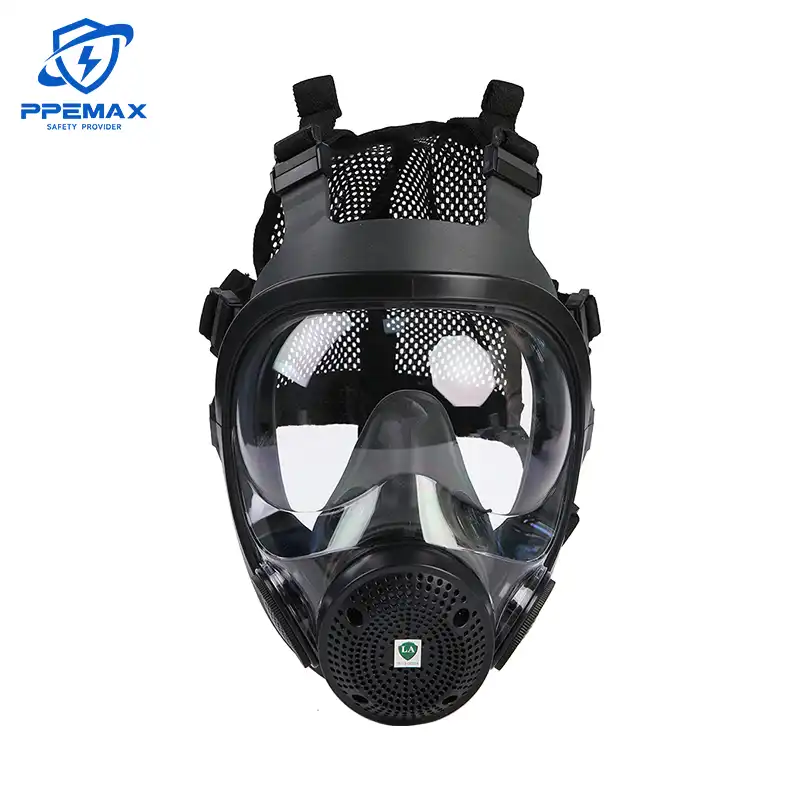
| Parameter | Specification |
|---|---|
| Material | High-grade lightweight silicone |
| Lens | Impact-resistant scratch-proof PC lens |
| Field of View | 88% panoramic vision |
| Mask Style | Full-face gas mask |
| Connector | Dual 40mm NATO RD bayonet port |
| Protection Class | Class 2 standard |
| Inward Leakage | ≤0.03% |
| Head Harness | 6-point high-tenacity nylon mesh, adjustable |
| Exhalation Valve | Low-resistance design |
| Compatible Filters | A2B2E2K2P3 RD NATO canister filters & all 40mm NATO series |
Bulk Procurement Considerations for Full Mask Respirators
Organisational requirements, financial limits, and supplier competencies must be considered for strategic mass purchase. Effective procurement protects worker safety and finances via intelligent decision-making.
Calculating Organizational Demand
Accurate volume estimate eliminates equipment shortages and inventory overruns. Audit chemical processing, spray painting, pharmaceutical compounding, and hazardous waste handling facilities for worker exposure. The indicated locations need primary devices for active usage and backup units for simultaneous repair cycles. To accommodate cleaning, fit testing, and maintenance, industry standards require 1.2 respirators per exposed worker.
Service life and replacement schedules determine the Full Mask Respirator filter purchase frequency. In high-concentration aerosol exposures, P100 particle filters must be replaced monthly but survive 40 hours in dusty settings. Contaminant type and humidity limit gas and vapour cartridge adsorption. Purchasing consumables quarterly and replenishing facepiece inventory every 18 months matches depreciation schedules and eliminates material deterioration.
Evaluating Supplier Credentials
Not all manufacturers meet quality or regulatory criteria. Procurement teams must check certification legitimacy with NIOSH or notified European assessment organisations before placing large purchases. Request batch-specific filtration, inhalation, and biocompatibility test results. Genuine providers give this documentation; evasive replies indicate counterfeit concerns.
Long-term supply chain complexity is reduced by product filter compatibility. Custom bayonet systems may attach cartridges faster but increase vendor lock-in, although RD40 or EN 148-1 threaded connectors enable cartridge compatibility. The warranty should cover manufacturing faults for three years and include lens replacement, valve repair kits, and harness components.
Supplier Reliability Factors
Lead times affect operational preparedness. Domestic distributors may fulfill orders in 5-7 days but charge more. Direct manufacturer agreements like PPE MAX give cost savings for purchases above 500 pieces; however, overseas shipment takes 3-4 weeks. Assess whether suppliers have enough inventory buffers for emergency reorders without manufacturing delays.
Post-purchase assistance distinguishes professional from commodity providers. Equipment utilisation is ensured by comprehensive training programs on fit testing, cartridge selection for particular risks, and maintenance. Technical hotlines manned by qualified industrial hygienists help solve unanticipated workplace issues.


Where to Find and Buy Certified Full Mask Respirators in Bulk
Navigating the B2B marketplace requires understanding available procurement channels and validating supplier legitimacy to secure authentic products at competitive pricing.
Identifying Trusted Manufacturers and Distributors
The respiratory protection market features several established manufacturers with decades of operational history. Beyond widely recognized brands, specialized manufacturers like PPE MAX bring unique value through customization capabilities and direct factory pricing. Our 65 years of continuous production experience supports organizations seeking OEM partnerships or private label programs tailored to specific industry requirements.
Authorized distributor networks extend manufacturers' reach while providing localized technical support and expedited delivery. Verify distributor credentials through manufacturer websites listing approved resellers by geographic region. Unauthorized grey-market sellers may offer marginally lower pricing but cannot guarantee genuine products or honor warranty claims.
Validating Product Authenticity
Counterfeit respiratory equipment poses serious legal and safety risks. Examine holographic certification labels, laser-etched serial numbers, and embossed manufacturer logos that authentic products display. Request Certificates of Conformity specific to your order batch, cross-referencing document numbers with issuing authority databases. Packaging quality often reveals authenticity—genuine manufacturers use durable corrugated materials with professional printing, while counterfeiters resort to flimsy boxes with pixelated graphics.
Physical inspection reveals material quality differences. Authentic silicone face seals exhibit uniform thickness without visible mold lines or surface imperfections. Polycarbonate lenses should resist scratching from moderate pressure and display optical clarity without distortion. Valve components operate smoothly without sticking or air leakage during manual testing.
Online Platforms Versus Direct Manufacturer Relationships
B2B marketplaces aggregate multiple suppliers, facilitating price comparisons and specification searches. These platforms benefit buyers requiring diverse PPE categories from various vendors consolidated into single purchase orders. Transaction fees and marketplace commissions may inflate final costs by 10-15% compared to direct sourcing.
Establishing direct manufacturer relationships yields strategic advantages for organizations with predictable ongoing demand. Volume commitment enables negotiated pricing structures with tiered discounts—our PPE MAX bulk programs offer graduated savings starting at 500-unit orders with enhanced terms for annual contracts exceeding 5,000 units. Direct communication eliminates intermediary delays when requesting custom labeling, specialized filter configurations, or expedited production runs.

If you're evaluating personal protective equipment suppliers and require batch-specific testing documents before placing an order, PPE MAX is able to provide official Certificates of Analysis, professional laboratory test reports, and product samples for your verification. Feel free to contact our team at marketing@ppemax.com to discuss your sourcing needs and obtain complete documentation for your quality assessment and procurement approval.
Ensuring Optimal Usage: Fit Testing, Maintenance, and Training
If incorrectly fitted, maintained, or used, premium full-face respirator equipment fails to protect. Organisational safety plans must meet these operational necessities.
Regulatory Fit Testing Requirements
OSHA requires quantitative or qualitative fit testing before and yearly after Full Mask Respirator use. Qualitative approaches identify seal loss by user sensory reaction to irritating smoke, bitter, or sweet aerosols. Quantitative testing uses specialised equipment to quantify particle concentration within and outside the facepiece, giving objective compliance fit parameters.
Even 24-hour stubble development may disrupt seal contact, disqualifying users from tight-fitting respirators. Medical exams ensure workers have enough lung capacity and no claustrophobia that might impede respirator usage. Records of these evaluations safeguard companies during regulatory audits and workplace incident investigations.
Maintenance Protocols for Extended Service Life
Clean silicone elastomers after each use to eliminate contaminants and sweat salts that damage them. Disassemble valves and immerse components in a mild detergent solution at room temperature to prevent solvents that damage rubber seals. Air drying minimises excessive moisture and microbiological development. Keep respirators in sealed containers out of direct sunlight and severe temperatures—UV and ozone increase material breakdown.
Pre-use inspections identify wear signs necessitating component replacement. Check face seals for fractures, pliability loss, and irreversible deformation. Cover apertures and test breathing and exhalation valves for air obstruction. Deep scratches or crazing in polycarbonate lenses need replacement for optical clarity and impact prevention. Service history is tracked in systematic inspection records, enabling preemptive replacement before failure.
Comprehensive Workforce Training Programs
Technical knowledge alone is insufficient—hands-on teaching assures correct donning and seal inspections. Training modules should show how to set the facepiece, draw straps over the head, tighten lower straps, then upper straps, and verify positive/negative pressure seals. Role-playing simulates stressful situations needing fast donning.
Filter selection training matches cartridges to job dangers. Filters for dusts, mists, and fumes do not protect against gases or vapours. Activated carbon-HEPA cartridges guard against hybrid situations like spray painting that produce solvent vapours and aerosol overspray. Understanding colour-coding and capacity indications saves premature replacement waste and unsafe service overextension.
Making the Right Choice: Bulk Buying Strategy and Decision Support
Choosing a supplier alliance involves quality, technological compatibility, and long-term value, not just pricing.
Cost Analysis Beyond Unit Price
Base unit, filter/cartridge, delivery, and duties/taxes are included in transparent quotes. Landed cost estimations should include all costs till delivery to your location. At 500, 1000, and 5000 units, volume discounts activate. Compare break-even points to predicted yearly consumption to determine the best order numbers for cash flow and per-unit savings.
Total cost of ownership must include training, fit-testing equipment, storage infrastructure, and inventory management labour. Reusable full-face units with a $150 initial investment and a five-year service life outperform $50 disposable versions that need yearly replacement, especially for workforces over 100.
Aligning Equipment Specifications With Operational Hazards
Generic procurement standards typically don't fit workplace needs. Multi-gas cartridges with P100 pre-filters are needed for full-face protection against acid gases, organic vapours, and corrosive mists in chemical processing. Mining and construction prioritise silica dust and welding fume particle filtering without gas protection. To avoid product contamination, pharmaceutical manufacturers use PAPR systems that maintain positive pressure to keep exhaled air in the mask cavity.
Intrinsically safe components for explosive atmospheres, food-grade materials for hygienic processing, and climate-specific elastomers for arctic to tropical temperatures are available from PPE MAX. OEM agreements provide private labelling and specification changes to fulfil operational needs not accessible in product catalogues.
Negotiation Strategies for Favorable Contract Terms
Multi-year supply agreements stabilise prices and ensure market allocation amid shortages. To spread payment and save storage, negotiate yearly volume agreements with quarterly delivery dates. Compared to prepayment requests from unknown suppliers, net-30 to net-60 payment periods boost cash flow.
The warranty should include replacement expenses for faulty items found during regular inspections, not only manufacturing problems at delivery. Service level agreements limit technical support and replacement parts delivery timeframes, preventing operational interruptions. These contractual safeguards are particularly useful when equipment supports essential infrastructure or hazardous material handling, when delays may have serious safety and financial ramifications.
Conclusion
Buying certified Full Mask Respirator protection in bulk requires careful consideration of technical parameters, supplier credentials, and pricing. Proper procurement combines financial limits with long-term operating needs while adhering to international safety standards. Partnerships between manufacturers and distributors affect worker safety and organisational efficiency. Procurement specialists ensure equipment investments that protect employee health and exceed regulatory requirements across varied industrial contexts by prioritising verifiable certifications, thorough training assistance, and transparent supplier relationships.
FAQ
1. How can I verify if a respirator supplier's certifications are legitimate?
Contact the issuing certification body directly—NIOSH maintains a publicly accessible Certified Equipment List searchable by manufacturer and model number. European notified bodies publish databases of EN-certified products with valid certificate numbers. Request suppliers provide complete test reports, including laboratory accreditation documentation. Legitimate manufacturers readily supply this information, while counterfeiters cannot produce authentic third-party validation documents.
2. What factors cause price variations between different full-face respirator suppliers?
Material quality significantly impacts cost—medical-grade silicone and optical polycarbonate exceed commodity elastomer and acrylic pricing. Certification compliance requires expensive testing protocols reflected in final pricing. Brand reputation commands premium positioning, though lesser-known manufacturers like PPE MAX deliver equivalent technical performance at competitive rates through direct factory relationships. Customization features, included accessories, and bundled training services create pricing differences beyond base equipment costs.
3. How frequently should organizations conduct fit testing and respirator maintenance?
Regulatory standards mandate annual fit testing at a minimum, with additional testing required after significant weight changes, dental work, or facial surgeries affecting seal contact. Maintenance after every use prevents contaminant buildup and material degradation. Monthly detailed inspections documenting component condition support proactive replacement scheduling. Organizations operating multi-shift continuous operations may require more frequent maintenance cycles to accommodate accelerated wear patterns from intensive use.
Partner With PPE MAX for Your Bulk Respirator Procurement Needs
Xi'an PPE MAX Co., Ltd. delivers comprehensive respiratory protection solutions backed by 65 years of manufacturing excellence and global distribution infrastructure spanning 134 countries. Our certified full-face respirator line meets NIOSH, EN 136, and AS/NZS 1716 standards while offering customization capabilities unavailable from commodity suppliers. Procurement managers benefit from our transparent bulk pricing, OEM partnership flexibility, and technical support services, including on-site training programs and fit testing protocols. We maintain substantial inventory reserves, ensuring rapid fulfillment for emergency orders alongside scheduled delivery programs supporting your operational continuity. As a trusted Full Mask Respirator manufacturer, we provide end-to-end solutions from initial specification consultation through after-sales technical assistance. Contact our team at marketing@ppemax.com to discuss your specific volume requirements and receive a detailed quotation tailored to your industry's unique safety challenges.
References
1. National Institute for Occupational Safety and Health. (2019). Respirator Selection Logic: Assigned Protection Factors. NIOSH Publication No. 2005-100. Centers for Disease Control and Prevention, Department of Health and Human Services.
2. Occupational Safety and Health Administration. (2020). Respiratory Protection Standard 29 CFR 1910.134. United States Department of Labor, Washington, D.C.
3. European Committee for Standardization. (2018). EN 136:1998 Respiratory Protective Devices - Full Face Masks - Requirements, Testing, Marking. CEN Technical Committee 79, Brussels, Belgium.
4. American National Standards Institute. (2020). ANSI Z87.1-2020: Occupational and Educational Personal Eye and Face Protection Devices. American National Standards Institute, New York.
5. International Safety Equipment Association. (2021). Comprehensive Guide to Respiratory Protection Equipment Procurement and Compliance. ISEA Publications, Arlington, Virginia.
6. Standards Australia and Standards New Zealand. (2012). AS/NZS 1716:2012 Respiratory Protective Devices. Joint Technical Committee SF-010, Sydney and Wellington.
Learn about our latest products and discounts through SMS or email