- English
- French
- German
- Portuguese
- Spanish
- Russian
- Japanese
- Korean
- Arabic
- Greek
- German
- Turkish
- Italian
- Danish
- Romanian
- Indonesian
- Czech
- Afrikaans
- Swedish
- Polish
- Basque
- Catalan
- Esperanto
- Hindi
- Lao
- Albanian
- Amharic
- Armenian
- Azerbaijani
- Belarusian
- Bengali
- Bosnian
- Bulgarian
- Cebuano
- Chichewa
- Corsican
- Croatian
- Dutch
- Estonian
- Filipino
- Finnish
- Frisian
- Galician
- Georgian
- Gujarati
- Haitian
- Hausa
- Hawaiian
- Hebrew
- Hmong
- Hungarian
- Icelandic
- Igbo
- Javanese
- Kannada
- Kazakh
- Khmer
- Kurdish
- Kyrgyz
- Latin
- Latvian
- Lithuanian
- Luxembou..
- Macedonian
- Malagasy
- Malay
- Malayalam
- Maltese
- Maori
- Marathi
- Mongolian
- Burmese
- Nepali
- Norwegian
- Pashto
- Persian
- Punjabi
- Serbian
- Sesotho
- Sinhala
- Slovak
- Slovenian
- Somali
- Samoan
- Scots Gaelic
- Shona
- Sindhi
- Sundanese
- Swahili
- Tajik
- Tamil
- Telugu
- Thai
- Ukrainian
- Urdu
- Uzbek
- Vietnamese
- Welsh
- Xhosa
- Yiddish
- Yoruba
- Zulu
What Voltage Ratings Are Available for Dielectric Gloves?
From Class 00, which is rated for a maximum voltage of 500 volts AC, to Class 4, which is rated for up to 36,000 volts AC, there are six different voltage rating groups for dielectric gloves. To keep electrical workers safe when they're working with live wires, each group lists specific proof test voltages and maximum use voltages. The electrical environment your team works in every day determines which voltage-rated dielectric gloves are best for them. It is important for procurement managers to know these differences so they can give their employees the right insulating protection that meets both ASTM D120 and IEC 60903 international safety standards.
Understanding Dielectric Gloves and Their Voltage Ratings
The Fundamental Role of Electrical Insulation
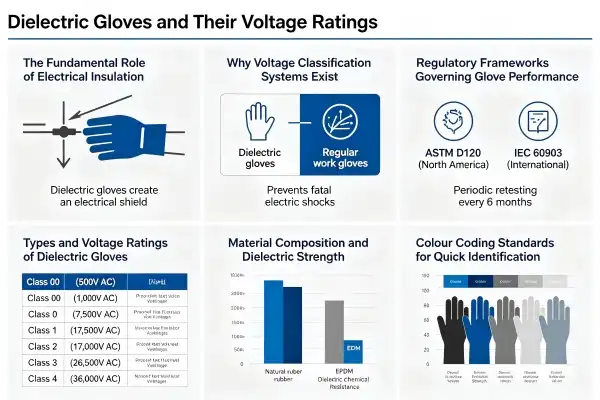
Dielectric gloves protect workers from getting electrical shocks by putting up a shield that doesn't pass electricity between them and live electrical parts. These special rubber or elastomer gloves stop the flow of electricity through the body, which regular work gloves can't do. "Dielectric" refers to materials that don't let electricity flow through them. These materials are necessary in places where touching live wires by mistake could be fatal.
Why Voltage Classification Systems Exist
Dielectric gloves protect workers from getting electrical shocks by putting up a shield that doesn't pass electricity between them and live electrical parts. These special rubber or elastomer gloves stop the flow of electricity through the body, which regular work gloves can't do. "Dielectric" refers to materials that don't let electricity flow through them. These materials are necessary in places where touching live wires by mistake could be fatal.
Regulatory Frameworks Governing Glove Performance
Two primary standards govern dielectric glove performance globally. ASTM D120 remains the dominant specification in North American markets, establishing rigorous testing protocols for electrical resistance, physical durability, and ozone resistance. Meanwhile, IEC 60903 provides the international framework, with similar performance requirements adapted for global markets. Both standards mandate periodic retesting every six months for dielectric gloves in active service, ensuring continued protection throughout their operational lifespan. When evaluating suppliers, verification of certification compliance against these standards should be non-negotiable in your procurement criteria.
Types and Voltage Ratings of Dielectric Gloves
The Six-Class Voltage Rating System
The classification system divides electrical insulating gloves into six categories based on maximum use voltage and proof test voltage. This structure helps match protection levels to specific working environments. Understanding these distinctions enables procurement teams to specify exactly what their operations require:
- Class 00 gloves provide protection up to 500 volts AC (750 volts DC), with a proof test voltage of 2,500 volts AC. These gloves suit low-voltage electrical work, including residential wiring, control panel maintenance, and battery systems in electric vehicles where compact dexterity matters as much as protection.
- Class 0 gloves extend protection to 1,000 volts AC (1,500 volts DC), tested at 5,000 volts AC. This classification serves commercial electrical contractors and industrial maintenance teams working on standard three-phase power distribution systems commonly found in manufacturing facilities.
- Class 1 gloves handle maximum voltages of 7,500 volts AC (11,250 volts DC), with proof testing at 10,000 volts AC. Utility workers performing distribution line maintenance typically rely on this classification when working on primary distribution circuits in urban and suburban power grids.
- Class 2 gloves protect against 17,000 volts AC (25,500 volts DC), tested to 20,000 volts AC. These gloves become essential for substation work and transmission line maintenance where medium-voltage equipment requires substantial insulation thickness.
- Class 3 gloves offer protection up to 26,500 volts AC (39,750 volts DC), with proof testing at 30,000 volts AC. High-voltage transmission work and specialised industrial applications demand this level of protection, particularly in mining operations and large-scale energy generation facilities.
- Class 4 gloves represent the highest protection tier, rated for 36,000 volts AC (54,000 volts DC) and tested at 40,000 volts AC. These specialised gloves serve transmission linemen working on high-voltage towers and engineers maintaining critical infrastructure in power generation plants.
These voltage-specific classifications reflect carefully engineered insulation thickness and material composition variations. Higher voltage ratings require thicker rubber construction, which naturally affects glove flexibility and tactile sensitivity—factors that procurement managers must balance against protection requirements.
Material Composition and Dielectric Strength
For many electrical shielding gloves, natural rubber is still the best choice because it is very flexible, has high dielectric strength, and is very dexterous, which lets workers move tools and parts easily. EPDM (Ethylene Propylene Diene Monomer) options, on the other hand, are better at resisting ozone breakdown, UV light, and some chemical contaminants. This means they last longer in tough weather conditions. The choice of material has an effect on both the initial cost of purchase and the number of times it needs to be replaced over time. This makes it an important thing to think about when buying in bulk.
Colour Coding Standards for Quick Identification
International colour-coding systems make it easy for workers and managers to see at a glance which gloves are the right ones, which lowers the risk of not wearing enough protection. Different manufacturers and regions use different colour schemes, but the idea behind them is the same: being able to tell the difference between voltage classes right away keeps dangerous mistakes from happening on the job. This is especially helpful for big jobs where different work zones may need to use more than one voltage class at the same time.
How to Choose the Right Voltage Rated Dielectric Gloves for Your Operation
Assessing Your Electrical Environment
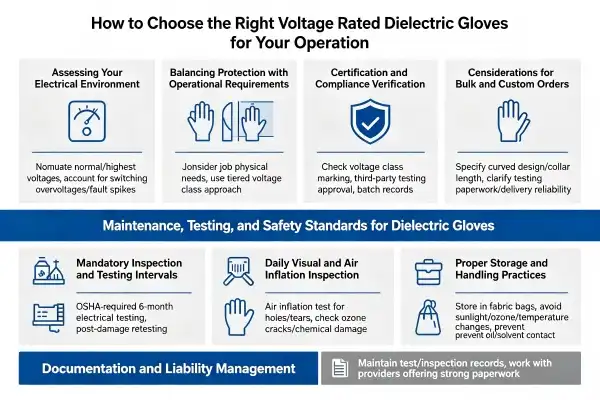
Choosing the right dielectric gloves starts with making a detailed list of the highest voltages that can be used in your buildings or on the job. This evaluation should take into account both normal voltages and possible sudden overvoltages that can happen when switching operations, fault conditions, or spikes caused by lightning occur. When unexpected electricity situations happen, the safety limits built into dielectric gloves voltage class selection are very important for keeping things safe.
Balancing Protection with Operational Requirements
In addition to power levels, the physical needs of each job should also be taken into account when choosing gloves. When worn for long periods of time, thicker, higher-voltage gloves can make it harder to feel things and make your hands tired, which could affect your work quality and output. Instead of always using the best level of safety, many operations use a tiered method, which means they use the right voltage class for each job. The goal of this approach is to improve both safety and working effectiveness while keeping costs low.
Certification and Compliance Verification
Good dielectric gloves have clear marks that show the voltage class, the date they were made, and that they meet licensing requirements. Checking for third-party testing approval when buying equipment, especially in bulk or through OEM deals, keeps your company safe from fake or low-quality goods that could break down during important use. Reputable makers keep full records of every production batch and the results of all quality control tests. This gives government buying offices and big businesses the responsibility they need.
Considerations for Bulk and Custom Orders
Companies with a lot of workers often arrange unique specs that strike a balance between safety, comfort, and cost-effectiveness. Curved designs that fit the shape of the hand make it easier to wear for long periods of time without getting tired, and different collar lengths can be used with different types of work gloves. When making supply deals, be clear about the testing paperwork needs, the new guarantee terms, and how reliable the delivery will be. These are all very important when the availability of tools directly affects the continuation of operations.
Maintenance, Testing, and Safety Standards for Dielectric Gloves
Mandatory Inspection and Testing Intervals
Electrical testing of insulated gloves is required by OSHA every six months while they are in use, and they must also be tested again after any damage or electrical event. This rule makes sure that gloves keep their protective properties for as long as they are used. During testing, the rubber is submerged in water and high-voltage AC or DC is applied to measure leaks and make sure it keeps its insulation qualities. To stay in line and show they've done their part, organisations should set up clear tracking systems that record test dates, results, and glove identification.
Daily Visual and Air Inflation Inspection
Before each use, workers should do a simple air inflation test. To do this, they should roll up the glove cuff to trap air inside, then put pressure on it to look for any holes, punctures, or tears that could make the protection less effective. If you look closely, you should be able to see if there are any signs of ozone splitting (small surface cracks that usually show up on bent areas), foreign items buried in the material, chemical damage, or physical cuts. Any glove that has these flaws must be taken out of service right away and either retested or thrown away to avoid accidental use.
Proper Storage and Handling Practices
The right way to store gloves greatly increases their useful life and keeps their protective qualities. To keep gloves dry, they should be kept in special fabric bags with the ends pointing down. The bags should be kept out of direct sunlight, away from ozone sources (like electric motors and welding tools), and from temperature changes. When you fold or squeeze gloves, you can make stress points that speed up ozone cracking. Also, rubber materials break down when they come into contact with oil, solvents, or some chemicals. Setting up good storage rules as part of the buying process will make sure that your quality equipment gives you the most value for your money.
Documentation and Liability Management
Keeping detailed records of upkeep is important for two reasons: it keeps workers safe and shows that the company is legally committed to safety standards. When problems happen, full records of tests and inspections are often very important for investigating the problems and figuring out who is responsible. The purchasing department should work with providers that offer strong paperwork, such as test papers, material safety data sheets, and expert support that helps your company's safety management systems.
Leading Dielectric Glove Brands and Market Solutions for B2B Buyers
Established Manufacturers and Their Specialisations
There are several well-known companies in the market for dielectric gloves, each with their own skills and new ideas. Honeywell has products for all voltage classes, but their Class 2 and Class 3 dielectric gloves are especially popular with utility businesses. They also have a lot of expert help tools. Ansell has created its own rubber materials that make them more flexible without lowering their dielectric strength. This solves a common problem where people's hands get tired after long periods of use. Klein Tools made their name by providing electrical workers with Class 00 and Class 0 dielectric gloves that are designed to be very sensitive to touch for precise work.
Aside from these well-known names, some specialised makers focus on certain market groups or specific needs. Others focus on making Class 3 and Class 4 goods for work with high-voltage gearbox lines, while others come up with special specs for OEM relationships with equipment makers who sell safety gear along with machinery. Regional tastes also play a role in brand choice, as some makers have better technical help and marketing networks in certain geographic markets.
Innovation Trends
Recent material science advances have produced thinner glove constructions maintaining equivalent dielectric strength, improving comfort and dexterity without sacrificing protection. Enhanced ozone-resistant formulations extend service intervals in outdoor utility applications, reducing replacement frequency and long-term costs. Some manufacturers now incorporate antimicrobial treatments addressing hygiene concerns in shared equipment environments, while others develop improved visibility through fluorescent colours that enhance worker awareness in low-light conditions.
Strategic Sourcing for B2B Procurement
Large-scale buyers should evaluate suppliers based on several critical factors beyond unit pricing. Lead time reliability becomes essential when equipment failure or testing rejection creates urgent replacement needs that can halt operations. Technical support availability helps specification teams match products to evolving workplace requirements. Flexible order quantities accommodate both routine replenishment and large project mobilisations without minimum order penalties that strain budget flexibility.
Established suppliers with broad international reach often provide localised support and certification documentation tailored to specific regulatory jurisdictions, simplifying compliance across multi-country operations. This becomes particularly valuable for manufacturers and contractors operating across borders where certification requirements vary significantly.
Conclusion
Selecting appropriate voltage-rated electrical insulating gloves requires understanding classification systems, material properties, and regulatory requirements that govern workplace electrical safety. The six voltage classes provide precise matching of protection levels to specific electrical environments, while proper maintenance and testing ensure continued reliability throughout the glove lifecycle. Organisations that invest time in proper specification and supplier selection achieve the dual goals of protecting their workforce and managing safety program costs effectively. At PPE MAX, our decades of experience supporting electrical safety programs worldwide have taught us that informed procurement decisions start with clear knowledge and access to certified, tested equipment that meets the specific demands of your operations.
FAQ
1. What happens if workers use gloves rated below their working voltage?
Using inadequately rated electrical insulating gloves creates immediate life-threatening danger. When applied voltage exceeds the glove's maximum use rating, the insulating material may break down, allowing current to pass through to the worker's hands and body. This dielectric failure can occur without warning, potentially causing severe electrical shock, cardiac arrest, or fatal electrocution. The proof test voltage provides some safety margin, but intentionally working outside rated parameters violates OSHA regulations and exposes both workers and employers to unacceptable risk. Proper voltage class selection based on actual working conditions remains non-negotiable in electrical safety programs.
2. How often should gloves be electrically tested?
ASTM D120 and OSHA regulations require electrical testing every six months for insulating gloves in regular service. Testing must occur before initial use and after any suspected damage, exposure to excessive heat, chemical contamination, or electrical incident. Organisations should establish clear tracking systems documenting each glove's test history, as lapses in testing compliance create both safety hazards and regulatory violations. Many operations partner with certified testing laboratories or invest in in-house testing equipment to manage this requirement efficiently.
3. Can dielectric gloves and insulating gloves be used interchangeably?
These terms generally refer to the same category of electrical protective equipment, though "dielectric gloves" more precisely describes their function of preventing current flow through non-conductive materials. Both terms indicate voltage-rated rubber gloves meeting ASTM D120 or IEC 60903 standards, distinguishing them from general-purpose work gloves, leather protectors, or other hand protection that lacks electrical insulation properties.
Partner with PPE MAX for Certified Electrical Safety Solutions
We understand that sourcing reliable electrical insulating gloves involves more than comparing price sheets—it requires a supplier who shares your commitment to worker safety and operational excellence. As a trusted dielectric gloves manufacturer serving global markets since 1956, PPE MAX delivers certified dielectric gloves protection across all voltage classifications, backed by comprehensive testing documentation and technical expertise gained from over six decades in the industry. Our procurement specialists work directly with safety managers, engineers, and distributors to specify equipment precisely matched to your electrical environments, operational demands, and regulatory requirements. Whether you need Class 00 gloves for precision electrical work or Class 4 protection for high-voltage transmission maintenance, our product line meets ASTM D120 and IEC 60903 standards with verification you can trust. Contact our team at marketing@ppemax.com to discuss your specific requirements, request technical specifications, or arrange a sample evaluation that demonstrates the quality difference decades of manufacturing experience delivers to your workforce protection programs.
References
1. American Society for Testing and Materials. (2022). ASTM D120-22: Standard Specification for Rubber Insulating Gloves. ASTM International.
2. International Electrotechnical Commission. (2021). IEC 60903:2021 - Live Working - Electrical Insulating Gloves. International Electrotechnical Commission Standards.
3. Occupational Safety and Health Administration. (2023). 29 CFR 1910.137: Electrical Protective Equipment. United States Department of Labour.
4. National Fire Protection Association. (2023). NFPA 70E: Standard for Electrical Safety in the Workplace. National Fire Protection Association Publications.
5. Cadick, J., Capelli-Schellpfeffer, M., & Neitzel, D. (2021). Electrical Safety Handbook, 4th Edition. McGraw-Hill Professional.
6. International Labour Organisation. (2020). Code of Practice on Safety and Health in the Use of Personal Protective Equipment. International Labour Office Publications.
Learn about our latest products and discounts through SMS or email