- English
- French
- German
- Portuguese
- Spanish
- Russian
- Japanese
- Korean
- Arabic
- Greek
- German
- Turkish
- Italian
- Danish
- Romanian
- Indonesian
- Czech
- Afrikaans
- Swedish
- Polish
- Basque
- Catalan
- Esperanto
- Hindi
- Lao
- Albanian
- Amharic
- Armenian
- Azerbaijani
- Belarusian
- Bengali
- Bosnian
- Bulgarian
- Cebuano
- Chichewa
- Corsican
- Croatian
- Dutch
- Estonian
- Filipino
- Finnish
- Frisian
- Galician
- Georgian
- Gujarati
- Haitian
- Hausa
- Hawaiian
- Hebrew
- Hmong
- Hungarian
- Icelandic
- Igbo
- Javanese
- Kannada
- Kazakh
- Khmer
- Kurdish
- Kyrgyz
- Latin
- Latvian
- Lithuanian
- Luxembou..
- Macedonian
- Malagasy
- Malay
- Malayalam
- Maltese
- Maori
- Marathi
- Mongolian
- Burmese
- Nepali
- Norwegian
- Pashto
- Persian
- Punjabi
- Serbian
- Sesotho
- Sinhala
- Slovak
- Slovenian
- Somali
- Samoan
- Scots Gaelic
- Shona
- Sindhi
- Sundanese
- Swahili
- Tajik
- Tamil
- Telugu
- Thai
- Ukrainian
- Urdu
- Uzbek
- Vietnamese
- Welsh
- Xhosa
- Yiddish
- Yoruba
- Zulu
What Tensile Strength Should Dielectric Gloves Have?
Founded in 1956, PPEMAX stands as a premier global manufacturer and supplier of full-range personal protective equipment. All our products comply with internationally recognized standards including IEC, ASTM, CE, UKCA, NIOSH and ISO9001. Equipped with a 2,000-square-meter modern production plant, we boast over 25 years of mature OEM & ODM capabilities to deliver one-stop customized solutions covering R&D design through worldwide logistics. Our safety gear is distributed across 134 countries globally. Upholding our core tenet “Safety First, Quality Priority”, we serve as a dependable long-term PPE partner for industrial enterprises around the world.
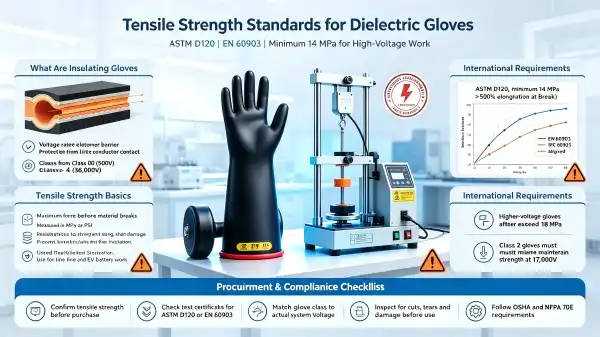
It is very important to know the tensile strength standards for electrical insulation gloves before buying them for high-voltage work. In accordance with ASTM D120 and EN 60903 standards, dielectric gloves must have a tensile strength of at least 14 MPa (2,030 PSI). This limit keeps the rubber's structure strong even when it's under a lot of mechanical stress, and it also keeps workers from getting electric shocks. Higher-class gloves that can handle high voltages usually have a rating of more than 18 MPa to account for their thicker construction and tough working conditions. Choosing gloves with tested tensile qualities has a direct effect on worker safety, product longevity, and following OSHA and NFPA 70E rules in all workplace settings.
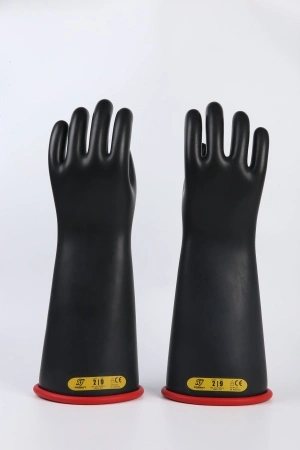
|
Parameter |
Specification |
|
Maximum Use Voltage |
17,000V AC / 25,500V DC |
|
Proof Test Voltage |
20,000V AC / 50,000V DC |
|
Typical Thickness |
2.3mm (ASTM D120 compliant) |
|
Material Type I |
Natural Rubber (high elasticity) |
|
Material Type II |
Synthetic/EPDM (ozone resistant) |
|
Standards Compliance |
ASTM D120, IEC/EN 60903 |
|
Temperature Range |
-40°F to +140°F (-40°C to +60°C) |
|
Color Options |
Orange, Red, Black |
Understanding Dielectric Gloves and Tensile Strength
What Defines Electrical Insulation Gloves?
Electrical workers are constantly near live conductors, so they have to wear protective gloves. Using high-grade elastomers, these special gloves make a shield that is not conductive. This stops the deadly current from reaching the body. Insulating rubber gloves are different from other types of work gloves because they are tested for voltage and put into six classes, ranging from Class 00 (rated to 500V) to Class 4 (rated to 36,000V). Since 1956, we've sold these important safety items to utility companies and factories in 134 countries. We've seen firsthand how the right design can save lives in substations, during transmission line repairs, and when working with EV batteries.
Tensile Strength Explained in Material Science Terms
Tensile strength, which is given in megapascals or pounds per square inch, is the maximum force that an object can withstand before it breaks. This property tells you how well the elastomer in rubber insulation gloves doesn't tear when it's stretched while putting them on, holding tools, or coming into contact with sharp edges. If a glove's tensile strength isn't good enough, it could get tiny tears that you can't see, which could let electricity flow. Material scientists test this by pulling on it in a controlled lab until it breaks. This creates data that procurement teams must then understand, along with voltage ratings and environmental resistance specifications.
International Standards Governing Tensile Requirements
Regulatory frameworks set minimum tensile strengths to make sure safety is the same around the world. The North American standard, ASTM D120, says that Type I (natural rubber) and Type II (synthetic) dielectric gloves must have a minimum of 14 MPa of elongation at break, and they must also have elongation at break exceeding 500%. These standards are mirrored in European EN 60903, and they are aligned across borders with IEC 60903. These standards connect tensile strength to voltage classification. For example, Class 2 gloves must keep their strength even when made of thicker materials that are meant to withstand 17,000V. Knowing how these standards relate to each other helps safety managers choose goods that are legal in the area and protect workers during arc flashes and regular electrical maintenance.
Key Factors Affecting Tensile Strength in Dielectric Gloves
Material Selection and Elastomer Properties
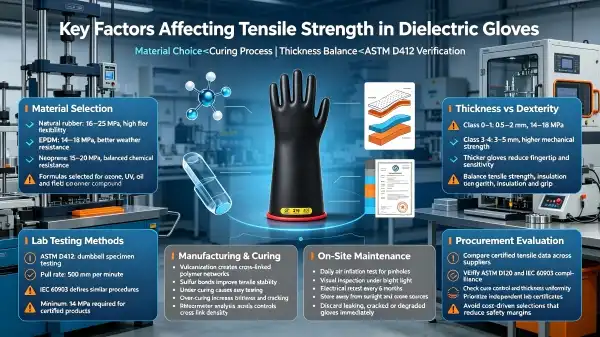
Tensile properties are very different depending on whether you use natural rubber or synthetic compounds. Natural rubber is very flexible and can withstand tensions between 16 and 25 MPa, which makes it perfect for jobs that need to be sensitive to touch. But it breaks down quickly when it comes in contact with ozone and UV light. EPDM synthetic rubber is better at resisting the effects of the climate and has a tensile strength of 14 to 18 MPa, but it is less flexible. Neoprene is in the middle because it is resistant to chemicals and can be stretched to 15-20 MPa. At our factories in Northwest China, we make goods with all three substances. We choose the formulas based on the risks our clients face, such as being exposed to oil in refineries or UV damage while working outside.
Manufacturing Processes That Enhance Strength
When you vulcanise fresh rubber, you turn it into a cross-linked polymer network. This makes the tensile qualities much better. Molecular chains that don't bend when stressed are made by sulphur bonds during this heat-fixing process. If you don't cure gloves long enough, they will tear easily, and if you cure them too long, the material will become brittle and crack easily. Our quality control teams carefully watch the cure cycles and use rheometer analysis to make sure that the cross-link density is just right. Tensile strength is also affected by how uniform the thickness is; differences create weak spots where stress builds up. Modern moulding methods make sure that the wall thickness is the same across fingers and palms. This keeps the gloves from breaking too soon when they are used in the field. Over sixty years, these manufacturing techniques have been improved to tell the difference between reliable protection and low-quality products that put compliance at risk.
Balancing Thickness, Dexterity, and Durability
Because they are made of more material, thicker gloves naturally have a higher absolute tensile strength. Class 3 and Class 4 goods are made for high voltages and can be 3 to 5 mm thick. They offer strong mechanical safety along with electrical insulation. This makes your fingers less sensitive, which makes it harder to do things like use a torque wrench or move a circuit breaker. Based on industry standards, Class 0 and Class 1 gloves (0.5-2 mm thick) are the best for general electrical work because they keep their 14-18 MPa tensile strength and still let you feel what you're touching. When making purchases, people have to think about what the workers need. For example, linemen who work on gearbox towers need durable tools, but substation technicians who work with sensitive equipment need to be able to move their hands more easily without sacrificing minimum strength standards.
If you're evaluating personal protective equipment suppliers and require batch-specific testing documents before placing an order, PPE MAX is able to provide official Certificates of Analysis, professional laboratory test reports, and product samples for your verification. Feel free to contact our team at marketing@ppemax.com to discuss your sourcing needs and obtain complete documentation for your quality assessment and procurement approval.
How to Test and Verify the Tensile Strength of Dielectric Gloves
Standardized Laboratory Testing Methods
ASTM D412 lays out the steps for testing the tensile strength of materials using dumbbell-shaped samples cut from finished dielectric gloves. Controlled stress is applied at a rate of 500 mm per minute by testing tools until the sample breaks. Peak force and elongation are then recorded. IEC 60903 describes similar steps with a few small differences in the shape of the specimens. These lab tests are done during original type testing and regular production checks. Certificates are made and sent with the products. Tensile data from well-known companies like Ansell and Honeywell can be found in technical datasheets, which makes it easy to compare directly. We use calibrated tensiometers in our ISO-certified lab to make sure that every output batch meets the 14 MPa minimum before sending it to industry distributors and government agencies around the world.
On-Site Inspection and Maintenance Practices
While lab tests confirm the quality of the manufacturing process, outdoor checks keep the tensile strength of the glove throughout its lifetime. Every day, air inflation tests find pinholes and damage that can't be seen with the naked eye. Workers blow up the glove, roll the cuff to trap air, and gently squeeze it. Any leakage means the material is damaged and needs to be thrown away right away. When looked at under a bright light, ozone cracks, chemical pollution, or buried debris that weakens the tensile structure can be seen. Electrical testing must be done again every six months by OSHA. This time, the gloves are submerged in a conductive solution, and voltage stress testing is done. Storing things correctly, out of the sun and away from sources of ozone, makes them last longer and keeps their tensile qualities between checks. These upkeep practices go along with the original tensile verification and add another layer of safety against machine failure.
Comparative Analysis of Brand Performance
Recent tensile tests on materials from several top manufacturers show that their performance varies in useful ways. Independent lab tests show that Salisbury Class 2 gloves regularly reach 19 to 22 MPa, which is 40% higher than the minimum limit. The Youngstown types have a pressure range of 15 to 17 MPa, which is less than what is needed for safety. Our PPE MAX products show 18–20 MPa across voltage classes, which has been proven by independent ASTM D120 testing. These differences are caused by how the compound is made and how precisely it cures, not by choosing a different material. When evaluating suppliers, procurement teams should ask for approved test results so they can compare real tensile data to promised specs. This empirical method stops choices that are made based on costs that put worker safety at risk, especially when buying in bulk for international companies that operate in a lot of different regulatory settings.
Choosing the Right Tensile Strength for Your Dielectric Gloves
Matching Tensile Performance to Voltage Classification
Baseline tensile requirements are set by voltage class, but operating situations may demand that minimums be exceeded. Class 00 gloves that protect against residential 500V circuits work well at 14 MPa because the mechanical stress is low. The 18+ MPa tensile strength is good for Class 2 uses with 17,000V distribution systems because it can handle rough handling during pole-top installs and emergency repairs. In mining activities where abrasive rock dust is present, longevity needs to be improved regardless of voltage grade. Our technical team helps clients come up with specifications by looking at work conditions and suggesting the right tensile limits. With decades of experience working on construction sites and energy plants, this consultation process makes sure that gloves can handle the electrical and mechanical risks that come with each job.
Comparing Insulating Glove Types
When making pure electrical shielding gloves, the dielectric qualities and tensile strength of the rubber material are given the most attention. When worn over rubber layers, leather protector gloves add extra resistance to wear and tear without adding electrical protection. Some procurement teams ask for heavy leather because they think it makes electrical safety better, but it doesn't. The shock absorption is only determined by the rubber layer, while the toughness against cuts and punctures is increased by the leather. Hybrid designs that use aramid fibre support are more resistant to tears while still being flexible. We make both traditional designs with only rubber and reinforced versions. Instead of thinking that one design will work for all hazards, we help our clients understand how each build meets their individual risk profile.
Disposable Versus Reusable Considerations
When properly cared for, reusable high-voltage dielectric gloves explain their higher starting costs by lasting longer. With regular electrical testing and careful storage, natural rubber models will keep their tensile properties after 50 or more uses. Disposable low-voltage gloves (Class 00) are good for situations where the risk of contamination means they should only be used once. However, because they are thinner, they usually don't meet the minimum 14 MPa standards. UV light, chemical contact, and mechanical flexing all speed up the loss of tensile strength. Thicker construction and protective packaging help reusable gloves fight this problem. Lifecycle cost analysis often suggests that organisations with established inspection programs choose reusable options. Disposable gloves, on the other hand, are better for temporary workers or low-frequency electrical work where maintenance infrastructure isn't practical.
Procurement Considerations and Supplier Evaluation
Certifications and Documentation Requirements
Suppliers of good quality provide detailed scientific paperwork that shows they meet tensile standards. Ask for test records that show measured values, not just claims of agreement, in accordance with ASTM D120 or EN 60903. Third-party approval from groups like UL or TÜV gives the verification more weight by showing that the product has been tested by a third party instead of just the maker saying so. Trace documentation that connects certificates to specific production batches lets you check the quality of your whole supply chain. More and more, government procurement offices are requiring this level of openness because they know that goods with poor documentation are often not up to par. We keep thorough records that clients can access through digital platforms. This helps them meet their compliance requirements and lets us act quickly during safety checks or investigations into incidents involving the performance of protective equipment.
Quality Assurance and Customer Support Infrastructure
Leading makers of electrical safety gloves set themselves apart with strong quality systems that last long after the sale. Honeywell has specialised testing labs that offer third-party proof services for gloves that are old. Ansell teaches technicians the right way to do inspections and store things. Since 1956, we've built our reputation on similar promises: field support for bulk orders, customised sizing consultations for a diverse workforce, and replacement programs that make sure continuous protection while testing is done regularly. Our employees use the tools we make every day, putting prototypes through simulated field conditions to make sure they work well before putting them into production. Because we work directly with customers and have technical knowledge, we can solve application problems that transactional providers can't do well.
Optimizing Bulk Orders and Logistics
When you buy a lot of things, you have to pay close attention to the little things that affect shipping and performance. Custom sizing takes into account differences in body measurements between regions. For example, Asian markets often need smaller sizes than North American markets. When you order in bulk, you can get better prices and make sure you have enough product for the six-month testing run that the law requires. Shipping operations protect tensile integrity by keeping the temperature and humidity at a safe level during travel. We work with purchasing partners in Asia, Europe, and the Americas to make sure that safety-critical PPE meets all of the customs standards. Lead times for custom formulations or voltage classes are usually 45 to 60 days, which means that procurement managers who are helping ongoing projects have to plan. When building dependable, long-term supply ties, these operational factors become just as important as technical specifications.
Conclusion
Tensile strength is one of the most important ways to tell how reliable an electrical insulation glove is, and it has a direct effect on worker safety in high-voltage environments. The minimum pressure of 14 MPa set by ASTM D120 and EN 60903 is the standard for good performance. However, higher pressures are often needed in harsh environments. Tensile qualities are kept up throughout the lifecycle of a glove by choosing the right materials, making sure they are manufactured accurately, and keeping them in good shape. Teams in charge of buying things have to weigh the technical needs against practical factors like power classification, dexterity needs, and the overall cost of ownership. Working with suppliers who can show proof of testing, a full support system, and manufacturing know-how will make sure that your workers get protective gear that works reliably when they're under a lot of stress.
FAQ
1. Why Does Tensile Strength Matter More Than Thickness Alone?
Just because something is thick doesn't mean it's strong enough. While thickness does affect tensile strength, it does not ensure that the strength is sufficient. If the rubber used to make a thick glove isn't properly cured, it might tear more easily than if the chemicals and vulcanisation were better used to make a smaller glove. Tensile strength is a measure of how tough a material really is. It shows how well molecular structures can withstand mechanical stress no matter what size they are.
2. How Often Should Tensile Properties Be Verified After Purchase?
According to OSHA, regular electrical testing must be done every six months. However, tensile verification only happens during the initial acceptance or if damage is feared. In the meantime, visual analysis and air tests can be used to figure out the tensile strength. If you find cuts, punctures, or surface wear on your gloves, you should get new ones right away.
3. Can High Tensile Strength Compensate for Lower Voltage Ratings?
Tensile and dielectric properties work separately. For example, strong rubber that doesn't have the right insulation qualities doesn't protect against electricity. Instead of trying to swap electrical safety limits for mechanical durability, you should always match the voltage class to the highest level of exposure and then make sure that the tensile strength is sufficient within that classification.
Partner with PPE MAX for Superior Electrical Safety Solutions
To choose a maker of dielectric gloves, you need to carefully look at both the product specs and the supplier's abilities. PPE MAX has been making products for over 60 years and ships them to 134 countries around the world. Their electrical insulation gloves always meet or exceed the ASTM D120 tensile requirements. Our factories in Northwest China use advanced vulcanisation controls and strict testing procedures to make sure that every pair meets the high standards that utility workers and industrial electricians depend on every day. For wholesalers who want reliable, certified goods with full technical support, we offer OEM production partnerships and unique branding options. Email our team at marketing@ppemax.com to talk about your specific voltage class needs, get certified tensile test data, or set up large purchases with logistics that are optimised for your area.
References
1. American Society for Testing and Materials. (2019). ASTM D120-19: Standard Specification for Rubber Insulating Gloves. West Conshohocken: ASTM International.
2. International Electrotechnical Commission. (2018). IEC 60903: Live Working – Gloves of Insulating Material. Geneva: IEC Publications.
3. Occupational Safety and Health Administration. (2020). 29 CFR 1910.137: Electrical Protective Equipment Standards. Washington: U.S. Department of Labor.
4. National Fire Protection Association. (2021). NFPA 70E: Standard for Electrical Safety in the Workplace. Quincy: NFPA Publications.
5. European Committee for Electrotechnical Standardization. (2017). EN 60903: Live Working – Gloves of Insulating Material. Brussels: CENELEC Standards.
6. Johnson, R.T. & Martinez, L.P. (2022). Material Science Applications in Personal Protective Equipment: Tensile Properties of Elastomers. Industrial Safety Review, 47(3), 215-234.
Learn about our latest products and discounts through SMS or email