- English
- French
- German
- Portuguese
- Spanish
- Russian
- Japanese
- Korean
- Arabic
- Greek
- German
- Turkish
- Italian
- Danish
- Romanian
- Indonesian
- Czech
- Afrikaans
- Swedish
- Polish
- Basque
- Catalan
- Esperanto
- Hindi
- Lao
- Albanian
- Amharic
- Armenian
- Azerbaijani
- Belarusian
- Bengali
- Bosnian
- Bulgarian
- Cebuano
- Chichewa
- Corsican
- Croatian
- Dutch
- Estonian
- Filipino
- Finnish
- Frisian
- Galician
- Georgian
- Gujarati
- Haitian
- Hausa
- Hawaiian
- Hebrew
- Hmong
- Hungarian
- Icelandic
- Igbo
- Javanese
- Kannada
- Kazakh
- Khmer
- Kurdish
- Kyrgyz
- Latin
- Latvian
- Lithuanian
- Luxembou..
- Macedonian
- Malagasy
- Malay
- Malayalam
- Maltese
- Maori
- Marathi
- Mongolian
- Burmese
- Nepali
- Norwegian
- Pashto
- Persian
- Punjabi
- Serbian
- Sesotho
- Sinhala
- Slovak
- Slovenian
- Somali
- Samoan
- Scots Gaelic
- Shona
- Sindhi
- Sundanese
- Swahili
- Tajik
- Tamil
- Telugu
- Thai
- Ukrainian
- Urdu
- Uzbek
- Vietnamese
- Welsh
- Xhosa
- Yiddish
- Yoruba
- Zulu
Does a Full Mask Respirator Block Organic Vapors?
Founded in 1956, PPEMAX stands as a premier global manufacturer and supplier of full-range personal protective equipment. All our products comply with internationally recognized standards including IEC, ASTM, CE, UKCA, NIOSH and ISO9001. Equipped with a 2,000-square-meter modern production plant, we boast over 25 years of mature OEM & ODM capabilities to deliver one-stop customized solutions covering R&D design through worldwide logistics. Our safety gear is distributed across 134 countries globally. Upholding our core tenet “Safety First, Quality Priority”, we serve as a dependable long-term PPE partner for industrial enterprises around the world.
If you use the right organic vapour cartridges or combination filters with your Full Mask Respirator, it will effectively block organic vapours. The device itself covers the whole face and seals off airflow, but the filter media that is connected to it is what actually blocks volatile organic compounds (VOCs). These special capsules have activated carbon cells that are designed to soak up organic vapours like toluene, xylene, acetone, and other solvents that are common in industrial settings. Without the right type of filter, the respirator can't protect against vapour dangers. Choosing the right filter is therefore very important for worker safety.
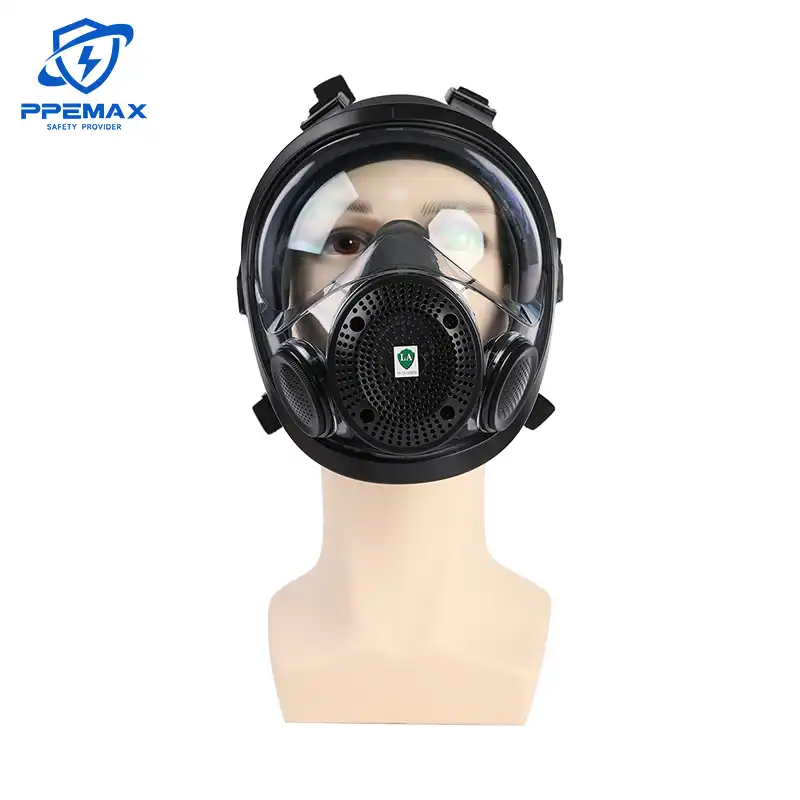
| Parameter | Specification |
|---|---|
| Material | High-grade lightweight silicone |
| Lens | Impact-resistant scratch-proof PC lens |
| Field of View | 88% panoramic vision |
| Mask Style | Full-face gas mask |
| Connector | Dual 40mm NATO RD bayonet port |
| Protection Class | Class 2 standard |
| Inward Leakage | ≤0.03% |
| Head Harness | 6-point high-tenacity nylon mesh, adjustable |
| Exhalation Valve | Low-resistance design |
| Compatible Filters | A2B2E2K2P3 RD NATO canister filters & all 40mm NATO series |
Understanding How Respiratory Protection Blocks Organic Vapors
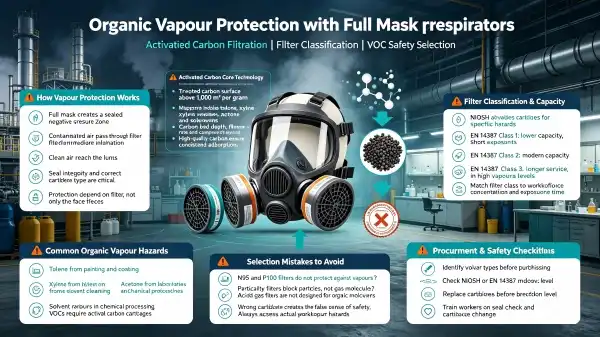
Vapour protection is based on several scientific concepts that work together. When these devices are properly fitted and equipped, they create a negative-pressure environment inside the facepiece when the user breathes in. This forces dirty air through the filter media before it reaches the user's lungs.
The Role of Activated Carbon Filtration
Activated carbon is the main defence mechanism in organic vapour cylinders. This carefully treated carbon has a huge surface area—often more than 1,000 square meters per gram—and tiny holes that adsorb and hold on to vapour molecules. As dirty air flows through the carbon bed, organic vapour molecules stick to the surface of the carbon. Clean air keeps going to the person wearing it. How well this process works relies on things like the type of carbon, the depth of the bed, the rate of airflow, and the organic compounds that are already in the surroundings.
At PPE MAX, we use high-quality activated carbon that is obtained through strict quality control procedures in our manufacturing process. At carefully controlled temperatures, the carbon is heated up, which creates the perfect hole structure for collecting a wide range of organic vapours. This high level of technical accuracy, gained from 65 years of production experience, makes sure that the protection works the same way in all kinds of industrial settings.
Filter Classification and Protection Levels
Standards for the respiratory safety group organic vapour cartridges into groups based on their volume and breakthrough time. In the US, NIOSH-approved cartridges have specific labels that say what they can be used for. In the same way, European EN 14387 standards divide filters into classes (Class 1, 2, or 3) based on how long it takes for them to break through and how much they can hold. Class 1 filters have lower capacity and are better for short exposures or low concentrations. Class 3 filters, on the other hand, offer longer protection in harsh environments.
Knowing these categories helps procurement specialists match safety gear to the conditions of the workplace. A chemical processing plant that uses concentrated solutions needs filters with a higher capacity and a longer service life than a light manufacturing plant that only occasionally exposes itself to vapour. This difference is very important when figuring out the total cost of ownership and making sure there are enough safety gaps for workers.
Why Filter Selection Cannot Be Overlooked
If you choose the wrong type of protection, you might feel safe when you're not. Particulate filters like N95 and P100 are good at getting rid of airborne particles and aerosols, but they don't protect against organic vapours at all. The mechanical filtering in these filters stops particles, but they don't have the activated carbon needed to soak up vapour. In the same way, filters made for acid gases won't work well with organic vapours because the chemicals involved are different.
We've seen situations where buying teams tried to simplify their inventory by using the same particulate filters for all tasks. This method seriously misunderstands the dangers to workers' lungs and puts them in great danger. At PPE MAX, our technical support team works directly with B2B clients to do risk assessments and suggest the best filter configurations for their unique work locations.
Comparing Respiratory Protection Options for Vapor Hazards
There are a lot of different types of lung protection devices on the market, and each one has its own pros and cons when it comes to dealing with organic vapour pollution. When safety managers and procurement workers understand these differences, they can make choices that are in line with their operational needs and budget.
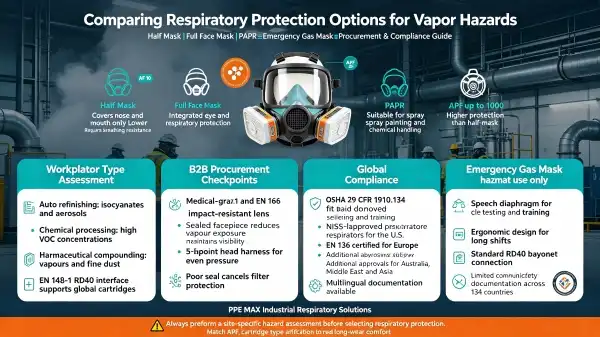
When compared to Full Mask Respirators, half-mask respirators are smaller and make it easier to breathe because they only cover the nose and mouth. These devices work well in low-risk areas where safety goggles can be used on their own to protect the eyes. But they have a smaller Assigned Protection Factor (APF of 10) and can't protect against both respiratory and eye risks at the same time, which happens a lot when working with organic solvents that are annoying.
Full Mask Respirators protect your eyes and lungs at the same time, so you only need one piece of gear for multiple security needs. The continuous seal around the whole face region provides higher protection factors (APF of 50 in negative pressure mode) and keeps the sensitive membranes around the eyes from being exposed to vapour. In industries like spray painting, chemical handling, and pharmaceutical production, where organic vapours can be harmful to the body by breathing them in and causing instant discomfort through eye irritation, this method works very well.
Powered Air-Purifying Respirators in Vapor Environments
Powered air-purifying respirators (PAPRs) have fans that are driven by batteries and pull air through filters and into the facepiece. This positive pressure gets rid of breathing difficulty and makes wearing it for long amounts of time comfortable. PAPRs offer the best levels of safety (APFs up to 1000) and make breathing through negative pressure devices less tiring.
Even with these benefits, PAPRs are not perfect for protecting against organic vapour. The battery and blower unit make the machine heavier and bigger, which could make it harder to move around in tight spaces or on elevated platforms. To keep power from going out in the middle of a shift, careful control of battery life is needed. The initial cost and continuing costs of replacing the batteries are much higher than those of standard air-purifying respirators. This makes them less cost-effective for companies with large staffs unless the operational benefits make up for the investment.
Gas Masks and Specialized Applications
Military-grade gas masks and escape respirators are special types that are made for emergencies and not for everyday use in the workplace. These devices usually have their own filter links, are built to be tough, and are designed so that they can be put on quickly and safely, rather than being comfortable or able to communicate. They work great for what they're meant to do, like emergency evacuation, responding to dangerous materials, or tactical operations. But they don't work well in everyday industrial settings where workers need to talk to each other, stay aware of what's going on, and do detailed work for long shifts.
At PPE MAX, most of our products are industrial-grade respiratory protection made to meet the needs of the production, building, and process industries. The things we make have speech diaphragms that let you talk clearly, ergonomic designs that balance safety with comfort, and standard filter connections that work with cartridges that are sold all over the world. We took this realistic approach because we know that effective safety gear needs to be worn all the time to be useful, and that comfort and usefulness are directly linked to worker acceptance.
If you're evaluating personal protective equipment suppliers and require batch-specific testing documents before placing an order, PPE MAX is able to provide official Certificates of Analysis, professional laboratory test reports, and product samples for your verification. Feel free to contact our team at marketing@ppemax.comto discuss your sourcing needs and obtain complete documentation for your quality assessment and procurement approval.
Selecting the Right Protection for Your Industrial Operation
A thorough risk assessment is the first step in effective procurement. Different fields have different organic vapour problems that need specific protection plans. Chemical factories may be exposed to certain liquids in high concentrations, which means they need screens with a lot of space and maybe even systems that supply air to the tanks. When painting cars, the coatings used contain isocyanates, which means that combination screens are needed to deal with both vapour and aerosol dangers. Medicinal compounding plants need to be protected from both vapours and small particles of active medicinal ingredients that are spread out.
The devices that PPE MAX makes can meet these different needs because they have more than one way to attach a filter. Our bayonet connection system works with a lot of different cartridge types from many different manufacturers because it meets EN 148-1 RD40 threading standards. This interoperability gives buyers choices and makes sure that businesses can get the right tools through established supply lines instead of being limited to their own systems.
Critical Evaluation Factors for B2B Procurement
When looking at breathing protection providers, you should think about more than just the initial unit cost. Effective protection starts with a Full Mask Respirator that seals properly. A device that doesn't seal properly doesn't protect you, no matter how good the filter is. Instead of cheaper rubber materials, our face seals are made from medical-grade silicone, which is more comfortable, lasts longer, and is resistant to chemicals. The material stays flexible at all temperatures and doesn't break down when it's cleaned and sanitised over and over again.
Lens quality has a direct effect on how safe and productive workers are. Our visors are made from plastic that meets the impact resistance standards of ANSI Z87.1 and EN 166. They also have anti-fog treatments that keep them clear when the temperature changes or when you work out. When workers can't see clearly through fogged glasses, they often break their seal to wipe the lens or just don't wear the device at all, which defeats the whole point of safety gear.
The strap system checks to see if the device stays in the right place while the person moves their head or does physical work. Our 5-point adjustment method spreads pressure evenly across the head, so there are no pressure spots that hurt after long wear. Quick-adjustment clips let workers get the right fit without help, which encourages regular correct use instead of the "close enough" method that lowers safety.
Compliance and Certification Requirements
Buying respiratory protection must take into account legal compliance in all operating areas. In the United States, 29 CFR 1910.134 OSHA rules require certain actions, such as fit testing, medical review, and training. Member states of the European Union enforce similar rules through their own versions of Framework Directive 89/391/EEC. Our products are approved by NIOSH for use in the US and EN 136 for use in Europe. They also have extra approvals for use in Australia, the Middle East, and Asia, where our clients have facilities.
To stay in compliance in 134 countries, you have to keep up with changing standards and regional rules. To help our customers meet their legal reporting requirements, we offer certification paperwork, material safety data, and technical specs in a number of languages. This help with paperwork is especially helpful for multinational companies that want to standardise safety gear across all of their activities while still following local rules.
Maintaining Protection Performance Through Proper Use
Even the best breathing protection doesn't work if it's not used or kept properly. The amount of carbon in an organic vapour cartridge and the amount of contaminants in the work area determine how long it can be used. Unlike particulate filters, which show clear signs of being full, vapour cartridges don't show clear signs of being full until breakthrough happens. This is when the user suddenly detects a vapour smell or taste, which means the carbon bed is full and can't take in any more contaminants.
To set up the right change-out plans, you need to know both what the maker recommends and how things really work in the workplace. Conservative methods change cartridges at set times based on how long they are expected to last. More complex programs use breakthrough detectors or estimates based on readings of vapour concentration and work time to get the most out of each cartridge without lowering protection. We help our clients make these programs based on their specific needs and willingness to take on risk.
The Critical Importance of Fit Testing
Without a good fit against the wearer's face, no respiratory protection device can do what it's supposed to do. Either qualitative methods (relying on the wearer's ability to detect test substances) or quantitative methods (using instruments to measure leakage) are used to make sure that this seal works. OSHA requires respirator users to get fit tested once a year, and again if their bodies change in a way that could affect fit, like if they gain or lose a lot of weight or get dental work.
We've seen that some companies see fit testing as just another task that needs to be done for compliance reasons, rather than an important safety measure. This point of view completely misses the point. Different groups of people have very different face sizes, so a device that fits exactly on one person may leak a lot on another. By trying the fit of different types and sizes of devices, each worker can be given safety gear that does its job and doesn't just take up space on their face.
Common Usage Errors and Their Consequences
Even when the right equipment is chosen, respiratory protection is compromised by a number of mistakes that can be predicted. The most common problem is facial hair—even stubble can create leak paths that go right around the filter. Companies that really care about safety must either have rules that require workers to shave or offer other forms of protection, like supplied-air hoods, for workers who have medical or religious reasons for keeping beards.
Over time, bad storage breaks down device parts. When facepieces are left out in full sunlight, the rubber seals age faster. Devices that are kept wet encourage the growth of microbes and the breakdown of materials. We suggest specialised storage cases that keep devices safe from damage from the environment and let them dry out properly between uses. The small amount of money spent on proper storage greatly increases the useful life of devices and keeps them from getting contaminated.
Chemical residues and biological contamination can build up on areas that come into contact with the face and lips if they are not cleaned properly. We make sure that our Full Mask Respirator gadgets have smooth surfaces and easy-to-reach shapes so that they can be cleaned thoroughly. Cleaning regularly with mild soap and water and then disinfecting with the right sanitisers keeps things clean and in good shape. Harsh chemicals or rough scrubbing can damage lens coatings and seal surfaces, which means that parts need to be replaced.
Strategic Procurement Approaches for Respiratory Protection
B2B procurement specialists have to find a balance between short-term cost concerns and longer-term value concerns. The lowest price at first doesn't always mean the lowest total cost of ownership when you consider how often you have to replace things, how much filters cost, how much upkeep costs, and how much it could cost if safety fails.
Building ties with dependable providers adds value that goes beyond just buying things. At PPE MAX, we think our job goes far beyond just making and shipping gadgets. Because we have been in business for 65 years, we know what works in real workplace settings, not just what looks good in product material. We share this information by offering technical help, training materials, and group problem-solving when our clients face unique security issues.
Evaluating Supplier Capabilities and Support
When getting respiratory protection for work that takes place in other countries, supply chain reliability is very important. Our production capacity and inventory levels are kept high enough so that we can fill large orders quickly. Our distribution network reaches 134 countries, and shipping times are usually reasonable. This global capability is very important for multinational companies that want to combine their suppliers instead of managing local suppliers in each market.
With customisation choices, devices can be made to fit specific business needs or brand guidelines. We offer custom labelling for wholesalers who are making their own lines of branded products, as well as changes to the way the products work for specific commercial uses. Because of this, organisations with specific needs that off-the-shelf goods don't quite meet can use this versatility.
Support after the sale is what sets sellers who stand behind their goods apart from those who are just filling orders. Our technical support team can help you choose the right product, use it correctly, and keep it in good shape. We keep spare parts on hand so that we can repair worn-out parts on time. This extends the life of the gadget and lowers the total cost of ownership. Instead of just storing tools, organisations can use training programs to create effective lung protection programs.
Structuring Procurement Agreements for Long-Term Value
Agreements for bulk purchases are good for both buyers and sellers. Buyers get better prices and get priority with supplies, while suppliers get more reliable production, which helps them be more efficient. We work with big businesses to make deals that are both flexible and binding, so that they can be changed to fit changing business needs while still getting good prices.
Businesses that have changing demand or more than one place can use consignment inventory systems. Instead of keeping big safety stocks at each location, the seller manages a central inventory that makes sure there is always enough stock while lowering the buyer's working capital needs. These agreements are especially helpful for businesses that have regular demand trends or project-based work that causes short-term increases in the need for protective gear.
Conclusion
To keep workers safe from organic vapour dangers, you need to do more than just buy equipment. You also need to fully understand how to protect people, choose the right devices, and do regular repairs. Full Mask Respirators with the right organic vapour cartridges have been shown to work well when chosen and used correctly. They provide better protection than other methods in high-risk environments. Putting respiratory and eye protection in one device takes into account the real-life exposures that people face on the job, makes it easier to manage equipment, and ensures that health standards are met. Companies that buy good tools, set strict rules for how to use them, and work with sellers who care about their success build long-lasting safety plans that protect their most valuable asset: their employees.
FAQ
1. Do all respirators protect against organic vapors?
No, lung protection devices can only stop organic vapours when they are equipped with certain organic vapour cartridges that have activated carbon in them. Vapours are not blocked by N95 or P100 particle filters, and using the wrong type of filter gives you a dangerous false sense of security.
2. How often should organic vapor cartridges be replaced?
How often you replace it depends on how much vapour is in it, how long it works, and how much space it has in the cartridge. Manufacturers give service life tables that are based on certain chemicals and amounts. Conservative methods change cartridges before the estimated breakthrough time, and end-of-service-life signs add extra safety margins.
3. Can workers wear respiratory protection comfortably during full shifts?
Modern devices have practical features that make them comfortable to wear for long periods of time. Balanced weight distribution, soft seal materials, less breathing resistance, and choices like drinking tubes keep workers safe during their shifts without making them too tired or uncomfortable.
Partner With PPE MAX for Superior Respiratory Protection Solutions
Xi'an PPE MAX Co., Ltd has been making high-quality products for 65 years and can help you with your job safety issues. We are a reliable Full Mask Respirator provider that works with 134 countries to provide approved safety gear that meets NIOSH, EN 136, and AS/NZS 1716 standards. Our wide range of products includes gadgets with soft silicone seals, anti-fog polycarbonate lenses, and universal filter compatibility—all of which are designed to work in the tough conditions your employees face every day. Our team can help you with bulk orders, OEM manufacturing, or custom solutions. They are knowledgeable and quick to respond. Email us at marketing@ppemax.com to talk about your respiratory protection needs and find out how our production skills and global supply chain can give your business the stability it needs.
References
1. National Institute for Occupational Safety and Health. (2018). NIOSH Guide to the Selection and Use of Particulate Respirators. Department of Health and Human Services Publication No. 96-101.
2. Occupational Safety and Health Administration. (2021). Respiratory Protection Standard 29 CFR 1910.134: Compliance Guide for General Industry.
3. European Committee for Standardization. (2019). EN 136:1998 Respiratory Protective Devices - Full Face Masks - Requirements, Testing, Marking.
4. American National Standards Institute. (2020). ANSI Z88.2 Practices for Respiratory Protection: Selection, Use, and Care of Respirators.
5. International Safety Equipment Association. (2022). Respirator Filter Selection and Service Life Determination in Industrial Applications: Technical Report Series.
6. Nelson, T.J. & Associates. (2017). Activated Carbon Performance in Organic Vapor Respiratory Protection: Industrial Hygiene Research Quarterly, Volume 42, Pages 287-314.
Learn about our latest products and discounts through SMS or email