- English
- French
- German
- Portuguese
- Spanish
- Russian
- Japanese
- Korean
- Arabic
- Greek
- German
- Turkish
- Italian
- Danish
- Romanian
- Indonesian
- Czech
- Afrikaans
- Swedish
- Polish
- Basque
- Catalan
- Esperanto
- Hindi
- Lao
- Albanian
- Amharic
- Armenian
- Azerbaijani
- Belarusian
- Bengali
- Bosnian
- Bulgarian
- Cebuano
- Chichewa
- Corsican
- Croatian
- Dutch
- Estonian
- Filipino
- Finnish
- Frisian
- Galician
- Georgian
- Gujarati
- Haitian
- Hausa
- Hawaiian
- Hebrew
- Hmong
- Hungarian
- Icelandic
- Igbo
- Javanese
- Kannada
- Kazakh
- Khmer
- Kurdish
- Kyrgyz
- Latin
- Latvian
- Lithuanian
- Luxembou..
- Macedonian
- Malagasy
- Malay
- Malayalam
- Maltese
- Maori
- Marathi
- Mongolian
- Burmese
- Nepali
- Norwegian
- Pashto
- Persian
- Punjabi
- Serbian
- Sesotho
- Sinhala
- Slovak
- Slovenian
- Somali
- Samoan
- Scots Gaelic
- Shona
- Sindhi
- Sundanese
- Swahili
- Tajik
- Tamil
- Telugu
- Thai
- Ukrainian
- Urdu
- Uzbek
- Vietnamese
- Welsh
- Xhosa
- Yiddish
- Yoruba
- Zulu
What Sizes Are Available for Class 1 Insulating Gloves?
Shields with an inactive permanent shade use filters made of hardened glass. They never break because there are no electronics inside them. These screens last longer than any other on the market, even in the toughest conditions where dust, water, and high temperatures could damage computer parts. For flux-cored arc welding in small spaces where batteries can't be changed, a lot of big factories and ships use passive shields alongside Class 1 Insulating Gloves.
Understanding Class 1 Insulating Gloves: Specifications and Importance of Size
Why Sizing Matters for Electrical Protection
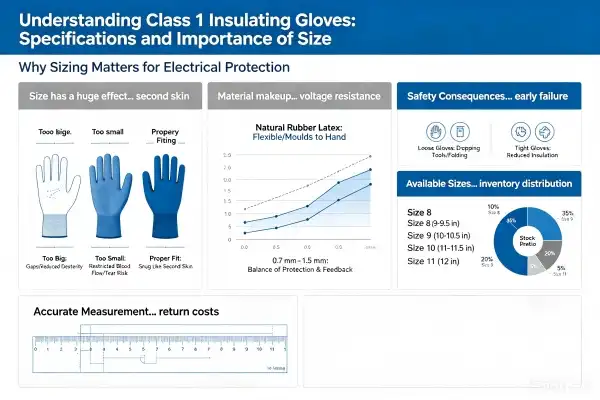
Size has a huge effect on how well protection works. Too-big gloves leave gaps and make it harder to feel things, while too-small gloves cut off blood flow, make your hands tired, and may tear when you put them on. We've learned over many years of field testing with our own team members that the best fit feels like a second skin—it's snug enough to keep your agility when using tools and controls, but not too tight that you can't wear it for long periods of time while doing complicated electrical repair tasks. The makeup of the material has a big effect on how well it fits. Our natural rubber latex gloves are very flexible and mould perfectly to your hand, giving you more agility for difficult jobs. The thickness range of 0.7 mm to 1.5 mm strikes a good mix between electrical protection and physical feedback. This lets workers know what they're working on without affecting the dielectric barrier that stops dangerous current flow
The Safety Consequences of Poor Fit
Electrical gloves that don't fit right pose a number of risks. When working with live parts, loose gloves make it more likely that you will drop something. They also fold or wrinkle when they are being used, which creates stress points that speed up the breakdown of the material. On the other hand, gloves that are too tight stretch the rubber beyond what it was meant to do, which weakens the insulation and could lower the voltage resistance. We have examples of gloves failing early during regular electrical testing because they were the wrong size. This shows that buying teams should put accurate measurements ahead of cost-effectiveness.
Available Sizes for Class 1 Insulating Gloves: Dimensional Breakdown
Our manufacturing experience supplying industrial safety distributors and large-scale enterprises has revealed that comprehensive size ranges eliminate the compromise between safety and comfort. The industry standard sizing system accommodates the full spectrum of adult hand dimensions encountered across global workforces.
Standard Size Range and Measurements
Electrical insulating gloves follow a numerical sizing convention that correlates directly with hand circumference measurements:
- Size 8 (Medium): Covers 9-9.5 inch measurements, the most frequently specified size across North American and European procurement orders, fitting the statistical average for male industrial workers.
- Size 9 (Large): Designed for 10-10.5 inch circumference hands, popular among construction and mining personnel who often have larger builds and hand dimensions.
- Size 10 (Extra-Large): Fits 11-11.5 inch measurements, essential for inclusive workforce accommodation and increasingly requested by public safety procurement departments managing diverse personnel.
- Size 11 (Double Extra-Large): The largest standard offering at approximately 12 inches circumference, ensuring that even workers with the largest hand dimensions receive proper protection without resorting to makeshift solutions.
Understanding these dimensions helps procurement professionals anticipate inventory distribution. Our sales data across manufacturing plants and infrastructure projects shows that maintaining stock ratios of approximately 10% Size 8, 35% Size 9, 20% Size 10, and 5% Size 11 typically satisfies workforce needs, though specific demographics may shift these percentages.
Accurate Measurement Techniques for Procurement Teams
To make sure that measurements are the same for all large sales, measuring by hand needs an organised approach when selecting Class 1 Insulating Gloves. Before making big orders, we suggest that buying teams set up regular ways to measure things. If you want to find out how big your hand is for Class 1 Insulating Gloves, use a soft cloth measuring tape and measure across the palm, excluding the thumb. The base size number comes from this measurement, which is taken with the hand open and the fingers together. The length of the hand from the wrist seam to the middle knuckle gives extra information that helps tell the difference between workers who need longer glove lengths for the same measurement size. Some makers, like PPE MAX, offer length changes within normal sizes to account for differences in the length and width of the hand.
Digital callipers are accurate when writing down exact measurements for special orders or when buying from several international sellers who have slightly different ideas about how to measure things. Putting these measures in your buying database makes it easier to replace things and cuts down on mistakes in size that cost a lot to return.
Manufacturer Variations and Standardisation Challenges
Even though ASTM and IEC standards control electricity efficiency, different makers use different size charts. European names and North American providers sometimes use different standards for measuring things. Asian makers may base their sizes on area population trends, which could lead to fit problems when they sell their goods in the West. This problem is solved by clear size instructions and example programs. Before placing big orders, we recommend that wholesalers and end users ask for sample sets that cover the whole size range. Physical testing with real workers gets rid of the need to guess and shows any differences between how something fits on a chart and how it fits in real life. This method has saved our partners a lot of money on transportation costs and ensured safety from being compromised by regular size mismatches.
How to Choose the Right Size Class 1 Insulating Gloves for Your Business Needs
Selecting electrical gloves involves balancing multiple procurement criteria beyond simple size charts. Your organisation's specific applications, workforce demographics, and operational requirements all influence optimal glove selection.
Matching Sizes to Job Roles and Applications
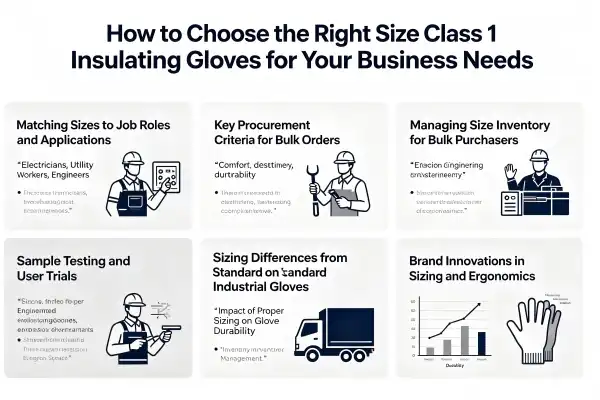
When electricians work on detailed control panels, they need to be very dexterous. To keep their motor control precise, they often choose gloves that fit more snugly within their size range. When working outside for long periods of time, utility workers who handle bigger tools and wires may choose comfort over ultimate flexibility, sometimes choosing gloves that are on the larger side of their measurement range to keep their hands from getting tired. Engineers who do electrical testing and approval often have to work in both situations, which is why having different sizes of gloves on hand is helpful. We've seen that giving workers main and backup gloves in sizes close to each other helps with hand swelling during long shifts and changes in temperature that affect both the size of the hand and the flexibility of the glove.
For use in the mining and energy sectors, there are extra things to think about. If a worker is wearing thick rubber gloves over heavy outer gloves, they might need to go up a size to fit the layered system. Our expert support team helps procurement managers figure out the best way to size complicated PPE systems that include more than one type of glove.
Key Procurement Criteria for Bulk Orders
When we talk to government bodies and big businesses that are making big orders, a few things always come up as important decision points. Whether workers wear the gloves all the time or look for ways to get around them that put safety at risk depends on how comfortable they are. Our flexible design, which was improved over decades of user feedback, makes the structure of the glove less stressful on the hands, so they don't get tired. Productivity is directly linked to dexterity when wearing Class 1 Insulating Gloves. Workers who are taking care of intricate electricity links can't give up their ability to feel things. The natural rubber latex we use in Class 1 Insulating Gloves is more flexible than manufactured options. This means that fingers can bend naturally even through the 7,500-volt insulation layer that is needed.
Beyond the original buying price, durability affects the total cost of ownership. When you use the right size, you avoid overstretching and mechanical stress, which improves the service life. If the gloves are the right size, they should last the whole testing cycle before showing signs of wear. If they don't fit right, they often have to be thrown away early because of stress cracks or puncture damage. Compliance with regulations is still a must. Our Class 1 gloves are made to meet the standards set by ASTM D120, IEC 60903, and OSHA 1910.137. They also have the CE label for use in European markets. This full set of certifications makes it easier to keep up with compliance paperwork for international operations and meets the different legal systems your company faces in different places.
Sample Testing and User Trials
We strongly advocate for sample testing before finalising specifications for large procurement contracts. Distribute sample gloves across representative user groups—different hand sizes, job roles, and work environments. Collect structured feedback on fit, comfort, dexterity, and any sizing concerns that emerge during actual work conditions rather than simple try-on sessions. This user-centred approach has helped numerous distributors and end-users refine their sizing distribution and identify specific features that matter most to their workforce. The investment in sample programs consistently returns value through reduced returns, improved safety compliance, and enhanced worker satisfaction that translates to better PPE adherence.
Managing size inventory for bulk purchasers requires strategic planning. We offer flexible ordering arrangements that allow distributors to adjust size ratios between shipments as usage patterns become clear. Our OEM partnerships and customisation capabilities extend to packaging configurations that simplify inventory management for wholesalers serving diverse customer segments.
Comparison and Practical Insights: Class 1 Insulating Gloves Sizes versus Other Glove Types
Understanding how electrical insulating glove sizing differs from other industrial gloves prevents common procurement mistakes and helps safety managers set appropriate expectations with end-users.
Sizing Differences from Standard Industrial Gloves
Workers accustomed to leather work gloves or general-purpose rubber gloves often experience sizing confusion when first using electrical insulating gloves. The precise sizing requirements and thicker material construction mean that a worker who typically wears size medium in leather gloves might require size large in Class 1 rubber insulating gloves to achieve comparable comfort. The critical difference stems from functional requirements. Standard work gloves prioritise basic protection and grip, allowing looser fits without compromising performance. Electrical insulating gloves must maintain intimate contact with skin to prevent voltage-induced arcing while simultaneously providing enough internal space for air circulation that prevents excessive perspiration affecting grip security.
Leather protector gloves worn over insulating rubber gloves introduce another sizing dimension. These protectors typically size directly over the rubber glove, meaning workers need accurately sized protectors matched to their rubber glove size, not their bare hand measurement. We supply coordinated sets that eliminate this potential confusion point.
Impact of Proper Sizing on Glove Durability
Our quality control data demonstrates that correctly sized gloves consistently outlast poorly fitted alternatives. Gloves stretched beyond their design parameters experience accelerated ageing, with rubber molecular structures breaking down faster under constant tension. This degradation appears as surface cracking, reduced elasticity, and ultimately, electrical testing failures that require premature retirement. Conversely, oversized gloves bunch and fold during use, creating localised stress points where repeated flexing causes mechanical failure. The glove thickness at fold points effectively reduces, potentially compromising dielectric properties even before visible damage appears. Regular electrical testing catches these degradations, but proper initial sizing prevents the accelerated wear altogether.
The economic implications are substantial for organisations managing large PPE inventories. Extending glove service life through proper sizing reduces procurement frequency, testing costs, and the administrative burden of tracking shortened replacement cycles. When we analyse the total cost of ownership rather than the simple unit price, sizing accuracy emerges as a significant cost control factor.
Brand Innovations in Sizing and Ergonomics
The electrical safety industry continues advancing glove design, with several manufacturers introducing innovations that improve fit accuracy. Contoured patterns that follow natural hand curvature reduce material bunching in the palm while maintaining full coverage. Multi-panel construction allows different thickness profiles across the glove, concentrating insulation where electrical exposure risks are highest while thinning areas requiring maximum dexterity. PPE MAX incorporates ergonomic shaping refined through extensive field testing with our own personnel across various applications. Our gloves feature anatomically correct finger positioning that reduces muscle strain during extended wear. The curved finger design accommodates the hand's natural resting position rather than forcing fingers into unnatural alignment, meaningfully improving comfort during multi-hour electrical maintenance procedures.
Advanced manufacturing techniques now enable more precise sizing tolerances. Computer-controlled cutting and assembly processes reduce the dimensional variability that once made glove sizing somewhat unpredictable. This manufacturing precision allows distributors to stock with confidence that size consistency will remain stable across production lots and reorder cycles.
Caring for Class 1 Insulating Gloves to Maintain Size Integrity and Performance
Proper maintenance directly affects how well gloves maintain their original size characteristics and protective properties throughout their service life. Environmental factors and handling practices influence rubber elasticity, potentially altering fit over time.
Storage and Handling Best Practices
Gloves should be stored in protective canvas bags, positioned fingers up to prevent permanent creasing or deformation. Storage environments require temperature control, ideally between 50-70°F, with relative humidity around 50-60%. Extreme temperatures cause rubber to either harden and lose flexibility (cold) or become tacky and degrade rapidly (heat). Direct sunlight and ozone exposure represent significant degradation risks. UV radiation breaks down rubber molecular chains, causing surface cracking and brittleness. Ozone, generated by electric motors and other equipment common in industrial environments, attacks rubber aggressively. We recommend dedicated storage areas away from operating electrical equipment and windows where sunlight exposure occurs.
Chemical exposure during storage must be prevented. Even residual chemicals on shelving or in storage containers can migrate into rubber, causing swelling, shrinkage, or material property changes that alter sizing. Clean, dedicated storage specifically for electrical PPE eliminates cross-contamination risks from other workplace chemicals.
Environmental Factors Affecting Glove Dimensions
Temperature fluctuations during use impact the Class 1 Insulating Gloves' fit temporarily. Cold weather stiffens rubber, making gloves feel tighter and reducing flexibility. Workers in telecommunications and utility sectors working outdoors during winter months often report sizing concerns with Class 1 Insulating Gloves that resolve once the gloves warm to body temperature. We advise procurement teams to consider climate conditions when establishing sizing strategies, potentially providing cold-weather workers with Class 1 Insulating Gloves at the upper end of their size range. Moisture and perspiration affect internal fit. Cotton liners absorb perspiration, maintaining a consistent sizing feel during extended wear. Without liners, accumulated moisture makes gloves feel loose and slippery, compromising grip security. Many organisations include cotton liners as standard components in their electrical glove systems, improving both comfort and sizing stability.
Chemical contamination from workplace substances can cause rubber to swell or shrink, effectively changing glove size. Petroleum products, solvents, and even some cleaning agents attack natural rubber. Immediate cleaning following any chemical exposure prevents permanent damage. We provide specific cleaning protocols for different contaminant types, ensuring that cleaning itself doesn't introduce sizing problems.
Testing and Retirement Guidelines
OSHA 1910.137 and ASTM F496 mandate electrical testing every six months for gloves in active service. This testing verifies continued dielectric integrity but also provides an opportunity to assess physical condition, including any size changes indicating material degradation. Gloves showing significant dimensional changes from their original specifications should be retired regardless of electrical test results, as altered sizing suggests molecular breakdown affecting reliability. Visual inspection before each use catches developing problems early. Workers should check for surface cracking, embedded foreign material, punctures, or any physical damage. They should also assess whether the glove fit feels different from normal—unusual tightness or looseness may indicate swelling, shrinkage, or material degradation requiring removal from service.
Retirement decisions balance safety with economic efficiency. Gloves meeting all performance criteria but showing minor wear indicators might continue in service for less critical applications, while retiring them from maximum voltage work. This tiered retirement approach extends equipment value while maintaining uncompromising safety standards for the highest-risk applications.
Conclusion
Selecting appropriate sizes for electrical insulating gloves represents far more than a simple procurement specification—it fundamentally determines worker safety, comfort, and operational efficiency. The standardised size range, from 6 through 11, accommodates diverse workforce demographics across global operations. Accurate hand measurement techniques, understanding manufacturer variations, and implementing sample testing programs help procurement teams optimise sizing decisions for bulk orders. Proper glove care maintains size integrity throughout the service life, while regular testing ensures continued protection. Organisations that invest attention in sizing details achieve better safety outcomes, extend equipment longevity, and support workforce productivity through comfort and dexterity that properly fitted electrical gloves provide.
FAQ
1. How do I measure hands correctly for Class 1 electrical insulating gloves?
Measure hand circumference at the widest point across the palm using a flexible fabric measuring tape, excluding the thumb. Take measurements with the hand open and fingers together. Record both circumference and length from wrist to middle fingertip. Compare these measurements against manufacturer sizing charts, selecting the size corresponding to your circumference measurement. When measurements fall between sizes, consider job requirements—precision work benefits from a smaller size within range, while comfort-focused applications may warrant sizing up.
2. Do sizing standards vary between different glove manufacturers?
Sizing variations exist despite electrical performance standards. European, North American, and Asian manufacturers sometimes use different measurement reference points or calibrate to regional demographic averages. This makes physical sample testing essential before large procurement commitments. Request samples across your size range and conduct user trials with actual workers to identify any discrepancies between sizing charts and real-world fit.
3. What safety risks result from incorrectly sized electrical gloves?
Oversized gloves create gaps compromising electrical seal integrity, reduce tactile sensitivity increasing accident risk, and bunch during use, causing stress concentrations that accelerate failure. Undersized gloves stretch rubber beyond design parameters, potentially reducing voltage resistance, restricting blood flow, causing fatigue, and may tear during donning. Both scenarios compromise the fundamental protective function, making accurate sizing a critical safety requirement rather than merely a comfort consideration.
Partner with PPE MAX for Comprehensive Class 1 Insulating Gloves Solutions
Xi'an PPE MAX brings 65 years of electrical safety expertise to your procurement needs. As a leading Class 1 Insulating Gloves supplier serving 134 countries, we understand that proper sizing determines both safety outcomes and operational success. Our comprehensive size range, from 6 through 11, backed by ASTM D120 and IEC 60903 certifications, ensures your diverse workforce receives optimal protection and comfort with Class 1 Insulating Gloves. We offer customised sizing programs, OEM manufacturing partnerships, and bulk order advantages specifically designed for industrial distributors, large enterprises, and government procurement departments. Our technical team provides measurement guidance, sample testing support, and inventory management strategies that minimise your operational complexity while maximising worker safety. Contact us at marketing@ppemax.com to discuss how our Class 1 insulating gloves manufacturer capabilities can support your specific requirements. We deliver tailored solutions combining proven quality, competitive pricing, and responsive global logistics that keep your teams protected and productive.
References
1. American Society for Testing and Materials. (2016). ASTM D120-14a: Standard Specification for Rubber Insulating Gloves. West Conshohocken: ASTM International.
2. International Electrotechnical Commission. (2014). IEC 60903:2014 Live Working – Gloves of Insulating Material. Geneva: IEC Publications.
3. Occupational Safety and Health Administration. (2020). OSHA Standard 1910.137: Electrical Protective Devices. Washington: U.S. Department of Labour.
4. National Safety Council. (2019). Electrical Safety in the Workplace: Guidelines for Personal Protective Equipment Selection and Use. Itasca: NSC Press.
5. Institute of Electrical and Electronics Engineers. (2018). IEEE Guide for Testing and Certification of Electrical Protective Equipment. New York: IEEE Standards Association.
6. Canadian Standards Association. (2017). CSA Z462: Workplace Electrical Safety Standard - Selection and Care of Rubber Insulating Gloves. Toronto: CSA Group.
Learn about our latest products and discounts through SMS or email