- English
- French
- German
- Portuguese
- Spanish
- Russian
- Japanese
- Korean
- Arabic
- Greek
- German
- Turkish
- Italian
- Danish
- Romanian
- Indonesian
- Czech
- Afrikaans
- Swedish
- Polish
- Basque
- Catalan
- Esperanto
- Hindi
- Lao
- Albanian
- Amharic
- Armenian
- Azerbaijani
- Belarusian
- Bengali
- Bosnian
- Bulgarian
- Cebuano
- Chichewa
- Corsican
- Croatian
- Dutch
- Estonian
- Filipino
- Finnish
- Frisian
- Galician
- Georgian
- Gujarati
- Haitian
- Hausa
- Hawaiian
- Hebrew
- Hmong
- Hungarian
- Icelandic
- Igbo
- Javanese
- Kannada
- Kazakh
- Khmer
- Kurdish
- Kyrgyz
- Latin
- Latvian
- Lithuanian
- Luxembou..
- Macedonian
- Malagasy
- Malay
- Malayalam
- Maltese
- Maori
- Marathi
- Mongolian
- Burmese
- Nepali
- Norwegian
- Pashto
- Persian
- Punjabi
- Serbian
- Sesotho
- Sinhala
- Slovak
- Slovenian
- Somali
- Samoan
- Scots Gaelic
- Shona
- Sindhi
- Sundanese
- Swahili
- Tajik
- Tamil
- Telugu
- Thai
- Ukrainian
- Urdu
- Uzbek
- Vietnamese
- Welsh
- Xhosa
- Yiddish
- Yoruba
- Zulu
How to Clean and Maintain a Full Mask Respirator Properly?
Cleaning and maintaining your Full Mask Respirator the right way is important for keeping your employees safe and following the rules. After each use, a well-kept Full Mask Respirator should be taken apart, cleaned with mild, manufacturer-approved solutions, dried in the air away from direct sunlight, and checked for wear before putting it back together. This routine keeps the rubber face seal in good shape, keeps the filter clean, and keeps the plastic lens clear. If these steps aren't taken, the Assigned Protection Factor is lost, workers are exposed to dangerous contaminants, and your company's exposure grows in high-risk areas like chemical processing or pharmaceutical manufacturing.
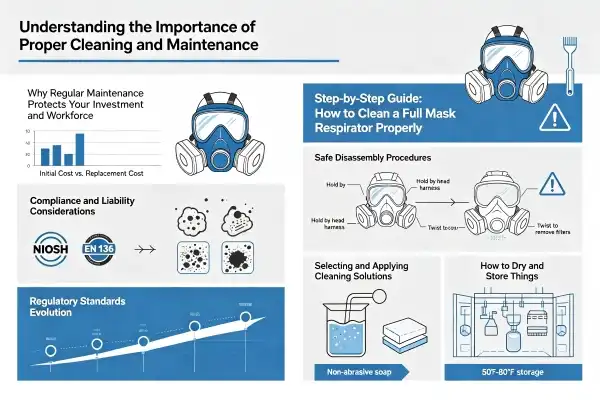
Understanding the Importance of Proper Cleaning and Maintenance
Every day, industrial workers depend on respiratory protection devices to shield them from dangerous airborne hazards. The effectiveness of these devices, however, relies entirely on consistent, proper care.
Why Regular Maintenance Protects Your Investment and Workforce
Businesses that have a lot of employees will have to spend a lot of money on respiratory safety tools. The respirator quickly loses its ability to keep a good seal when dirt and grime build up on the facepiece or inside the valve sections. This growth not only makes things less comfortable, but it also leaves dangerous holes in the filtration system that let impure air pass right through. When workers in chemical factories are around volatile organic compounds or acid gases, even small breaches in the seal can lead to exposure events that lead to OSHA violations, workers' compensation claims, and production shutdowns.
In our 65 years of serving industrial clients in 134 countries, we at PPE MAX have seen what happens when repair plans aren't followed properly. Purchasing managers often only look at how much the equipment costs at first, not how much it will cost if it breaks down early. A several-hundred-dollar mask is useless if it gets contaminated and has to be thrown away early or if worn-out parts break down during important activities.
Compliance and Liability Considerations
Regulatory bodies like NIOSH and groups that enforce EN 136 standards say that companies have to keep breathing tools clean. These rules aren't just made up by the government; they're based on decades of study into worker health that shows that equipment that isn't well taken care of directly causes chronic lung diseases, acute exposure incidents, and workplace deaths. Safety officers and buying teams need to know that records of upkeep can be used as formal proof of doing the right thing. When regulatory checks happen, or incident probes start, thorough repair records show that your company cares about protecting workers and following the rules.
Step-by-Step Guide: How to Clean a Full Mask Respirator Properly
Effective cleaning requires systematic attention to each component while respecting the materials' chemical sensitivities. The process protects both the equipment and the worker who will use it next.
What is the first step in cleaning a respirator?
Before you start cleaning respirator, make sure the area is well-ventilated and free of the things that the Full Mask Respirator was protecting you from. Carefully take off the Full Mask Respirator, keeping in mind that the outside areas may still have harmful residues on them. To keep your skin from coming into contact with dirty surfaces, hold the mask by the head harness straps instead of the facepiece. To start taking things apart, use the bayonet link twist device to separate the filter cylinders or jars. These parts should never be cleaned—filters are used up and should be thrown away according to your facility's rules for toxic trash. To take out the breathing and exhaling valves, gently press the clips that hold them in place. If there is a speaking diaphragm, it usually comes off with an easy twist-and-pull action. Use a marked tray to keep all the small parts in order so you don't lose them and can reassemble the item correctly.
Selecting and Applying Cleaning Solutions
Modern respirators are made of medical-grade silicone and thermoplastic rubber, which need to be cleaned with certain chemicals. Harsh chemicals, solvents derived from petroleum, and chlorine bleach solutions will break down these materials, making them rigid, brittle, and less flexible, which makes the seal less reliable. At PPE MAX, we make sure that the surfaces of our products are easy to clean and can be sanitised over and over again without breaking down. Make a washing solution by mixing warm water with a light, non-abrasive soap that is safe for breathing devices. Soak the facepiece and the parts that have been taken apart in this solution for about ten minutes to get rid of any contaminants that are stuck inside. Scrub all the surfaces gently with a soft-bristle brush, focusing on the areas around the lens seal, valve seats, and the inside of the nose cup where sweat and skin oils tend to build up.
It's important to pay extra attention to the wide-view plastic glass. This material is impact-resistant according to ANSI Z87.1 standards and has an anti-fog layer. However, rough cleaning methods will damage the surface and take away the protective treatments. Only use soft, lint-free cloths and a lens cleaning respirator that have been approved to clean the lens. Do not use paper towels or rough fabrics that can leave tiny scratches.
How to Dry and Store Things
After being rinsed well with clean water to get rid of any soap residue, parts must be dried fully before they can be put back together. Mould can grow, and materials break down when moisture gets stuck inside valve sections or between the facepiece and lens. Hang the parts of the mask in a clean, well-ventilated area that is out of direct sunlight and away from sources of heat. Extreme heat and ultraviolet light make flexible materials break down faster and can bend plastic parts. Silicone covers and rubber parts keep their material qualities when they are stored in climate-controlled areas. The temperature and humidity in storage areas should stay between 50°F and 80°F. If you store respirators in a room with chemical vapours, the vapours can get inside and damage the materials even when the respirators aren't being used.
Maintenance Tips to Extend the Lifespan of Full Mask Respirators
Beyond routine cleaning, systematic inspection and component management dramatically extend equipment service life while ensuring consistent protection.
Implementing Regular Inspection Protocols
Setting up detailed inspection plans that are in line with your operations helps safety teams find wear patterns before they become a threat to safety. The 5-point head strap system should be checked for cracks in the adjustment clips, loss of flexibility, or tearing. Each strap should be lightly stretched. If it doesn't return to its original length or becomes permanently deformed, it needs to be replaced. The face seal of the Full Mask Respirator is the most important part for keeping the right safety factors. Check the surface of the silicone seal all the way around for tears, cracks, or places where the material has stiffened. Even small flaws can lead to leaks that make security much less effective. It should feel soft and easy to bend. The part has hit the end of its useful life if the material feels stiff or has changed colour.
Filter Management and Replacement Schedules
Knowing the different kinds of filters and how to tell when they need to be replaced and how long they can last safely stops both of these problems. But they don't protect against gases or vapours; they only protect against dust, mist, and fume particles. Chemical tubes have activated carbon or other sorbent media that are made to remove certain types of contaminants. For settings with more than one danger, combination screens use both technologies together. When to replace something depends on more than just what the maker says. In places with a lot of pollution, screens may hit full capacity a long time before the estimated service life. A lot of new cartridges have end-of-service-life signs that change colour when the cartridge is about to break. But these markers only work with certain drugs. Rather than just using scheduled dates to set new dates, procurement teams should use real exposure tracking data and recorded usage hours to do so.
At PPE MAX, our respirators come with standard RD40/EN 148-1 thread connections and bayonet mounting systems that let you use a lot of different filters. Because of this, companies can make the best use of their filter stock while still being able to adapt to changing danger patterns without having to buy whole new respirator units.
Documentation and Record-Keeping Systems
Comprehensive maintenance records serve multiple purposes beyond regulatory compliance. Tracking individual respirator service histories reveals patterns that inform procurement decisions. If specific models consistently require component replacement at predictable intervals, this data supports negotiations with suppliers and justifies investment in more durable alternatives. Records documenting cleaning frequency, inspection findings, and component replacements establish defensible protocols during incident investigations or regulatory audits.
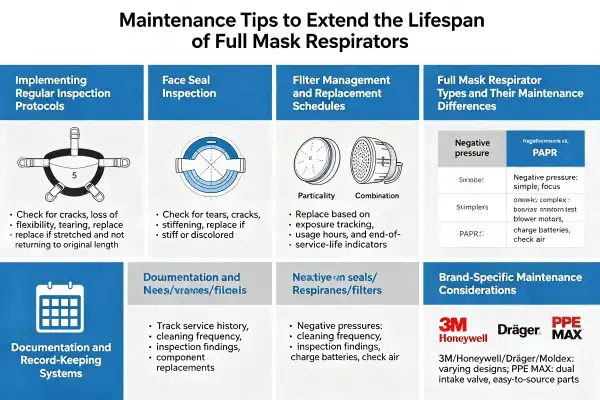
Full Mask Respirator Types and Their Maintenance Differences
Not all respiratory protection devices require identical maintenance approaches. Understanding these distinctions helps procurement professionals select equipment that aligns with their operational capabilities and workforce management systems.
Comparing Negative Pressure and Powered Systems
In traditional negative pressure respirators, the person breathing pulls air through filter media, which creates a small amount of negative pressure inside the facepiece when the person breathes in. Because these devices are physically simple and have fewer parts that need to be maintained, they are good for businesses that don't have a lot of expert support staff. Maintenance is mostly about making sure the seals are good, the valves work, and the filters are managed. Powered air-purifying respirators have battery-powered fans that push filtered air into the facepiece. This creates positive pressure, which increases safety and lowers breathing resistance. These systems are more comfortable to use for long periods of time and can be used by workers who can't pass negative-pressure fit tests, but they need more upkeep. Blower motors need to be tested for performance on a regular basis, batteries need to be charged and replaced, and air tubes need to be checked for cracks or holes.
Because PAPR systems are more complicated, they need more advanced repair plans and a larger supply of extra parts. When organisations look at these choices, they should decide if their current servicing infrastructure can handle the extra needs or if it would be better to work with a source that offers full expert support.
Brand-Specific Maintenance Considerations
Leading companies like 3M, Honeywell, Dräger, and Moldex all use their own designs that affect how often they need to be maintained. Some brands use throwaway valve parts that make replacing easier but raise the cost of ownership over time. Others have strong valves that can be cleaned hundreds of times, but they need to be inspected in a more thorough way. PPE MAX makes respirators by using what they've learned from 65 years of field practice and customer comments. Our dual intake valve design makes it easier to breathe while using replacement parts that are easy to find. This makes it easier for buying teams to manage operations across multiple sites and lowers the amount of inventory they need to keep on hand. The center-mounted breathing valve effectively lets out released air and moisture while still being easy to reach for regular maintenance checks without having to take the whole thing apart.
Procurement Considerations for Full Mask Respirator and Maintenance Supplies
Strategic procurement extends beyond initial equipment purchase to encompass the complete lifecycle cost and supply chain reliability.
Evaluating Total Cost of Ownership
Respirator procurement decisions should evaluate Full Mask Respirator durability, component availability, and maintenance supply costs rather than focusing exclusively on initial purchase price. A Full Mask Respirator device costing 20% less initially but requiring twice-yearly lens replacement versus every two years generates higher lifecycle costs while increasing administrative burden and supply chain risk. Reusable respirators with replaceable filters offer substantial cost advantages over disposable alternatives in environments with consistent, ongoing exposure. The upfront investment is recovered through reduced per-use costs, particularly when managing large workforces or extended projects. Organizations operating in multiple locations benefit from standardizing on specific models that allow centralized parts inventory and simplified training protocols.
Building Reliable Supply Partnerships
Authorized distributors and direct manufacturer relationships ensure product authenticity and consistent availability—critical factors when managing just-in-time inventory systems or responding to unexpected demand surges. Counterfeit respiratory protection equipment represents a serious and growing concern in global markets. These fraudulent products often appear identical to genuine equipment but fail to meet published performance specifications and lack proper certifications. Establishing relationships with manufacturers offering customization options, flexible order quantities, and responsive technical support creates competitive advantages. PPE MAX serves industrial safety distributors, large-scale construction firms, and government procurement departments across international markets with bulk packaging options, custom labeling for distributors, and readily available spare parts backed by technical support.
Maintenance Supply Kits and Volume Ordering
Maintenance kits that are already put together and include cleaning solutions, new valves, head harness parts, and lens covers make it easier to keep track of supplies and make sure that everything works together. When you buy these products in bulk, you save money on each unit and know that they will be available during budget planning rounds. Teams in charge of buying things should work out deals that include technical training for repair workers, detailed service records, and access to experts who can figure out problems with performance or strange wear patterns.
Conclusion
Cleaning and maintaining breathing protection equipment correctly has a direct effect on worker safety, following the rules, and the total cost of ownership. The detailed steps described here, including carefully taking things apart and choosing the right cleaning product, along with regular inspections and smart purchasing partnerships, will make sure that your employees are always safe. Companies that set up written repair plans, buy good tools from well-known brands, and work with sources that are easy to get in touch with will be able to meet both current safety rules and new rules that are being made by regulators. Putting money into regular maintenance pays off because it extends the life of equipment, lowers the cost of replacing it, and most importantly, stops exposure events that could hurt workers or make the company responsible for damages.
FAQ
1. How often should respirators be cleaned?
Respirators require cleaning after each use in contaminated environments. In continuous-use scenarios, cleaning should occur at least daily. High-contamination settings may necessitate more frequent cleaning during shift breaks to maintain comfort and seal integrity. Establish cleaning schedules based on actual contamination levels and visible soiling rather than arbitrary timeframes.
2. Can I use alcohol or bleach to disinfect respirators?
Avoid using alcohol, bleach, or other harsh disinfectants on respirator components. These chemicals degrade silicone and elastomeric materials, compromise seals, and damage anti-fog lens coatings. Use only mild detergents specifically approved by the manufacturer. For facilities requiring additional disinfection beyond routine cleaning, consult the manufacturer for compatible sanitizing agents that won't damage materials.
3. What are signs that a respirator needs component replacement?
Replace components when you observe cracks or tears in the face seal, loss of elasticity in head straps, discoloration or clouding of the lens, stiff or distorted valve flaps, or persistent air leakage during fit testing. Any compromise to the seal or breathing resistance indicates component failure requiring immediate replacement before returning the respirator to service.
Partner with PPE MAX: Your Trusted Full Mask Respirator Supplier
Securing reliable respiratory protection for your workforce requires more than just purchasing equipment—it demands partnership with a Full Mask Respirator manufacturer committed to your long-term safety objectives. PPE MAX has protected workers across 134 countries since 1956, combining proven manufacturing excellence with responsive customer support that helps your organization maintain peak Full Mask Respirator performance. Our respirators meet NIOSH, EN 136, and AS/NZS 1716 certifications, feature durable silicone seals and anti-fog polycarbonate lenses, and accommodate comprehensive filter options through standard bayonet connections. We offer bulk packaging, custom labeling for distributors, and readily available spare parts backed by technical training programs. Connect with our team today at marketing@ppemax.com to discuss how our Full Mask Respirator solutions and maintenance supply programs can support your specific operational requirements.
References
1. American National Standards Institute. (2020). ANSI Z88.2-2015: Respiratory Protection—Standard for Respiratory Protection Programs. Washington, D.C.: ANSI Publications.
2. Centers for Disease Control and Prevention, NIOSH. (2019). NIOSH Guide to the Selection and Use of Particulate Respirators. Publication No. 96-101. Cincinnati, OH: Department of Health and Human Services.
3. European Committee for Standardization. (2018). EN 136:1998 Respiratory Protective Devices—Full Face Masks—Requirements, Testing, Marking. Brussels: CEN Publications.
4. Occupational Safety and Health Administration. (2021). Respiratory Protection Standard 29 CFR 1910.134. Washington, D.C.: U.S. Department of Labor.
5. International Safety Equipment Association. (2022). Best Practices for Cleaning and Maintaining Reusable Respirators in Industrial Environments. Arlington, VA: ISEA Technical Publications.
6. Nelson, T.J. and Richards, M. (2021). Industrial Respiratory Protection: Selection, Care, and Effective Use in Occupational Health Programs (4th ed.). London: Taylor & Francis Group.
Learn about our latest products and discounts through SMS or email