- English
- French
- German
- Portuguese
- Spanish
- Russian
- Japanese
- Korean
- Arabic
- Greek
- German
- Turkish
- Italian
- Danish
- Romanian
- Indonesian
- Czech
- Afrikaans
- Swedish
- Polish
- Basque
- Catalan
- Esperanto
- Hindi
- Lao
- Albanian
- Amharic
- Armenian
- Azerbaijani
- Belarusian
- Bengali
- Bosnian
- Bulgarian
- Cebuano
- Chichewa
- Corsican
- Croatian
- Dutch
- Estonian
- Filipino
- Finnish
- Frisian
- Galician
- Georgian
- Gujarati
- Haitian
- Hausa
- Hawaiian
- Hebrew
- Hmong
- Hungarian
- Icelandic
- Igbo
- Javanese
- Kannada
- Kazakh
- Khmer
- Kurdish
- Kyrgyz
- Latin
- Latvian
- Lithuanian
- Luxembou..
- Macedonian
- Malagasy
- Malay
- Malayalam
- Maltese
- Maori
- Marathi
- Mongolian
- Burmese
- Nepali
- Norwegian
- Pashto
- Persian
- Punjabi
- Serbian
- Sesotho
- Sinhala
- Slovak
- Slovenian
- Somali
- Samoan
- Scots Gaelic
- Shona
- Sindhi
- Sundanese
- Swahili
- Tajik
- Tamil
- Telugu
- Thai
- Ukrainian
- Urdu
- Uzbek
- Vietnamese
- Welsh
- Xhosa
- Yiddish
- Yoruba
- Zulu
What Are the Key Benefits of Electrical Rubber Gloves in Safety Work?
Electrical rubber gloves are very important for keeping your hands safe from shocks, burns, and electrocution in all voltage settings. These special insulation gloves put up a vital buffer between workers and live electrical parts, greatly lowering the number of injuries and deaths. At PPE MAX, we know that choosing the right insulating gloves has a direct effect on regulatory compliance, business continuity, and worker trust for purchasing managers, safety engineers, and procurement directors who work in the building, energy, industrial, and utility sectors. This in-depth guide looks at how these gloves improve safety standards and meet the practical concerns of B2B buyers around the world who are looking for reliable, approved personal protective equipment.
Understanding Electrical Rubber Gloves and Their Safety Role
What Makes Electrical Rubber Gloves Essential PPE
Electrical rubber gloves are made of high-dielectric rubber compounds that are carefully mixed and designed to resist electrical current without conducting it. Unlike regular work gloves, these insulated gloves are put through a lot of tests to make sure they can protect against certain voltage levels. The rubber material forms an insulating layer that stops current from flowing through the wearer's body. This blocks the path to ground that would otherwise cause an electrical shock.
Voltage Classification Systems and Standards
Based on the highest voltage that can be used, the classification method splits insulating gloves into separate groups. Class 00 gloves can handle voltages of up to 500V AC, so they can be used for electrical work in homes and low-voltage control systems. Class 0 gloves can handle up to 1,000V AC and are often used to place meters and fix electric cars. Class 3 gloves protect you up to 26,500V AC, which is important for work that involves moving or distributing high power. This method, which is based on ASTM D120 and IEC 60903 standards, makes it possible to match hazards and safety levels very accurately.
Regulatory Frameworks Governing Insulating Gloves
When working on or near electrical equipment that is on, OSHA rule 29 CFR 1910.137 says that you must wear insulated gloves. As part of ASTM F496's in-service care and testing guidelines, dielectric testing must be done every six months. IEC 60903 gives foreign standards that are accepted in markets in Asia, Europe, and the Middle East. These regulatory frameworks give buying teams clear guidelines for choosing products. This makes sure that purchases are legal and keeps companies from being held responsible.
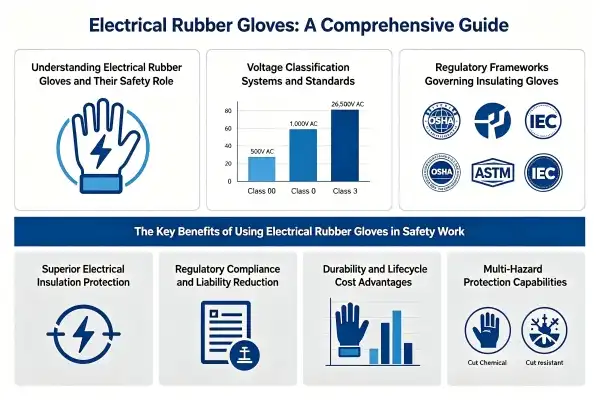
The Key Benefits of Using Electrical Rubber Gloves in Safety Work
Superior Electrical Insulation Protection
One of the best things about insulated gloves is that they keep electrical current from getting to the worker's body. If you choose the right ones and keep them in good shape, these gloves will keep you safe from touching live wires. We've seen a lot of situations where properly rated gloves have kept people from getting seriously hurt when equipment suddenly went live or when they accidentally touched live parts. This safety does more than just keep you from getting shocked. It also keeps you from getting arc flash burns, which can happen even if you don't touch high-voltage equipment directly.
Regulatory Compliance and Liability Reduction
When organizations don't follow electricity safety rules, they can be sued and lose a lot of money. Companies can show that they follow OSHA, NFPA 70E, and other foreign safety rules by wearing electrical rubber gloves. When properly rated and tested gloves are used and documented, the risk of liability in the event of an accident at work is greatly reduced. Safety checks always find that insulating glove programs show proactive risk management, which helps get better insurance rates and better contractor standards. It also keeps you from getting fined by the government, which can happen in big industry markets and can be very expensive.
Durability and Lifecycle Cost Advantages
If you take good care of your high-quality insulated gloves, they will last a long time and not need to be replaced as often, which lowers the total cost of ownership. Natural rubber formulations are very flexible and don't tear easily, while EPDM materials don't break down when used outside because of ozone. The ability to be used again is especially helpful for big businesses that have to keep track of a lot of safety tools. If you follow the right testing procedures, gloves can last for years, which makes them a better deal than throwaway ones. They last a long time, which makes them a good investment for procurement managers who are looking at lifetime costs across spread workforces.
Multi-Hazard Protection Capabilities
These days, insulation gloves are used for more than just electricity safety. They also protect against other dangers in the workplace. Chemical protection is built into a lot of recipes, which means they can handle oils, acids, and solvents that are common in industrial settings. Some designs have better mechanical resistance against cuts and scrapes, which lowers the chance of physical damage that could damage the electrical integrity. Another important feature is arc flash resistance, which means that certain materials are made to handle the heat that is released when an electrical fault happens. This multi-hazard protection makes it possible for single PPE items to cover a wide range of safety issues in complicated work settings.
Choosing the Right Electrical Rubber Gloves for Your Business Needs
Voltage Rating Selection Criteria
Correctly choosing gloves starts with correctly assessing the risks. Companies need to figure out the highest voltage that their employees can be exposed to and then choose gloves that are rated for at least that level. Class 00 gloves are good for low-voltage control work and home use, while Class 0 gloves are better for industry control systems and handling electric vehicles. For power cable work and high-voltage industrial distribution, Class 3 is needed. It is important that the specs for purchases take into account both normal working voltages and possible fault situations to make sure there are enough safety gaps.
Material Type and Performance Characteristics
Natural rubber gloves for electrical work are very flexible and dexterous, which is important for jobs that need small motor skills like installing meters or working on control panels. EPDM rubber doesn't crack when exposed to ozone, which makes it better for outdoor utility uses that will be in the sun for a long time. Changes in thickness affect both the amount of protection and the delicacy of the touch, so it's important to find a balance between safety margins and working needs. When buying teams know about these material trade-offs, they can choose gloves that meet both safety needs and job requirements in a wide range of work situations.
Leather Protectors and Accessory Requirements
Leather protector gloves for electrical rubber gloves are very important because they keep the rubber insulation gloves safe from damage that could affect their electrical stability. Rubber can be punctured or torn by sharp edges, rough surfaces, and materials that are rough on the skin. This makes current track that removes protection. To stop electrical tracking, leather covers must go at least two inches below the rubber cuff of the glove. This stacked security system is the best in the business and is required by safety standards for most voltage classes. As matched sets, the procurement requirements should include both insulating gloves and leather covers that are the right size.
Supplier Certification and Quality Verification
Manufacturers you can trust have strict quality control programs and third-party certifications that show they meet ASTM and IEC standards. Reliable sellers provide proof test certificates, information on the materials used, and production date codes as proof. We've seen that working with certified sellers lowers the risk of buying things and makes sure that the standard of the products is the same for each sale. When looking for insulating gloves for important safety uses across foreign supply chains, it is important to check the supplier's qualifications, production capabilities, and quality systems.
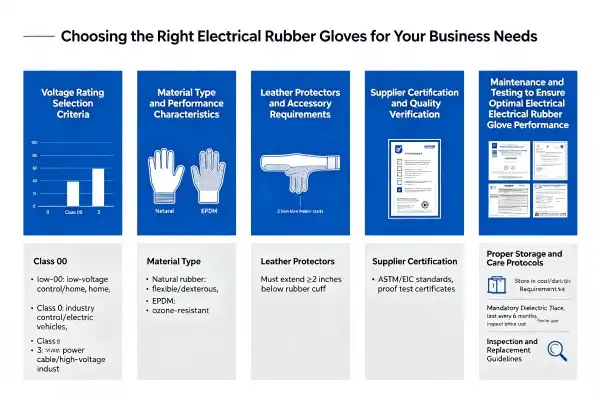
Maintenance and Testing to Ensure Optimal Electrical Rubber Glove Performance
Proper Storage and Care Protocols
When not in use, insulating gloves should be kept in cool, dark, dry places that are out of direct sunlight, ozone sources, and high temperatures. Rubber materials break down when they are exposed to UV rays, which lowers their dielectric strength and mechanical qualities. When you fold or squeeze storage bags, you create stress points that are likely to crack. We suggest that you store things in places that are separate from chemicals, oil products, and sharp items. Taking good care of gloves will make them last longer and keep their protective qualities, which will increase the value of your safety equipment purchases.
Mandatory Dielectric Testing Requirements
As per ASTM F496, gloves must be electrically tested every six months after they are put to use, and no more than 12 months should pass between tests for gloves that were kept before they were first used. For testing, gloves must be submerged in water while certain proof test voltages are applied, and current loss, which means the insulation has failed, is watched. Companies can either set up their own testing facilities or hire accredited third-party labs to do the work for them. Test records show that gloves are in line with regulations and show which ones are worn out before they are used in the field. It is necessary to do these regular tests in order to protect workers and keep an eye on risk for the company.
Inspection and Replacement Guidelines
Before each use, gloves should be looked at visually and physically for holes, tears, ozone cracks, and foreign items stuck inside. The air expansion test helps find small holes that can't be seen by looking at the skin. Any glove that is damaged, worn out too much, or fails a test must be taken out of work right away. Replacement plans should take into account how often something is used, how exposed it is to the environment, and what the maker recommends. Setting clear criteria for retirement stops people from using broken tools, which keeps security levels the same for everyone in the workforce.
Procurement Strategies for Electrical Rubber Gloves in B2B Markets
Supplier Network Evaluation
When you do effective buying, you compare the strengths and weaknesses of different supply routes, such as direct makers, approved distributors, and wholesale platforms. When you work directly with a manufacturer, you can often get special specs and better prices for large orders. Regional distributors are better because they can serve quickly and give professional help in the area. We've found that having a wide range of suppliers makes the supply chain more stable and lets us set prices that are competitive. When doing foreign sourcing, lowering procurement risks means checking the financial security, production capacity, and quality systems of suppliers.
Volume Purchasing and Cost Optimization
Large companies with standard protection needs for electrical rubber gloves can benefit a lot from bulk buying deals because they lower unit costs by a lot. When you make a volume promise, you can discuss different price levels, longer payment terms, and priority allocation for times when supply is limited. Companies that are in charge of more than one building should combine specs whenever they can. This will help them save money on purchases and make handling their inventory easier. Costs can be cut even more by strategically timing purchase orders around production cycles. However, safety must never be compromised for financial reasons.
Customization and OEM Capabilities
Many corporate buyers need options that are specifically made to meet their needs, whether they have specific voltage ranges, size distributions, or branding needs. Well-known companies like PPE MAX can do both OEM and ODM, which means they can make private-label goods that meet the unique needs of each customer. Organizational needs can be met with custom packaging, size ranges, and expert documents. These features are especially useful for wholesalers who are making their own lines of products or for big companies that are making sure that their safety programs are the same across all of their foreign operations. When setting up long-term supply partnerships, procurement teams should look at how flexible the manufacturing is.
Conclusion
Electrical rubber gloves are essential for protecting workers in the building, utility, and industry sectors who come into contact with live electrical systems. In addition to preventing shocks, they also help with regulatory compliance, protecting against multiple hazards, and providing cost-effective performance over their entire lifespan. To make the right choice, you need to know about voltage classifications, material qualities, and the specific needs of each work setting. Maintenance programs that include regular tests and inspections make sure that gloves stay safe for as long as they are used. For companies that run big safety programs, strategic sourcing methods that balance seller relationships, volume buying, and the ability to make changes are the best way to get the best protection levels and lowest total cost of ownership.
FAQ
What voltage rating do I need for my application?
Find out the highest power your workers could be exposed to, including any possible fault situations. For work in homes and with low voltages, Class 00 gloves protect against up to 500V AC. Class 0 can handle up to 1,000V AC, which makes it good for industrial controls and service electric vehicles. Class 3 guards against voltages of up to 26,500V AC for use in utility lines. Choose gloves with a rating at least as high as your highest contact voltage.
How often must insulating gloves be tested?
Every six months after gloves are put to use, ASTM F496 and OSHA 1910.137 say they must be tested for electricity. Gloves that have been stored and haven't been checked in the last 12 months can't be given out. Testing makes sure that the dielectric is still good and finds any damage before it is used in the field. Organizations must keep test records that show they are following these required periods.
Are leather protector gloves required?
Leather guards are very important for mechanical security because they stop holes, cuts, and abrasions that would damage rubber insulation. For most jobs, you have to wear them, and the rubber glove has to go at least two inches past the leather cover to stop electricity tracking. This multiple-layer security is the best way to protect against all voltage classes.
Partner with PPE MAX for Certified Electrical Rubber Gloves Solutions
Since 1956, PPE MAX has made electrical shielding products that have been thoroughly tested and meet global safety standards to protect workers in 134 countries. Our production skills allow us to make approved insulating gloves from Class 00 to Class 3, which come with full dielectric testing and quality documentation. As a top maker of electrical rubber gloves, we serve industrial safety distributors, utility companies, and government procurement offices. We also offer OEM solutions that are custom-made to meet your voltage needs and the needs of your workforce. You can email our technical team atmarketing@ppemax.com to talk about voltage ratings, get approved test paperwork, or get detailed quotes for large orders. Let our 60 years of experience help you improve your electricity safety program with tools that your employees can trust.
References
1. American Society for Testing and Materials. (2020). ASTM D120-20 Standard Specification for Rubber Insulating Gloves. West Conshohocken, PA: ASTM International.
2. Occupational Safety and Health Administration. (2019). 29 CFR 1910.137 - Electrical Protective Equipment. Washington, DC: U.S. Department of Labor.
3. American Society for Testing and Materials. (2021). ASTM F496-20 Standard Specification for In-Service Care of Insulating Gloves and Sleeves. West Conshocken, PA: ASTM International.
4. International Electrotechnical Commission. (2018). IEC 60903:2018 Live Working - Electrical Insulating Gloves. Geneva, Switzerland: IEC.
5. National Fire Protection Association. (2021). NFPA 70E Standard for Electrical Safety in the Workplace. Quincy, MA: NFPA.
6. Institute of Electrical and Electronics Engineers. (2019). IEEE Guide for Testing and Maintenance of Electrical Protective Equipment. Piscataway, NJ: IEEE Standards Association.
Learn about our latest products and discounts through SMS or email